



Friday, November 6, 2026 Paksha:Krishna Tithi:Trayodashi

Saturday, November 7, 2026 Paksha:Krishna Tithi:Chaturdashi

Saturday, November 7, 2026 Paksha:Krishna Tithi:Chaturdashi

Saturday, November 7, 2026 Paksha:Krishna Tithi:Chaturdashi

Sunday, November 8, 2026 Paksha:Krishna Tithi:Amavasya


Sunday, November 8, 2026 Paksha:Krishna Tithi:Amavasya

Sunday, November 8, 2026 Paksha:Krishna Tithi:Amavasya
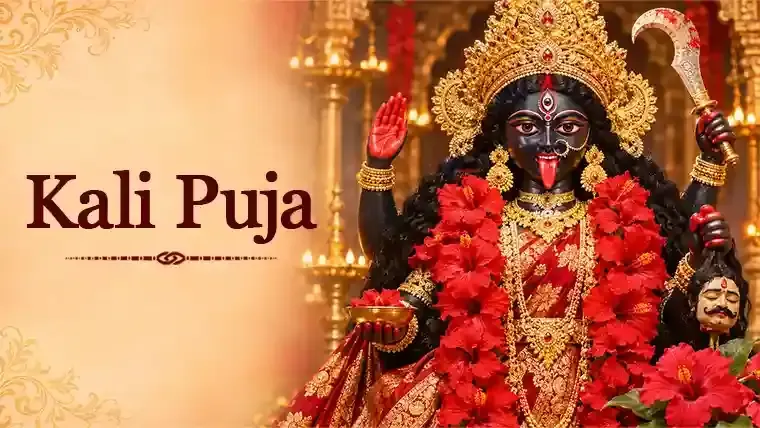
Kali Puja, also called Shyama Puja, is a major Hindu festival dedicated to Goddess Kali. It is observed on the new moon night of Kartik, usually the same night as Diwali. In 2026, Kali Puja falls on Sunday, November 8. Kali Chaudas is observed a day earlier, on Saturday, November 7.
Kali Puja 2026: Tithi and Muhurat
| Detail | Information |
|---|---|
| Kali Puja 2026 date | Sunday, November 8, 2026 |
| Kali Chaudas 2026 date | Saturday, November 7, 2026 |
| Amavasya tithi begins | 11:27 AM on November 8 |
| Amavasya tithi ends | 12:31 PM on November 9 |
| Nishita Puja muhurat | 11:39 PM on November 8 to 12:31 AM on November 9 |
Local calendars may vary slightly. A trusted panchang helps confirm the exact timing for a specific city.
In West Bengal, Kali Puja is a public holiday on November 8, 2026. State notifications also list additional closures on November 9 and 10.
When Is Kali Puja?
Kali Puja is observed on Dipannita Amavasya, the new moon day. This falls in the Hindu month of Ashwayuja (Amanta tradition) or Kartika (Purnimanta tradition). The festival generally lands in October or November, on the same night as Diwali.
Kali Puja Dates from 2025 to 2028
| Year | Kali Puja Date |
|---|---|
| 2025 | Monday, October 20 |
| 2026 | Sunday, November 8 |
| 2027 | Friday, October 29 |
| 2028 | Tuesday, October 17 |
What Is Kali Puja?
Kali Puja is the worship of Goddess Kali, the fierce form of Goddess Adya Shakti, the primordial divine feminine energy. Most Diwali celebrations center on Goddess Lakshmi. In West Bengal, Assam, Odisha, Tripura, and parts of eastern India, Goddess Kali is worshipped on the Amavasya night of Diwali instead.
The festival is especially significant in Bengal. There, Goddess Kali is regarded not only as a destroyer but also as a protective Mother who removes fear, ignorance, ego, and negativity. The name Shyama Puja refers to the dark appearance of the Goddess.
Why Kali Puja Is Celebrated
Kali Puja celebrates the destruction of evil and the triumph of spiritual knowledge over ignorance. Devotees worship Goddess Kali for courage, protection, and freedom from fear.
The festival is celebrated for the following reasons:
Victory of good over evil, as Goddess Kali destroyed demonic forces and restored cosmic order.
Removal of ego and arrogance, which keep a person away from humility and devotion.
Relief from fear, negativity, and ignorance.
Protection from external evil and hardship.
Spiritual liberation, since Goddess Kali represents the power that cuts through attachment and illusion.
The darkest night of the lunar month is chosen on purpose. Devotees worship Goddess Kali as the divine light and strength that remains even when outer light is absent.
The Story of Goddess Kali
According to a widely told legend, the demons Shumbha and Nishumbha created chaos and defeated the gods. Unable to overcome them, the gods prayed to Goddess Durga.
From the fury of Goddess Durga, Goddess Kali emerged as a fearsome and supremely powerful form of Shakti. She destroyed the demons and restored peace.
Her battle fury, however, did not subside. It calmed only when she saw Lord Shiva lying before her. At that moment, her tongue extended in remorse or restraint.
This story explains her iconic form. She is shown with dark or blue-black skin, a garland of skulls, a skirt of severed arms, a sword, and a severed head. One foot rests upon Lord Shiva.
These symbols stand for the destruction of ego, attachment, and ignorance. They do not represent literal violence alone.
Kali Puja and Diwali
Kali Puja and Diwali usually fall on the same night, since both are observed on Kartik Amavasya. Their emphasis differs, though.
| Aspect | Kali Puja | Lakshmi Puja (Mainstream Diwali) |
|---|---|---|
| Main deity | Goddess Kali | Goddess Lakshmi |
| Core theme | Destruction of evil, courage, protection, liberation | Prosperity, wealth, light, abundance |
| Main regions | Bengal, Assam, Odisha, Tripura | Much of North and West India |
| Typical timing | Midnight worship on Amavasya | Evening worship during Pradosh Kaal |
Both observances share the deeper Diwali message of light overcoming darkness and good overcoming evil.
Kali Chaudas: Meaning and Date
Kali Chaudas is also known as Narak Chaturdashi or Choti Diwali. It is observed on the 14th day (Chaturdashi) of the dark fortnight, one day before Diwali. The festival is especially important in Gujarat and parts of western India.
In 2026, Kali Chaudas falls on Saturday, November 7, the day before Kali Puja.
Why Kali Chaudas Is Observed
Kali Chaudas is dedicated to Goddess Mahakali. It is believed to remove evil influences, negativity, laziness, and fear.
The day is also linked to the legend of Lord Krishna defeating the demon Narakasura. This is why it is called Narak Chaturdashi.
Kali Chaudas Rituals
Traditional observances include the following:
Abhyang Snan: An early morning oil bath using warm water, ubtan, gram flour, fragrant oils, and herbs. It symbolizes purification of the body and mind.
Offerings: Black sesame, black gram (urad dal), and other dark-colored items are offered to Goddess Kali.
Diyas: Lamps are lit in odd numbers, often 13 or 15, and placed around the home to drive away darkness and evil spirits.
Midnight worship: Some households perform a special puja late at night. A mustard oil lamp is lit, kajal tilak is applied, incense is offered, and sweets such as imarti are prepared.
Protection ritual: A coconut may be rotated around a person's head and then offered to the Goddess. This is believed to take away negativity.
How Kali Puja Is Celebrated
Kali Puja is largely a nighttime worship, and some traditions are influenced by Tantric practices. Devotees install images or idols of Goddess Kali, light lamps, and offer flowers, sweets, rice, lentils, and red hibiscus. Red hibiscus is considered especially dear to the Goddess.
Common elements of the celebration include:
Midnight puja, since the Nishita period is considered especially auspicious for invoking the protective energy of Goddess Kali.
Idol worship in homes, neighborhoods, and temples. In Kolkata, community pandals are a major feature.
Offerings and bhog of red hibiscus, sweets, rice, lentils, and fruits. Some ritual offerings follow family or priestly tradition.
Chanting of Kali mantras and prayers for courage, protection, health, peace, and the removal of obstacles.
Lighting of diyas that brighten homes and streets, linking Kali Puja with the wider Diwali festival.
History of Kali Puja
Kali worship existed much earlier. Organized household and public Kali Puja became prominent in Bengal around the 16th century. The sage Krishnananda Agamavagisha is credited with starting and popularizing the practice in Bengal.
In the 18th century, Raja Krishnachandra of Nadia helped the festival spread further. Its popularity grew in the 19th century, particularly through the influence of Sri Ramakrishna Paramahamsa. He is one of the most celebrated devotees of Goddess Kali in Bengal.
Where Kali Puja Is Celebrated
Kali Puja is most prominent in the following places:
West Bengal: Especially Kolkata, Kalighat, Dakshineswar, and community pandals across the state.
Assam, Odisha, and Tripura: Worship of Goddess Kali on Diwali Amavasya is widespread.
Jharkhand and other parts of eastern India: Rituals and community celebrations vary by region.
Indian diaspora communities: Bengali, Odia, and Assamese communities abroad celebrate Diwali through Kali worship.
Spiritual Significance of Kali Puja
Kali Puja is not only about protection from outside difficulties. Its deeper message is transformation. Devotees seek the strength to face fear, anger, attachment, ego, and ignorance.
The fierce appearance of Goddess Kali reminds worshippers that destruction can be sacred when it frees the mind from what holds it back.
Devotees commonly pray for:
Courage and inner strength
Protection from negative forces and adversity
Removal of obstacles and ego
Health, peace, prosperity, and spiritual growth
Frequently Asked Questions
When is Kali Chaudas in 2026?
Kali Chaudas is observed on Saturday, November 7, 2026, one day before Kali Puja.
Why is Kali Puja celebrated?
Kali Puja marks the victory of Goddess Kali over demonic forces and the triumph of knowledge over ignorance. It is also a time to seek courage, protection, and freedom from ego and fear.
What is the difference between Kali Puja and Kali Chaudas?
Kali Puja is the midnight worship of Goddess Kali on Amavasya. Kali Chaudas falls on the Chaturdashi is a day earlier and is dedicated to Goddess Mahakali. It is also linked to Lord Krishna's victory over Narakasura.
Is Kali Puja the same as Diwali?
Both are observed on the same new moon night. Diwali is mainly marked by worship of Goddess Lakshmi, while Kali Puja is dedicated to Goddess Kali. Kali Puja is more common in Bengal, Assam, Odisha, and Tripura.
Why is Kali Puja performed at midnight?
The Nishita period is considered especially auspicious for invoking the protective energy of Goddess Kali. The darkest night is also symbolic of divine strength that remains in the absence of light.
What is Kali Puja also called?
It is also known as Shyama Puja, a name that refers to the dark complexion of the Goddess.
What is offered to Goddess Kali during the puja?
Red hibiscus, sweets, rice, lentils, and fruits are commonly offered. On Kali Chaudas, black sesame and black gram are also offered.
Is Kali Puja a public holiday?
In West Bengal, Kali Puja is a public holiday on November 8, 2026. State notifications also list additional closures on November 9 and 10.
Festival List
- Nag Panchami
- Raksha Bandhan
- Janmashtami
- Ganesh Chaturthi
- Onam
- Pitru Paksha
- Shardiya Navratri
- Durga Puja
- Dussehra
- Karwa Chauth
- Dhanteras
- Diwali
- Govardhan Puja
- Bhai Dooj
- Chhath Puja
- Tulsi Vivah
- Guru Nanak Jayanti
- Christmas
- New year
- Lohri
- Pongal
- Makar Sankranti
- Vasant Panchami
- Shivratri
- Ramadan
- Holi
- Good Friday
- Navratri
- Gudi Padwa
- Ugadi
- Vaisakhi
- Ram Navami
- Mahavir Jayanti
- Hanuman Jayanati
- Buddha Purnima
- Akshay Tritiya
- Shani Jayanti
- Guru Purnima
- Hariyali Teej