


Wednesday, October 28, 2026 Paksha:Krishna Tithi:Tritiiya
Thursday, October 29, 2026 Paksha:Krishna Tithi:Chaturthi
Thursday, October 29, 2026 Paksha:Krishna Tithi:Chaturthi
Thursday, October 1, 2026 Paksha:Krishna Tithi:Panchami
Thursday, October 1, 2026 Paksha:Krishna Tithi:Panchami
Friday, October 2, 2026 Paksha:Krishna Tithi:Saptami
Friday, October 2, 2026 Paksha:Krishna Tithi:Saptami
Saturday, October 3, 2026 Paksha:Krishna Tithi:Ashtami
Saturday, October 3, 2026 Paksha:Krishna Tithi:Ashtami
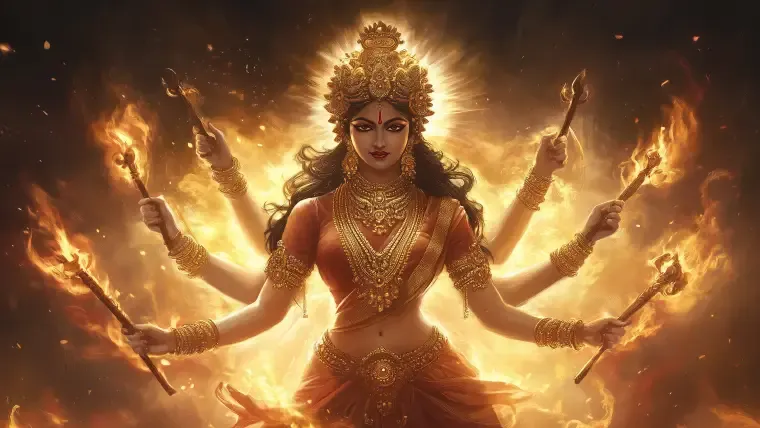
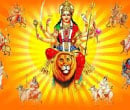
Durga Puja 2026 will be observed in West Bengal from Friday, October 16, to Wednesday, October 21. The main public celebrations run from Maha Shashthi to Vijaya Dashami. Exact ritual timings may vary by location and local panchang. Durga Puja is one of the most beloved Hindu festivals. It honors Goddess Durga's victory over the buffalo demon Mahishasura and celebrates good's triumph over evil.
Durga Puja Countdown: How Many Days Are Left?
Durga Puja festivities begin on Maha Shashthi and conclude on Vijaya Dashami. Wondering how many days are left until Durga Puja 2026? Check the countdown below!
Durga Puja 2026: Date and Full Calendar
The festival falls during the bright half (waxing phase) of the Hindu month of Ashvina, usually in September or October. Durga Puja 2026 takes place on the following days.
| Date | Observance | Key Rituals & Celebrations |
|---|---|---|
| Saturday, October 10 | 🌺 Mahalaya | Ancestor remembrance and invocation of Goddess Durga |
| Friday, October 16 | 🪔 Maha Shashthi | Kalparambha, Bodhan, and Bilva Nimantran |
| Saturday, October 17 | 🌿 Maha Saptami | Nabapatrika Snan and Kolabou Puja |
| Monday, October 19 | 🌸 Maha Ashtami | Pushpanjali, Kumari Puja, and Sandhi Puja |
| Tuesday, October 20 | 🙏 Maha Navami | Navami Puja and Navami Homa |
| Wednesday, October 21 | 🔴 Vijaya Dashami | Sindoor Khela, processions, and Durga Visarjan |
Note: Saptami tithi continues into October 18 in the Bengali calendar. For that reason, it is not counted as a separate major day.
What Is Durga Puja?
Durga Puja is a festival dedicated to Goddess Durga, the divine form of Shakti. Shakti means power and represents divine feminine energy.
The festival is traditionally linked with a ten-day period that begins with Mahalaya and ends with Vijaya Dashami. In Bengal, the main public celebrations take place over five days, from Shashthi to Dashami.
People in West Bengal, Assam, Odisha, Tripura, Bihar, and Jharkhand celebrate Durga Puja with great devotion. Bengali communities worldwide also observe it.
Durga Puja and Navratri
Durga Puja and Navratri overlap because both fall in the Ashvina month. However, the two festivals are not the same.
In Bengal and Assam, the focus is on Durga Puja, with grand pandals, clay idols, and community worship. In many parts of northern and western India, people observe Navratri with fasting, temple worship, Garba, and Dandiya.
Kalash Sthapana in Navratri Tradition
Kalash Sthapana, also called Ghatasthapana, is performed at the beginning of some Navratri traditions to invoke Goddess Shakti. The procedure varies by region, family custom, and sampradaya. The following is a simplified household outline, not a universal puja method.
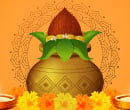
Clean the worship area, and place a chowki on a fresh cloth. A wide earthen pot is filled with soil, and barley or other customary grains are sown in it. Fill a separate kalasha with clean water.
Depending on local custom, add unbroken rice (Akshata), a betel nut, a coin, or durva grass to the water. A sacred thread is tied around the neck of the vessel. Place five mango or ashoka leaves at the opening, and set a coconut, often wrapped in red cloth, on top.
Worship the kalasha with flowers, incense, a lamp, and fruit. Devotees may recite prayers or make a personal resolve, known as a sankalpa. Ritual timings vary by location, so a local panchang or priest is the best guide.
The Nine Forms of Goddess Durga in Navratri
Many Navratri traditions dedicate each of the nine days to one form of the Goddess, collectively known as Navadurga. The sequence below is commonly followed, but offerings and customs vary by region. It is not a description of Bengali Durga Puja, which follows a different regional calendar.
Pratipada, Goddess Shailaputri: The daughter of the Himalayas and the first form of Navadurga. Ghatasthapana is performed on this day in traditions that observe it. Ghee is a commonly cited offering.
Dwitiya, Goddess Brahmacharini: This form represents austerity, devotion, and spiritual discipline. Households may follow their own customs.
Tritiya, Goddess Chandraghanta: Depicted with a crescent moon on her forehead, she is associated with courage and protection. Kheer is often offered.
Chaturthi, Goddess Kushmanda: This form is associated with creative energy and vitality. Malpua is a commonly mentioned offering.
Panchami, Goddess Skandamata: She is the mother of Lord Kartikeya, also known as Skanda, and represents maternal protection. Some regions associate bananas with this day.
Shashthi, Goddess Katyayani: A fierce form linked with the destruction of evil. Honey is often offered.
Saptami, Goddess Kalaratri: The formidable form associated with the removal of fear and darkness. Jaggery is commonly offered.
Ashtami, Goddess Mahagauri: She is associated with purity, peace, and compassion. Some traditions offer coconut, and Kanya Puja may also be held.
Navami, Goddess Siddhidatri: The ninth form, associated with spiritual accomplishment. Sesame seeds are a commonly cited offering.
Dashami, Vijayadashami: The day marks the conclusion of Navratri. In Bengal, it brings farewell rituals and immersion of the idol. In other regions, it is observed as Dussehra.
Important Durga Puja Rituals
Each day of the festival carries its own customs and meaning. Below are some of the best-known Bengali rituals.
Mahalaya: Marks the beginning of Devi Paksha. Families remember their ancestors and welcome Goddess Durga to the earth.
Bodhan: This ritual awakens the Goddess and is traditionally performed on Shashthi.
Nabapatrika Snan: A bundle of nine plants is given a ceremonial bath on Saptami and then worshipped as a form of the Goddess.
Pushpanjali: Devotees offer flowers while chanting mantras. This ritual is especially prominent on Ashtami.
Sandhi Puja: Devotees perform the puja at the sacred moment when Ashtami ends and Navami begins. Its exact time depends on the local tithi.
Navami Homa: Devotees hold a sacred fire ritual on Navami to seek Goddess Durga's blessings.
Dhunuchi Dance: Devotees dance with clay burners filled with smoking incense, a custom closely tied to Bengal.
Sindoor Khela: On Dashami, married women in many communities apply sindoor to one another and to the idol of Goddess Durga.
Visarjan: The idol is carried in a procession and immersed in water. It marks the farewell of the Goddess until the next year.
Spiritual and Astrological Impact of Durga Puja
Durga Puja is a sacred festival that celebrates the goddess Durga, who embodies Shakti. The festival is a symbol of courage, protection, fertility, creation, generation, prosperity, and victory.
Prayer, fasting, meditation, and festivals offer many a spiritual outlet this Puja.
In Jyotish traditions, some practitioners connect worship of the Goddess with planetary influences and a person's birth chart. Certain forms of Devi worship may be suggested as devotional remedies for perceived astrological challenges. These views vary among astrologers and traditions.
Both the festival and the goddess herself represent the auspicious beginning of something powerful and divine. Many people choose to begin new ventures and pray to the goddess for blessings and success. Individual astrological guidance is best sought from verified astrologers.
The Story of Goddess Durga and Mahishasura
The demon Mahishasura once performed a deep and powerful penance. Lord Brahma blessed him, granting him the wish that neither men nor gods would be able to slay him.
Feeling invincible, Mahishasura grew arrogant. He attacked the heavens, drove out the devatas, and troubled the innocent across the three worlds.
The gods turned to Lord Brahma, Lord Vishnu, and Lord Shiva for help. The three gods combined their power and summoned a great beam of light from their bodies and weapons. The other gods added their power, and the goddess manifested.
The goddess had ten arms, and each god gave her one of their weapons. Lord Shiva gave her a trident, Lord Vishnu gave her a discus, and the mountains gave her a lion to ride.
Mahishasura saw the Goddess and was struck by her beauty. He sent messengers asking her to become his queen. Goddess Durga declined and called him to battle.
The war raged for days. Mahishasura sent mighty armies, but the Goddess destroyed them. When he faced her himself, the demon kept changing forms, appearing as a buffalo, a lion, and an elephant.
Finally, on the tenth day, the demon transformed into a buffalo yet again, but this time, the goddess skewered him with her trident. With that, the demon was slain, and peace was restored to the heavens.
Cultural Significance of Durga Puja
Durga Puja is more than a religious event. It is the biggest cultural celebration in Bengal, bringing families, neighbors, and entire cities together.
Artisans spend months shaping clay idols and building elaborate pandals. Many pandals follow creative themes, turning streets into open-air art galleries. Music, food, and the beat of the dhak drum fill the festive days.
In 2021, UNESCO added Durga Puja in Kolkata to the Representative List of the Intangible Cultural Heritage of Humanity. The recognition honors the families, priests, drummers, artists, and community committees who keep the tradition alive.
Festival List
- Nag Panchami
- Raksha Bandhan
- Janmashtami
- Ganesh Chaturthi
- Onam
- Pitru Paksha
- Shardiya Navratri
- Durga Puja
- Dussehra
- Karwa Chauth
- Dhanteras
- Diwali
- Govardhan Puja
- Bhai Dooj
- Chhath Puja
- Tulsi Vivah
- Guru Nanak Jayanti
- Christmas
- New year
- Lohri
- Pongal
- Makar Sankranti
- Vasant Panchami
- Shivratri
- Ramadan
- Holi
- Good Friday
- Navratri
- Gudi Padwa
- Ugadi
- Vaisakhi
- Ram Navami
- Mahavir Jayanti
- Hanuman Jayanati
- Buddha Purnima
- Akshay Tritiya
- Shani Jayanti
- Guru Purnima
- Hariyali Teej