

Why Do We Perform Laxmi Puja on Diwali? Significance & Rituals
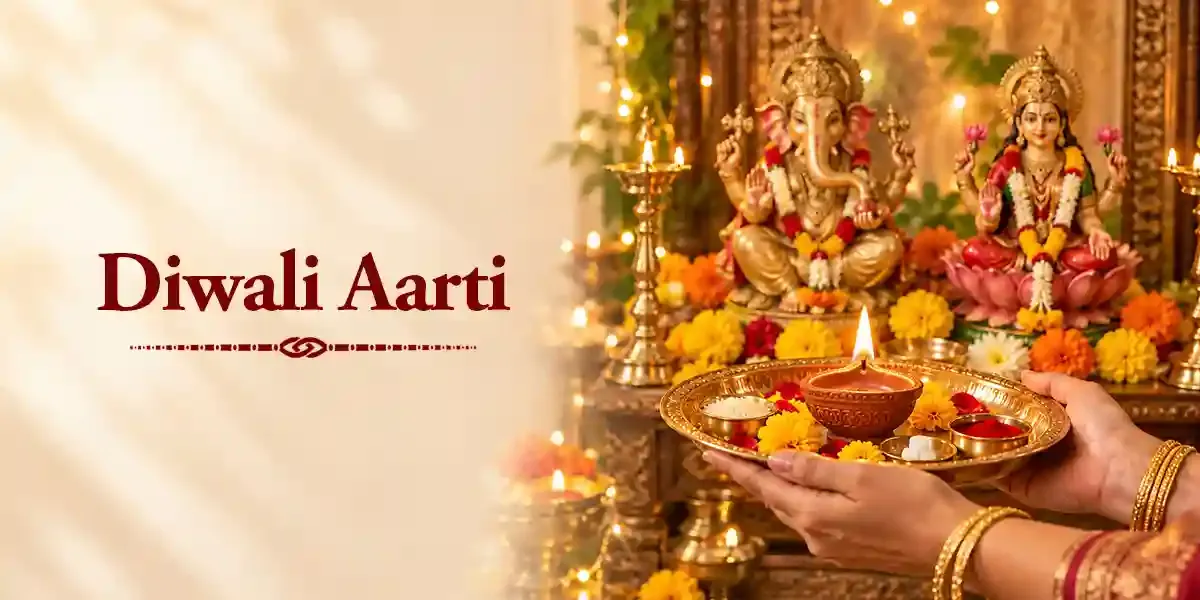
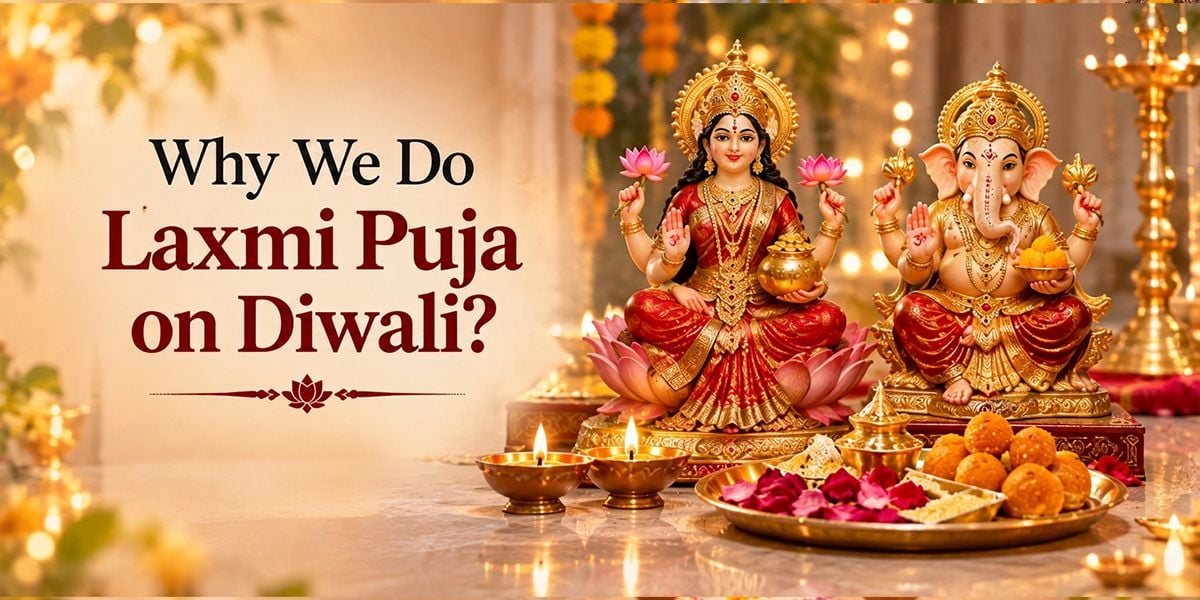
Laxmi Puja is done on Diwali because Kartik Amavasya is believed to be the night when Goddess Lakshmi visits clean, brightly lit homes. She blesses households with wealth, prosperity, and good fortune. Diyas are lit, entrances are kept welcoming, and Goddess Lakshmi is worshipped along with Lord Ganesha.
Various Reasons Why Laxmi Puja is Performed on Diwali
Several traditional stories explain why Goddess Lakshmi is worshipped on this night.
Samudra Manthan
The Devas and Asuras churned the cosmic ocean to obtain amrita, the nectar of immortality. Goddess Lakshmi emerged from the ocean and chose Lord Vishnu as her consort.
Many traditions link her emergence with Kartik Amavasya. This makes Diwali an especially auspicious night to worship her.
Goddess Lakshmi's Return and Marriage to Lord Vishnu
Some traditions say Goddess Lakshmi left the world after Lord Indra's arrogance, and prosperity faded with her. She was later reborn from a lotus, and abundance returned.
Other traditions connect the marriage of Goddess Lakshmi and Lord Vishnu with Diwali night. These are traditional beliefs, and accounts vary across regions.
Lord Rama's Return to Ayodhya
Lord Rama returned to Ayodhya after defeating Ravana and completing 14 years of exile. The people of Ayodhya lit rows of diyas to welcome him home.
This story adds to Diwali's message of light, righteousness, and new beginnings. The name Deepavali means a row of lights.
Lord Krishna and Narakasura
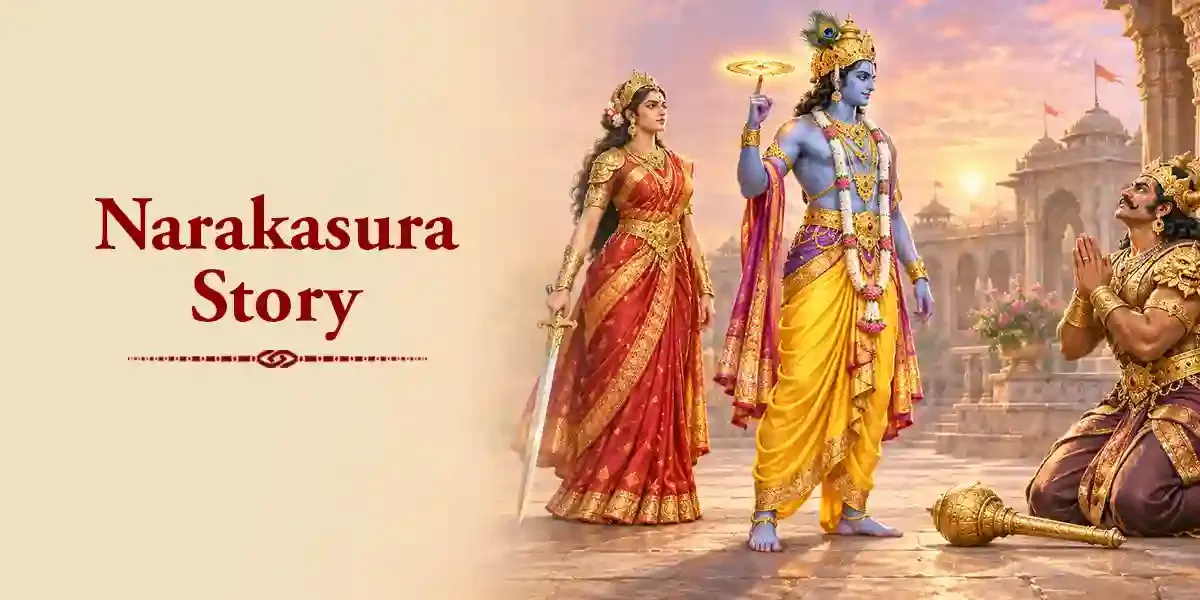
In several South Indian traditions, Diwali marks Lord Krishna's victory over the demon Narakasura. This highlights the theme of freedom from evil and negativity.
Why Diwali Night Is Considered Auspicious
Timing plays a big part in Laxmi Puja. Several factors make Diwali night special.
- Kartik Amavasya: It marks the start of a new lunar cycle.
- Darkness: The new moon sky makes the glow of diyas more meaningful.
- Pradosh Kaal: This evening period after sunset is considered ideal for worshipping Goddess Lakshmi.
- Vrishabha Kaal (Sthir Lagna): It is often preferred because "sthir" means stable, which symbolizes lasting prosperity.
Why Are Diyas Lit for Goddess Lakshmi?
Diwali arrives on the darkest night of the lunar month. Diyas stand for hope, divine light, and the removal of negativity.
Lamps placed at entrances, windows, and balconies are believed to guide Goddess Lakshmi into the home. They also show that the household is ready to receive prosperity.
Why Is Lord Ganesha Worshipped with Goddess Lakshmi?
Lord Ganesha is the remover of obstacles and the deity of auspicious beginnings. He is invoked first so that the puja goes smoothly.
Goddess Lakshmi is then invoked for prosperity and fulfillment. Together, they represent an obstacle-free start and lasting abundance.
Why Businesses Worship Goddess Lakshmi on Diwali
Many trading communities treat Diwali as the financial New Year. Old ledgers are closed, and new account books are opened.
Goddess Lakshmi is worshipped for honest growth, stability, and prosperity. This ritual, called Chopda Pujan, is especially important among Gujarati, Marwari, and Maharashtrian business families.
Regional Traditions
Diwali is celebrated in different ways across India.
- North India: Lord Rama's return, worship of Lord Ganesha and Goddess Lakshmi, and widespread diyas.
- Gujarat and Maharashtra: Chopda Pujan and the opening of new account books.
- Bengal: Goddess Kali is worshipped on Diwali night. Kojagori Lakshmi Puja is observed separately on Ashwin Purnima.
- South India: The story of Lord Krishna and Narakasura, early morning rituals, and community-specific worship of Goddess Lakshmi.
- Jain and Sikh traditions: Diwali is observed for distinct spiritual and historical reasons.
Planning your regional Diwali rituals or Chopda Pujan? Consult with a verified astrologer from Astroyogi to understand how your local family traditions align with Vedic timings this year.
Laxmi Puja 2026 Date and Muhurat
Diwali in 2026 falls on Sunday, November 8. The table below lists the key timings.
| Detail | 2026 Timing |
|---|---|
| Diwali Date | Sunday, November 8, 2026 |
| Lakshmi Puja Muhurat | 6:09 PM to 8:07 PM |
| Duration | 1 hour 58 minutes |
| Pradosh Kaal | 5:45 PM to 8:19 PM |
| Vrishabha Kaal | 6:09 PM to 8:07 PM |
| Amavasya Tithi | 11:27 AM, Nov 8 to 12:31 PM, Nov 9 |
Timings can differ by city, so it is best to check the local panchang before the puja.
FAQs
Why is Laxmi Puja done on Diwali?
Diwali falls on Kartik Amavasya, the night traditionally associated with the visit of Goddess Lakshmi. Clean, lit homes are believed to welcome her blessings of prosperity and good fortune.Why is Goddess Lakshmi worshipped on Amavasya?
The new moon night is believed to be when Goddess Lakshmi moves through the world. Its darkness also makes the light of diyas more meaningful.Why are diyas lit for Goddess Lakshmi?
Diyas symbolize the removal of darkness, ignorance, and negativity. They are also believed to guide Goddess Lakshmi to a welcoming home.Why is Lord Ganesha worshipped before Goddess Lakshmi?
Lord Ganesha removes obstacles and blesses new beginnings. Invoking him first helps the puja proceed smoothly.Is Laxmi Puja only for wealth?
No. It also stands for health, family harmony, wisdom, courage, and spiritual well-being.What is Chopda Pujan?
It is the worship of new account books during Diwali, especially among Gujarati, Marwari, and Maharashtrian trading communities. It seeks blessings for financial stability in the new year.Why do businesses worship Goddess Lakshmi on Diwali?
Diwali marks the financial New Year for many traders. Worship begins the new accounting year with gratitude and a prayer for honest growth.
Team Astroyogi is an experienced in-house editorial team of passionate writers, researchers, and astrology enthusiasts dedicated to making ancient divination sciences more accessible and meaningful in everyday life. With years of collective experience in creating insightful astrology and spirituality content, the team specializes in simplifying complex spiritual concepts into practical guidance for readers seeking clarity, balance, and personal growth. The Astroyogi editorial team possesses expertise across a wide range of subjects, including Indian Astrology, Vedic Astrology, Planetary Transits, Horoscope Analysis, Vastu Shastra, Numerology, Tarot, Spiritual Wellness, and Ritual Practices. Every piece of content is carefully researched, fact-checked, and crafted with the intention of offering reliable, insightful, and easy-to-understand guidance rooted in traditional wisdom. Driven by a commitment to authenticity and reader trust, Team Astroyogi strives to create content that empowers individuals to navigate life’s opportunities and challenges with confidence, positivity, and inner peace. Their mission is to bridge ancient astrological knowledge with modern-day relevance, helping readers make informed decisions and lead more harmonious lives.