

Dhanteras Puja Samagri List: Items Required for Puja at Home
Dhanteras is an auspicious occasion to worship Goddess Lakshmi, Lord Ganesha, Lord Kuber, and Lord Dhanvantari. On this day, families clean and decorate their homes, light diyas, buy new utensils and precious metals like silver and gold. Furthermore, perform puja to seek blessings for their health, happiness, and prosperity.
Preparing the puja items in advance makes the celebrations more organized and allows you to perform the rituals without last-minute hassles. Whether you are performing the puja for the first time or following your family's traditional rituals, having a complete Dhanteras Puja Samagri List can be helpful.
Dhanteras Puja Samagri List
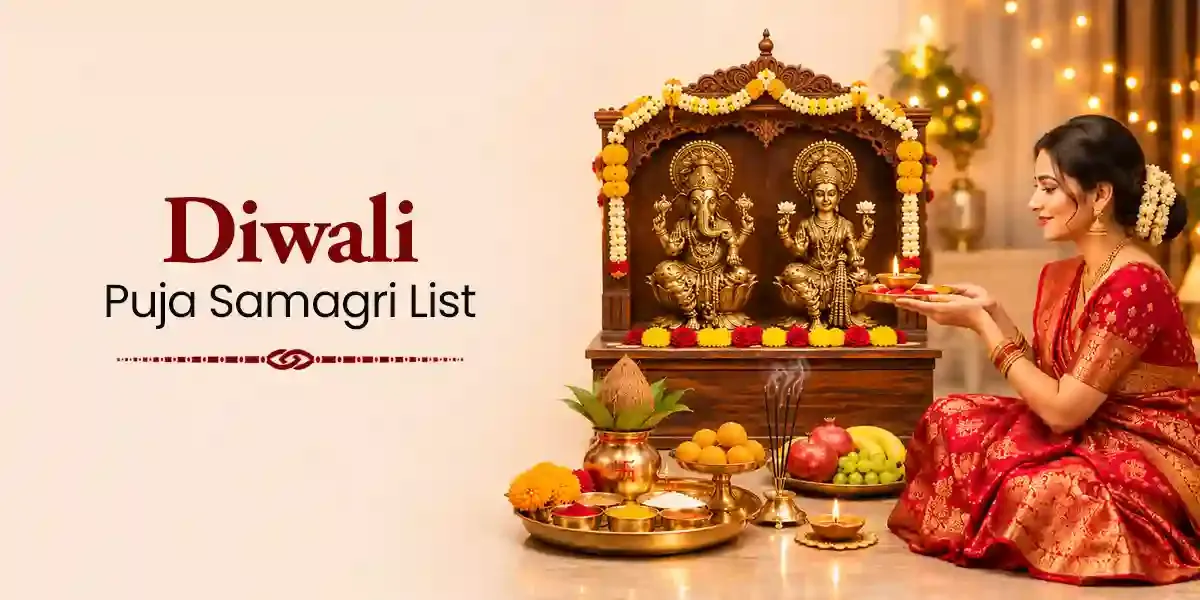
Before beginning the puja, arrange all the required items in one place. Here is a list of commonly used Dhanteras puja samagri along with their purpose:
| Puja Samagri | Significance and Use |
|---|---|
| Idols or pictures of Goddess Lakshmi and Lord Ganesha | Worshipped for wealth, prosperity, wisdom, and the removal of obstacles. |
| Picture or idol of Lord Kuber | Kept in the puja area to seek blessings for wealth and financial stability. |
| Picture or idol of Lord Dhanvantari | Worshipped for good health, healing, and well-being. |
| Roli and Kumkum | Used for applying tilak to the deities and during puja rituals. |
| Akshat (uncooked rice) | Offered to the deities as a symbol of auspiciousness and devotion. |
| Haldi (turmeric powder) | Used in traditional rituals and considered a symbol of purity and prosperity. |
| Chandan (sandalwood paste) | Applied as tilak to the deities as a mark of respect and devotion. |
| Fresh flowers and garlands | Offered to the deities and used to decorate the puja area. |
| Lotus and marigold flowers | Traditionally offered to Goddess Lakshmi as symbols of purity and auspiciousness. |
| Diya (earthen lamps) | Lit to welcome positivity and symbolically remove darkness. |
| Cotton wicks (Batti) | Used along with oil or ghee to light the diyas. |
| Ghee or mustard oil | Used as fuel for lighting lamps during the puja. |
| Incense sticks (Agarbatti) and Dhoop | Used to create a fragrant and peaceful atmosphere during worship. |
| Fruits and sweets for Bhog | Offered to the deities as prasad and later distributed among family members. |
| Panchamrit | A traditional mixture of milk, curd, ghee, honey, and sugar offered during puja. |
| Betel leaves (Paan) and Supari | Used as traditional offerings in Hindu worship. |
| Coconut (Nariyal) | Offered as a symbol of purity, devotion, and auspicious beginnings. |
| Kalash and clean water | Used for Kalash Sthapana as a symbol of abundance and auspiciousness. |
| Gangajal | Used for purification and other religious rituals. |
| Moli (sacred red thread) | Used during puja ceremonies as a sacred thread. |
| Coins and currency notes | Placed before the deities to seek blessings for financial prosperity. |
| New utensils or silver coins | Traditionally purchased on Dhanteras and worshipped as symbols of good fortune. |
| Panchpatra and spoon | Used to hold and offer water during puja rituals. |
| Aarti thali and bell (Ghanti) | Used while performing aarti to conclude the worship. |
| Red or yellow cloth | Used to cover the puja chowki and place the idols. |
| Rangoli colors | Used to decorate the entrance and puja area to welcome the festive occasion. |
Also read: Diwali Puja Samagri List
Dhanteras Puja Vidhi: How to Perform the Puja at Home
Once you have arranged your Dhanteras puja samagri, follow these simple steps to perform the puja at home.
Step 1: Clean and Decorate Your Home
Clean your home, especially the entrance and puja area. Decorate the entrance with rangoli, flowers, and diyas to welcome prosperity.
Step 2: Prepare the Puja Chowki
Place a clean red or yellow cloth over a wooden chowki. Arrange the idols or pictures of Goddess Lakshmi, Lord Ganesha, and Lord Kuber.
Step 3: Perform Kalash Sthapana
Fill a kalash with clean water, add a few drops of Gangajal, and place mango leaves and a coconut over it, following your family tradition.
Step 4: Offer Puja Samagri
Apply tilak to the deities and offer flowers, akshat, fruits, sweets, and other traditional offerings.
Step 5: Worship Goddess Lakshmi and Lord Kuber
Offer prayers to Goddess Lakshmi and Lord Kuber. Seek their blessings for prosperity, financial stability, and happiness.
Step 6: Perform Aarti
Light the diya, ring the bell, and perform the aarti of the deities. Distribute the prasad among family members.
Step 7: Perform Yamadeepdaan
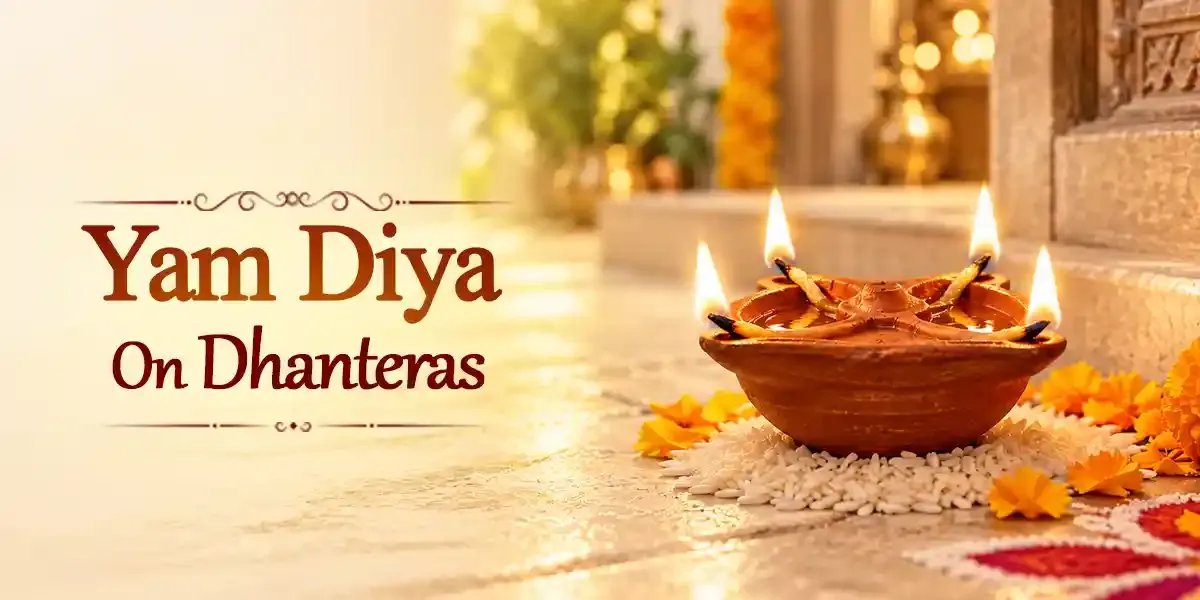
In the evening, light an earthen diya as part of the Yamadeepdaan tradition and offer prayers for the well-being of your family.
Also read: Dhanteras Puja Vidhi
Tips to Prepare Your Dhanteras Puja Samagri in Advance
A little preparation can make your Dhanteras celebrations more enjoyable. Keep these simple tips in mind:
- Prepare your Dhanteras puja samagri list a day before the festival.
- Purchase fresh flowers, fruits, and sweets on the day of puja.
- Keep separate plates for offerings and puja essentials.
- Check your diyas, cotton wicks, and oil beforehand.
- Keep the idols and puja area clean.
- Follow your family's traditional rituals and local customs.
- Check the local Dhanteras puja muhurat before beginning the rituals.
Final Words
Dhanteras is an occasion to welcome the Diwali festivities with prayers, positivity, and family traditions. Keeping your Dhanteras Puja Samagri List ready in advance helps you prepare for the rituals without any last-minute rush. From lighting diyas and offering flowers to worshipping Goddess Lakshmi and Lord Kuber, every ritual reflects the hope for health, happiness, and prosperity. Celebrate the occasion with devotion and make the festivities special with your loved ones.
Talk to Astrologers
View All


Team Astroyogi is an experienced in-house editorial team of passionate writers, researchers, and astrology enthusiasts dedicated to making ancient divination sciences more accessible and meaningful in everyday life. With years of collective experience in creating insightful astrology and spirituality content, the team specializes in simplifying complex spiritual concepts into practical guidance for readers seeking clarity, balance, and personal growth. The Astroyogi editorial team possesses expertise across a wide range of subjects, including Indian Astrology, Vedic Astrology, Planetary Transits, Horoscope Analysis, Vastu Shastra, Numerology, Tarot, Spiritual Wellness, and Ritual Practices. Every piece of content is carefully researched, fact-checked, and crafted with the intention of offering reliable, insightful, and easy-to-understand guidance rooted in traditional wisdom. Driven by a commitment to authenticity and reader trust, Team Astroyogi strives to create content that empowers individuals to navigate life’s opportunities and challenges with confidence, positivity, and inner peace. Their mission is to bridge ancient astrological knowledge with modern-day relevance, helping readers make informed decisions and lead more harmonious lives.