

Diwali Puja Samagri List: Essential Items, Their Significance and Uses
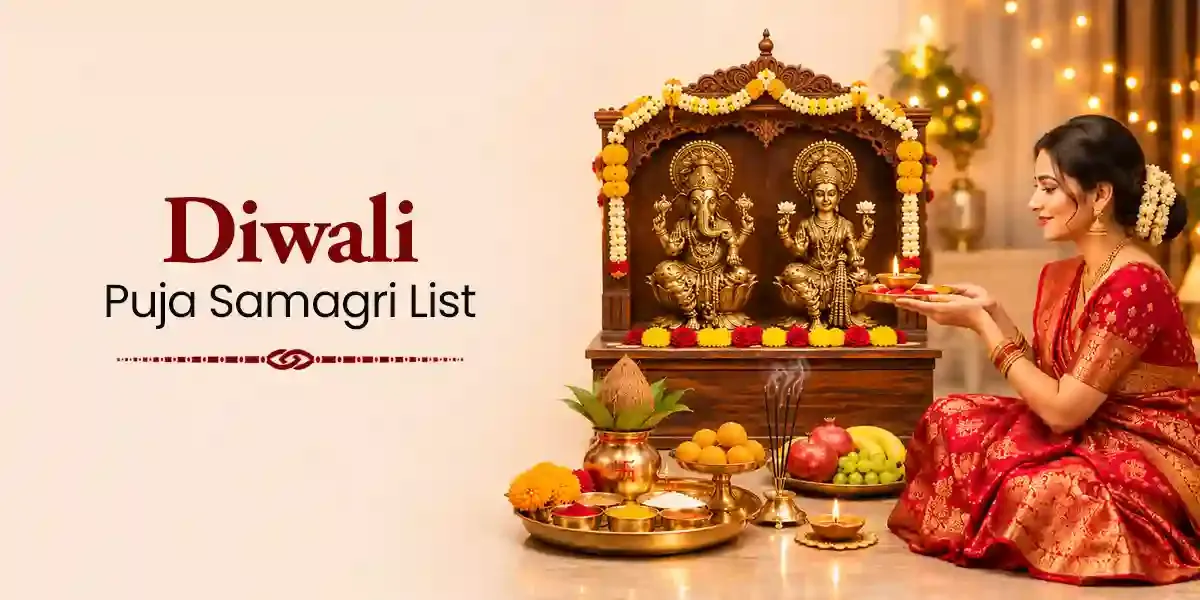
On Diwali night, the new moon night of Kartik, thousands of diyas light up homes across India. At the center of the celebration is the puja thali, a carefully arranged plate holding the Diwali puja samagri.
Gathering the right Diwali Laxmi puja samagri is the first step of the puja for Goddess Lakshmi and Lord Ganesha. The ritual is performed to invite prosperity, remove obstacles, and celebrate the victory of good over evil.
The list below is flexible. Family tradition, region, and personal circumstances matter more than buying an elaborate kit.
Quick Diwali Puja Samagri List
This short list gives a brief answer before the detailed explanations.
- Puja thali
- Idols or images of Goddess Lakshmi and Lord Ganesha
- Clean chowki and red cloth
- Kalash with water, mango leaves, and coconut
- Diyas, cotton wicks, and ghee or mustard oil
- Matchbox or lighter
- Kumkum or roli
- Haldi
- Chandan or sandalwood paste
- Akshat or unbroken rice
- Fresh flowers and garlands
- Incense sticks or dhoop
- Camphor
- Bell
- Sweets, dry fruits, and fruit for bhog
- Clean coins or currency notes
- Small bowls of water
- Tulsi leaves, if available
- Rangoli colors or flower petals
- Prasad thali or bowls
Minimum samagri for a simple Lakshmi Puja: Images of Goddess Lakshmi and Lord Ganesha, two diyas with oil or ghee and wicks, kumkum, haldi, rice, fresh flowers, incense, a bell, sweets, fruit, and a coin. This basic list suits students, renters, travelers, and first-time celebrants.
To find the most auspicious mahurat for this sacred ritual, talk to an astrologer on Astroyogi today and get personalized guidance
Diwali Puja Items List: What Is Needed
Most Diwali puja samagri can be found at home. Grouping the items by purpose makes preparation easier.
- Deity and altar items: Idols of Goddess Lakshmi and Lord Ganesha, chowki, red cloth, kalash
- Light and fragrance: Diyas, wicks, oil or ghee, incense, dhoop, camphor
- Tilak and sacred offerings: Kumkum, haldi, chandan, akshat, water
- Bhog and prosperity items: Sweets, dry fruits, fruit, coins, currency
- Decoration: Rangoli colors, flowers, garlands, petals
A simple, sincere puja is fully valid. Grandeur is not the goal.
Diwali Puja Samagri List: 10 Essential Items and Their Meanings
Each item on the puja thali carries its own significance. Together, the items welcome prosperity, health, and positive energy into the home.
1. Diyas: The Light That Welcomes Goddess Lakshmi
Diyas symbolize the victory of light over darkness and the removal of ignorance. They illuminate the puja area, the entrance, and the rest of the home.
Two to five small clay diyas are typically used for the puja, with more placed around the house if desired. They are filled with mustard oil or ghee and fitted with cotton wicks.
One diya should be kept ready for aarti. The main diya is lit at the start of the puja and kept burning safely throughout the ritual.
Substitute: Brass or steel diyas work in place of clay diyas. LED diyas can be used for decoration, but a real flame is traditionally preferred for aarti.
2. Kalash: A Symbol of Abundance and Divine Presence
The kalash represents abundance, nourishment, and divine presence. It is filled with clean water, and mango leaves are placed around the rim.
A coconut rests on top. A red cloth, mauli, or sacred thread may be tied around it if the family tradition includes one.
The kalash is placed in the center of the thali or beside the deities, depending on custom.
Substitute: A small, clean steel or copper bowl can be used when a traditional kalash is unavailable.
3. Rangoli Colors: Decorating the Sacred Space
Rangoli is drawn to welcome guests, deities, and positive energy. Traditional colors include red, yellow, orange, and white.
Powders, flower petals, rice flour, turmeric, or a mix of these can be used. A simple design near the entrance and around the puja area is enough.
Footprint motifs of Goddess Lakshmi, often called Lakshmi Charan, are drawn leading into the home. They symbolize the Goddess entering the house.
Substitute: Flower petals, rice flour, turmeric, or a simple chalk design.
4. Flowers and Garlands: Offerings of Purity and Devotion
Fresh flowers represent purity, devotion, beauty, and auspiciousness. Popular choices include marigold, rose, jasmine, mogra, and lotus.
A small garland is prepared for the deities, and loose petals are kept in a bowl for offering. Lotus is especially associated with Goddess Lakshmi, though any fresh seasonal flower is acceptable.
Substitute: Any clean, fresh seasonal flowers. Artificial flowers may be used for decoration, but fresh flowers are preferred for offerings.
5. Incense Sticks and Dhoop: Purifying the Atmosphere
Incense creates a calm, sacred atmosphere and is offered during the puja. Popular fragrances include sandalwood, jasmine, rose, mogra, and lavender.
Incense sticks are kept in a holder on or beside the thali. Dhoop or loban can be used instead of agarbatti.
Incense is lit after the diya and before or during the offering of flowers and bhog.
Safety note: Keep incense away from curtains, children, pets, and loose decorations.
6. Sweets and Dry Fruits: Bhog for the Deities
Sweets and dry fruits are offered as bhog and later distributed as prasad. Common choices include laddu, barfi, kheer, peda, almonds, cashews, dates, and raisins.
Fresh, clean items arranged in small portions look best. Stale, broken, or unwrapped food should be avoided.
After the puja, the prasad is shared with family members, neighbors, or guests.
Substitute: Fresh fruit or homemade sweets.
7. Coins and Currency: Inviting Prosperity and Gratitude
Coins and currency notes symbolize wealth, prosperity, and gratitude. Clean coins, a silver coin, or fresh notes are placed respectfully near the deities or on the thali.
Some families also place account books, pens, or business ledgers before the deities during Chopda Puja.
The emphasis is on respectful intention, not the amount of money.
8. Kumkum, Roli, Haldi, and Chandan: Tilak and Blessings
Kumkum or roli is used for tilak. Haldi is linked with purification and auspiciousness. Chandan, or sandalwood paste, carries a cooling and sacred significance.
Tilak is applied to the deities, the kalash, and family members. Each item is best kept in its own small bowl or leaf cup.
Mixing roli and haldi directly on the thali can stain it or create clutter, so small containers are a tidier choice.
9. Akshat: Unbroken Rice for Abundance and Completeness
Akshat refers to unbroken rice grains. It symbolizes fertility, abundance, wholeness, and prosperity.
Clean, unbroken white rice is sprinkled during prayers and mantras. It is also offered to the deities along with flowers and other sacred items.
A small bowl on the thali keeps it within easy reach.
10. Water: Purification and Sacred Offering
Water is used for purification and offerings. Clean water is kept in small copper, brass, or steel bowls.
A few tulsi leaves can be added, as tulsi is considered sacred in many Hindu traditions.
Depending on family custom, the water may be used for achamana, sprinkled around the puja area, or offered to the deities.
Additional Items That May Be Needed
Several useful items are often missing from basic lists.
- Idols or images: Lord Ganesha is worshipped first to remove obstacles, and Goddess Lakshmi is worshipped for prosperity.
- Chowki: A clean wooden or metal platform for placing the deities.
- Red cloth or puja aasan: Covers the chowki and creates a sacred base.
- Camphor: Used for aarti and purification. It should stay away from flammable decorations.
- Bell: Rung during aarti and prayers.
- Panchamrit ingredients: Milk, curd, honey, ghee, and sugar, for families that offer panchamrit.
- Supari and paan leaves: Traditional offerings in many households.
- Matchbox or lighter: Often forgotten, but essential for lighting diyas and incense.
- Small bowls and spoons: For kumkum, haldi, chandan, rice, water, and bhog.
- Tray or plate liner: Protects the thali from oil, color, and glitter stains.
How to Arrange a Diwali Puja Thali in 6 Steps
Arrangements vary by regional and family customs, so these steps can be adapted to the tradition followed at home.
Step 1: Choose and Clean the Thali
Select a brass, silver, steel, or decorated thali. Wash and dry it thoroughly, then polish metal thalis until they shine.
A tray liner or banana leaf underneath protects the surface from oil and color stains.
Step 2: Set Up the Deities
Place the idols or images of Goddess Lakshmi and Lord Ganesha on a separate, clean chowki. Cover the chowki with a clean red cloth or puja aasan.
The deities are positioned to face the person performing the puja. The thali stays nearby but should not be overcrowded.
Step 3: Place the Kalash
Put the kalash in the center of the thali or beside the idols, following the family custom.
The coconut and mango leaves should sit securely. Keeping the kalash away from the thali's edge prevents spills.
Step 4: Arrange the Diyas and Lights
Place diyas in a semicircle around the thali or puja area. Extra wicks, oil or ghee, and matches stay close by.
The surface must be stable and heat-resistant. Flames should be kept away from curtains, rangoli powder, flowers, and loose decorations.
Step 5: Add Tilak, Rice, and Water
Arrange small bowls of kumkum, haldi, chandan, and akshat. Place water bowls nearby, with the bell and incense holder within easy reach.
Powders should not be placed where oil or flames may spill.
Step 6: Add Bhog, Coins, and Finishing Touches
Arrange sweets, dry fruits, and flowers in small, elegant portions rather than large piles. Place coins or currency respectfully.
Camphor is added only when it is time for aarti. A final safety check comes before any flame is lit.
Easy Substitutes for Diwali Puja Samagri
A missing item should never stop the puja. The table below lists practical substitutes for commonly unavailable items.
| Missing Item | Easy Substitute |
|---|---|
| Traditional kalash | Clean steel or copper bowl |
| Lotus flowers | Marigold, rose, jasmine, or any fresh seasonal flowers |
| Chandan paste | Sandalwood powder mixed with a little water |
| Ghee | Mustard oil or another clean cooking oil for diyas |
| Camphor | A lit diya for Aarti, used carefully |
| Clay diyas | Brass or steel lamps |
| Fresh flowers | Tulsi leaves, banana leaf, or clean flower petals |
| Silver coin | A clean currency note or any coin kept respectfully |
| Panchamrit | Clean water or a simple sweet offering |
| Puja kit | Basic household items and a sincere prayer |
A simple puja performed with devotion is more meaningful than an elaborate arrangement performed in a hurry.
Common Mistakes to Avoid
- Shopping for everything at the last minute
- Forgetting small but essential items such as wicks, matchboxes, oil, camphor, or a coin
- Buying fresh flowers too early, so they wilt before the puja
- Using chipped, dirty, or broken bowls, diyas, or thalis
- Offering stale sweets or unwashed fruit
- Overbuying large puja kits with unnecessary items
- Placing flammable decorations too close to flames
- Leaving diyas, incense, or camphor unattended
- Treating the puja as a display rather than an act of devotion
Conclusion
Diwali puja samagri is more than a collection of items. It is an expression of faith, gratitude, and connection to tradition. A polished thali, fragrant flowers, glowing diyas, and carefully arranged offerings make the ritual beautiful, but the heart of the puja is sincerity.
A full traditional setup or a few simple kitchen items can both serve well. What matters most is a clean space, a peaceful mind, and a heartfelt welcome for Goddess Lakshmi and Lord Ganesha.
Talk to Astrologers
View All



Team Astroyogi is an experienced in-house editorial team of passionate writers, researchers, and astrology enthusiasts dedicated to making ancient divination sciences more accessible and meaningful in everyday life. With years of collective experience in creating insightful astrology and spirituality content, the team specializes in simplifying complex spiritual concepts into practical guidance for readers seeking clarity, balance, and personal growth. The Astroyogi editorial team possesses expertise across a wide range of subjects, including Indian Astrology, Vedic Astrology, Planetary Transits, Horoscope Analysis, Vastu Shastra, Numerology, Tarot, Spiritual Wellness, and Ritual Practices. Every piece of content is carefully researched, fact-checked, and crafted with the intention of offering reliable, insightful, and easy-to-understand guidance rooted in traditional wisdom. Driven by a commitment to authenticity and reader trust, Team Astroyogi strives to create content that empowers individuals to navigate life’s opportunities and challenges with confidence, positivity, and inner peace. Their mission is to bridge ancient astrological knowledge with modern-day relevance, helping readers make informed decisions and lead more harmonious lives.