

How Many Diyas to Light on Choti Diwali? Significance and Traditions
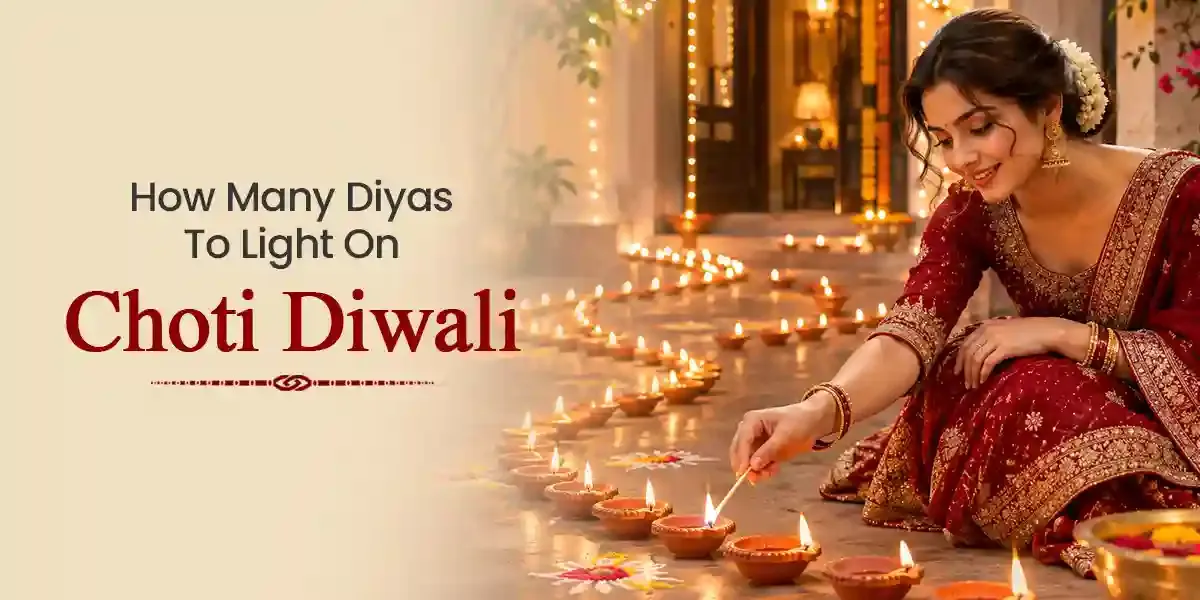
Choti Diwali, which is also known as Naraka Chaturdashi, is celebrated a day before the main Diwali. We all know lighting diyas is an important part of Diwali celebration, symbolizing the victory of light over darkness and good over evil.
However, many people are still confused about how many diyas they should light on Choti Diwali. While it is recommended in some traditions to light 14 diyas, the number varies across regions and families.
Moreover, understanding the significance of this custom can help you celebrate Choti Diwali with devotion and follow the traditions that are meaningful to your household.
Why Are 14 Diyas Lit on Choti Diwali?
The tradition of lighting 14 diyas on Choti Diwali is associated with different regional beliefs and customs. In some households, these lamps are lit to honor traditional beliefs related to protection, peace, and well-being.
Naraka Chaturdashi is also associated with the legend of Lord Krishna's victory over the demon Narakasura. This victory represents the triumph of good over evil and the restoration of peace. Lighting diyas during the festival reflects this broader symbolism of light overcoming darkness.
The number 14 is also significant in certain Hindu traditions involving the fourteen worlds described in Hindu cosmology. However, the explanation for lighting 14 diyas can differ across communities, and the practice is not universal.
How Many Diyas Can You Light According to Your Preference?
If you are unsure how many diyas to light, you can choose a number that suits your home, your family's customs, and your festive decorations.
| Number of Diyas | Significance |
|---|---|
| 1 Diya | Symbolizes light, hope, and the beginning of a prayer or spiritual observance. |
| 5 Diyas | Represent the five elements of nature: earth, water, fire, air, and space. |
| 11 Diyas | Often associated with auspiciousness and devotion; some families light them as part of their festive traditions. |
| 14 Diyas | Associated with Naraka Chaturdashi traditions in some Hindu households, symbolising protection and well-being. |
Where Should You Place Diyas on Choti Diwali?
Often, the next confusion is where to place the diyas in your house. But it depends on your family's customs, the rituals you observe, and the space available.
1. Main Entrance
Lighting diyas near the main entrance is a common Diwali tradition. The warm glow of the lamps creates a welcoming atmosphere and symbolizes the hope of inviting auspiciousness and happiness into the home.
2. Home Temple or Puja Room
You can light a diya in your home temple or puja room while offering prayers. Many families include diya lighting as part of their daily worship during the Diwali period.
3. Near the Tulsi Plant
In households where Tulsi worship is customary, a diya may be placed near the Tulsi plant. This practice is associated with devotion and auspiciousness in Hindu traditions.
4. Courtyard, Balcony, or Windowsills
You can place diyas in your courtyard, balcony, or on suitable windowsills to illuminate your home. Ensure that every lamp rests on a stable, heat-resistant surface and is kept away from curtains and other flammable materials.
How to Light Diyas on Choti Diwali: Simple Puja Vidhi
You can follow these simple steps to include diya lighting in your Choti Diwali celebrations.
- Clean the space where you plan to place the diyas and prepare your home for the festival.
- Arrange clean earthen or other suitable lamps with cotton wicks.
- Fill the diyas with the oil or ghee traditionally used in your household.
- Place the diyas in your home temple, near the entrance, or in other appropriate locations according to your family's customs.
- Pray according to your household's traditions and express gratitude for peace, happiness, and well-being.
- Light the lamps carefully and ensure that they remain on stable surfaces away from flammable materials.
Final Words
Lighting diyas is a cherished part of Choti Diwali, representing hope, positivity, and the victory of good over evil. While 14 diyas are traditionally lit in some households, there is no single number that everyone must follow. Choose the practice that aligns with your family's customs, offer your prayers with devotion, and celebrate the festival safely with your loved ones.
Talk to Astrologers
View All




Team Astroyogi is an experienced in-house editorial team of passionate writers, researchers, and astrology enthusiasts dedicated to making ancient divination sciences more accessible and meaningful in everyday life. With years of collective experience in creating insightful astrology and spirituality content, the team specializes in simplifying complex spiritual concepts into practical guidance for readers seeking clarity, balance, and personal growth. The Astroyogi editorial team possesses expertise across a wide range of subjects, including Indian Astrology, Vedic Astrology, Planetary Transits, Horoscope Analysis, Vastu Shastra, Numerology, Tarot, Spiritual Wellness, and Ritual Practices. Every piece of content is carefully researched, fact-checked, and crafted with the intention of offering reliable, insightful, and easy-to-understand guidance rooted in traditional wisdom. Driven by a commitment to authenticity and reader trust, Team Astroyogi strives to create content that empowers individuals to navigate life’s opportunities and challenges with confidence, positivity, and inner peace. Their mission is to bridge ancient astrological knowledge with modern-day relevance, helping readers make informed decisions and lead more harmonious lives.