

Why Is Dhanteras Celebrated? Know Its History, Stories and Significance
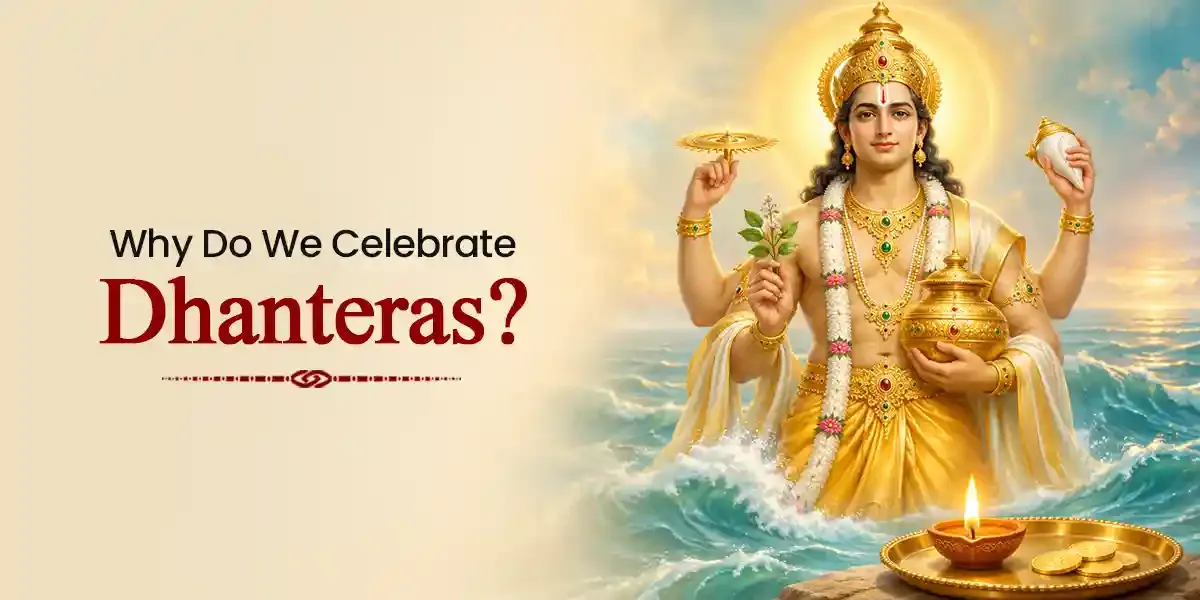
Dhanteras is celebrated to honor Lord Dhanvantari, the divine physician and source of Ayurveda, along with Goddess Lakshmi and Lord Kubera. It marks the beginning of Diwali and expresses prayers for good health, wealth, prosperity, and protection from untimely death.
The festival falls on the thirteenth lunar day, or Trayodashi, of the dark fortnight in the Hindu month of Kartik. Its name combines "dhan," meaning wealth, and "teras," meaning thirteenth.
The Main Reasons Dhanteras Is Celebrated
- To honor Lord Dhanvantari: He emerged from the cosmic ocean carrying the nectar of immortality and is revered as the god of health, medicine, and Ayurveda.
- To welcome Goddess Lakshmi: Devotees seek her blessings for wealth, abundance, harmony, and prosperity in the home.
- To worship Lord Kubera: He is honored as the guardian of wealth and the ideal of responsible prosperity.
- To light lamps for Lord Yama: The Yamadeepdaan tradition seeks protection from untimely death and blessings for a long life.
- To begin Diwali: Dhanteras opens the five-day festival and sets the theme of light, renewal, and abundance.
The Story Behind Dhanteras
There is not just one story behind Dhanteras. Three distinct legends explain why the day is observed, and each highlights a different blessing: health, wealth, and protection.
Lord Dhanvantari and the Churning of the Ocean
The gods and demons once churned the cosmic ocean, known as Samudra Manthan, to obtain amrita, the nectar of immortality.
During the churning, Lord Dhanvantari appeared holding a pot of this nectar. He is regarded as the physician of the gods and the divine source of Ayurveda.
This is why the day is also called Dhanvantari Trayodashi. It shows that health is considered the first form of wealth. Dhanteras celebrates healing and well-being, not only money.
Goddess Lakshmi's Emergence
Goddess Lakshmi is also believed to have risen from the ocean during the same churning. She represents wealth, fortune, auspiciousness, and prosperity.
Given the importance of this, homes are cleaned, decorated, and lit with lamps on Dhanteras. The aim is to create a welcoming space for Goddess Lakshmi and invite her blessings into the household.
Yamadeepdaan: The Story of the Prince and Lord Yama
A young prince was destined to die from a snakebite on the fourth night after his marriage.
His wife refused to let him sleep. She sang songs, told stories, and lit many lamps around the house. She also placed gold, silver, ornaments, and coins at the entrance.
When Lord Yama, the god of death, arrived disguised as a serpent, the bright light and shining metals blocked his way. He stayed outside, listened to the songs through the night, and left at dawn without taking the prince's life.
This story is the reason lamps are lit on Dhanteras to seek protection from untimely death and to pray for longevity.
Why Dhanteras Is Also Called Yamadeepdaan
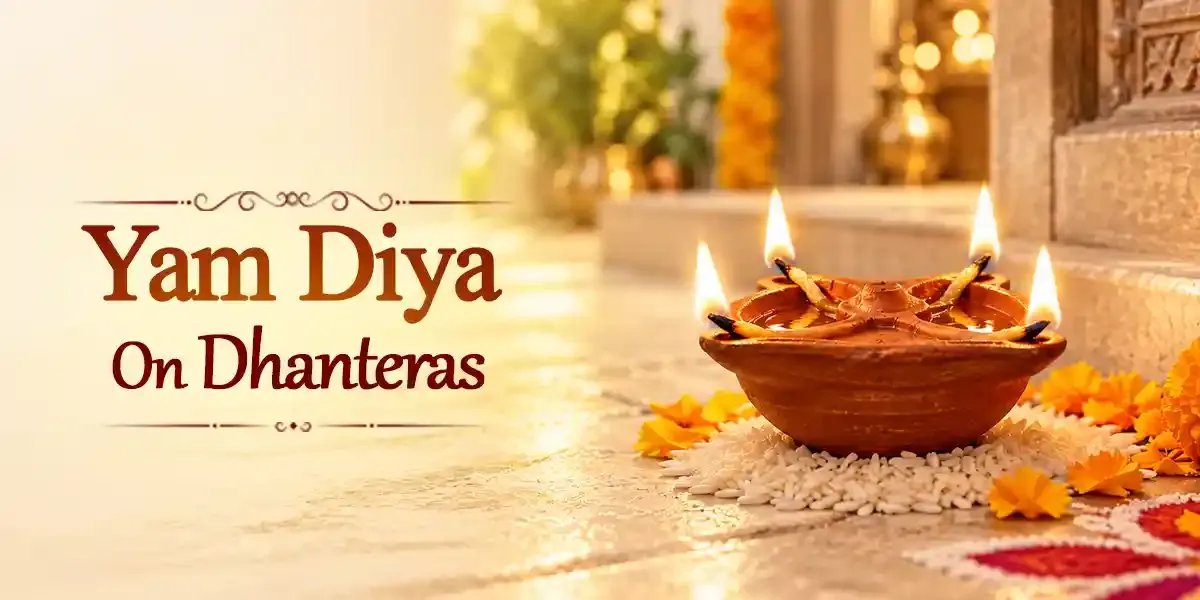
The word "Yama" refers to the god of death, and "deepdaan" means offering lamps. On this day, a lamp is lit outside the home, often facing south, as a symbolic offering to Lord Yama.
The practice expresses the hope for a long, safe, and healthy life for every member of the family.
Why Are Lord Dhanvantari, Goddess Lakshmi, Lord Kubera, and Lord Yama Worshipped?
During the festival of Dhanteras, devotees pray to multiple deities to seek holistic blessings for the year ahead. This table highlights what each deity represents and the core reasons they are revered.
| Deity | What They Represent | Why They Are Worshipped |
|---|---|---|
| Lord Dhanvantari | Health, medicine, Ayurveda | For good health, healing, and longevity |
| Goddess Lakshmi | Wealth, fortune, abundance | For prosperity and household well-being |
| Lord Kubera | Wealth and treasury | For financial stability and responsible prosperity |
| Lord Yama | Time and death | For protection from untimely death |
Why Do People Buy Gold and Utensils on Dhanteras?
Buying gold, silver, or utensils is among the best-known customs of the day. Several beliefs sit behind it:
- Gold and silver are seen as symbols of Goddess Lakshmi and lasting prosperity.
- Buying metal is believed to invite wealth and good fortune into the household.
- Utensils represent practical prosperity, nourishment, and abundance at home.
- New purchases are often kept aside for the Lakshmi Puja on Diwali night.
- The custom also connects to the Yamadeepdaan story, where precious metals helped protect the prince.
Buying gold or utensils is a symbolic way of welcoming prosperity, not merely a shopping tradition.
Why Are Lamps Lit on Dhanteras?
Lamps stand for light, awareness, hope, and protection. They are lit to welcome Goddess Lakshmi into a clean and well-lit home.
The Yamadeepdaan lamp is offered to Lord Yama for longevity and safety. Lighting diyas also begins the larger Diwali theme of light overcoming darkness.
Why Is Dhanteras Celebrated Before Diwali?
Dhanteras is the first day of the five-day Diwali festival. It prepares the home for the arrival of Goddess Lakshmi and sets the main themes of the season: health, wealth, light, and renewal.
The days that follow are Naraka Chaturdashi, Lakshmi Puja (Diwali), Govardhan Puja, and Bhai Dooj.
Dhanteras comes first because it prepares both the home and the mind for Diwali.
Why We Celebrate Dhanteras: The Deeper Meaning
- Health is the greatest wealth: The presence of Lord Dhanvantari places well-being at the center of the festival.
- Prosperity should be responsible: Lord Kubera represents wealth that is protected and used wisely.
- Life is precious: The story of Lord Yama is a reminder of the value of time, family, and longevity.
- Light removes fear: Lamps symbolize hope, awareness, and protection from darkness.
- True abundance is complete: Dhanteras brings together material prosperity, health, security, and gratitude.
For a deeper understanding of the spiritual significance of Dhanteras and how to align its rituals with your personal path, consider consulting with verified astrologers on Astroyogi.
Team Astroyogi is an experienced in-house editorial team of passionate writers, researchers, and astrology enthusiasts dedicated to making ancient divination sciences more accessible and meaningful in everyday life. With years of collective experience in creating insightful astrology and spirituality content, the team specializes in simplifying complex spiritual concepts into practical guidance for readers seeking clarity, balance, and personal growth. The Astroyogi editorial team possesses expertise across a wide range of subjects, including Indian Astrology, Vedic Astrology, Planetary Transits, Horoscope Analysis, Vastu Shastra, Numerology, Tarot, Spiritual Wellness, and Ritual Practices. Every piece of content is carefully researched, fact-checked, and crafted with the intention of offering reliable, insightful, and easy-to-understand guidance rooted in traditional wisdom. Driven by a commitment to authenticity and reader trust, Team Astroyogi strives to create content that empowers individuals to navigate life’s opportunities and challenges with confidence, positivity, and inner peace. Their mission is to bridge ancient astrological knowledge with modern-day relevance, helping readers make informed decisions and lead more harmonious lives.