
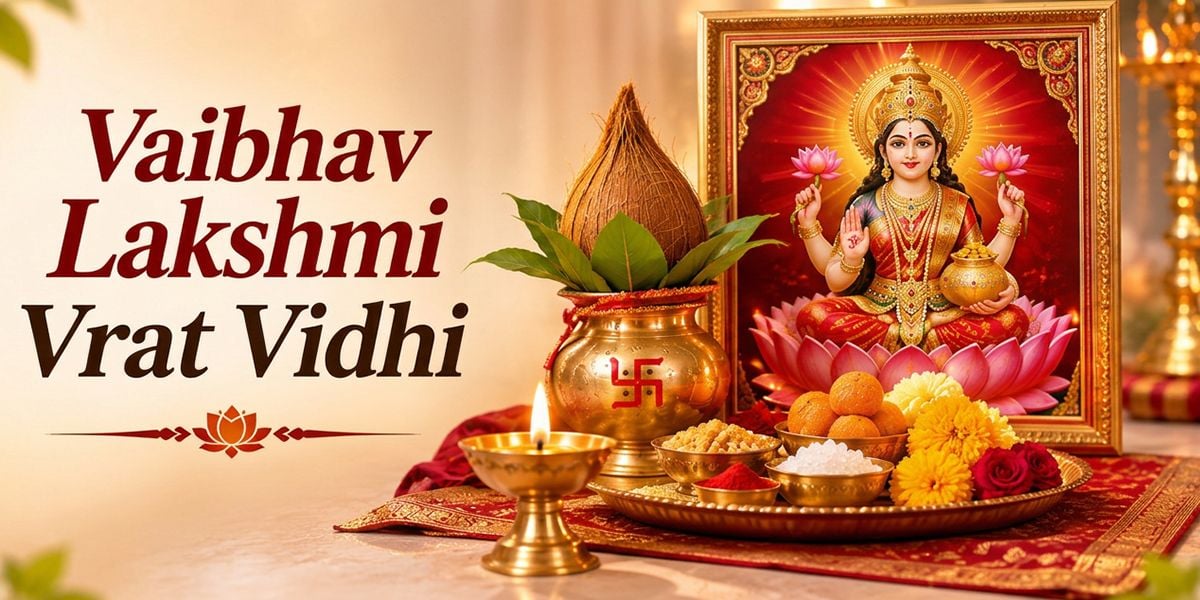

Vaibhav Lakshmi Vrat Vidhi: Samagri, Puja Steps, Katha, Mantra & Udyapan
Vaibhav Lakshmi Vrat is a Friday vrat dedicated to Goddess Lakshmi. It is observed for 11 or 21 Fridays with a fixed sankalp (resolve) for prosperity, marital harmony, relief from debt, or the fulfillment of a heartfelt wish.
"Vaibhav" means glory and abundance. In this vrat, Goddess Lakshmi is worshipped as Vaibhav Lakshmi or Dhana Lakshmi, the giver of wealth, peace at home, and lasting well-being.
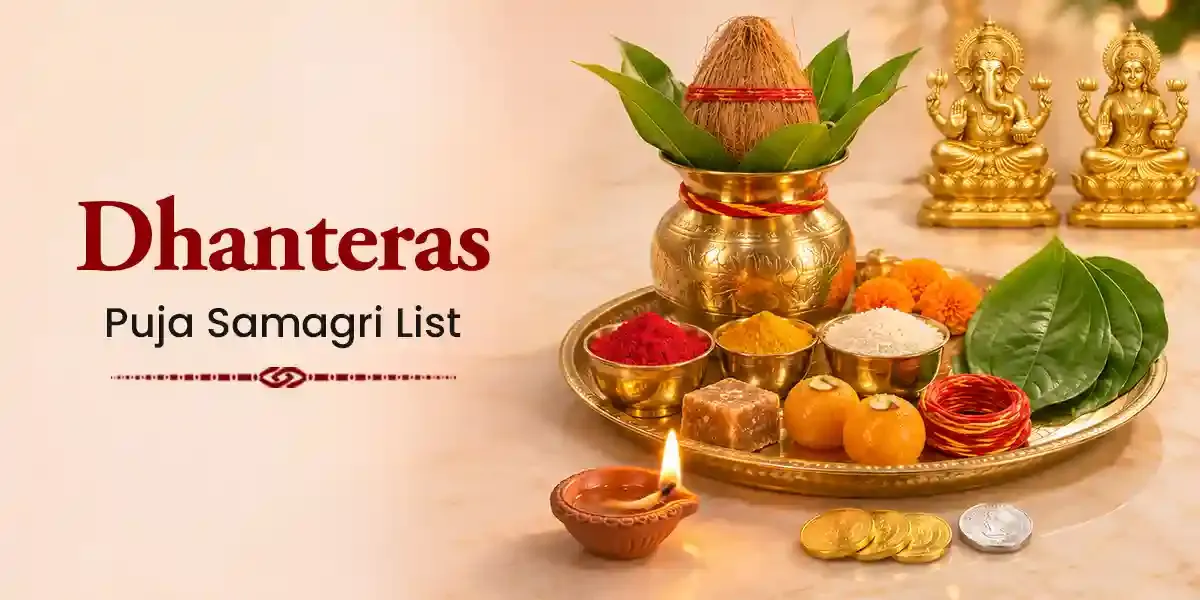
Vaibhav Lakshmi Vrat Samagri
The following items are kept ready before the Friday puja begins.
- Photo or idol of Goddess Lakshmi, preferably Dhana Lakshmi seated on a lotus
- Shri Yantra
- Wooden chauki with a red or yellow cloth
- Clean asana for sitting
- Copper or brass kalash filled with water
- Small bowl to place over the kalash
- Gold or silver coin, ring, or ornament (a rupee coin may be used if unavailable)
- Unbroken rice (akshat)
- Panchamrit (milk, curd, ghee, honey, and sugar), plus milk and clean water
- Roli, kumkum, haldi, chandan, mauli, and attar or rose water
- Red or pink flowers, especially lotus or rose
- Ghee diya, incense sticks, camphor, bell, and conch
- Kheer or another milk-based sweet for bhog
- Fruit, coconut, paan, and supari
- Vaibhav Lakshmi Vrat Katha booklet
Vaibhav Lakshmi Vrat Sankalp
The sankalp is taken on the first Friday, after a morning bath, while seated before the image of Goddess Lakshmi. It is a clear and sincere resolve to observe the vrat.
A simple sankalp includes four points:
- The devotee's name
- The number of Fridays, either 11 or 21
- The specific wish, such as relief from debt, family harmony, or business growth
- A promise to perform the Udyapan with devotion on completion
The intention should stay positive and specific. The number of Fridays is not changed midway. To extend an 11th Friday vrat to the 21st, a fresh sankalp is taken.
How to Do Vaibhav Lakshmi Vrat: Step-by-Step Vidhi
The Vidhi has two parts. The morning is for preparation and restraint, while the evening is for the main puja.
Morning Rituals
- Waking early, cleaning the house and puja area, and taking a bath
- Wearing clean clothes, preferably red or white
- Taking the sankalp on the first Friday
- Speaking truthfully and avoiding anger, gossip, and hurting anyone
- Keeping a light fast if health permits
Evening Puja Vidhi
- A second bath, followed by clean clothes.
- Sitting on a clean asana facing east.
- Placing a wooden chauki in front and spreading a red or yellow cloth on it.
- Making a small mound of akshat on the cloth.
- Placing the kalash filled with water on the rice.
- Keeping a small bowl on the kalash with the gold or silver object inside.
- Placing the image of Goddess Lakshmi and the Shri Yantra in front of the kalash.
- Lighting a ghee diya and incense sticks.
- Bathing the gold or silver object with milk and panchamrit, then rinsing it with clean water, wiping it, and returning it to the bowl.
- Offering haldi, kumkum, akshat, chandan, attar, and flowers to Goddess Lakshmi.
- Reciting the Vaibhav Lakshmi Vrat Katha with devotion.
- Chanting the Vaibhav Lakshmi mantra 11, 21, or 108 times.
- Performing the aarti, usually "Om Jai Lakshmi Mata."
- Offering kheer as bhog and distributing it as prasad, first to the married women of the home and then to everyone else.
Vaibhav Lakshmi Mantra
The mantra widely chanted during the Friday puja is:
Om Shreem Hreem Shreem Kamale Kamalalaye Prasida Prasida Shreem Hreem Shreem Mahalakshmyai Namah
The mantra is chanted 11, 21, or 108 times. The same count is kept on every Friday, as consistency matters more than quantity.
Other optional recitations include "Om Shreem Mahalakshmyai Namah," Shri Suktam, Lakshmi Chalisa, and Lakshmi Ashtottara Shatanamavali.
Vaibhav Lakshmi Vrat Katha
The katha has two connected stories. Both are read or heard during the evening puja.
Sheela's Story
Sheela was a devoted and virtuous woman. After her husband fell into bad company, the household faced conflict and financial trouble.
A divine elderly woman guided Sheela to observe the Friday vrat with a kalash, a gold or silver object, a ghee lamp, the katha, and kheer prasad. Through sincere devotion, peace and prosperity slowly returned to her home.
Asha's Story
Asha heard of Sheela's success and began the same vrat. However, the rituals were performed mechanically and without faith, so the expected results did not come.
The moral is clear. The power of the vrat lies in faith, humility, truthful conduct, and sincere surrender to Goddess Lakshmi, not in ritual items alone.
When to Perform Vaibhav Lakshmi Vrat
The vrat is kept on Fridays. The first Friday of Shukla Paksha, the bright fortnight after Amavasya, is considered the most auspicious day to begin.
- Duration: 11 Fridays or 21 Fridays, decided at the start.
- Main puja: evening, around Pradosh Kaal after sunset, facing east.
- Missed Friday: the vrat resumes on the next Friday, and the missed Friday is added at the end to complete the count.
A Friday may be missed because of travel, illness, or menstruation. The count is then completed by extending the vrat, not by changing the original sankalp.
Fasting Rules and Bhog
Most devotees keep a partial fast. A strict nirjala fast is optional and should suit one's health.
- Daytime: fruits, nuts, milk, curd, tea, and water are commonly taken.
- Evening: one sattvik meal after the puja.
- Avoid: onion, garlic, sour food, eggs, meat, and alcohol.
- Bhog: Kheer made with rice, milk, sugar, saffron, and cardamom is the traditional offering.
The bhog is always offered to Goddess Lakshmi before it is eaten. Another milk-based sweet may be offered if kheer is not possible.
Those who are ill, pregnant, elderly, or on medication may skip fasting. The evening puja, katha, mantra, and prasad remain the essential parts of the vrat.
Important Rules and What to Avoid
Rules to Follow
- The same gold or silver object is kept throughout the vrat. It is never borrowed.
- The puja is performed at home. If traveling, that Friday is skipped and added later.
- The Shri Yantra, kalash, metal object, kheer bhog, katha, and aarti form the core of the puja.
- A lamp is lit for Goddess Lakshmi every Friday, and the home is kept clean.
- Food, clothes, money, a Lakshmi image, or a Shri Yantra is donated as per capacity.
What to Avoid
Starting the vrat without a clear sankalp
Lies, anger, gossip, and hurting others on vrat days
Selling or pawning the gold or silver object kept for the vrat
Performing the Udyapan before the chosen 11 or 21 Fridays are complete
Keeping this vrat together with the Goddess Santoshi Mata Vrat, as only one is chosen
Using a torn, dirty, or damaged image of Goddess Lakshmi
Vaibhav Lakshmi Vrat Udyapan Vidhi
Udyapan is the formal conclusion of the vrat. It is performed on the 11th or 21st Friday and expresses gratitude to Goddess Lakshmi. It should not be done before the chosen count is complete.
- The usual Friday Vaibhav Lakshmi puja is performed.
- 7, 11, or 21 married women are invited home. Girls or the needy may be honored if that is not possible.
- Each guest is welcomed with kumkum tilak and akshat on the forehead.
- A Vaibhav Lakshmi Vrat Katha booklet is gifted to each guest.
- Kheer prasad, coconut, chunri, and small gifts such as clothes, utensils, or ornaments are offered as per capacity.
- Coconut and chunri are also offered to Goddess Lakshmi.
- A Lakshmi image, Shri Yantra, food, clothes, or money is donated as per means.
- An extra ghee diya is lit, and gratitude is offered to Goddess Lakshmi to complete the sankalp.
Sharing the katha booklet and prasad with married women is considered an essential part of the Udyapan.
Who Can Observe the Vrat and Its Benefits
Married women most commonly observe Vaibhav Lakshmi Vrat. Unmarried women, men, and families can also keep it. The method stays the same, and only the sankalp changes.
- Unmarried women: a suitable marriage and a happy home
- Men: business growth, career, and relief from debt
- Families: shared peace and prosperity, with one member performing the main puja
Devotees observe the vrat with faith for financial stability, marital harmony, removal of obstacles, and family well-being.
The deeper teaching is that true vaibhav comes when devotion is joined with honest effort, disciplined conduct, charity, and gratitude.
Ritual details may vary by family, region, and the Vaibhav Lakshmi Vrat booklet being followed. Those with health concerns should avoid strict fasting. For personalized guidance, consult a verified astrologer.
Team Astroyogi is an experienced in-house editorial team of passionate writers, researchers, and astrology enthusiasts dedicated to making ancient divination sciences more accessible and meaningful in everyday life. With years of collective experience in creating insightful astrology and spirituality content, the team specializes in simplifying complex spiritual concepts into practical guidance for readers seeking clarity, balance, and personal growth. The Astroyogi editorial team possesses expertise across a wide range of subjects, including Indian Astrology, Vedic Astrology, Planetary Transits, Horoscope Analysis, Vastu Shastra, Numerology, Tarot, Spiritual Wellness, and Ritual Practices. Every piece of content is carefully researched, fact-checked, and crafted with the intention of offering reliable, insightful, and easy-to-understand guidance rooted in traditional wisdom. Driven by a commitment to authenticity and reader trust, Team Astroyogi strives to create content that empowers individuals to navigate life’s opportunities and challenges with confidence, positivity, and inner peace. Their mission is to bridge ancient astrological knowledge with modern-day relevance, helping readers make informed decisions and lead more harmonious lives.