

12 Powerful Names of Lakshmi: Meaning, Benefits and How to Chant
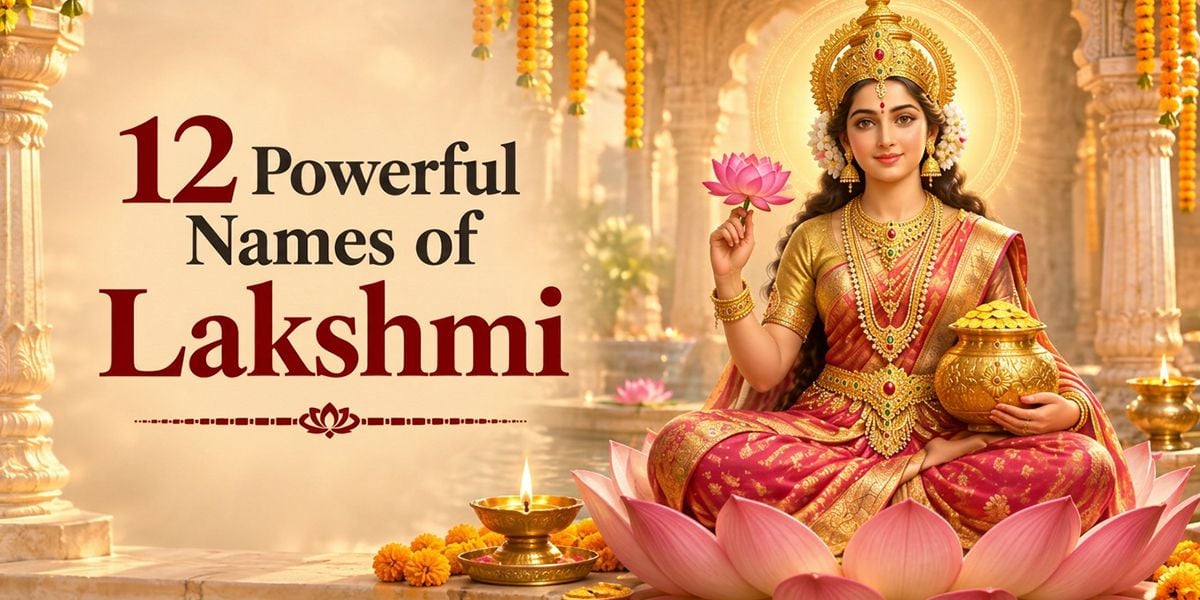
The 12 powerful names of Lakshmi are Ishwari, Kamala, Lakshmi, Chala, Bhuti, Haripriya, Padma, Padmalaya, Sampad, Rama, Shri, and Padmadharini. Together, these names form a widely recited version of the Shri Lakshmi Dwadasha Nama Stotram.
Devotees traditionally recite these names to invoke the blessings of Goddess Lakshmi for wealth, peace, harmony, and steady prosperity.
Quick list of the 12 names
- Ishwari
- Kamala
- Lakshmi
- Chala
- Bhuti
- Haripriya
- Padma
- Padmalaya
- Sampad
- Rama
- Shri
- Padmadharini
12 Names of Lakshmi and Their Meaning
Each name of Goddess Lakshmi highlights a different quality, from sovereignty and purity to wealth and joy. The table below lists all 12 names with their meanings.
| Name | Meaning | Why It Is Powerful |
|---|---|---|
| Ishwari (ईश्वरी) | Divine Mother, supreme ruler | Invokes the protective and sovereign grace of Goddess Lakshmi |
| Kamala (कमला) | Lotus-born, lotus-dwelling | Represents purity, beauty, and spiritual growth |
| Lakshmi (लक्ष्मी) | Goddess of fortune and auspiciousness | The central name for prosperity and divine blessings |
| Chala (चला) | Moving, ever-flowing | Shows that wealth grows when it circulates through honest work and generosity |
| Bhuti (भूति) | Prosperity, welfare, well-being | Invokes comfort, security, health, and positive growth |
| Haripriya (हरिप्रिया) | Beloved of Lord Vishnu | Connects wealth with devotion and divine harmony |
| Padma (पद्मा) | Lotus | Symbolizes grace and purity untouched by negativity |
| Padmalaya (पद्मालया) | One who resides on the lotus | Represents stability, serenity, and the source of blessings |
| Sampad (संपद्) | Wealth, riches, resources | Directly invokes material and spiritual abundance |
| Rama (रमा) | The delightful one, source of joy | Represents joy, beauty, and harmonious relationships |
| Shri (श्री) | Auspicious radiance, honor | Invokes dignity, refinement, and auspicious energy |
| Padmadharini (पद्मधारिणी) | Holder of the lotus | Symbolizes divine grace, purity, and spiritual awakening |
Why These 12 Names Are Powerful
The names cover many dimensions of Goddess Lakshmi. Together, they present her as more than a giver of money.
- Wealth and abundance: Sampad, Bhuti, Shri, and Lakshmi invoke prosperity in both material and spiritual forms.
- Purity and grace: Kamala, Padma, Padmalaya, and Padmadharini use the lotus to show beauty that rises above worldly challenges.
- Harmony and devotion: Haripriya and Rama connect Goddess Lakshmi with Lord Vishnu, joy, and balanced relationships.
- Protection and sovereignty: Ishwari reflects the divine authority and care of the Goddess.
- Flowing prosperity: Chala teaches that abundance is dynamic and meant to be used wisely and shared.
Benefits of Chanting the 12 Names
The benefits below are rooted in devotional tradition and are considered matters of faith, not guarantees.
Invites auspiciousness and positive energy into the home
Supports peace, gratitude, and emotional calm
Is traditionally recited for wealth, prosperity, and family well-being
Encourages mindful and ethical use of money and resources
Helps devotees focus on both material security and inner contentment
How to Chant the 12 Powerful Names of Lakshmi
The method is simple and can be followed at home. A clean space and a sincere intention matter most.
- Choose a clean, quiet space and sit before an image or idol of Goddess Lakshmi.
- Light a ghee lamp and incense.
- Offer flowers, especially lotus or red roses, if available.
- Recite the complete stotra slowly and clearly.
- For japa, repeat the stotra 108 times using a crystal or tulsi mala.
- Close with gratitude and an aarti.
Best days for chanting
Friday is the most commonly recommended day for worshipping Goddess Lakshmi. Diwali, Sharad Purnima, Varalakshmi Vratam, and Mahalakshmi Vrat are also considered especially auspicious.
Don't guess your auspicious hours. Consult with a verified astrologer who can calculate the perfect Muhurat for your prayers.
Lakshmi Mantras to Chant with the 12 Names
Many devotees pair the 12 names with a few well-known mantras. The table below lists some of the most commonly recited ones.
| Purpose | Mantra |
|---|---|
| Reciting the 12 names | Ishwari Kamala Lakshmishchala Bhutir Haripriya. Padma Padmalaya Sampad Rama Shrih Padmadharini. |
| Mahalakshmi mantra | Om Shreem Hreem Shreem Kamale Kamalalaye Praseeda Praseeda Shreem Hreem Shreem Om Mahalakshmyai Namah. |
| Success in efforts | Om Shreem Hreem Kleem Shri Siddha Lakshmyai Namah. |
| Marital harmony | Lakshmi Narayana Namah. |
Important Note
These names and mantras are part of Hindu devotional tradition. Many devotees recite them for prosperity and peace.
Spiritual practice works best alongside honest effort, gratitude, financial responsibility, and kindness toward others. It is not a substitute for practical planning or professional advice.
Also read: How to Please Goddess Lakshmi: A Guide to Attract Wealth and Prosperity
Team Astroyogi is an experienced in-house editorial team of passionate writers, researchers, and astrology enthusiasts dedicated to making ancient divination sciences more accessible and meaningful in everyday life. With years of collective experience in creating insightful astrology and spirituality content, the team specializes in simplifying complex spiritual concepts into practical guidance for readers seeking clarity, balance, and personal growth. The Astroyogi editorial team possesses expertise across a wide range of subjects, including Indian Astrology, Vedic Astrology, Planetary Transits, Horoscope Analysis, Vastu Shastra, Numerology, Tarot, Spiritual Wellness, and Ritual Practices. Every piece of content is carefully researched, fact-checked, and crafted with the intention of offering reliable, insightful, and easy-to-understand guidance rooted in traditional wisdom. Driven by a commitment to authenticity and reader trust, Team Astroyogi strives to create content that empowers individuals to navigate life’s opportunities and challenges with confidence, positivity, and inner peace. Their mission is to bridge ancient astrological knowledge with modern-day relevance, helping readers make informed decisions and lead more harmonious lives.