




Sunday, September 13, 2026 Paksha:Shukla Tithi:Tritiiya
Sunday, September 13, 2026 Paksha:Shukla Tithi:Tritiiya
Monday, September 14, 2026 Paksha:Shukla Tithi:Chaturthi
Monday, September 14, 2026 Paksha:Shukla Tithi:Chaturthi
Tuesday, September 15, 2026 Paksha:Shukla Tithi:Panchami
Wednesday, September 16, 2026 Paksha:Shukla Tithi:Shashthi
Thursday, September 17, 2026 Paksha:Shukla Tithi:Saptami

Thursday, September 17, 2026 Paksha:Shukla Tithi:Saptami
Thursday, September 17, 2026 Paksha:Shukla Tithi:Saptami
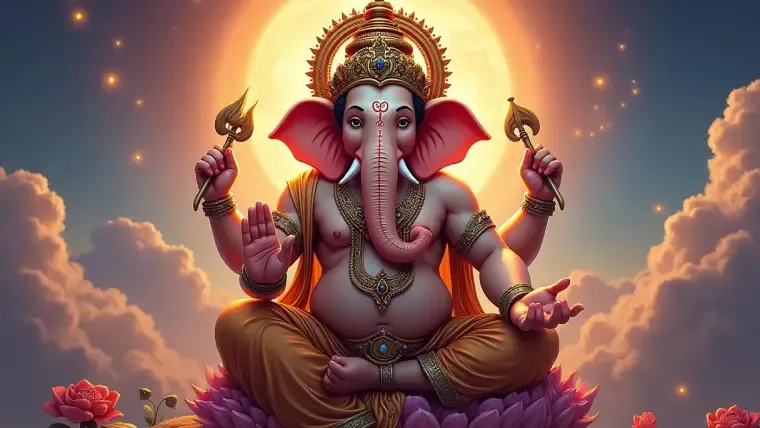
Ganesh Chaturthi is a popular Hindu festival that commemorates the birth of Lord Ganesha, the elephant-headed deity associated with wisdom, prosperity, and good fortune. According to the Hindu Panchang, the festival begins on the fourth day (Chaturthi) of the Bhadrapada month and is celebrated with prayers, rituals, and festivities. In 2026, Ganesh Chaturthi will be celebrated on Monday, 14 September.
Ganesh Chaturthi 2026 Date & Time
Duration - 02 Hours 28 Mins
Chaturthi Tithi Begins - 07:06 AM on Sep 14, 2026
Chaturthi Tithi Ends - 07:44 AM on Sep 15, 2026
Ganesh Chaturthi 2026 Sthapana Muhurat: City-Wise Timings
Getting the Sthapana timing right is an important part of the Ganesh Chaturthi celebrations. The auspicious Muhurat varies by city, so devotees should follow the local timings for Ganesh Murti Sthapana. Here are the city-wise Sthapana Muhurats and corresponding Madhyahna Puja windows for 2026:
| Detail / City | Auspicious Timing (2026) | Ritual Window |
|---|---|---|
| Sthapana Muhurat (New Delhi) | 11:02 AM – 01:31 PM (14 Sept) | Midday (Madhyahna) Puja Window |
| Sthapana Muhurat (Mumbai) | 11:20 AM – 01:48 PM (14 Sept) | Midday (Madhyahna) Puja Window |
| Sthapana Muhurat (Pune) | 11:16 AM – 01:44 PM (14 Sept) | Midday (Madhyahna) Puja Window |
| Sthapana Muhurat (Kolkata) | 10:18 AM – 12:46 PM (14 Sept) | Midday (Madhyahna) Puja Window |
All About the Festival of Ganesh Chaturthi
This festival marks one of the most celebrated occasions in Hinduism. The ten days of this festival are considered highly auspicious, and people celebrate these days with renewed devotion. The festival is especially celebrated with grandeur in the states of Maharashtra, Gujarat, Odisha, Goa, Uttar Pradesh, Chhattisgarh, and West Bengal.
Alternative Names:
Vinayaka Chaturthi (widely used in Sanskrit and pan-Indian traditions)
Vinayagar Chaturthi (commonly used in Tamil Nadu and South Indian traditions)
Ganeshotsav / Ganesh Utsav (referring to the grand community celebrations)
Chavath or Chouth (used in regional Konkani and Goan traditions)
Significance of the Ganesh Chaturthi Festival
Also known as Vinayak Chaturthi, this festival is celebrated over multiple days each year, falling in August or September on the Gregorian calendar. Lord Ganesha is regarded as the deity of wisdom, new beginnings, and the remover of obstacles—the Vighnaharta—so his birthday is considered especially auspicious. Hindus worldwide seek his blessings before starting new projects, and many bring his idol home to invite prosperity and success.
While ten days of celebration is the traditional norm, the exact span in 2026 runs across 11 calendar days, from installation to final immersion:
| Festival Day | Date (2026) | Ritual Focus & Significance |
|---|---|---|
| 🪔 Day 1 | Monday, 14 September | Ganesh Sthapana – Welcoming and installing Lord Ganesha |
| 🙏 Day 2 | Tuesday, 15 September | Morning and evening Aarti, prayers, and traditional offerings |
| 🌺 Day 3 | Wednesday, 16 September | Mid-festival prayers, devotional activities, and Modak distribution |
| 🕉️ Day 4 | Thursday, 17 September | Devotional prayers and community celebrations |
| 🎶 Day 5 | Friday, 18 September | Community gatherings, Bhajan singing, and devotional activities |
| 🎉 Day 6 | Saturday, 19 September | Weekend devotional events and festive gatherings |
| 🪔 Day 7 | Sunday, 20 September | Public Pandal visits, prayers, and festive celebrations |
| 🙏 Day 8 | Monday, 21 September | Continued prayers and preparations for the closing phase |
| 🌿 Day 9 | Tuesday, 22 September | Penultimate-day rituals and spiritual reflection |
| 🛕 Day 10 | Wednesday, 23 September | Final full day of prayers and public Pandal celebrations |
| 🌊 Day 11 | Friday, 25 September | Anant Chaturdashi – Major day for Ganesh idol immersion |
Bringing Ganesh Murti Home: A Traditional Step-by-Step Guide
🌸 Before Bringing the Murti
Visit the Idol maker with family members.
Wear traditional attire.
Cover the murti with a clean cloth.
🙏 Welcoming Ganpati Bappa
Chant “Ganpati Bappa Morya” while bringing the murti home.
Perform aukshan at the entrance according to family tradition.
Welcome the murti with prayers and devotion.
🪔 Preparing for Sthapana
Prepare a clean wooden chowki with unbroken rice grains.
Place the Ganesh murti carefully on the chowki.
Decorate the puja area with rangoli and flowers.
Proceed with Ganesh Sthapana and Puja Vidhi.
Ganesh Sthapana: Welcoming the Lord Ganesha
Ganesh Sthapana is the formal ritual of installing Lord Ganesha in the home or pandal. In Vedic philosophy, the clay idol begins as just a physical form—Sthapana performs Prana Pratishtha (infusing life force), turning the idol into a living vessel for the deity's cosmic energy for the duration of the festival.
It's performed to invite wisdom, prosperity, and the removal of obstacles into the household, treating Ganesha as an honored royal guest.
How it's done, step by step:
Prepare the altar – Clean and purify the space with Ganga jal, and place a wooden platform (chowki) covered in fresh red or yellow cloth.
Create the base – Place a handful of unbroken raw rice (akshata) at the center of the platform as the deity's seat.
Bring in the idol – Carry the idol to the altar, often with its face covered, and set it on the rice base before uncovering the face.
Prana Pratishtha – Chant the invocation mantras (touching the idol with a Durva grass blade dipped in ghee) to establish divine consciousness within the form.
Shodashopachara Puja – Offer the deity the traditional 16 steps of hospitality: washing the feet and hands (padya, arghya), a symbolic bath (snana) with water, milk, or honey, new sacred thread and clothes (vastra), and decoration with sandalwood paste, sindoor, and flower garlands (alankara).
Favorite offerings – Present 21 blades of durva grass, red hibiscus flowers, and modaks or laddus.
Aarti & Sankalpa – Close with the Ganesha aarti and a camphor lamp, along with a sankalpa—a formal vow or prayer for the family's well-being.
Ganesh Chaturthi Puja Vidhi (Daily Ritual)
Once Sthapana is complete, the same core ritual is repeated each day of the festival:
Purify & place: Wake early, cleanse the worship area with Ganga jal, and keep the idol on its raised platform.
Invoke: Chant the pratishtha mantra—
Asyai Pranah Pratishthantu Asyai Pranaksharantu Cha | Asyai Devatvamarchayai Mamaheti Cha Kashchana || Om Siddhi-Buddhi Sahitaya Shri Mahaganadhipataye Namah | Supratishtho Varado Bhava.||Welcome the deity: Offer yellow flowers, wash the feet, offer arghya, and sip holy water (achaman).
Bathe the idol: Perform jal snanam, then panchamrit snanam (milk, curd, honey, ghee, and sugar), and rinse with Ganga jal.
Adorn: Offer moli, new clothes, akshat, sindoor, and sandalwood paste, along with a flower garland, shami leaves, and durva grass.
Light: Offer dhoop (incense) and a deepak (lamp).
Offer bhog: Present naivedhyam (food/modaks), followed by tambulam and dakshina.
Close with aarti: Sing the aarti, offer pushpanjali, and complete a parikrama around the idol.
Repeat these steps with devotion each day through the festival. If you'd like the fuller version of this ritual—including the reasoning behind each step and a complete list of materials to keep ready—check out our detailed step-by-step Ganesh Chaturthi Puja Vidhi.
Rituals Associated with Ganesh Chaturthi
This festival is celebrated with great excitement as people bring the figure of Bappa, or Lord Ganesha, into their homes to welcome prosperity into their lives. Here are the top rituals performed at this festival in India:
Modak is said to be Lord Ganesha's favorite, and it is common to offer 21 modaks along with 21 blades of durva grass to the God, as the number 21 is considered auspicious. That said, families may offer 5, 7, 11, or 21 modaks depending on their own tradition.
Before the festival, sculptors across the country get busy making beautiful, unique idols of the Lord, which devotees then take home for puja.
Large pandals are set up with elaborately decorated idols of the Lord, and devotees visit them over the festival's ten days as dancing and singing fill the air.
On the tenth day of the festival, known as Anant Chaturdashi, devotees bid farewell to the deity with a promise of welcoming him into their homes next year. The farewell is quite emotional, as if people are bidding goodbye to a family member.
Statues are immersed in water bodies, but in recent years, people have become more environmentally conscious. As a result, the idols are now immersed in buckets or pits of water, especially created for visarjan, to keep water bodies safe.
One important ritual of this day is based on astrological rules. According to it, people are not supposed to look at the moon during Ganesh Chaturthi. Legend has it that after a grand feast, Lord Ganesha was returning home when the Moon, Chandra, mocked his large belly and elephant form.
Angered, Lord Ganesha cursed the Moon so that anyone who looked upon it on this day would incur a Mithya Dosha, leading to false accusations and loss of reputation. The Moon later repented, and the curse was softened so that it applied specifically to Ganesh Chaturthi.
If the moon is sighted by accident, devotees are advised to recite the prescribed shloka or chant "Om Gan Ganapataye Namah" to ward off the dosha.
Astrological Significance of Ganesh Chaturthi
Beyond its religious meaning, this festival carries astrological weight. The aarti, offerings, fasting, and puja performed during Ganesh Chaturthi are believed to benefit everyone, but they're considered especially helpful for those going through a difficult mahadasha (main planetary period) or antardasha (sub-period) of Mercury or the Moon—planets closely tied to Ganesha in Vedic astrology.
Go Green with Eco-Friendly Ganesh Idols
One of the most thoughtful ways to celebrate today is to bring home an eco-friendly Ganesh idol. These murtis are crafted from materials like natural clay, paper mache, and seed-infused red soil, finished with organic, chemical-free colors—and each type dissolves or transforms differently once the festival ends.
Clay Ganesha: Fully biodegradable and simple to immerse at home. After the Uttar Puja, fill a large tub or bucket with water and immerse the clay Ganesha gradually while following the usual visarjan steps. The clay-infused water doesn't need to go to waste—it can go straight into your garden.
Paper Mache Ganpati: Made from a blend of paper pulp, organic glue, and clay, these idols are just as non-polluting and dissolve easily in a tank or tub of water. That leftover water, too, can be reused for gardening.
Red Soil (Tree) Ganesha: Built from red soil, seeds, and organic fertilizer. For immersion, set the idol into a pot layered with potting mix, natural clay, and fertilizer, then water it steadily. Over time, the soil breaks down, and the embedded seeds sprout—turning the idol itself into a living plant.
Legend Associated with Ganesh Chaturthi
Goddess Parvati felt lonely on Mount Kailash during Lord Shiva's absence. Driven by maternal desire, she created a child from the dirt of her body and breathed life into him, creating Lord Ganesha.
While bathing, Goddess Parvati ordered Lord Ganesha to guard her chamber door. When Lord Shiva returned, the young guard blocked his path. Unaware of the boy's identity, Lord Shiva grew furious and severed his head.
Heartbroken by her son's death, Goddess Parvati demanded his return. Lord Shiva promised to restore him and sent deities to fetch the head of the first living creature they found facing north. They returned with an elephant's head.
Lord Shiva attached the elephant head to the body, granting Lord Ganesha a divine rebirth. Today, devotees celebrate this rebirth during Ganesh Chaturthi, welcoming Lord Ganesha into their homes like a beloved family member.
To know more about the Ganesh Chaturthi dates and time, connect with Astroyogi astrologers to plan your puja.
Festival List
- Nag Panchami
- Raksha Bandhan
- Janmashtami
- Ganesh Chaturthi
- Onam
- Pitru Paksha
- Shardiya Navratri
- Durga Puja
- Dussehra
- Karwa Chauth
- Dhanteras
- Diwali
- Govardhan Puja
- Bhai Dooj
- Chhath Puja
- Tulsi Vivah
- Guru Nanak Jayanti
- Christmas
- New year
- Lohri
- Pongal
- Makar Sankranti
- Vasant Panchami
- Shivratri
- Ramadan
- Holi
- Good Friday
- Navratri
- Gudi Padwa
- Ugadi
- Vaisakhi
- Ram Navami
- Mahavir Jayanti
- Hanuman Jayanati
- Buddha Purnima
- Akshay Tritiya
- Shani Jayanti
- Guru Purnima
- Hariyali Teej