



Sunday, October 25, 2026 Paksha:Shukla Tithi:Purnima

Sunday, October 25, 2026 Paksha:Shukla Tithi:Purnima
Monday, October 26, 2026 Paksha:Krishna Tithi:Prathama
Monday, October 26, 2026 Paksha:Krishna Tithi:Prathama

Monday, October 26, 2026 Paksha:Krishna Tithi:Prathama
Wednesday, October 28, 2026 Paksha:Krishna Tithi:Tritiiya


Thursday, October 29, 2026 Paksha:Krishna Tithi:Chaturthi
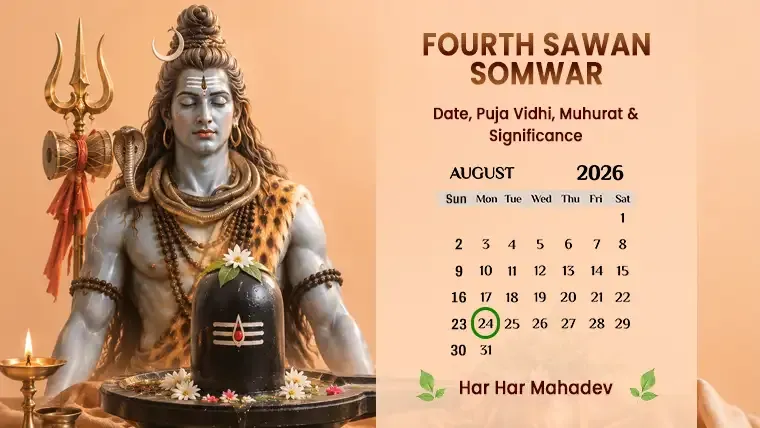
Sawan Somvar 2026 is the last Monday of the month of Shravan. As it is the last somvar in the month of Sawan, it becomes very spiritually and culturally significant for all devotees of Lord Shiva. Let’s go through the details on Muhurat timings, Puja vidhi, and the importance of this day.
Shrawan (Sawan) Fourth Somwar 2026 Date And Tithi
The Fourth Sawan Somvar falls on a different date depending on your region's calendar system. Here's a quick reference:
| 🌍 Region | 📅 Calendar System | 🕉️ Fourth Sawan Somwar Date | 🌙 Tithi |
|---|---|---|---|
| 🏛️ North India (Delhi, Uttar Pradesh, Bihar, Rajasthan, Madhya Pradesh, etc.) | Purnimānta | 📅 24 August 2026 (Monday) | 🌙 Krishna Paksha Navami / Dashami* |
| 🌴 Maharashtra, Gujarat & South India | Amānta | 📅 7 September 2026 (Monday) | 🌙 Shukla Paksha Chaturdashi / Amavasya* |
To check dates for the other Somwars in Sawan:
Sawan First Somwar | Sawan Second Somwar | Sawan Third Somwar
🕉️ Shubh Muhurat for Fourth Sawan Somwar 2026
Timing is everything when it comes to Shiva Puja. Here are the best times to perform your rituals:
| ⏰ Muhurat / Period | 🕒 Approx. Time Band | 🙏 Best For |
|---|---|---|
| 🌅 Brahma Muhurat | 4:20 AM – 5:10 AM | Ideal for meditation, Om Namah Shivaya chanting, Shiva Japa, and beginning the day with spiritual focus. |
| 🌄 Morning Puja | After sunrise – Mid-morning | Best for Jalabhishek, offering milk, bel-patra, flowers, and performing the regular Shiva Puja. |
| 🕛 Abhijit Muhurat | Around 12:00 Noon | A highly auspicious period for taking an important Sankalp, performing a brief Shiva Puja, or offering abhishek. |
| 🌇 Evening / Pradosh Kaal | Sunset – About 1 to 1.5 hours after | One of the most sacred times for the main Shiva Aarti, Deepak, Jalabhishek, and evening worship of Lord Shiva. |
If you can only fit in one puja session, aim for either the Amrit Kaal or the Pradosh Kaal—both are considered gateways to the most powerful blessings.
Note: Because sunrise times shift slightly by location, check a local Panchang or consult an astrologer for the exact minute-by-minute abhishek timings in your specific city.
Puja Vidhi and Rituals of Sawan Fourth Somwar
This is where the real work happens. The day moves through five stages: cleansing, oath-taking, Abhishek, offerings, and the evening aarti.
Morning Cleansing and Sankalp: Initiate your vrat by getting up during Brahma Muhurta and taking a bath using black sesame or til water. This procedure is called Pratah Snan, which serves as a cleansing of the soul. Following this, turn your face towards the east, hold rice grains, flowers, and water in your right hand, and make your Sankalp.
The Abhishek Ritual: This is the centerpiece of the puja and takes the most time and energy. Liquids are poured over the Shivling in a continuous, uninterrupted flow while chanting the Maha Mrityunjaya Mantra or "Om Namah Shivaya." The usual order is:
Gangajal — for purity
Raw cow's milk — for prosperity
Curd — for firmness
Honey or sugarcane juice — for good speech and financial relief
Shravan Archana, the Sacred Offerings: After the Abhishek, it’s time to offer cool and sattvic offerings to the lord. At least three Bel Patra leaves should be offered with the smooth side facing downwards. While Datura and Bhang are offered to drive away the negative energy, sandal paste is offered to draw the Tripundra marks on the body. An important note here is not to offer any tulsi leaf, turmeric, or broken rice to Lord Shiva.
Evening Conclusion and Parana: As Pradosh Kaal nears, devotees chant Sawan Somwar Vrat Katha and do the aarti with camphor. After performing the ceremony, devotees break the fast by eating some fruits, makhana, and sabudana, and not normal salt, grains, onions, or garlic.
Sawan Somvar Vrat: Diet and Fasting Rules
Devotees follow distinct levels of fasting based on physical endurance and personal choice. Regardless of style, devotees strictly adhere to a Sattvic lifestyle.
Fasting Classifications
Nirjala Vrat: A complete fast observed without consuming a single drop of water or food from dawn to dusk or the next day morning.
Phalahar Vrat: A partial fast allowing water, milk, and fresh fruit consumption throughout the day.
Single Sattvic Meal: Some choose to consume just one wholesome vegetarian meal after sunset once the final evening prayers are finished.
🍎 Sawan Somwar Vrat Guide
Follow these dietary guidelines to observe the fast with purity and devotion.
| ✅ Permitted Foods (Do's) | ❌ Prohibited Foods (Don'ts) |
|---|---|
| 🍌 Fresh fruits (Banana, Apple, Pomegranate, etc.) | 🌾 All grains (Wheat, Rice, Lentils, Corn, etc.) |
| 🥛 Dairy products (Milk, Fresh Curd, Buttermilk, Paneer) | 🧂 Regular table salt (Sodium Chloride) |
| 🪨 Rock Salt (Sendha Namak) for savory dishes | 🧅 Onion, Garlic, and pungent spices |
| 🌰 Sabudana (Tapioca Pearls), Makhana (Foxnuts), Kuttu (Buckwheat Flour) | 🍟 Packaged junk food and deep-fried snacks |
| 🥥 Coconut water and herbal, caffeine-free teas | 🍺 Alcohol, Tobacco, and Non-vegetarian food |
Have questions about your Sawan Somwar fast or puja muhurat? Connect with an Astroyogi astrologer for expert clarity and personalized vrat details.
Why Sawan Fourth Somwar Matters
According to legend, Lord Shiva drank the Halahal poison to protect the universe during the Samudra Manthan. Water and milk offerings are symbolic of respect and invoking divine protection, which is all the more true on the Fourth Somwar.
It is quite significant to complete the Solah Somwar Vrat ritual, as it signifies spirituality; not observing it may lead to a sense of incompleteness in your spiritual devotion.
Moreover, there is also a change of purpose here. While the first three Mondays deal with Kamya Puja—prayers for personal wishes of wealth, rain, or marriage—the fourth Somwar is associated with Nishkama Karma, which means selfless worship in which devotees observe Dan-Punya, or charity and feeding people.
So whether you're fasting for the first time this Shravan or you've been at it for four straight Mondays, the Sawan Fourth Somwar 2026 is your moment to bring it all full circle with the right date, the right muhurat, and the right puja vidhi and rituals in place.
Festival List
- Nag Panchami
- Raksha Bandhan
- Janmashtami
- Ganesh Chaturthi
- Onam
- Pitru Paksha
- Shardiya Navratri
- Durga Puja
- Dussehra
- Karwa Chauth
- Dhanteras
- Diwali
- Govardhan Puja
- Bhai Dooj
- Chhath Puja
- Tulsi Vivah
- Guru Nanak Jayanti
- Christmas
- New year
- Lohri
- Pongal
- Makar Sankranti
- Vasant Panchami
- Shivratri
- Ramadan
- Holi
- Good Friday
- Navratri
- Gudi Padwa
- Ugadi
- Vaisakhi
- Ram Navami
- Mahavir Jayanti
- Hanuman Jayanati
- Buddha Purnima
- Akshay Tritiya
- Shani Jayanti
- Guru Purnima
- Hariyali Teej