


Wednesday, September 16, 2026 Paksha:Shukla Tithi:Shashthi
Thursday, September 17, 2026 Paksha:Shukla Tithi:Saptami

Thursday, September 17, 2026 Paksha:Shukla Tithi:Saptami
Thursday, September 17, 2026 Paksha:Shukla Tithi:Saptami
Friday, September 18, 2026 Paksha:Shukla Tithi:Saptami
Friday, September 18, 2026 Paksha:Shukla Tithi:Saptami
Saturday, September 19, 2026 Paksha:Shukla Tithi:Ashtami
Saturday, September 19, 2026 Paksha:Shukla Tithi:Ashtami
Saturday, September 19, 2026 Paksha:Shukla Tithi:Ashtami
Saturday, September 19, 2026 Paksha:Shukla Tithi:Ashtami
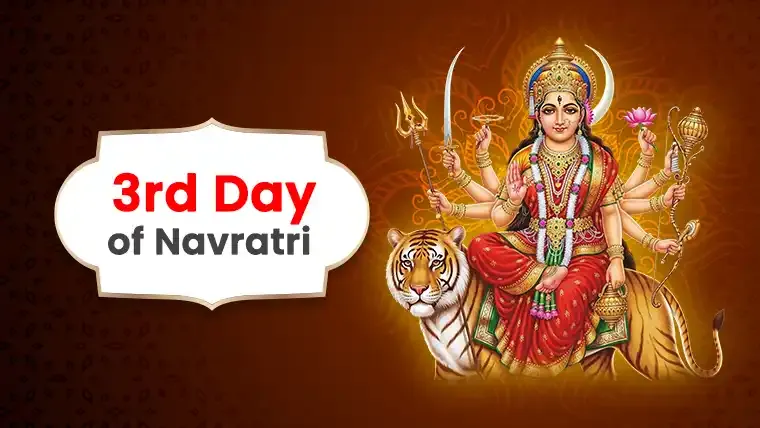
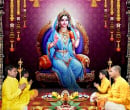
Navratri Day 3 (the third day of Navratri) celebrates the third form of Goddess Durga among the Navadurga, focusing on courage, peace, and protection from evil forces. Each day of Navratri, including Navratri day 3, brings unique rituals, a specific color, and vrat practices that deepen devotion and invite divine Shakti into daily life.
Navratri Day 3 Overview
| Aspect | Details |
|---|---|
| Chaitra Navratri 3rd Day 2026 Date | 21 March 2026 (Saturday) |
| Tithi | Tritiya (third lunar day as per Hindu Panchang) |
| Navratri Day | Navratri Day 3 |
| Goddess Worshipped | Maa Chandraghanta |
| Navratri Third Day Color | Royal Blue |
| Key Ritual | Worship of Maa Chandraghanta |
| Planet Associated | Venus (Shukra) |
What’s the Significance of the 3rd Day of Navratri?
The third day of Navratri holds deep spiritual meaning as it honors a goddess who embodies both fierce power and serene compassion. Worship on Navaratri day 3 is believed to dispel fears, grant inner strength, and shield devotees from negativity, making it ideal for those seeking courage in challenges.
Key spiritual meanings associated with Navratri day 3 include:
Awakening bravery and spiritual courage
Balancing aggression with peace
Protection from enemies and evil spirits
Enhancing devotion and marital harmony
Navratri Day 3 Goddess: Maa Chandraghanta
The Navratri day 3 goddess is Maa Chandraghanta, the third form of Navadurga, named for the half-moon (Chandra) shaped like a bell (Ghanta) on her forehead. She represents the married form of Parvati alongside Lord Shiva, blending strength and kindness to grant peace and victory over fears.
Puja Essentials (Samagri) for Navratri 3rd Day
Gather these items for a complete Navratri Day 3 puja to honor the goddess properly.
Idol or picture of Maa Chandraghanta
Pooja thali (ritual tray) with roli, kumkum, haldi (turmeric), chandan, and sindoor (red powder)
Flowers and garlands (jasmine, white lotus, marigold)
Fruits, sweets, panchamrit (a sacred mixture of milk, yogurt (curd), honey, sugar (or jaggery), and ghee), and special bhog like kheer (milk-based rice pudding)
Ghanti (bell), shankh (conch), rudraksha mala for japa (chants)
Red or yellow cloth for the altar, vermilion for the tilak (a sacred mark applied to the forehead during rituals)
Puja Rituals for Navratri Day 3
On the third day of Navratri, rituals emphasize invoking Maa Chandraghanta's protective energy through structured worship.
Morning Rituals:
Get up early, bathe, and wear royal blue or light-colored clothes as per the Navratri 3rd day color.
Clean the puja area, decorate with rangoli, and light a ghee diya before the Kalash from Ghatasthapana (established on Day 1 of Navratri).
Offer kumkum (sacred vermillion powder), chandan (sandalwood paste), and fresh flowers to the established Kalash before focusing on Maa Chandraghanta's idol or image.
Worship of Maa Chandraghanta:
Perform abhishek (ceremonial bath or anointing of a deity's idol) using milk, curd, honey, and Gangajal
Adorn with red or yellow chunari, ornaments, and garlands
Light incense, dhoop, and camphor while ringing a bell to create sacred vibrations
Offer bhog and perform aarti with devotion
Aarti, Bhajans, and Katha:
Devotees recite Durga aarti, Navdurga stuti, and simple bhajans praising Maa Chandraghanta's protective power and serene devotion.
Reading or listening to Chandraghanta's Katha (story) helps devotees understand the deeper meaning of this third day of Navratri.
Families often gather in the evening for group aarti, which strengthens collective faith and devotion.
Evening practices include bhajans, Durga Saptashati recitation (third chapter), and distributing prasad to the family.
Navratri Day 3 Mantra
Mantra chanting is a key ritual connecting with the Navratri 3rd day Devi. Devotees often chant this main Beej Mantra of Maa Chandraghanta for her blessings.
|| Om Devi Chandraghantayai Namah ||
Color of the 3rd Day of Navratri: Royal Blue
The Navratri 3rd-day color is royal blue, symbolizing depth, tranquility, and royal strength, which complements Maa Chandraghanta's majestic form. This color evokes the vast sky and ocean, mirroring the goddess's ability to calm storms of fear and turmoil in life.
Devotees wear royal blue attire, use blue-themed decorations, and offer blue flowers or items to amplify protective energies and inner peace.
Auspicious Offerings, Flowers, and Bhog on Day 3 of Navratri
Offerings on the third day reflect the goddess's love for simple, sattvic items that promote purity and courage.
Flowers: White lotus, Jasmine, and mogra for serenity, red or yellow marigolds to invoke her warrior aspect, loose petals scattered during aarti for added fragrance and devotion
Bhog: Kheer, milk-based sweets, fruits like bananas and pomegranates, and honey.
Special offerings: Milk-based preparations such as kheer or rabri are considered favorites of Goddess Chandraghanta and are commonly offered.
Fasting Rules for the 3rd Day of Navratri
Navratri vrat on day 3 continues the purification from previous days, focusing on discipline for Maa Chandraghanta's grace. Many devotees continue the vrat they started on the first day, while some begin fasting specifically on the 3rd day of Navratri. Devotees avoid wheat, rice, lentils, onions, and other general foods and prefer eating fruits, dairy items, Sabudana (sago pearls) dishes, and more. You can read all rules for Navratri fasting here.
Do’s and Don’ts for Navratri Day 3
Follow these instructions for auspicious observance of the third Navratri.
Do’s:
Begin the day with prayers and positive thoughts
Chant Maa Chandraghanta mantras and perform aarti with full devotion
Wear clothes based on the day 3 Navratri color (royal blue)
Maintain a sattvic diet
Share prasad and involve family in evening bhajans
Focus on courage-building activities like meditation
Don’ts:
Avoid anger, arguments, negative thoughts, or speech
Do not disturb or move the puja setup
No tamasic foods, alcohol, or non-veg during vrat
Refrain from laziness; stay active in worship
Do not consume alcohol, tobacco, or non-vegetarian food
Avoid breaking fasting rules without reason
The 3rd day of Navratri is dedicated to the powerful form of Goddess Chandraghanta, who symbolizes courage, protection, and spiritual transformation. By observing vrat, chanting the Navratri 3rd day mantra, wearing the Navratri 3rd day color, and performing traditional rituals, devotees invite strength, positivity, and divine blessings into their lives.
Understanding the significance of the Navratri third day, its rituals, offerings, and spiritual meaning allows devotees to celebrate this sacred day with deeper devotion and awareness.
Festival List
- Nag Panchami
- Raksha Bandhan
- Janmashtami
- Ganesh Chaturthi
- Onam
- Pitru Paksha
- Shardiya Navratri
- Durga Puja
- Dussehra
- Karwa Chauth
- Dhanteras
- Diwali
- Govardhan Puja
- Bhai Dooj
- Chhath Puja
- Tulsi Vivah
- Guru Nanak Jayanti
- Christmas
- New year
- Lohri
- Pongal
- Makar Sankranti
- Vasant Panchami
- Shivratri
- Ramadan
- Holi
- Good Friday
- Navratri
- Gudi Padwa
- Ugadi
- Vaisakhi
- Ram Navami
- Mahavir Jayanti
- Hanuman Jayanati
- Buddha Purnima
- Akshay Tritiya
- Shani Jayanti
- Guru Purnima
- Hariyali Teej