

Complete Navratri Puja Samagri List: What are the Must-Have Items?
Want your Chaitra Navratri celebration to be truly divine? It all starts with the perfect Navratri puja samagri list or worship items. During this sacred period, worshipping the nine forms of Goddess Durga, also known as Navdurga, with devotion, fasting, and rituals deepens your connection with her divine energy. To make your prayers truly meaningful, having the right items for worship is essential.
The right Navratri puja items not only enhance your worship but also bring your devotion to life. From essential offerings to special touches, a well-prepared Navratri list ensures every prayer flows with sincerity and grace.
Curious which items can make your puja complete? Check out the full Navratri pooja items list now!
Navratri Puja Ghatasthapna Samagri List
Ghatasthapana is the first day of devotion during Chaitra Navratri; hence, having the proper Navratri worship materials (Pooja Samagri) on this day is thought to be crucial. As per the established rituals, the following objects are used in the worship ceremony.
Earthen Pot
An earthen pot is used for sowing barley. Sacred soil and grains are placed inside it, and it is then kept at the place of worship, where it is regarded as a symbol of prosperity and new life.
The Kalash
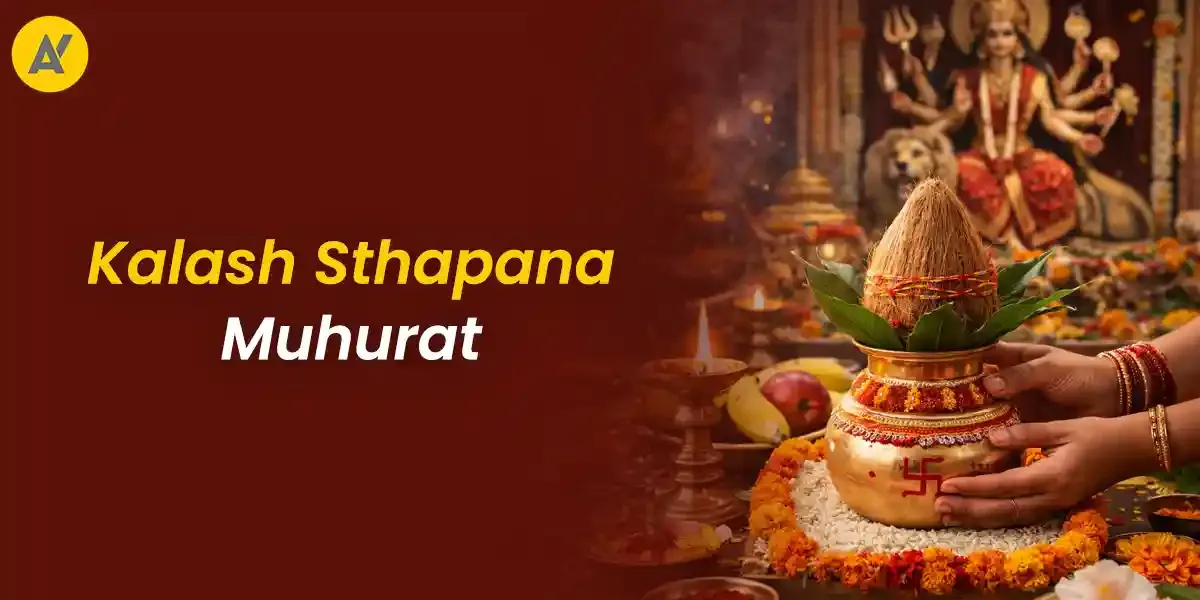
The Kalash is the central element of Ghatasthapana. It is filled with water and topped with mango or Ashoka leaves and a coconut, symbolizing the Goddess Shakti and auspiciousness.
Barley
Barley is sown in the soil in the earthen clay pot. During Navratri, its growth is considered an auspicious sign and serves as a symbol of prosperity.
Soil from a Sacred Place
The soil from a temple or any other sacred site is given special significance in worship rituals. It is used for sowing barley.
Diya and Baati
Lighting an Akhand Jyoti (eternal flame), using the diya (lamp) and bati (cotton wick) during Navratri is considered auspicious. It symbolizes the grace of Mother Goddess and positive energy.
Ganga Jal
Ganga Jal (water from the holy River Ganges) is used to sanctify the worship area and the puja items.
Mango Leaves
The mango leaves are placed atop the Kalash and are considered symbols of auspiciousness and purity.
Coconut, Roli, Mauli, and Other Materials
A whole coconut (with its husk), betel nut, sacred red thread (Mauli), vermilion (Roli), unbroken rice (Akshat), turmeric, a red cloth, flowers, garlands, and similar items are offered during the worship of the goddess.
In addition, the Aarti ritual, performed using cardamom, cloves, and camphor, is done, indicating the completion of the worship.
Do check this out: Happy Chaitra Navratri 2026: Wishes, Messages & Blessings to Share with Loved Ones
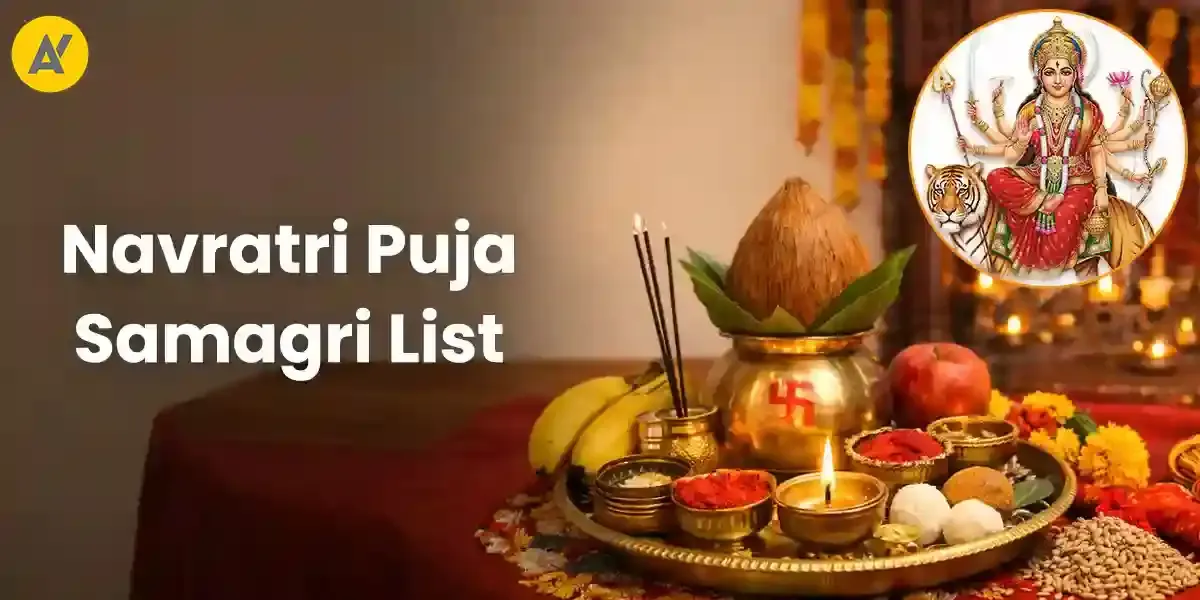
Navratri Puja Samagri List
When worshipping Goddess Durga and her nine forms known as Navdurga during Navratri, it is considered highly important to use the appropriate materials for the puja rituals. Each item holds its own religious significance and is offered with deep reverence.
The Idol of Mother Durga
For worship, an idol or image of Goddess Durga is placed upon a raised platform. Seated directly in front of it, devotees perform worship and adoration throughout the entire nine days.
The Wooden Pedestal and the Red Cloth
A red cloth is spread over the wooden pedestal (chauki) used for worship. The color red is associated with Goddess Durga and is considered a symbol of power and divine feminine energy.
Garland of Flowers
Fresh flowers, such as marigolds, roses, jasmine, mogra, and garlands are offered to Goddess Durga. This creates a devotional and fragrant atmosphere during the worship ritual.
Roli and Akshat
Roli (vermilion powder) and Akshat (rice grains) are offered to the Goddess. They are regarded as symbols of reverence and auspiciousness.
Fruits and Sweets
Sweets, fruits, and Naivedya (a sacred Hindu ritual of offering food to deities) are offered to Goddess Durga as Prasad. This offering also includes fruits, dry fruits, and Panchmeva (a traditional Indian blend of five nutritious, sacred dry fruits and nuts).
Solah Shringar and Kamal Gatta
Offering the 'Solah Shringar' (Sixteen Adornments) to the Mother Goddess is considered auspicious. Additionally, Kamal Gatta (lotus seeds) are also utilized in the worship ritual.
Betel leaves, Betel Nuts, Cloves, and Batasha
All these items, Paan (betel leaves), Supari ( betel nuts), cloves, and Batasha (a traditional, crispy, coin-shaped sugar candy that holds significant cultural and religious importance) are offered during worship and hold special significance in various religious rituals.
Lamps, Incense, and Ghee
By lighting ghee lamps, and using agarbattis (incense sticks and cones), the atmosphere is rendered pure and fragrant.
Other Materials
During the Navratri puja, a small pot (lota) filled with water, some money or coins, green cardamom, nutmeg, mace, and a coconut is also offered. A puja performed with utmost reverence and devotion, using all of these elements, is thought to be a means of gaining the grace of Goddess Durga.
Check out the Astroyogi store to find more puja essentials!
Final Words
The festival of Chaitra Navratri celebrates devotion, faith, and the vibrant energy of Goddess Durga. Over nine sacred days, devotees honor her nine forms, seeking happiness, peace, and prosperity at home.
To perform the rituals properly, having the right Navratri puja samagri list is essential. From Ghatasthapana to daily Aarti and Bhog offerings, each Navratri pooja item holds its own significance, helping you connect deeply with the Goddess. True worship combines these items with genuine faith and devotion.
Follow the complete Navratri list to ensure your celebrations are blessed and heartfelt, and elevate your festive rituals today!
May the grace of Mother Durga ensure that happiness, peace, and prosperity prevail in every home; this is the true essence of Navratri.
Wondering how to perform Puja during Navratri? Curious which day will be most auspicious for you, or which ritual can help fulfill your wishes? Get personalized guidance from the expert astrologers at Astroyogi and make your Navratri celebrations truly meaningful. Call or Chat now!
Team Astroyogi is an experienced in-house editorial team of passionate writers, researchers, and astrology enthusiasts dedicated to making ancient divination sciences more accessible and meaningful in everyday life. With years of collective experience in creating insightful astrology and spirituality content, the team specializes in simplifying complex spiritual concepts into practical guidance for readers seeking clarity, balance, and personal growth. The Astroyogi editorial team possesses expertise across a wide range of subjects, including Indian Astrology, Vedic Astrology, Planetary Transits, Horoscope Analysis, Vastu Shastra, Numerology, Tarot, Spiritual Wellness, and Ritual Practices. Every piece of content is carefully researched, fact-checked, and crafted with the intention of offering reliable, insightful, and easy-to-understand guidance rooted in traditional wisdom. Driven by a commitment to authenticity and reader trust, Team Astroyogi strives to create content that empowers individuals to navigate life’s opportunities and challenges with confidence, positivity, and inner peace. Their mission is to bridge ancient astrological knowledge with modern-day relevance, helping readers make informed decisions and lead more harmonious lives.