

Ghatasthapana 2026: Kalash Sthapana muhurat Date, Time, Puja Vidhi and Mantras
Kalash Sthapana, also known as Ghatasthapana, marks the sacred start of the Navratri festival, inviting Goddess Durga's divine energy into your home through a beautifully decorated pot symbolizing prosperity and purity. Performed on the first day of Navratri, this fundamental ritual sets the spiritual tone for nine days of devotion, fasting, and blessings.
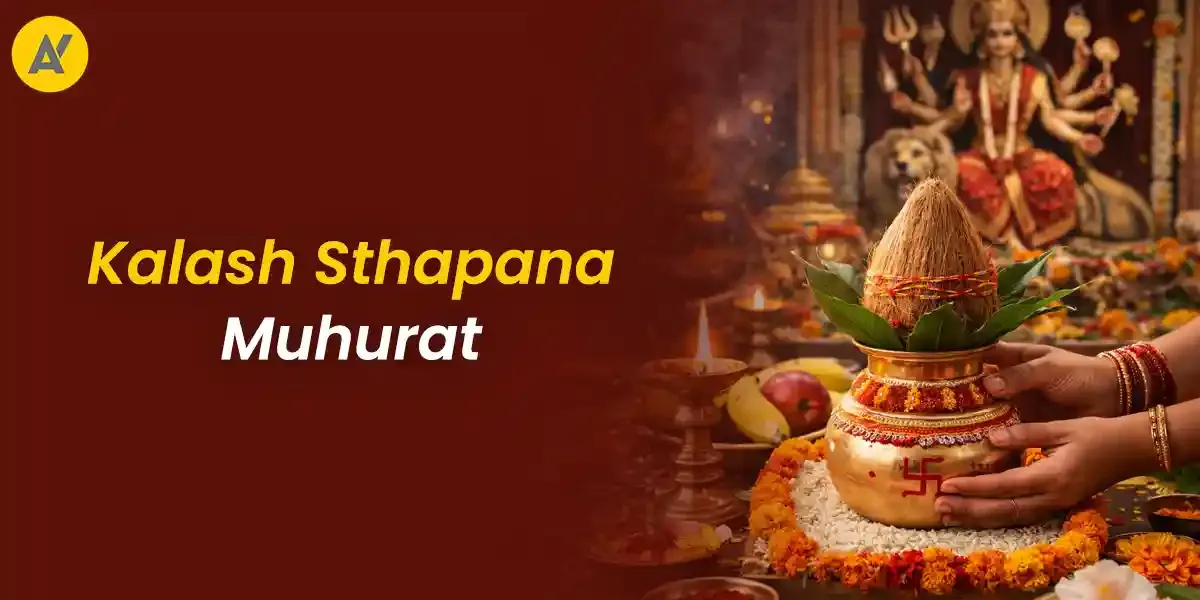
Derived from Sanskrit, “Kalash” refers to a sacred pot, often filled with water, rice, coins, or grains, and topped with mango leaves and a coconut. “Sthapana” means installation or placement, signifying the establishment of divine presence in the home or temple. Together, Kalash Sthapana Vidhi invites positive energy, prosperity, and the blessings of the goddess into one’s surroundings.
Auspicious Kalash Sthapana Muhurat in 2026
Timing is everything in Hindu rituals. Here are the key auspicious Muhurat details for Kalash Sthapana or Ghatasthapana, which is done on Day 1 of Navratri:
Chaitra Navratri Ghatasthapana Date – March 19, 2026 (Thursday)
Ghatasthapana Muhurat/Timings – 06:52 AM to 07:43 AM
Ghatasthapana Abhijit Muhurat – 12:05 PM to 12:53 PM

Iconography and Significance of Kalash Sthapana
The Kalash, Ghat or sacred pot, often made of copper or clay, represents the universe with its wide mouth for abundance, narrow neck for control, and firm base for stability. Topped with mango leaves, a coconut, and sacred threads, it embodies life-giving energy.
In Navratri, especially Chaitra Navratri starting March 19, 2026, it invokes Goddess Durga's presence, making your home a temple of Shakti. This ritual isn't just ceremonial; it's a powerful way to align your space with cosmic positivity.
Why is Kalash Sthapana Performed in Navratri?
The Kalash is considered a symbolic representation of the universe. Its water signifies life, the grains represent nourishment, and the coconut and leaves denote fertility and abundance. When installed correctly, it becomes a focal point for prayers and meditation.
During Navratri, the Kalash is believed to embody Goddess Durga herself, making it an essential aspect of the rituals that unfold over the nine days. Performing Kalash Sthapana with devotion is thought to remove negative energies, attract prosperity, and ensure spiritual growth for the household.
This ritual creates a sacred environment where energies align harmoniously. People often believe that the Navratri Kalash Sthapana ritual brings a sense of peace and positivity to their homes, reflecting its deep spiritual significance.
Items Required for Kalash Sthapana
Before beginning Kalash Sthapana Vidhi or ritualistic procedure, proper preparation is key to ensuring the ritual’s effectiveness. Start by choosing a clean and sacred space, preferably in the puja room or an area designated for spiritual activities. The items required for the ritual include
Copper, brass, or clay Kalash (pot)
Fresh mango leaves
Whole coconut with husk
Red or yellow chunari (sacred cloth), mauli (sacred thread)
Ganga jal (water from the holy Ganges River), coins, supari (betel nut), cloves, cardamom
Turmeric, kumkum, rice grains (akshat), wheat for sowing barley (jau)
Clean soil in a small tray
Barley seeds for jau
Fresh flowers, fruits, and sweets
Ghee lamp, dhoop or agarbatti (incense sticks), camphor, puja thali
Idol or photo of Goddess Durga
Ghanti (bell)
Also Read: Maa Durga 2026: Arrival and Departure Vehicles and Their Meaning
Step-by-Step Kalash Sthapana Puja Vidhi
Follow this easy guide. Start after a purifying bath, wearing clean clothes.
Cleanse the Space: Sweep and mop your puja area. Sprinkle Ganga jal. Place a wooden chowki (platform) covered with red cloth.
Prepare the Base: Spread soil on a plate or small pot over the chowki. Sow barley seeds evenly; these jau seeds will sprout as a sign of prosperity throughout the Navratri duration.
Fill the Kalash: Wash the Kalash. Add Ganga jal, a coin, supari, cloves, cardamom, and rice. Insert and arrange five mango leaves in a circle, like a crown, at the mouth or rim of the kalash.
Adorn the Kalash: Tie the mauli around the neck of the Kalash. Place the coconut (head up) on the mango leaves sitting at the mouth of the kalash, binding it with a red cloth and the sacred thread. Apply kumkum and turmeric tikaa (forehead markings). Draw a Swastika symbol on the kalash with turmeric or vermillion.
Position and Invoke: Set the Kalash on the prepared soil bed, northeast corner preferred. Sit before the Kalash, begin chanting mantras, light a ghee diya and invoke Durga and her nine forms to reside in the kalash during the nine days.
Light the Flame: Light an Akhand Jyoti (eternal flame) near the kalash, which should remain lit throughout the nine days of Navaratri as a symbol of the goddess's eternal energy and protection.
Panchopchar Puja: Offer deep (lamp), dhoop (incense), pushp (flowers), sugandh (perfume), and naivedya (sweets/fruits). Chant mantras and ring the bell/ghanti.
Aarti and Prasad: Perform Durga Aarti, circling the flame. Distribute prasad; keep the Kalash undisturbed for nine days of Navaratri, lighting a daily lamp.
Your Kalash is now Devi's home! Every day during Navratri, wake up early and bathe. Offer fresh flowers daily, and recite Durga Saptashati or Chalisa. Water the jau gently. Perform aarti (lamp-waving ritual) and seek divine blessings.
Mantras during Ghatasthapana
Mantras can amplify the ritual's power.
- While touching the Kalash to the ground, chant the mantra given below.
|| Om Bhurasi Bhumirasyaditirasi Vishwadhaya Vishwasy Bhuvanasya Dhartree. Prithveem Yaccha Prithveem Dri Gung H Prithveem Ma Hi Gung Seeh.||
- Chant the below mantra while establishing the Kalash.
|| Om aa jighra kalasham mahyaa tvaa vishantvindvah।||
|| Punaroorjaa ni vartasva saa nah sahasram dhukshvorudhaaraa payasvati punarma vishataadayih ||
Also Read: Complete Navratri Puja Samagri List: What are the Must-Have Items?
Benefits of Proper Kalash Sthapana
Some of the key benefits include:
The ritual of Ghatasthapana is believed to shower Goddess Durga's grace in terms of financial stability, enhanced well-being, protection from enemies, and wish fulfillment.
It is also believed to bring harmony in the family, boost focus, and remove challenges.
Spiritually, it is believed that Kalash Sthapana can awaken the kundalini, balancing the root chakra for grounded strength.
Common Mistakes to Avoid During Kalash Sthapana
Here’s what one must keep in mind:
Don't use a cracked Kalash or an iron pot.
Face the east/north direction while doing the puja; place the Kalash in the northeast direction.
Skip onion/garlic in prasad; stay sattvic.
Avoid consuming non-veg or alcohol at home during Navratri.
Need personalized guidance for Kalash Sthapana or Navratri rituals? Talk to our expert astrologers today!
Team Astroyogi is an experienced in-house editorial team of passionate writers, researchers, and astrology enthusiasts dedicated to making ancient divination sciences more accessible and meaningful in everyday life. With years of collective experience in creating insightful astrology and spirituality content, the team specializes in simplifying complex spiritual concepts into practical guidance for readers seeking clarity, balance, and personal growth. The Astroyogi editorial team possesses expertise across a wide range of subjects, including Indian Astrology, Vedic Astrology, Planetary Transits, Horoscope Analysis, Vastu Shastra, Numerology, Tarot, Spiritual Wellness, and Ritual Practices. Every piece of content is carefully researched, fact-checked, and crafted with the intention of offering reliable, insightful, and easy-to-understand guidance rooted in traditional wisdom. Driven by a commitment to authenticity and reader trust, Team Astroyogi strives to create content that empowers individuals to navigate life’s opportunities and challenges with confidence, positivity, and inner peace. Their mission is to bridge ancient astrological knowledge with modern-day relevance, helping readers make informed decisions and lead more harmonious lives.