

Maa Durga 2026: Arrival and Departure Vehicles and Their Meaning
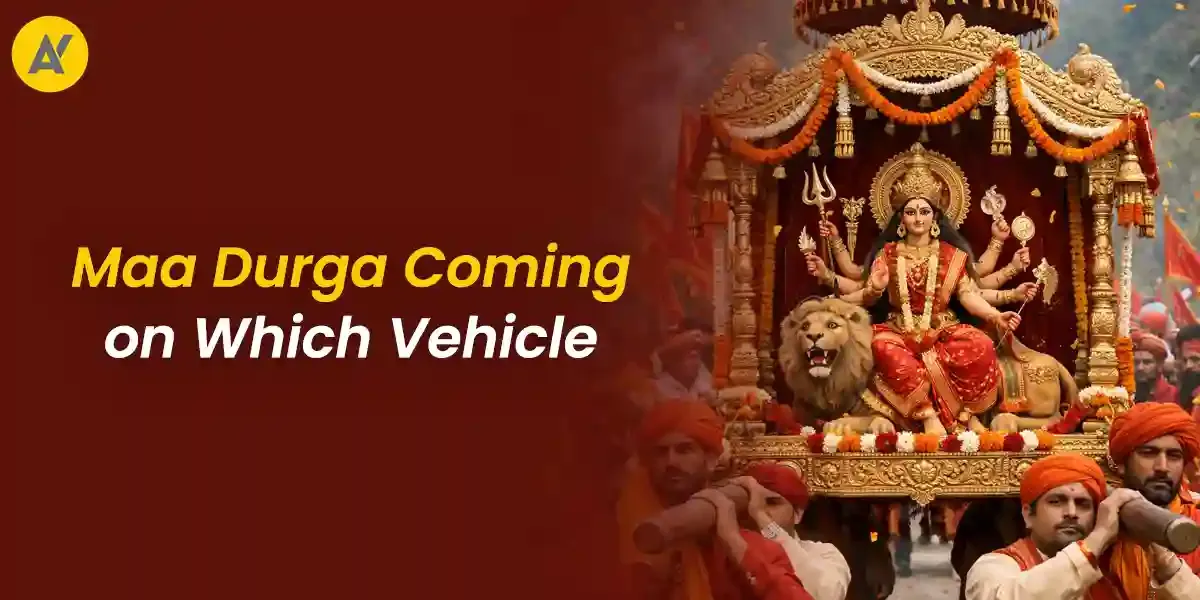
Every Navratri, one of the most searched questions is, “Maa Durga will come on which vehicle?” For Sharad Navratri 2026 (11–20 October), traditional Panchang rules determine the arrival vehicle based on the weekday on which Navratri begins and the departure vehicle based on the weekday on which it ends.
This year, as Navratri begins on Sunday, Maa Durga’s arrival vehicle is considered to be an elephant. Since Navratri ends on Tuesday, her departure vehicle is considered to be a horse.
Meaning Behind Maa Durga's Arriving and Departing Vehicle
The eternal vehicle of Durga Maa is the lion, but during Navratri she is believed to arrive and depart on different vehicles depending on the year. Each vehicle carries its own symbolic meaning, and this is what the elephant and horse are said to represent for 2026.
| 🌺 Navratri 2026 | 📅 Start Date | 📅 End Date | 🐘 Arrival Vehicle | 🐎 Departure Vehicle |
|---|---|---|---|---|
| Sharad Navratri (Ashwin) | 11 October, Sunday | 20 October, Tuesday | Elephant | Horse |
Meaning Behind Maa Durga Arriving on an Elephant
The elephant is traditionally seen as a highly auspicious sign. In Hindu belief, it represents stability, strength, patience, and abundance. When Maa Durga arrives on an elephant, it is generally interpreted as a positive indication for the coming year, pointing toward good rainfall, healthy agricultural growth, and overall prosperity.
Spiritual guides often add that observing Navratri with faith, generosity, and devotion can further strengthen these positive influences.
Meaning Behind Maa Durga Departing on a Horse
The horse carries a different kind of symbolism, tied to movement, speed, and change. When Maa Durga departs on a horse, it is traditionally read as a sign of a more dynamic period ahead, one that may bring faster shifts in society or governance, more activity, travel, or competition, and a greater need for courage, discipline, and consistent effort.
This is not considered a negative sign on its own. It is generally understood as a period where hard work and right action carry extra weight.
Also read: Complete Navratri Puja Samagri List: What are the Must-Have Items?
Why the Vehicle of Maa Durga's Arrival and Departure Changes Every Year
According to Hindu religious belief, the vehicle changes every year because it is determined by the Hindu lunar calendar and the specific weekday on which the festival begins and ends. Traditional Panchang calculations hold that the day of Ghatasthapana decides the vehicle of the goddess's arrival, while the final day of Navratri, Vijayadashami, determines the vehicle of her departure.
Each vehicle, such as the elephant, horse, palanquin, or boat, carries its own symbolic meaning and is believed to indicate the general conditions expected for the coming year. Devotees treat these as spiritual indicators related to rainfall, agriculture, economic stability, health, and social harmony rather than exact predictions.
It is worth noting that minor variations in this reading exist across regional Panchangs, so local priests or family traditions may offer slightly different interpretations.
Final Words
Navratri is not only a festival of devotion but also a time when many traditions reflect deeper cultural beliefs. The symbolism behind Maa Durga's arrival and departure vehicles keeps devotees spiritually connected to age-old customs and encourages reflection on the kind of year that lies ahead.
Team Astroyogi is an experienced in-house editorial team of passionate writers, researchers, and astrology enthusiasts dedicated to making ancient divination sciences more accessible and meaningful in everyday life. With years of collective experience in creating insightful astrology and spirituality content, the team specializes in simplifying complex spiritual concepts into practical guidance for readers seeking clarity, balance, and personal growth. The Astroyogi editorial team possesses expertise across a wide range of subjects, including Indian Astrology, Vedic Astrology, Planetary Transits, Horoscope Analysis, Vastu Shastra, Numerology, Tarot, Spiritual Wellness, and Ritual Practices. Every piece of content is carefully researched, fact-checked, and crafted with the intention of offering reliable, insightful, and easy-to-understand guidance rooted in traditional wisdom. Driven by a commitment to authenticity and reader trust, Team Astroyogi strives to create content that empowers individuals to navigate life’s opportunities and challenges with confidence, positivity, and inner peace. Their mission is to bridge ancient astrological knowledge with modern-day relevance, helping readers make informed decisions and lead more harmonious lives.