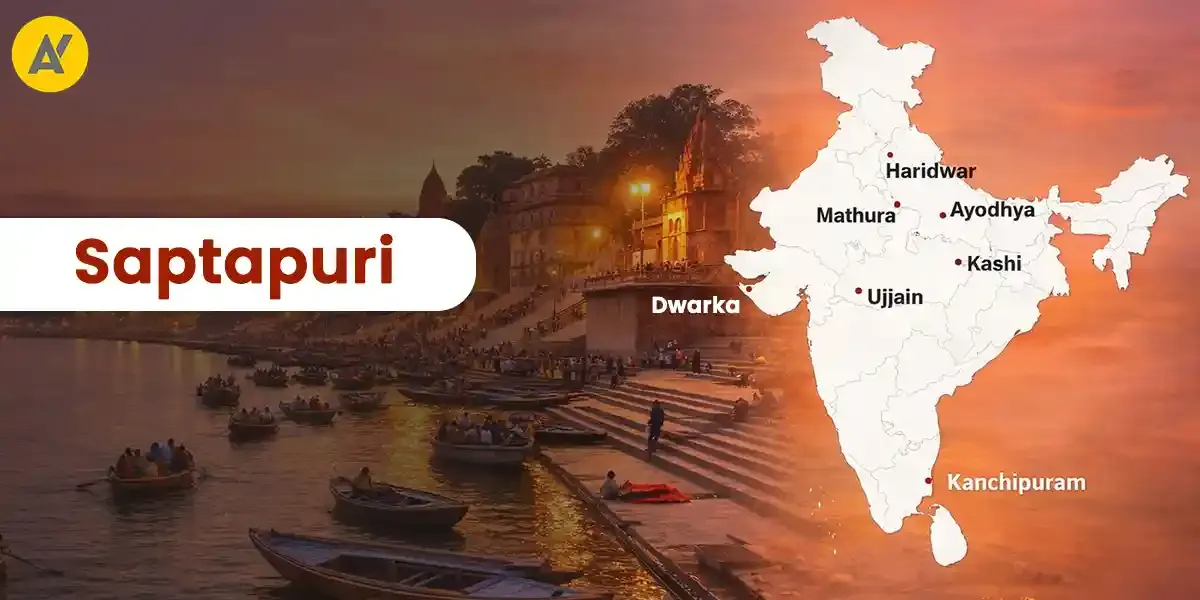


Saptapuri: Seven Sacred Cities
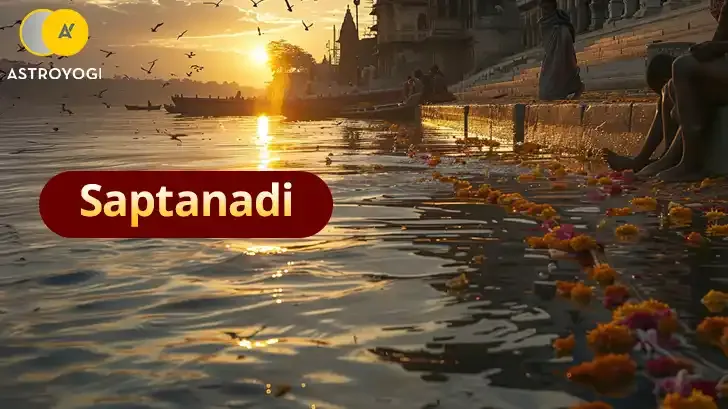
"Saptanadi" refers to the 7 sacred rivers of India, which hold immense spiritual, cultural, and historical significance. It also holds a deeper philosophical meaning, where they are the symbols of purity, motherhood, and life-giving energy flow. In Hinduism, rivers are not treated only as natural sources but also as goddesses, and therefore regular prayers and rituals are performed on their banks.
They also reflect the historical development of Indian civilization, which flourished along these river systems. They are not just rivers but are deeply interconnected in terms of geography, devotion, and spirituality, forming a single unified sacred system.
Even now, as we explore the 7 most sacred rivers in Hinduism and their significance, we are drawn into their deeper meaning, so let us take you through it.
Ganga (Ganges)
The Ganga River is regarded as the holiest river in Hinduism and is believed to connect heaven to earth; it is also thought to have descended from heaven to provide purification for wrongdoings. It is also respected not just as a natural waterway but as Ganga Mata, a living goddess.
Ganga is considered a pathway to liberation, and its water is believed to wash away sins, purify the soul, and free it from the cycle of rebirth. It flows through several major pilgrimage cities such as Haridwar, Prayagraj, Varanasi, and Patna, each of which holds deep religious importance.
Devotees visit these pilgrimage cities to seek blessings, take a holy dip in the river, and perform rituals and aartis on its banks. This deep emotional bond transforms the river into a sacred companion throughout human life.
Yamuna
The Yamuna River holds a sacred place in Hinduism, as it's closely connected with Lord Krishna. It is believed that he spent his childhood in Vrindavan and Mathura on its banks, performing divine plays near the river, which makes it the central site for Krishna and his divine plays. Therefore, devotees believe that the Yamuna’s waters carry spiritual power due to their divine connection with Lord Krishna.
In Hinduism, the Yamuna is worshipped as a goddess, believed to be the daughter of the Sun God Surya and the sister of the Death God Yama; due to this divine connection, the river is considered both protective and purifying. It is also believed that taking a holy dip in the Yamuna purifies sins and protects against the fear of death.
Saraswati
The Saraswati River is known as the most spiritual and mysterious river in Hinduism. It is believed to be a hidden river even though it's not seen today, but devotees believe that it still exists spiritually. It is connected with Goddess Saraswati, the goddess of wisdom, speech, music, and learning, symbolizing purity and knowledge in Hinduism.
It is often described as an invisible river flowing at the Triveni Sangam in Prayagraj, where it is believed to merge with the Ganga River and the Yamuna River in a subtle, spiritual form. Within this spiritual system, the Saraswati River acts as an intellectual and inner guiding force among the seven rivers.
Godavari
The Godavari River is also known as the Dakshini Ganga due to its immense spiritual and cultural significance in southern India. People often associate this river with abundance, nourishment, and strength. It represents the material and agricultural prosperity that sustains human life.
The most significant expressions of devotion are seen during the Godavari Pushkaram, when devotees gather in large numbers along the riverbanks to perform sacred baths, offer offerings to ancestors, and engage in charitable acts. Even today, despite environmental challenges, the devotion toward the Godavari remains strong. People continue to admire it with deep respect, treating its waters as sacred and powerful.
Narmada
Narmada is considered an extremely powerful and sacred river in Hinduism. It is believed that merely seeing the river is enough to cleanse sins, which sets it apart from Ganga, where bathing is emphasized.
In Hinduism, the river is personified as a goddess and is associated with Lord Shiva. Devotees believe that the Narmada originated from the sweat of Shiva during deep meditation, giving it a divine and mystical origin. Narmada represents a balance of spirituality and inner peace. And it is often seen as a river of meditation and inner transformation.
Sindu (Indus)
The Indus River, which is also known as the Sindhu in ancient texts. It is one of the oldest and most historically significant rivers in the world. It is described as the roaring river, often portrayed as the king of rivers due to its flow and energy.
Sindhu represents ancient continuity, strength, and the foundation of civilization. It is not just a physical river but also a cultural and spiritual symbol of life and prosperity for early Vedic people. The river reflects the outer strength and expansion of civilization. Moreover, it also reminds devotees of the powerful role rivers play in shaping not only spiritual beliefs but also societies, cultures, and histories.
Kaveri
The Kaveri River is one of the most sacred and culturally important rivers in southern India. It originates from the Brahmagiri Hills in the Western Ghats (Karnataka) and flows southeast through Karnataka and Tamil Nadu before emptying into the Bay of Bengal.
Devotees revere Kaveri as a goddess and nurturing mother. It is believed to have been born as the daughter of Sage Kavera, later blessed by the gods to become a sacred river that nourishes life. Devotees believe that bathing in the Kaveri purifies sins and brings prosperity and well-being.
The river stands for the life-giving and sustaining aspect of nature. It completes the seven-river system by representing the deep connection between devotion, agriculture, and daily life in southern India. It also represents nourishment, fertility, and maternal care.
Final Words
Saptanadi is believed to nourish both the land and the human spirit, sustaining agriculture, supporting civilizations, and guiding generations in faith and meaning.
They are not only sources of water but also sources of identity, continuity, and sacred energy that flow through India’s past, present, and future. They remind us that life itself is like the flow of a river, diverse in its paths but united by purpose.
Team Astroyogi is an experienced in-house editorial team of passionate writers, researchers, and astrology enthusiasts dedicated to making ancient divination sciences more accessible and meaningful in everyday life. With years of collective experience in creating insightful astrology and spirituality content, the team specializes in simplifying complex spiritual concepts into practical guidance for readers seeking clarity, balance, and personal growth. The Astroyogi editorial team possesses expertise across a wide range of subjects, including Indian Astrology, Vedic Astrology, Planetary Transits, Horoscope Analysis, Vastu Shastra, Numerology, Tarot, Spiritual Wellness, and Ritual Practices. Every piece of content is carefully researched, fact-checked, and crafted with the intention of offering reliable, insightful, and easy-to-understand guidance rooted in traditional wisdom. Driven by a commitment to authenticity and reader trust, Team Astroyogi strives to create content that empowers individuals to navigate life’s opportunities and challenges with confidence, positivity, and inner peace. Their mission is to bridge ancient astrological knowledge with modern-day relevance, helping readers make informed decisions and lead more harmonious lives.