


Monday, September 14, 2026 Paksha:Shukla Tithi:Chaturthi
Monday, September 14, 2026 Paksha:Shukla Tithi:Chaturthi
Tuesday, September 15, 2026 Paksha:Shukla Tithi:Panchami
Wednesday, September 16, 2026 Paksha:Shukla Tithi:Shashthi
Thursday, September 17, 2026 Paksha:Shukla Tithi:Saptami

Thursday, September 17, 2026 Paksha:Shukla Tithi:Saptami
Thursday, September 17, 2026 Paksha:Shukla Tithi:Saptami
Friday, September 18, 2026 Paksha:Shukla Tithi:Saptami
Friday, September 18, 2026 Paksha:Shukla Tithi:Saptami
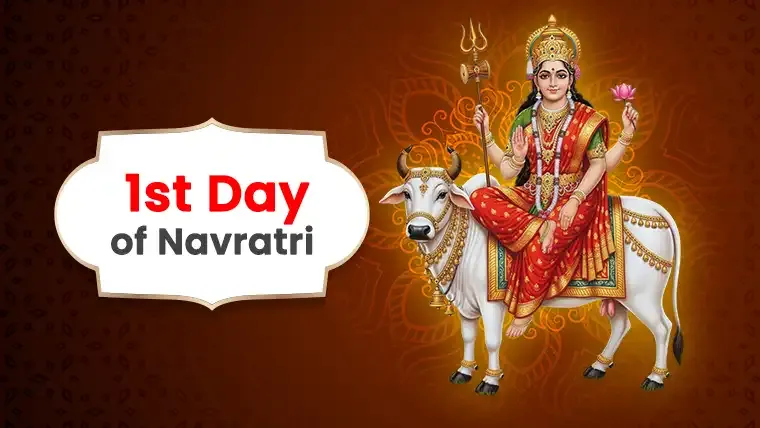
Navratri Day 1 (the first day of Navratri) marks the beginning of nine sacred nights dedicated to Goddess Durga and her nine forms, known as Navadurga. Each day (Navratra Day 1 to Day 9) is associated with a specific form of Devi (goddess), a color, rituals, and fasting rules that help devotees invite blessings, protection, and spiritual growth into their lives.
Navratri Day 1 Overview
The day 1 Navratri rituals and practices revolve around the worship of Maa Shailputri.
| Aspect | Details |
|---|---|
| Chaitra Navratri 1st Day 2026 Date | 19 March 2026 (Thursday) |
| Tithi | Pratipada (the first lunar day as per the Hindu Panchang) |
| Navratri Day | Navratri Day 1 |
| Goddess Worshipped | Maa Shailputri |
| Navratri First Day Color | White |
| Key Ritual | Ghatasthapana / Kalash Sthapna |
| Planet Associated | Moon |
What’s the Significance of the First Day of Navratri?
The first day of Navratri is extremely important because it marks the beginning of nine days of devotion and spiritual discipline. On this day, devotees invoke Goddess Durga’s energy into their homes through sacred rituals.
The Navratri day 1 goddess represents purity and divine power. Worshipping her is believed to remove obstacles and bring peace and prosperity to the household. Many devotees believe that performing rituals correctly on the 1st Navratri ensures divine blessings for the entire year.
Key spiritual meanings associated with Navaratri Day 1 include:
Beginning of the worship of the divine feminine energy
Spiritual cleansing of the mind and body
Setting positive intentions for the nine days ahead
Strengthening inner determination
Invoking protection and strength in life
Removing negativity from life
Victory of good over evil
Navratri Day 1 Goddess: Maa Shailputri
The Navratri 1st day goddess is Maa Shailputri, the first form of Goddess Durga among the Navadurga. The name Shailputri means “Daughter of the Mountain.” She is believed to be the daughter of the Himalayas and represents strength, purity, and devotion.
In Hinduism, Maa Shailputri is considered an incarnation of Goddess Parvati and is associated with purity, strength, and unwavering devotion. Her form symbolizes stability, patience, and spiritual power. Devotees worship her on the first Navratra to receive strength and determination.
Ghatasthapana: The Main Ritual of Navratri Day 1
Ghatasthapana, also called Kalash Sthapana, is considered the most important ritual of Navratri day 1 and marks the formal beginning of the festival.
During Ghatasthapana, a sacred Kalash filled with water is installed, topped with mango leaves and a coconut. The Kalash or Ghat represents the universe and the presence of Goddess Durga as Shakti (divine feminine energy) during all nine days of Navratri.
Steps of Ghatasthapana:
This ritual invites the blessings of the Navratri 1st day Devi into the home.
Clean the puja area and decorate it with rangoli and flowers
Fill a Kalash with holy water
Place mango leaves around the mouth of the Kalash
Put a coconut wrapped in red cloth (if possible) on top of the Kalash
Sow barley seeds around the Kalash
Invoke Goddess Durga/Maa Shailputri with mantras and aarti
Ghatasthapna Muhurat on the First Day of Navratri 2026
Chaitra Ghatasthapana Date – 19 March 2026 (Thursday)
Ghatasthapana Muhurat – 06:52 AM to 07:42 AM (IST)
Ghatasthapana Abhijit Muhurat – 12:04 PM to 12:53 PM (IST)
Puja Essentials (Samagri) for Navratri 1st Day
To perform the Navratra day 1 puja properly, several essential items are prepared and gathered, such as. Preparing these items ensures a complete and traditional first day of Navratri puja.
Idol or picture of Maa Durga/Maa Shailputri.
Kalash (made of copper, clay, or steel), clean water or Gangajal, coins, betel nut (supari), durva grass, akshat (whole rice grains).
Coconut, mango leaves, red cloth, or chunari (sacred scarf) for the Kalash and Devi.
Pooja thali (ritual tray) with roli, kumkum (red powder), haldi (turmeric) powder, chandan (sandalwood paste), akshat, and sindoor.
Flowers and garlands (marigold, hibiscus, jasmine, etc.).
Diya (especially ghee diya), dhoop, incense sticks, and camphor.
Sweets, fruits, panchamrit (a sacred mixture of five natural ingredients: milk, yogurt (curd), honey, sugar (or jaggery), and ghee), and other sattvic prasad items.
Ghanti (bell), shankh (conch), and, if desired, a japa mala (rudraksha or tulsi) for mantra chanting.
Puja Rituals for Navratri Day 1
Devotees follow several rituals when worshipping Maa Shailputri on Navratri day 1.
Morning Rituals:
Wake up early and take a bath
Clean the house and puja area
Wear clean or new clothes
Perform Ghatasthapana
Worship of Maa Shailputri
After the Kalash is established, devotees begin the worship of the Navratri first- day goddess.
Typical worship rituals include:
Offering flowers and garlands
Applying sandalwood paste or kumkum to the idol
Lighting a ghee diya
Offering fruits and sweets
Chanting the Navratri day 1 mantra
Aarti, Bhajans, and Katha:
Devotees perform morning and evening aarti with devotional songs dedicated to Goddess Durga and Maa Shailputri.
Reading sacred texts such as Durga Saptashati is also considered auspicious on the 1st day of Navratri.
Perform morning and/or evening aarti with a bell and conch, singing Durga aarti or bhajans dedicated to Shailputri.
Read or listen to Maa Shailputri Vrat Katha and Navadurga stories to understand the deeper meaning of Navratra Day 1.
Navratri Day 1 Mantra
Chanting mantras helps devotees connect spiritually with the Navratri 1st day goddess. This Navratri 1st day mantra is dedicated to Maa Shailputri and is believed to bring strength and divine protection.
|| Om Devi Shailputryai Namah ||
Color of the 1st Day of Navratri: White
The first day of Navratri is associated with the color white, which represents purity, peace, and calmness.
Devotees often wear white clothing and offer white flowers such as jasmine, lilies, or mogra while worshipping Maa Shailputri. This color is believed to bring mental clarity, positive energy, and harmony within the home.
Auspicious Offerings, Flowers, and Bhog on Day 1 of Navratri
Offerings on the first day of Navratri are selected to honor the pure, grounded, and nurturing essence of Maa Shailputri, who embodies stability and divine strength from the mountains.
Flowers: White lotus, jasmine, marigold, and lotus flowers are traditionally preferred, symbolizing purity and devotion. Red hibiscus is also offered to invoke her protective Shakti (divine feminine power) energy.
Bhog: Simple sattvik offerings like white kheer, rice pudding, fresh fruits (especially bananas and whole coconuts), and milk-based sweets such as peda or barfi are ideal. Cow ghee-based preparations are believed to enhance the grounding vibrations.
Special offerings: Devotees often present coconut (shriphala), honey, or pure ghee to Maa Shailputri, as these represent wholeness and blessings of well-being.
Fasting Rules for the 1st Day of Navratri
Fasting is an important part of the observance of Navratri day 1. Navratri vrat (fasting) on day 1 is seen as a powerful way to purify the body and mind and align with the Devi’s energy. On the first day, devotees prefer to eat fruits, buckwheat flour, etc., and avoid common salt, wheat, rice, and other things. For the whole list, you can read the fasting rules here.
Do’s and Don’ts for Navratri Day 1
Here are a few crucial things one needs to keep in mind when celebrating the 1st day of Navratri.
Do’s:
Start the 1st day of Navratri with a clean body, a clean home, and a clear intention.
Perform Ghatasthapana/Kalash Sthapana at the right muhurat or auspicious time.
Wear clothes based on the Navratri first day color and maintain a sattvic lifestyle.
Chant Maa Shailputri mantras, perform daily aarti, and share prasad with family or guests.
Don’ts:
Avoid negative speech, anger, and conflicts; try to keep thoughts and actions pure.
Do not move or disturb the Kalash once it is established, unless prescribed by the ritual at the end of Navratri.
Avoid consuming alcohol, tobacco, non-veg, and restricted foods during vrat.
The 1st day of Navratri marks the sacred beginning of nine days of devotion dedicated to the divine feminine power. By worshipping Maa Shailputri, performing Ghatasthapana, chanting the Navratri day 1 mantra, and observing vrat rituals, devotees invite strength, purity, and blessings into their lives.
Understanding the rituals, Navratri first-day color, offerings, and spiritual significance helps devotees celebrate Navratri day 1 with deeper faith and awareness, setting the tone for a meaningful and spiritually uplifting Navratri festival.
Festival List
- Nag Panchami
- Raksha Bandhan
- Janmashtami
- Ganesh Chaturthi
- Onam
- Pitru Paksha
- Shardiya Navratri
- Durga Puja
- Dussehra
- Karwa Chauth
- Dhanteras
- Diwali
- Govardhan Puja
- Bhai Dooj
- Chhath Puja
- Tulsi Vivah
- Guru Nanak Jayanti
- Christmas
- New year
- Lohri
- Pongal
- Makar Sankranti
- Vasant Panchami
- Shivratri
- Ramadan
- Holi
- Good Friday
- Navratri
- Gudi Padwa
- Ugadi
- Vaisakhi
- Ram Navami
- Mahavir Jayanti
- Hanuman Jayanati
- Buddha Purnima
- Akshay Tritiya
- Shani Jayanti
- Guru Purnima
- Hariyali Teej