

Navratri Fasting Rules: A Complete Guide to Eating Right and Staying Devotional
Navratri is a nine-day festival dedicated to Goddess Durga, celebrated with devotion, rituals, and fasting. Fasting during this period is a way to purify the body, calm the mind, and focus on spiritual growth. It’s about mindful eating and following certain rules to respect the tradition.
For many devotees, these nine days go beyond fasting; they're also about reconnecting with faith and inner strength. Understanding Navratri fasting rules helps one maintain their energy, stay healthy, and follow rituals correctly.
This guide explains what you can eat, what to avoid, and tips to observe the fast effectively.
Why Fasting Matters During the Navratri Celebration?
Fasting or Vrat during Navratri is connected to physical and spiritual well-being. Each day of the nine days of Navratri is dedicated to a different form of Goddess Durga, known as Navdurga, encouraging reflection and discipline.
Physically, fasting helps improve digestion, regulate metabolism, and boost immunity. Spiritually, it cultivates patience, devotion, and focus. Following Navratri vrat rules also creates a sense of routine, keeping the mind calm and the body energized.
Basic Navratri Fasting Rules
Observing a Navratri fast requires following specific rules. Here are the main guidelines:
Timing of the Fast
The fast usually begins at sunrise and ends at sunset. Some people have only one meal in the evening, while others may have two light meals, ensuring they follow fasting norms.
Foods to Avoid
Non-vegetarian food, alcohol, and grains like rice, wheat, and pulses are avoided. Onion and garlic are often restricted as they are considered tamasik and can disturb concentration. Moreover, processed and packaged foods should be avoided.
*Note: Tamasik (or tamasic) foods are said to promote inertia, lethargy, heaviness, and mental confusion.
Preferred Foods
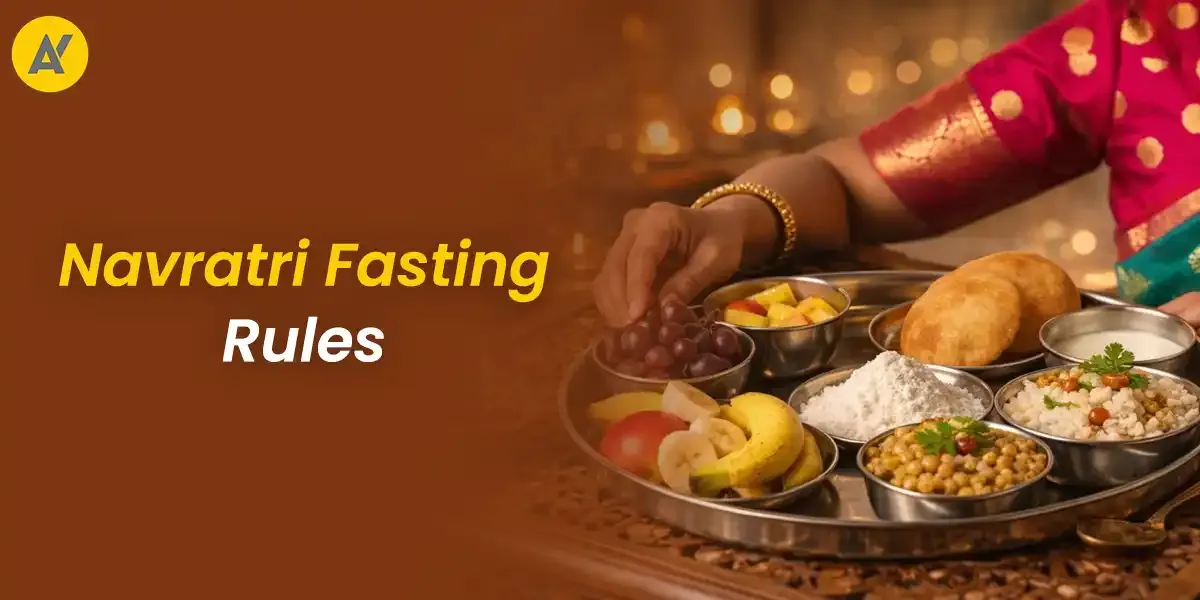
Sattvik foods like fruits, milk, yogurt, nuts, certain vegetables, and flours like buckwheat (kuttu), samak rice or atta (from barnyard millet), and water chestnut (singhara) are permitted. Root vegetables such as potatoes, sweet potatoes, and carrots are also commonly used.
*Note: Sattvik food is a pure, plant-based diet rooted in Ayurveda designed to promote mental clarity, physical strength, and inner peace.
Hydration
Drink plenty of water, coconut water, herbal teas, or milk-based drinks. Limit caffeine-heavy drinks, though small amounts of black coffee or green tea are sometimes consumed (in moderation).
Mindful Eating
Eat in moderation. Fasting is about discipline and self-control, not overeating. Heavy meals can reduce energy and defeat the purpose of the fast.
Do also read: Kalash Sthapana muhurat Date, Time, Puja Vidhi and Mantras
Navratri Fasting Food List: What You Can Eat
Here’s an essential list of foods that are considered safe during the Navratri fast:
Fruits: Banana, apple, papaya, pomegranate, coconut
Nuts & Seeds: Almonds, cashews, peanuts, makhana (fox nuts), pumpkin seeds, sunflower seeds, sesame seeds
Vegetables: Potato, sweet potato, pumpkin, cucumber, carrots, bottle gourd, beetroot
Dairy: Milk, paneer, yogurt, buttermilk, ghee (made of cow milk)
Flours & Grains: Buckwheat flour (kuttu atta), water chestnut flour (singhara), amaranth flour (rajgira)
Snacks: Roasted makhana, sabudana (tapioca or sago pearl) khichdi, vegetable patties
Spices & Extras: Sendha namak, cumin (jeera), ajwain (carrom seeds), fennel (saunf), ginger, green chilies, and hing (asafoetida).
Drinks: Coconut water, fresh fruit juices without additives, lassi, herbal teas.
Sweets: Jaggery, honey (in moderation)
Types of Navratri Fasts
Here are some of the common forms of Navratri Vrats that people typically follow:
- Nirjal Vrat (Fast without water)
It is the strictest Navratri fast and requires complete abstinence from both food and water.
This fast should only be attempted if health allows, preferably with guidance.
- Phalahar Vrat (Fruit-based Fast)
During this fast, one only eats fruits, milk, yogurt, and dried fruits. It keeps the body feeling light and provides energy.
- Partial Fast
This involves eating one full meal a day and consuming fruits or milk during the rest of the time. It is a suitable option for people with busy schedules.
- Full Fast
In this fast, one consumes dishes prepared only using ingredients permitted during the Navratri vrat. This routine is considered balanced and nutritious.
Useful Tips for Observing Navratri Fast
Here’s what you should keep in mind:
Plan Your Meals
Preparing fasting-friendly meals in advance helps avoid last-minute temptations and keeps your energy steady.
Avoid Heavy Spices and Oil
Keep meals light and easy to digest. Use minimal oil and avoid onion and garlic.
Stay Active but Calm
Gentle yoga, meditation, or a short walk helps balance energy. Avoid heavy workouts unless you are used to them.
Listen to Your Body
If you feel weak, modify the fast by drinking more fluids or eating small portions of allowed foods. Staying hydrated and eating the right fasting foods is essential for maintaining energy.
Combine Spiritual and Physical Discipline
Fasting during Navratri is most meaningful when paired with prayer, chanting, and meditation. Mindful eating aids in making the spiritual practice stronger.
This may interest you: Happy Chaitra Navratri 2026: Wishes, Messages & Blessings to Share with Loved Ones
Benefits of Navratri Fasting
Some of the advantages of keeping a Navratri fast are:
Physical Health: It supports detoxification, improves digestion, and helps maintain balanced weight.
Mental Clarity: Simple meals and routine can improve focus and calmness.
Spiritual Growth: Fasting supports cultivating discipline, patience, and devotion.
Sustained Energy: Light, protein-rich foods like nuts, fruits, and dairy help sustain stamina and energy levels throughout the day.
Common Mistakes to Avoid
Skipping hydration: Drink enough water and herbal drinks.
Overeating: Stick to light meals. Large portions can reduce energy.
Ignoring spiritual practices: Devotion is the key purpose of fasting.
Eating restricted foods: Onion, garlic, grains, and non-vegetarian items should be avoided for traditional fasting benefits.
Common Questions About Navratri Fasting Diet
Many people have questions about what can be eaten during the fast. Here are answers to some of the most common doubts:
Can I drink coffee during the Navratri fast?
Black coffee or green tea in moderation is generally allowed. Avoid milk-heavy or sugar-laden versions.
Are dry fruits allowed?
Yes. dry fruits like almonds, cashews, raisins, and dates are nutritious and help maintain energy levels.
Can I eat paneer, cheese, or yogurt?
Dairy products are permitted. Paneer and milk provide protein, which is helpful during fasting.
Which vegetables are allowed?
Pumpkin, bottle gourd, cucumber, carrots, and sweet potatoes are safe choices.
Are snacks like makhana and corn allowed?
Prefer roasted makhanas, as they are light, nutritious snacks commonly eaten during fasting.
Can sweets like rasgulla or rasmalai be eaten?
Homemade milk-based sweets made from milk or khoya are preferred in moderation. Avoid store-bought sweets that may contain non-fasting ingredients.
Final Words
Navratri fasting is a practice of discipline, devotion, and mindful nutrition. Following the fasting rules, eating appropriate foods, and maintaining a simple routine can make the nine-day period energizing and spiritually fulfilling.
Fasting is not about restriction alone; it is a way to cleanse the body, focus the mind, and strengthen your connection with the divine Goddess Durga. By understanding the rules and following them carefully, you can experience physical, mental, and spiritual benefits.
Happy and blessed Navratri!
Team Astroyogi is an experienced in-house editorial team of passionate writers, researchers, and astrology enthusiasts dedicated to making ancient divination sciences more accessible and meaningful in everyday life. With years of collective experience in creating insightful astrology and spirituality content, the team specializes in simplifying complex spiritual concepts into practical guidance for readers seeking clarity, balance, and personal growth. The Astroyogi editorial team possesses expertise across a wide range of subjects, including Indian Astrology, Vedic Astrology, Planetary Transits, Horoscope Analysis, Vastu Shastra, Numerology, Tarot, Spiritual Wellness, and Ritual Practices. Every piece of content is carefully researched, fact-checked, and crafted with the intention of offering reliable, insightful, and easy-to-understand guidance rooted in traditional wisdom. Driven by a commitment to authenticity and reader trust, Team Astroyogi strives to create content that empowers individuals to navigate life’s opportunities and challenges with confidence, positivity, and inner peace. Their mission is to bridge ancient astrological knowledge with modern-day relevance, helping readers make informed decisions and lead more harmonious lives.