


Saturday, November 7, 2026 Paksha:Krishna Tithi:Chaturdashi

Saturday, November 7, 2026 Paksha:Krishna Tithi:Chaturdashi

Saturday, November 7, 2026 Paksha:Krishna Tithi:Chaturdashi
Sunday, November 8, 2026 Paksha:Krishna Tithi:Amavasya


Sunday, November 8, 2026 Paksha:Krishna Tithi:Amavasya

Sunday, November 8, 2026 Paksha:Krishna Tithi:Amavasya

Sunday, November 8, 2026 Paksha:Krishna Tithi:Amavasya

Sunday, November 8, 2026 Paksha:Krishna Tithi:Amavasya
Sunday, November 8, 2026 Paksha:Krishna Tithi:Amavasya
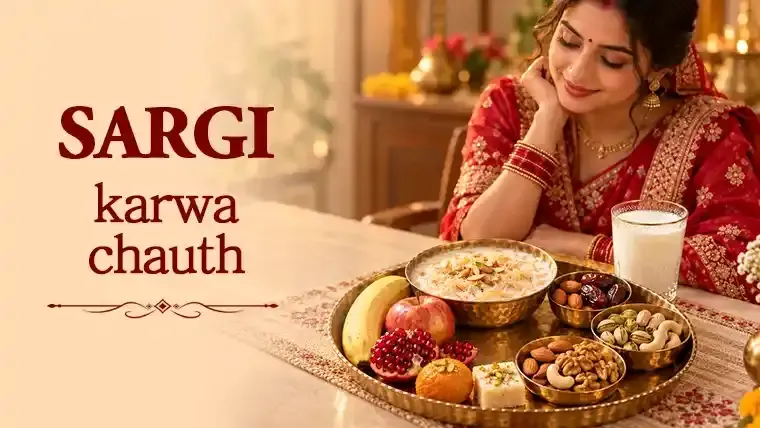
Sargi is the sacred pre-dawn meal eaten before sunrise on Karwa Chauth. Traditionally, a mother-in-law gives it to her daughter-in-law as a blessing before the day-long nirjala fast begins.
For Karwa Chauth 2026, the vrat falls on Thursday, October 29, 2026. Sargi must be finished before local sunrise on that morning.
Karwa Chauth 2026: Key Timings
Karwa Chauth is observed on Kartik Krishna Paksha Chaturthi. In 2026, the Chaturthi tithi begins at 1:06 AM and ends at 10:09 PM on October 29, so the vrat is widely observed on that date.
The table below lists reference timings for Delhi. Sargi time, puja muhurat, and moonrise differ from city to city.
| Ritual | Delhi Reference Time | Note |
|---|---|---|
| Sargi Preparation | Night before or from 3:00 AM | Food and thali are arranged in advance |
| Karwa Chauth Sargi Eating Time | 3:30 AM to 5:30 AM | General published window, adjusted to local sunrise |
| Brahma Muhurta | 4:47 AM to 5:39 AM | Considered especially auspicious for sargi and sankalp |
| Latest Sargi Time | Around 6:00 AM | Sunrise in Delhi is around 6:30 AM |
| Fasting Begins | After sargi and sunrise | No food or water in the traditional nirjala vrat |
| Evening Puja Muhurat | 5:38 PM to 6:56 PM | Puja, katha, and karwa ferna are performed |
| Moonrise | Around 8:17 PM | Varies by city |
What Is Sargi in Karwa Chauth?
Sargi is the first meal of Karwa Chauth. It is eaten before sunrise by the woman observing the vrat.
After sargi, the fast vow is taken. Food and water are traditionally avoided until moonrise.
The mother-in-law sends or serves it to bless the daughter-in-law, welcome her into the family, and wish her strength for the fast.
In many households, the daughter-in-law eats sargi after bathing, dressed in festive or traditional clothes, and after receiving blessings from elders. In other families, the meal comes first, and the bath follows later. Both practices exist, depending on local custom.
Spiritual Meaning of Sargi
Sargi carries three connected ideas.
Blessing and acceptance: The mother-in-law's sargi symbolizes affection, acceptance, and good wishes for the daughter-in-law's married life.
Devotion and discipline: Eating before sunrise marks the formal start of the vrat. After this meal, self-restraint continues until moonrise.
Care for the body: Since the fast is traditionally waterless, sargi is meant to provide lasting energy, hydration, and nourishment.
Karwa Chauth Sargi Items List
A traditional sargi thali includes foods that are filling, mildly sweet, hydrating, and easy to digest. Families customize the list, but the items below are the most common.
Traditional Food Items
| Category | Items |
|---|---|
| Sweets | Pheni, meethi seviyan, seviyan kheer, pheni with milk, halwa, laddoo, barfi |
| Fruits | Banana, apple, pomegranate, papaya, orange, sweet lime, melon, seasonal fruits |
| Dry fruits | Soaked almonds, walnuts, cashews, raisins, dates, figs, pistachios |
| Savory items | Mathri, meethi mathri, namkeen mathri, light sabzi, poha, and dalia in some homes |
| Main food | Roti, chapati, paratha with ghee, light stuffed paratha |
| Dairy | Milk, curd, buttermilk, kheer, paneer-based dishes |
| Hydrating foods | Coconut water, fresh coconut, cucumber, melon, citrus fruits |
| Beverages | Milk, tea, coffee, juice, lassi, and coconut water, as per family custom |
Auspicious Items in the Sargi Thali
Some items are included for blessings and shagun, even when they are not eaten.
Sindoor
Bindi
Bangles
Coconut
Sweets or mithai
Mehndi, clothes, jewelry, or a small gift
A red chunri, dupatta, or festive item, based on family tradition
How to Make Sargi for Karwa Chauth
There is no rigid recipe for sargi. The best version balances carbohydrates, protein, healthy fats, fluids, and natural sugars, so the fasting woman stays comfortable through the day.
Classic Sargi Menu
Pheni or seviyan kheer: Full-fat or toned milk is simmered, then pheni or thin vermicelli, sugar or jaggery, cardamom, and chopped nuts are added.
Fruit bowl: Banana, apple, pomegranate, papaya, and other seasonal fruit make a fresh, hydrating base.
Soaked dry fruits: Almonds, walnuts, dates, figs, and raisins are easier to digest after soaking.
Light paratha or roti: One or two wheat parathas made with ghee, sometimes paired with a mild sabzi.
Curd or milk: A bowl of curd, a glass of milk, or a small serving of kheer.
Coconut water: Coconut water or fresh coconut pieces support hydration.
Healthy Sargi Ideas
High-energy sargi: Pheni kheer, banana, soaked almonds, dates, and coconut water.
Protein-rich sargi: Curd, paneer bhurji, nuts, milk, and fruit.
Light sargi: Fruit, dalia, curd, coconut water, and a small portion of dry fruits.
Traditional Punjabi-style sargi: Pheni, mathri, fruit, dry fruits, paratha, curd, and sweets.
Foods to Avoid at Sargi
Very salty snacks, pickles, papad, and fried food, which can increase thirst
Excessively oily parathas and heavy sweets, which can cause bloating
Large amounts of tea or coffee on an empty stomach, especially when acidity is a concern
Any food after sunrise, since sargi must be completed before the fast begins
If you want to know the precise chandrodaya (moonrise) timings for your location or understand specific fasting rituals tailored to you, consult with a verified astrologer on Astroyogi today for personalized guidance.
Karwa Chauth Sargi Thali: Full Arrangement
The sargi thali is usually arranged the night before or early in the morning. It should look festive, but its main purpose is to offer a complete, nourishing pre-fast meal.
Suggested Thali Layout
Center: Pheni, seviyan kheer, or another sweet dish
First side: Fresh fruit bowl
Second side: Soaked dry fruits and nuts
Third side: Mathri, paratha, roti, or a light savory snack
Fourth side: Curd, milk, or buttermilk
Corner: Coconut water or fresh coconut
Decorative section: Sindoor, bindi, bangles, and sweets
Optional: A small gift, red chunri, or shagun item from the mother-in-law
Sargi Ritual: Step by Step
The day begins before sunrise, ideally during Brahma muhurta.
A bath and clean or festive clothes follow, if that is the household custom.
Sargi is received from the mother-in-law or another elder, along with blessings.
The full meal is eaten calmly before sunrise, without rushing.
The vrat sankalp is taken, with the resolve to observe Karwa Chauth for the husband's health, long life, and happiness.
The nirjala fast begins, with no food or water.
Mehndi is applied, and the puja thali is prepared during the day.
The evening puja and katha are attended, usually with other women.
After the actual moonrise, Arghya is offered, the moon is viewed through a sieve, and then the husband is seen.
The fast is broken with water and food offered by the husband or an elder family member.
Karwa Chauth Vrat Katha and Sargi
The most widely told Karwa Chauth story is that of Queen Veeravati. On her first Karwa Chauth, she stayed at her parents' home and fasted with her sisters-in-law.
Unable to bear the hunger and thirst, she was tricked into believing the moon had risen. She broke her fast before the real moonrise.
According to the legend, her husband's life was affected because the fast was ended improperly. Veeravati then prayed with deep devotion, and through divine grace and continued observance of the vrat, her husband was restored.
The story highlights sincerity, patience, and keeping the fast until the moon is truly seen.
Another important legend is that of Savitri and Satyavan. Savitri's devotion and determination are linked with protecting her husband's life, which ties into the festival's wider theme of marital devotion.
Sargi Etiquette and Family Customs
The mother-in-law traditionally sends sargi early in the morning, often before sunrise.
The daughter-in-law touches the elder's feet or seeks blessings before eating, according to family practice.
Some families add a small gift, clothes, jewelry, or sweets to the sargi as shagun.
When the mother-in-law lives in another city, sargi may be sent through a family member, courier, or delivery service. The sentiment and the pre-sunrise meal remain central.
Women often eat sargi together, share blessings, and prepare for the day's rituals as a group.
Frequently Asked Questions
What is the difference between sargi and baya?
Sargi is the pre-dawn meal eaten by the fasting woman. Baya is the collection of items, such as sweets, mathri, fruits, clothes, and gifts, that women may carry or exchange during Karwa Chauth rituals.
Can unmarried women keep Karwa Chauth?
Yes. The festival is mainly observed by married women for their husbands' well-being. Some unmarried women also observe it, praying for a suitable partner.
What should be eaten first after the fast?
After moon darshan and arghya, the husband customarily offers water and sweets. The meal begins with water, followed by light food such as fruit, curd, khichdi, dal, or a simple home-cooked meal. Very heavy fried food is best avoided right away.
Festival List
- Nag Panchami
- Raksha Bandhan
- Janmashtami
- Ganesh Chaturthi
- Onam
- Pitru Paksha
- Shardiya Navratri
- Durga Puja
- Dussehra
- Karwa Chauth
- Dhanteras
- Diwali
- Govardhan Puja
- Bhai Dooj
- Chhath Puja
- Tulsi Vivah
- Guru Nanak Jayanti
- Christmas
- New year
- Lohri
- Pongal
- Makar Sankranti
- Vasant Panchami
- Shivratri
- Ramadan
- Holi
- Good Friday
- Navratri
- Gudi Padwa
- Ugadi
- Vaisakhi
- Ram Navami
- Mahavir Jayanti
- Hanuman Jayanati
- Buddha Purnima
- Akshay Tritiya
- Shani Jayanti
- Guru Purnima
- Hariyali Teej