



Sunday, October 25, 2026 Paksha:Shukla Tithi:Purnima

Sunday, October 25, 2026 Paksha:Shukla Tithi:Purnima
Monday, October 26, 2026 Paksha:Krishna Tithi:Prathama
Monday, October 26, 2026 Paksha:Krishna Tithi:Prathama
Monday, October 26, 2026 Paksha:Krishna Tithi:Prathama
Wednesday, October 28, 2026 Paksha:Krishna Tithi:Tritiiya

Thursday, October 29, 2026 Paksha:Krishna Tithi:Chaturthi
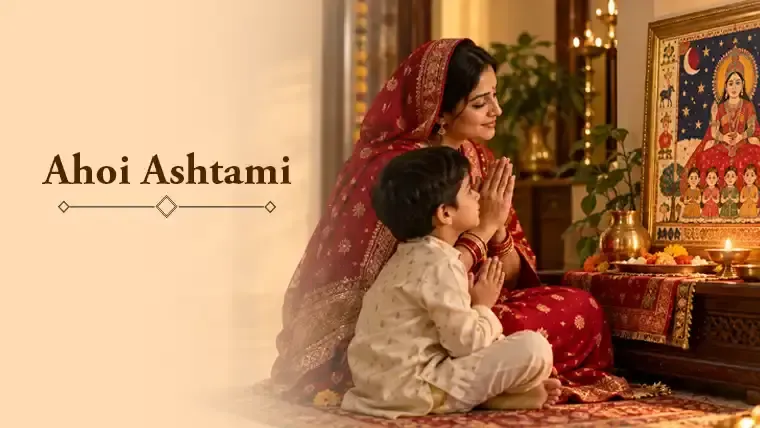
Ahoi Ashtami is a Hindu fasting festival dedicated to Goddess Ahoi Mata. Mothers traditionally observe it to pray for the well-being, happiness, and long life of their children. The festival is especially popular in North Indian households.
The main observances include fasting, evening worship, listening to the vrat katha, and offering water to the stars. Some families offer it to the Moon instead. Understanding the festival begins with the beliefs and story behind it.
When Is Ahoi Ashtami in 2026?
Ahoi Ashtami falls on Sunday, November 1, 2026. The Ahoi Ashtami vrat date and the main evening puja date are the same.
| Detail | Information |
|---|---|
| Ahoi Ashtami Date | Sunday, November 1, 2026 |
| Ahoi Ashtami Vrat Date | Sunday, November 1, 2026 |
| Ashtami Tithi Begins | November 1, 2026, at 2:51 PM IST |
| Ashtami Tithi Ends | November 2, 2026, at 1:10 PM IST |
| Calendar Reference | Kartik (Purnimanta) or Ashwin (Amanta), Krishna Paksha Ashtami |
Note: The tithi continues into November 2, but the festival is observed on November 1, when the evening puja falls within Ashtami.
Ahoi Ashtami 2026: Puja Time and Shubh Muhurat
The timings below are for New Delhi, India (IST).
| Detail | Timing |
|---|---|
| Ahoi Ashtami Puja Time | 5:36 PM to 6:54 PM |
| Puja Muhurat Duration | 1 hour 18 minutes |
| Evening Star-Sighting Time | Approximately 6:00 PM |
The Ahoi Ashtami puja muhurat is the period set aside for evening worship. It falls around Sandhya, the time near sunset.
The timings above apply to New Delhi and should not be treated as a single schedule for all of India or for other countries. A panchang for the specific city gives the most accurate timings.
What Is the Star Rise Time on Ahoi Ashtami?
For November 1, 2026, the star-sighting time in New Delhi is approximately 6:00 PM IST. This is the reference for families concluding the fast after seeing stars.
Star-sighting time is different from moonrise. Families that follow the moon-sighting custom should check a local panchang for the exact moonrise time in their city.
What Is the Significance of Ahoi Ashtami?
The central purpose of the Ahoi Ashtami vrat is devotional. Mothers fast and worship Goddess Ahoi Mata to seek blessings for their children's health, protection, and happiness.
Older descriptions often mention sons specifically. Today, the observance is widely understood as a prayer for all children, sons and daughters alike. These are religious beliefs and practices, not guarantees of particular outcomes.
Who Is Ahoi Mata?
Goddess Ahoi Mata is the deity worshipped on this day. Devotees see her as a protective mother figure who blesses children and families.
In the puja, her image is drawn on a wall or placed as a printed picture. The image usually includes Syahu or Sei, an animal figure with her young, which connects directly to the festival's story.
What Does "Ahoi Ashtami" Mean?
Ashtami means the eighth lunar day. The festival falls on the eighth day of the waning fortnight, known as Krishna Paksha, which gives it its name.
The festival is also called Ahoi Aathe. Different regions and families may explain the word "Ahoi" in different ways.
What Is the Story Behind Ahoi Ashtami?
Several versions of the katha are told across communities. One widely shared version is summarized below.
The accidental harm and the curse
A moneylender lived with his seven sons, a daughter, and seven daughters-in-law. Before Diwali, his daughter went with her sisters-in-law to collect soil. While digging, she accidentally killed a young animal belonging to Syahu, whose den was in the ground.
The grieving mother cursed the daughter so that she would never become a mother. Distressed, the daughter asked her sisters-in-law to take the curse in her place. Only the youngest agreed. After that, each of her children died soon after birth.
Service and compassion
The youngest daughter-in-law sought help and was advised to serve the Surhi cow. Pleased by her care, the cow agreed to take her to Syahu Mata.
On the way, she saw a snake threatening the young of Garuda Pankhini, a divine bird, and killed it to protect them. When the bird returned, it first misunderstood the scene and attacked her. After learning the truth, the bird became grateful and helped her continue the journey.
The blessing
When they reached Syahu Mata, she was pleased by the daughter-in-law's compassionate deeds. She blessed her with a flourishing family of seven sons and seven daughters-in-law.
What Does the Story Teach?
The katha highlights repentance, compassion, and care for living beings. The daughter-in-law serves, protects, and comforts others before receiving the blessing.
This theme connects naturally to the prayers mothers offer for their children. Regional versions of the story differ in details. The katha is a devotional narrative about care and restoration, not an explanation for real-life infertility, bereavement, or childhood illness.
How Is Ahoi Ashtami Celebrated?
The day follows a simple progression.
Morning bath and sankalp, a devotional resolution to observe the fast.
Observing the vrat according to family tradition.
Preparing the image and puja space.
Evening worship and offerings.
Reading or listening to the katha.
Performing the aarti.
Offering arghya and concluding the fast.
Details such as quantities and vessel arrangements are covered in the puja section below.
Why Are Stars Worshipped on Ahoi Ashtami?
The fast is traditionally concluded after the evening puja. Most families end it after sighting stars and offering water, known as arghya, to them.
Some households follow a moon-sighting tradition instead and wait until moonrise. Because moonrise is late on this day, star-sighting is more common. Each family follows its inherited custom.
Who Observes the Vrat?
Mothers traditionally observe the Ahoi Ashtami vrat for their children. Today, prayers include both sons and daughters.
Some women who wish to become mothers also worship on this day. This is a matter of faith and religious practice, not a promise of any result.
How to Perform Ahoi Ashtami Puja
Ahoi Ashtami Puja Samagri
Materials vary by family tradition, and not every household uses every item.
Commonly used materials
Ahoi Mata image, poster, or wall drawing
Image of Syahu or Sei and her young
Clean wooden chowki or a designated puja space
Water-filled kalash
Karwa or a small water vessel
Roli or kumkum
Akshat (unbroken rice)
Flowers
Diya and incense
Ahoi Ashtami Katha text
Offerings prepared according to family custom
Fruits and homemade sweets
Puri, pua, and halwa
Wheat or other customary grains
Community-specific items
- Silver Ahoi or Syau pendant
Preparing the Ahoi Mata Image
Traditionally, Goddess Ahoi Mata is drawn on a wall. One tradition describes an eight-cornered design, called Ashta Koshthak, which is linked to Ashtami. When wall drawing is not possible, a large printed image works well.
The image also shows Syahu or Sei with her young. These figures recall the katha and its message of compassion toward young life.
Step-by-Step Ahoi Ashtami: Puja Vidhi
Make the sankalp. After a morning bath, a resolution is made to observe the fast and worship Goddess Ahoi Mata for the children's well-being.
Prepare the worship space. The area is cleaned, and the image, vessels, flowers, and offerings are arranged before evening.
Install or draw the image. The image of Goddess Ahoi Mata is placed along with Syahu or Sei and her young.
Arrange the kalash and karwa. A water-filled kalash is placed according to household tradition, often with a smaller karwa above it. Arrangements differ between families.
Offer the puja materials. Roli, Akshat, flowers, and bhog are offered to the Goddess.
Read or listen to the katha. An elder often narrates it while family members listen. Some women hold seven grains of wheat during the katha, which is a family custom.
Perform the Aarti. The main worship concludes with the aarti and prayers for the family.
Offer arghya and conclude the fast. Water is offered to the stars or the Moon according to family practice. Prasad is then shared.
Looking for personalized guidance? If you need deeper clarity on the rituals or want specific advice tailored to your family traditions, consider consulting with verified astrologers from Astroyogi.
Other Traditions Associated With Ahoi Ashtami
The Silver Ahoi or Syau Pendant
Some communities worship a silver representation of Ahoi, also called Syau. It is offered roli, akshat, and milk during the puja, then worn as a pendant with silver beads.
Many families treat it as an heirloom. Coins or beads are sometimes added when the family grows.
Radha Kunda Snan
Ahoi Ashtami is associated with Radha Kunda Snan in the Mathura and Govardhan regions. Devotees, including couples praying for children, visit the sacred Radha Kund for ritual bathing and worship. The kund is linked to Goddess Radha.
This pilgrimage is separate from the home puja and is not required for observing the vrat. Its association with parenthood is a matter of faith, not a guarantee of any outcome.
Festival List
- Nag Panchami
- Raksha Bandhan
- Janmashtami
- Ganesh Chaturthi
- Onam
- Pitru Paksha
- Shardiya Navratri
- Durga Puja
- Dussehra
- Karwa Chauth
- Dhanteras
- Diwali
- Govardhan Puja
- Bhai Dooj
- Chhath Puja
- Tulsi Vivah
- Guru Nanak Jayanti
- Christmas
- New year
- Lohri
- Pongal
- Makar Sankranti
- Vasant Panchami
- Shivratri
- Ramadan
- Holi
- Good Friday
- Navratri
- Gudi Padwa
- Ugadi
- Vaisakhi
- Ram Navami
- Mahavir Jayanti
- Hanuman Jayanati
- Buddha Purnima
- Akshay Tritiya
- Shani Jayanti
- Guru Purnima
- Hariyali Teej