


Sunday, September 27, 2026 Paksha:Krishna Tithi:Prathama

Monday, September 28, 2026 Paksha:Krishna Tithi:Dvitiiya
Tuesday, September 29, 2026 Paksha:Krishna Tithi:Tritiiya
Tuesday, September 29, 2026 Paksha:Krishna Tithi:Tritiiya
Tuesday, September 29, 2026 Paksha:Krishna Tithi:Tritiiya
Wednesday, September 30, 2026 Paksha:Krishna Tithi:Chaturthi

Wednesday, September 30, 2026 Paksha:Krishna Tithi:Chaturthi

Tuesday, September 1, 2026 Paksha:Krishna Tithi:Panchami

Wednesday, September 2, 2026 Paksha:Krishna Tithi:Shashthi
Wednesday, September 2, 2026 Paksha:Krishna Tithi:Shashthi
Nag Panchami is observed during the sacred month of Shravan, coinciding with the monsoon season in India. The festival holds deep spiritual significance and is considered an auspicious occasion to worship and seek the blessings of the Nag Devtas and will occur on the 17th of August, according to the Hindu Panchang.
Nag Panchami 2027 Date & Time

Duration - 02 Hours 37 Mins
Panchami Tithi Begins - 02:27 AM on Aug 06, 2027
Panchami Tithi Ends - 12:22 AM on Aug 07, 2027
Nag Panchami 2026: Date and Puja Muhurat
| 🐍 Nag Panchami Details | 📅 Date & Time |
|---|---|
| Nag Panchami | 17 August 2026 (Monday) |
| Nag Panchami Puja Muhurat | 05:51 AM to 08:29 AM |
| Puja Duration | 02 Hours 37 Mins |
| Panchami Tithi Begins | 04:52 PM on 16 August 2026 |
| Panchami Tithi Ends | 05:00 PM on 17 August 2026 |
What is Nag Panchami?
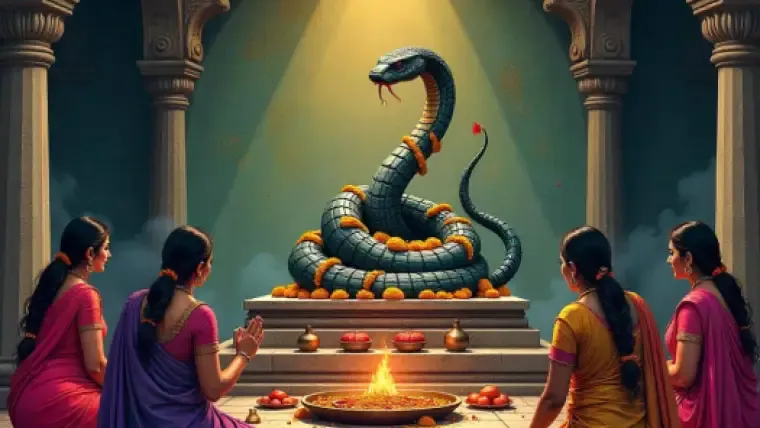
Nag Panchami is a celebrated Hindu festival where people around the country worship serpents and snakes. This propitious day falls on the Panchami Tithi or the fifth day of the Shukla Paksha, which is the waxing phase of the moon.
The Shravan month is thought to be extremely sacred by the Hindu community, especially for worshipping the Lord of the serpents or Nag Devta. This day usually occurs a day after the joyous event of Hariyali Teej.
According to the Gregorian calendar of the West, this day arrives either in July or August. Women across the country, on this day, offer milk to the snakes and worship the Nag Devta. They pray to seek the blessings of the deity for a healthy and long life for their families, especially their brothers.
Nag Panchami Puja Vidhi
This propitious day holds much relevance for many people. To gain the maximum benefits out of this day, we have enlisted a detailed pooja vidhi for this sacred day below:
Take a bath after getting up early in the morning.
Clean the puja room with holy water.
Spread a clean cloth on a wooden stool or chowki.
Place the idol or a photograph of the Snake God on it carefully.
Light an oil or ghee lamp to the right of the idol.
Take a Sankalp or pledge to perform the puja vidhi with utmost sincerity.
Sprinkle the holy water or Ganga Jal on the idol.
Offer chandan, haldi, akshat, kumkum, flowers, dhoop, and naivedhyam to the idol.
Join your hands together and close your eyes to pray to the Naag Devta on this auspicious day.
Do a Kshama Yachna, which means seeking forgiveness for your sins and mistakes made during the puja.
Recite the following Nag Panchami mantra to seek the blessings of the Snake God-
Om Bhujangeshaya Vidmahe, Sarprajaya Dhimahi, Tanno Nagah Prachodayat.
- Perform aarti to conclude the puja.
Astrological Facts of Nag Panchmi
The serpent holds a lot of significance in astrology. In Hinduism, Lord Shiva wears a snake around his neck, while Lord Vishnu rests on a six-headed snake known as Seshnaga. The coils of the snakes represent time, with each coil symbolizing the past, present, and future.
On the other hand, as per the beliefs of the Hindu religion, the world is balanced on the head of the Seshnaga. Hence, the relevance given to snakes is manifold. As a result, as per traditional astrology, people who have faults or doshas in their kundali can get resolution by worshipping the snakes on this day.
Offering cooked rice in milk, also known as kheer, is a common way to appease the serpent and receive blessings. Special pujas are organized, and fasts are observed to help people get relief from the Kaal Sarpa Dosha in their horoscope by praying to the Snake god.
Significance of Nag Panchami Festival
The festival of worshipping snakes was celebrated for the first time when Takshak, the king of the snakes, stalked Parikshit, the father of King Janamejaya. Takshak brutally killed Parikshit, and to avenge his death, Janamejaya organized an auspicious yajna to eliminate the existence of the entire Naga clan.
However, the Earth needs all the organisms to maintain balance in nature. Hence, Brahmin Astika intervened to stop this yajna and convey the importance of snakes to Janamejaya. The day this yajna was finally stopped is celebrated as Nag Panchami. Since then, people have paid their respects to snakes by conducting a sacred Nag Panchami puja.
Another significance of this auspicious day can be found in the legend of Lord Krishna, where he killed the Kaaliya Nag on this day of the Saavan month. He saved the Gokul vaasis, and hence the day has come to be celebrated every year since then.
Rituals Associated with the Festival of Nag Panchami
This festival is celebrated in different parts of India with a lot of gusto. Different rituals are performed across the country to commemorate this day. Here are some of the rituals that make this day a revered occasion among most people:
The temples that are dedicated to the Naag Devta are swamped with devotees from far and wide. Worshippers offer milk to the gods and snakes on this holy day.
In some parts of the country, snakes are ceremoniously given a bath in milk as it is believed to be a way to appease the snakes and seek their protection.
In West Bengal, the queen of snakes, Mansa, is worshipped on this day. Offerings of milk and five plantains are made to the queen to seek her blessings.
Another popular tradition of this day is to smear red sandalwood paste on a wooden board or clay sculptures of snakes. These are then worshipped as a personification of Naag Devta on this day.
In some parts of Punjab, a large snake is made with dough, and people parade it around the town to celebrate this day. Singing and dancing are a major part of the festivities as people express their enthusiasm on this day.
In Maharashtra, women offer milk, kumkum, haldi, and chaawal to the snakes carried by the snake charmers.
Legends Associated with Nag Panchmi
The God of snakes, Lord Shiva, is depicted with a snake around his neck. This snake is known to be Vasuki in the Hindu scriptures and is believed to have played a vital role during the magnanimous Samudra Manthan.
This was the episode where all the Gods, devtas (deities) and asuras (demons), participated in churning the ocean to find the elixir of life.
Another tale mentions a deadly snake that was turning the waters of River Yamuna into a life-threatening poison. The inhabitants of Mathura, popularly known as Brijwasis, were extremely troubled by this, and to alleviate their suffering, Krishna, who was the incarnation of Lord Vishnu, fought with the snake.
Defeating the Kaliya Naag, as the poisonous snake was known, Krishna forced him to drink back his poison from the water, making Yamuna pure again. After this, Krishna blessed the snake, stating that people will worship him in the times to come, offering him milk, garnering his blessings, and protection from all evil energies.
This festival reminds us of the many ways nature and its forces save and protect us. By praying to the Snake gods, we are prompted to live in harmony with all the organisms around us, respecting them and loving them!
Looking for personalised guidance on this auspicious occasion? Connect with experienced Astroyogi astrologers to understand its spiritual significance and how it may relate to your life.
Festival List
- Nag Panchami
- Raksha Bandhan
- Janmashtami
- Ganesh Chaturthi
- Onam
- Pitru Paksha
- Shardiya Navratri
- Durga Puja
- Dussehra
- Karwa Chauth
- Dhanteras
- Diwali
- Govardhan Puja
- Bhai Dooj
- Chhath Puja
- Tulsi Vivah
- Guru Nanak Jayanti
- Christmas
- New year
- Lohri
- Pongal
- Makar Sankranti
- Vasant Panchami
- Shivratri
- Ramadan
- Holi
- Good Friday
- Navratri
- Gudi Padwa
- Ugadi
- Vaisakhi
- Ram Navami
- Mahavir Jayanti
- Hanuman Jayanati
- Buddha Purnima
- Akshay Tritiya
- Shani Jayanti
- Guru Purnima
- Hariyali Teej