

Kali Puja Pandal: Meaning, Rituals, Traditions & Famous Pandals
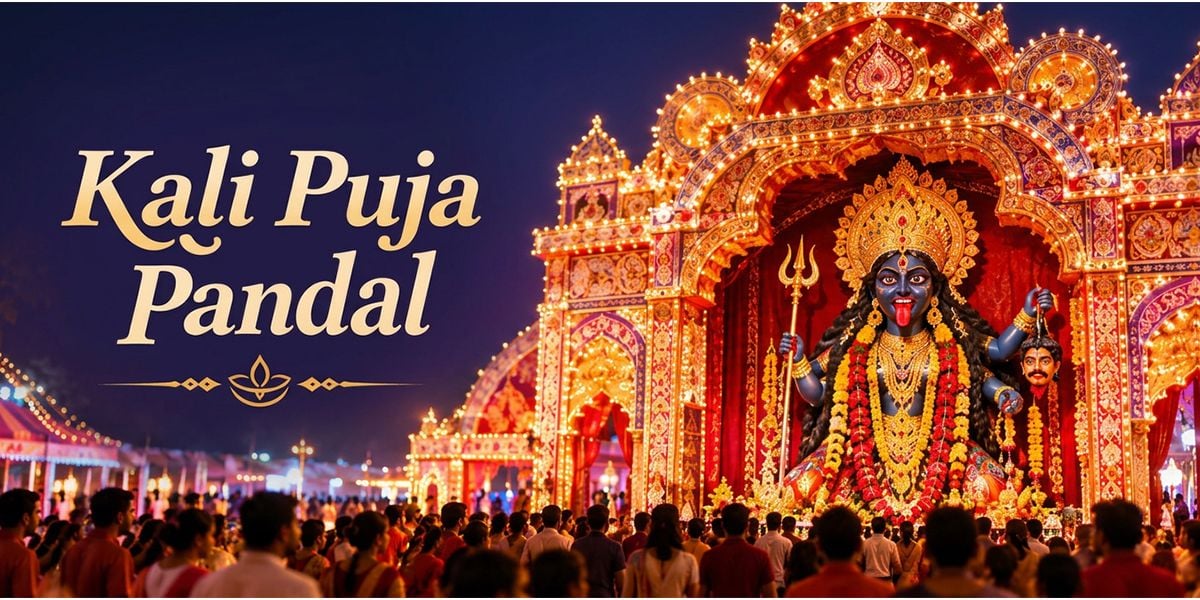
A Kali Puja Pandal is a temporary, beautifully decorated structure built to worship Goddess Kali during Kali Puja, also known as Shyama Puja. The festival is observed on the new moon night (Amavasya) of the Hindu month of Kartik, the same night as Diwali in many regions.
The pandal serves as a sacred space where a clay idol of Goddess Kali is installed, consecrated, and worshipped. After the festival, the idol is immersed in a river or lake.
Pandals are most common in West Bengal, Odisha, Assam, and Tripura. Bengali communities across India and abroad also set them up every year.
Main Parts of a Kali Puja Pandal
Most pandals follow a similar basic layout.
- Sanctum (Garbhagriha): The central altar that holds the idol of Goddess Kali.
- Entrance Gate (Toran): A decorated gateway, often built around an artistic or religious theme.
- Ritual Area (Mandap): The space for priests, offerings, and the sacred fire altar (Havan Kunda).
- Music Zone: The area for Dhak drummers and the Dhunuchi dance, a devotional dance with incense burners.
- Community Courtyard: An open space for gatherings, flower offerings (Pushpanjali), and distribution of Bhog, the sacred food offering.
Why Is a Kali Puja Pandal Built?
Kali Puja falls on the darkest night of the month. Goddess Kali is worshipped as the divine force of time and transformation, who removes fear, ignorance, and negativity.
The pandal brings this worship into the community. Neighborhood streets turn into spaces filled with lamps, incense, drumbeats, and prayers.
There are two main types of celebrations:
- Community (Barowari) pandals: Funded by neighborhood clubs, often with large themes, grand lighting, and public feasts.
- Household and Rajbari pandals: Held in ancestral or heritage homes, following traditions passed down for generations.
Rituals Held Inside a Kali Puja Pandal
The worship usually unfolds over a night and follows a set order.
Bhoot Chaturdashi: On the day before Kali Puja, 14 earthen lamps (Choddo Pradip) are lit. This is believed to invite ancestral blessings and remove negative energy.
Prana Pratishtha: Priests chant sacred hymns to invoke the divine presence into the clay idol.
Nishita Kaal Puja: The main worship takes place at midnight, generally between 11:00 PM and 3:00 AM. Offerings include red hibiscus flowers (Rrakta Jaba), bael leaves, and sweets.
Maha Aarti and Dhunuchi Naach: Devotees dance with clay or brass burners filled with burning coconut husk and camphor, accompanied by Dhak drums and conch shells.
Havan: A sacred fire ritual using ghee and wood is performed late at night.
Bhog and Prasad: Consecrated food is offered to the Goddess and then shared with visitors. Many pandals serve a vegetarian meal of khichdi, mixed vegetables, and rice pudding (Payesh).
Pushpanjali and Visarjan: Devotees offer flowers with mantras, and the idol is later immersed in a river or lake.
While pandal rituals bring communities together in devotion, you can align your personal spiritual practices with the energy of Maa Kali to remove obstacles and invite positivity into your home. Consult with a verified astrologer today to learn the exact rituals, offerings, and prayers tailored to your life's path.
Common Forms of Goddess Kali in Pandals
Different pandals present Goddess Kali in different forms. The table below lists the most common ones.
| Form | Description |
|---|---|
| Dakshina Kali | The most popular form, shown with the right foot forward on Lord Shiva. Linked with protection and blessings. |
| Chamunda Kali | A fierce, multi-armed form. Associated with destroying obstacles and enemies. |
| Dashamahavidya | All ten Wisdom Goddesses are shown together in one pandal. |
| Shamshan Kali | A form linked to cremation grounds and detachment from worldly ties. |
| Boro Maa | Giant idols, often 20 to 30 feet tall, are seen in towns such as Naihati and Shantipur. |
Astrological Significance of a Kali Puja Pandal
In Hindu astrology, Kartik Amavasya is considered a powerful night when the Sun and Moon come together. Worship of Goddess Kali on this night is believed to reduce the effects of Rahu, Ketu, and Saturn, including Shani Sade Sati.
Some commonly followed practices at the pandal include:
- Offering red hibiscus flowers to Goddess Kali for relief from Rahu and Ketu-related troubles.
- Lighting a mustard oil lamp near the altar to ease Saturn-related obstacles.
- Reciting the Kali Stotram during Pushpanjali for courage and peace of mind.
Vastu Direction Followed in Pandals
Traditional pandal builders often follow Vastu principles for the layout.
- Idol: West or southwest, facing east.
- Entrance: East, north, or northeast.
- Havan altar: Southeast, the direction of the fire element.
- Drums and music: Northwest, so the sound spreads without disturbing the sanctum.
Famous Kali Puja Pandals
Several places are known for their grand celebrations.
- Kolkata: Fatakesto (Naba Yubak Sangha), Chetla 24 Pally, Amherst Street, and Keoratala Mahashmashan.
- Barasat: Known for large themed pandals and lighting displays by clubs like Pioneer Athletic Club, Nabapally, and K.N.C. Regiment.
- Naihati and Shantipur: Famous for tall traditional idols.
- Other cities: Chittaranjan Park in Delhi, Shivaji Park in Mumbai, and BTM Layout in Bangalore.
Visitor Etiquette
A few simple points help maintain the sacred atmosphere.
Do:
- Wear traditional attire in red, white, or yellow.
- Receive Bhog with both hands, respectfully.
- Visit around Nishita Kaal for the most devotional atmosphere.
Avoid:
- Wearing black, dull, or torn clothing during offerings.
- Blocking the aisle or priest area for photographs.
- Turning your back to the idol while taking selfies.
FAQs
What is a Kali Puja Pandal in simple words?
It is a temporary decorated shrine where Goddess Kali is worshipped during Kali Puja.
When are Kali Puja Pandals set up?
They are set up shortly before Kartik Amavasya, with the main worship held at night.
Why is Kali Puja held at night?
The worship is performed at midnight, the darkest hour, because Goddess Kali is invoked to remove darkness, fear, and negativity.
Is vegetarian Bhog served in all pandals?
Many public pandals serve vegetarian Bhog. Some follow older Shakta traditions with different offerings.
Team Astroyogi is an experienced in-house editorial team of passionate writers, researchers, and astrology enthusiasts dedicated to making ancient divination sciences more accessible and meaningful in everyday life. With years of collective experience in creating insightful astrology and spirituality content, the team specializes in simplifying complex spiritual concepts into practical guidance for readers seeking clarity, balance, and personal growth. The Astroyogi editorial team possesses expertise across a wide range of subjects, including Indian Astrology, Vedic Astrology, Planetary Transits, Horoscope Analysis, Vastu Shastra, Numerology, Tarot, Spiritual Wellness, and Ritual Practices. Every piece of content is carefully researched, fact-checked, and crafted with the intention of offering reliable, insightful, and easy-to-understand guidance rooted in traditional wisdom. Driven by a commitment to authenticity and reader trust, Team Astroyogi strives to create content that empowers individuals to navigate life’s opportunities and challenges with confidence, positivity, and inner peace. Their mission is to bridge ancient astrological knowledge with modern-day relevance, helping readers make informed decisions and lead more harmonious lives.