
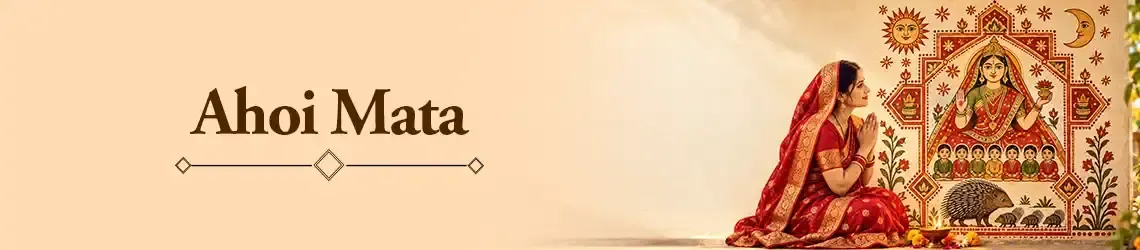
Ahoi Mata: History, Significance, Mantra and Worship
Goddess Ahoi Mata is a protective mother goddess. She is worshipped mainly by mothers who seek health, long life, and safety for their children.
Many devotees regard her as a form of Goddess Parvati or Shakti. Some also associate her with Goddess Lakshmi because of her link to household prosperity.
Names and Meanings
Ahoi Mata, Ahoi Maa, Ahoi Mata Ji: The most common names. "Mata" means "mother," and these forms address the goddess as the divine protector of children and the family.
Ahoi Bhagavati: "Bhagavati" means the auspicious Goddess. This name presents her as a form of divine feminine power.
Ahoi Ashtami Mata: Highlights her connection to Ashtami, the eighth lunar day on which her vrat is observed.
Ahoi Aathe: A regional name for the vrat. "Aathe" refers to the eighth day.
Syahu Mata or Sehi Mata: Names for the porcupine mother in the katha. She is remembered with respect as a symbol of maternal grief and compassion.
Meaning of Ahoi: The name is popularly understood as "one who averts misfortune." It reflects her role as a guardian against harm and sorrow.
History and Origin
The worship of Goddess Ahoi Mata grew out of vrat katha traditions. These are household stories and rituals passed down through families, not a single scripture or a pan-Indian cult.
The vrat follows the Purnimanta calendar used in North India, which places it on Krishna Paksha Ashtami of Kartik.
Because it falls shortly before Diwali, the festival is tied to the season of home renewal. Families clean and decorate their homes, light lamps, and prepare for gatherings.
The practice began as a domestic maternal rite. Mothers fasted, drew the Goddess on a wall, narrated the katha, and prayed for their children. Family memory carried the tradition from one generation to the next.
Mythology: The Ahoi Ashtami Vrat Katha
A moneylender's wife had seven sons. Shortly before Diwali, she went to the forest to dig red earth for plastering and decorating her home.
While digging, her spade accidentally struck a burrow and killed a young syahu, usually described as a porcupine. The grieving mother animal cursed the woman.
Soon after, the woman's seven sons died one after another. Overwhelmed by grief and guilt, she confessed what had happened to the elder women of her village.
The elders told her that an honest confession had already eased her fault. They advised her to worship Goddess Ahoi Bhagavati on Kartik Krishna Ashtami.
She drew the goddess along with the syahu and her young, kept the fast, listened to the katha, and offered water to the stars. She prayed with a repentant heart.
Pleased by her devotion, Goddess Ahoi Mata restored her sons or blessed her with children again. Since then, mothers have observed the vrat for their own children.
Spiritual Message
Harm caused unknowingly still carries consequences.
Sincere repentance and confession open the path to forgiveness.
A grieving mother deserves compassion, whether she is human or animal.
Symbolism and Iconography
Every part of the traditional image recalls the katha or the purpose of the vrat.
Goddess Ahoi Mata: The protective divine mother, representing grace, compassion, and relief from misfortune.
Eight corners (Ashta Koshthak): The image is drawn with eight sections to symbolize Ashtami, the eighth lunar day.
Seven sons: Children, family continuity, and the blessing of their well-being.
Syahu and her young: The grieving animal mother. She stands for compassion, accountability, and respect for all life.
Geru (red ochre): The traditional medium for drawing the Goddess. It symbolizes auspiciousness, the earth, and household renewal.
Stars: The sign for offering arghya and breaking the fast. They represent hope, guidance, and answered prayer.
Water (arghya): Purity, humility, and a prayer for protection and forgiveness.
How Goddess Ahoi Mata Is Worshipped
Worship takes place at home, usually in the evening after the first stars appear. Mothers lead the observance, and the whole family can join.
Morning Rituals
Wake before sunrise, bathe, and wear clean or auspicious clothes.
Clean the puja area and the wall or space where the Goddess will be placed.
Take the sankalpa, a formal vow to keep the vrat for the children's long life, health, and happiness.
Begin the fast. Many keep a nirjala vrat without food or water. Others follow a modified fast based on health, pregnancy, age, or family custom.
Evening Puja
Draw Goddess Ahoi Mata on the wall with geru, or place her image. The image includes eight corners, her seven sons, and the syahu with her young.
Arrange roli, akshat, flowers, a diya, incense, fruits, sweets, halwa puri or other prasad, and a kalash or karwa of water.
Light the diya and make the offerings. Then recite or listen to the Ahoi Ashtami Vrat Katha.
Sing the Ahoi Mata Aarti while offering the flame.
After the first stars appear, offer arghya with water and pray for the children's protection.
Break the fast with water and prasad, then share it with the family.
Traditional Extras
Some families hold seven wheat grains while listening to the katha.
Some traditions include a silver Ahoi, a silver bead necklace, a milk and rice offering, and a mala worn after the katha.
In certain households, arghya is offered to the moon instead of the stars, and the fast is closed at moonrise.
Why Goddess Ahoi Mata Is Worshipped
Children's well-being: For long life, good health, safety, and protection from misfortune.
Fertility and childbirth: For safe delivery and the blessing of children. Women hoping for a child also observe the vrat.
Family harmony: For peace, prosperity, happiness, and stability at home.
Forgiveness and relief: For release from guilt and sorrow and the removal of obstacles, as the katha teaches.
Compassion: To honor maternal love, including compassion for the grieving Syahu mother.
Mantras and Their Meaning
Main Mantra
ॐ श्री अहोई मात्रे नमः Om Shri Ahoi Mata Namah
Meaning: Salutations to Goddess Ahoi Mata. It is a simple mantra of surrender that invites her protective and motherly grace.
How it is chanted: Devotees repeat it 11, 21, 27, or 108 times during the puja, while lighting the diya, offering flowers, or performing the aarti.
Aarti Invocation
जय अहोई मातर्, जय अहोई मातर्। त्वामनिशं ध्यायन्ति, हरिविष्णुविधातारः॥
Jai Ahoi Mata, Jai Ahoi Mata.
Tumko nisdin dhyavat, Har Vishnu Vidhata.
Meaning: Victory to Goddess Ahoi Mata. Lord Vishnu and Lord Brahma, the Creator, meditate on her constantly.
The full aarti praises her as the mother of the universe and the giver of happiness and prosperity. It also describes her as the one who removes fear and sin from devoted worshippers.
Sankalpa
The sankalpa expresses a mother's prayer that her children live long, healthy, and happy lives. It asks Goddess Ahoi Mata to protect them from harm and bless the family with peace and prosperity.
Hindu Gods
- God Kartikeya
- God Annamalaiyar
- God Murugan
- God Dattatreya
- God Vishnu
- God Krishna
- God Jagannath
- God Hanuman
- God Ganesha
- God Surya
- Goddess Lakshmi
- God Shiva
- Goddess Tulsi
- Goddess Shakambhari
- Goddess Saraswati
- God Agni
- God Indra
- God Nandi
- God Ayyappa
- Goddess Durga
- God Kaal Bhairav
- Goddess Annapurna
- Maa Shailputri
- Maa Brahmacharini
- Maa Chandraghanta
- Maa Kushmanda
- Maa Skandamata
- Maa Katyayani
- Maa Kalaratri
- Maa Mahagauri
- Maa Siddhidatri