
Maa Skandamata
Maa Skandamata is the fifth form of Goddess Durga and is worshipped on the fifth day of Navratri. She is known as the mother of Lord Skanda (Kartikeya), the commander of the divine army. The name meaning of “Skandamata” comes from two words: “Skanda” and “Mata” meaning mother. Thus, she represents the powerful and nurturing aspect of motherhood combined with divine strength.
Devotees worship Maa Skandamata for wisdom, prosperity, and liberation. She is believed to bless her devotees with both material success and spiritual growth. Her calm and compassionate nature makes her one of the most beloved forms of Goddess Durga.
Iconography of Maa Skandamata
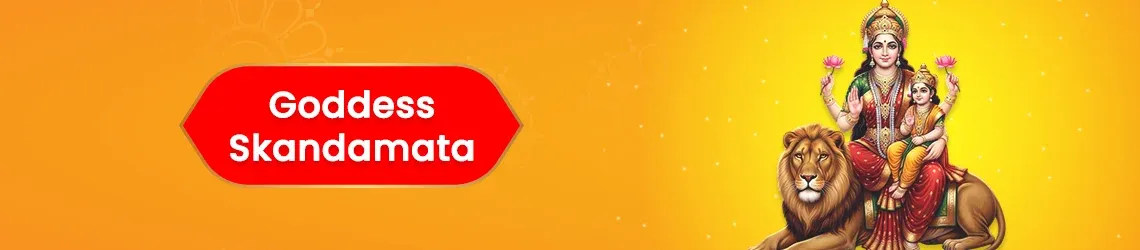
Maa Skandamata is depicted as a radiant goddess with four arms, three eyes, and a graceful appearance. She is often shown seated on a lotus flower, which is why she is also called “Padmasini.”
The goddess rides a majestic lion, representing her fierce strength and courage, while cradling her son Lord Kartikeya on her left thigh with her right hand, showcasing boundless motherly affection.
Her upper hands hold lotus flowers for purity and devotion, and her lower left hand offers the Abhaya Mudra, a gesture of fearlessness and protection. With a fair, glowing complexion called "Shubhra," Skandamata Mata radiates peace, often depicted with a calm smile that balances tenderness and valor.
Benefits of Worshipping Maa Skandamata
Worshipping Maa Skandamata is believed to bring both worldly success and spiritual upliftment. She is especially known for blessing devotees with wisdom and fulfilling their desires.
Skandamata Mata is also associated with the planet Mercury (Budh) in Vedic astrology, which represents intelligence, communication, and analytical thinking. Because of this connection, her worship is especially beneficial for improving mental clarity and decision-making. Some of the many benefits of worshiping the Goddess Skandamata include:
Enhances intelligence, communication, and learning abilities (due to Mercury influence)
Brings peace, happiness, and emotional balance
Improves clarity in thoughts and decision-making
Helps in achieving success in education and career
Removes fear, confusion, and negativity
Strengthens relationships and family harmony
Promotes spiritual awareness and inner growth
Protects from obstacles and difficulties in life
Chakra Associated With Maa Skandamata
Maa Skandamata rules the Vishuddha Chakra, or throat chakra, the center of pure communication, self-expression, and truth. This energy point fosters clarity in speech, wisdom, and the ability to articulate thoughts with confidence, leading to higher self-realization.
Balancing this chakra through her worship removes misunderstandings, boosts creativity, and purifies the mind from negativity. It empowers devotees to speak their truth fearlessly, fostering harmony in relationships and guiding them toward moksha, or ultimate liberation.
Story of Skandamata Mata
Maa Skandamata's legend is deeply connected to Goddess Parvati's role as the devoted mother of Lord Kartikeya, born to defeat the demon Tarakasura, who could only be slain by Shiva's son.
Goddess Parvati performed intense penance and devotion to win Lord Shiva’s heart. Eventually, they were united, and Lord Kartikeya (Skanda) was born, who is the mighty warrior god. As the mother of Skanda, Goddess Parvati came to be known as Skandamata. She lovingly raised him and guided him toward his divine purpose.
Skandamata Mata’s story highlights selfless motherhood, as she raised Skanda (Lord Kartikeya) amid cosmic battles, representing sacrifice and unconditional love. This tale teaches that true power comes from nurturing strength and devotion, helping believers to face worldly challenges with grace and resilience.
Worshipping Maa Skandamata
Worshipping Maa Skandamata on Navratri's fifth day involves simple, heartfelt rituals like fasting, offerings of milk, honey, and lotus flowers, and meditating on her form for inner purity. Devotees recite her aarti, chalisa, mantras, and stotras to invoke her blessings for wisdom, progeny, and protection from adversities.
Devi Skandamata puja is believed to strengthen family bonds, clear karmic blocks, and align one with divine motherhood, making it ideal for those seeking prosperity and eloquent expression in daily life.
Maa Skandamata Aarti
Maa Skandamata’s Aarti is performed to express devotion and gratitude. The "Om Jai Skandamata Mata" Aarti is chanted with lamps and flowers to honor her maternal glory, seeking protection, happiness, and spiritual upliftment. It is usually recited during Navratri or daily prayers to seek her blessings for wisdom, clarity, and protection.
You can read the complete Maa Skandamata Aarti here, along with the meaning and benefit.
Maa Skandamata Chalisa
The “Shri Skandamata Chalisa” is a devotional hymn that praises the divine qualities of the Goddess. Chanting this Chalisa with devotion is believed to bring wisdom, peace, prosperity, and protection from negativity.
॥ Doha ॥
Jai Giri Tanaye Dakshaje, Shambhu Priye Gunakhani। Ganpati Janani Parvati, Ambe! Shakti! Bhavani॥
(Meaning: Salutations to Ganesha, son of Parvati, the auspicious form who removes obstacles. Glory to merciful Maa Skandamata.)
॥ Chaupai ॥
Brahma Bhed Na Tumharo Paave, Panch Badan Nit Tumko Dhyaave॥
(Meaning: Even Lord Brahma cannot understand your true essence, and Lord Shiva constantly meditates on you.)
Shadmukh Kahi Na Sakat Yash Tero, Sahasbadan Shram Karat Ghanero॥
(Meaning: Even Lord Kartikeya and thousands of mouths fail to fully describe your glory.)
Teu Paar Na Paavat Mata, Sthit Raksha Lay Hiy Sajaata॥
(Meaning: No one can reach your limits; you create, protect, and dissolve the universe.)
Adhar Pravaal Sadrish Arunaare, Ati Kamaniya Nayan Kajraare॥
(Meaning: Your lips are red like coral, and your eyes are beautifully adorned with kajal.)
Lalit Lalaat Vilepit Keshar, Kumkum Akshat Shobha Manhar॥
(Meaning: Your forehead shines with saffron and vermillion, enhancing your divine beauty.)
Kanak Basan Kanchuki Sajaaye, Kati Mekhala Divya Laharaaye॥
(Meaning: You wear golden garments and a shining waistband that looks divine.)
Kanth Mandar Haar Ki Shobha, Jaahi Dekhi Sahajahi Man Lobha॥
(Meaning: The garland around your neck is so beautiful that it attracts every heart.)
Balarun Anant Chhabi Dhaari, Aabhushan Ki Shobha Pyaari॥
(Meaning: Your form shines like the rising sun, and your ornaments enhance your charm.)
Nana Ratna Jadit Singhasan, Taapar Raajati Hari Chaturanan॥
(Meaning: You sit on a throne decorated with precious gems, worshipped by Vishnu and Brahma.)
Indraadik Parivaar Poojit, Jag Mrig Naag Yaksh Rav Koojit॥
(Meaning: Indra and all divine beings worship you; all creatures sing your praises.)
Gir Kailas Nivaasini Jai Jai, Kotik Prabha Vikaasini Jai Jai॥
(Meaning: Victory to you, O resident of Mount Kailash, whose brilliance shines like millions of suns.)
Tribhuvan Sakal Kutumb Tihaari, Anu Anu Mah Tumhaari Ujiyaari॥
(Meaning: The entire universe is your family, and your light exists in every particle.)
Hain Mahesh Praanesh Tumhaare, Tribhuvan Ke Jo Nit Rakhvaare॥
(Meaning: Lord Shiva, protector of the three worlds, is your beloved.)
Unso Pati Tum Praapt Keenh Jab, Sukrit Puraatan Udit Bhaye Tab॥
(Meaning: You attained Shiva as your husband through the merits of past deeds.)
Boodha Bail Sawaari Jinki, Mahima Ka Gaave Kou Tinki॥
(Meaning: Shiva rides a bull, and no one can fully describe his greatness.)
Sada Shmashaan Bihaari Shankar, Aabhushan Hain Bhujang Bhayankar॥
(Meaning: Shiva dwells in cremation grounds and wears serpents as ornaments.)
Kanth Halaahal Ko Chhabi Chhaayi, Neelkanth Ki Padvi Paayi॥
(Meaning: By holding poison in his throat, Shiva became Neelkanth.)
Dev Magan Ke Hit As Kinho, Vish Lai Aapu Tinhahi Ami Dinho॥
(Meaning: For the welfare of the gods, he consumed poison and gave them nectar.)
Taaki Tum Patni Chhavi Dhaarinī, Durit Vidaarinī Mangal Kaarinī॥
(Meaning: You, his consort, remove sins and bring auspiciousness.)
Dekhi Param Saundarya Tihaaro, Tribhuvan Chakit Banaavan Haaro॥
(Meaning: Your beauty amazes all three worlds.)
Bhaya Bheeta So Mata Ganga, Lajja May Hai Salil Taranga॥
(Meaning: Even Mother Ganga appears humble before your glory.)
Nityanand Kari Varadaayini, Abhay Bhakt Kar Nit Anapaayini॥
(Meaning: You grant joy, blessings, and fearlessness to your devotees.)
Akhil Paap Trayataap Nikandini, Maheshwari Himalaya Nandini॥
(Meaning: You destroy all sins and suffering, O daughter of Himalaya.)
Kashi Puri Sada Man Bhaayi, Siddh Peeth Tehi Aapu Banaayi॥
(Meaning: You reside in Kashi, making it a sacred place of spiritual power.)
Bhagvati Pratidin Bhiksha Daatri, Kripa Pramod Sneh Vidhatri॥
(Meaning: You bless devotees daily with kindness, love, and joy.)
Ripukshay Kaarini Jai Jai Ambe, Vaacha Siddh Kari Avalambe॥
(Meaning: Victory to you, Goddess Ambe, destroyer of enemies and granter of success.)
Gauri Uma Shankari Kaali, Annapurna Jag Pratipaali॥
(Meaning: You are known by many forms: Gauri, Uma, Kali, and Annapurna, the nourisher of the world.)
Sab Jan Ki Ishwari Bhagvati, Patipraana Parmeshwari Sati॥
(Meaning: You are the supreme goddess and devoted consort of Lord Shiva.)
Tumne Kathin Tapasya Kini, Narad Saun Jab Shiksha Leeni॥
(Meaning: You performed severe penance after learning from Sage Narada.)
Ann Na Neer Na Vayu Aahaara, Asthi Maatra Tan Bhayau Tumhaara॥
(Meaning: You survived without food, water, or air, becoming extremely thin.)
Patra Ghaas Ko Khaadya Na Bhaayau, Uma Naam Tab Tumne Paayau॥
(Meaning: You even gave up leaves and grass, and thus earned the name Uma.)
Tap Biloki Rishi Saat Padhare, Lage Digaavan Digi Na Haare॥
(Meaning: Seven sages tried to distract you, but you remained firm.)
Tab Tav Jai Jai Jai Uchchaareu, Saptarishi Nij Geh Sidhaareu॥
(Meaning: They praised you and returned to their homes.)
Sur Vidhi Vishnu Paas Tab Aaye, Var Dene Ke Vachan Sunaaye॥
(Meaning: Gods, Brahma, and Vishnu came to grant you a boon.)
Maange Uma Var Pati Tum Tinson, Chaahat Jag Tribhuvan Nidhi Jinson॥
(Meaning: You asked for Shiva as your husband, who is desired by all worlds.)
Evamastu Kahi Te Doou Gaye, Sufal Manorath Tumne Laye॥
(Meaning: They granted your wish and you achieved your desire.)
Kari Vivaah Shiv Son Bhaama, Punah Kahaai Har Ki Baama॥
(Meaning: You married Shiva and became his divine consort.)
Jo Padhi Hai Jan Yah Chalisa, Dhan Jan Sukh Deihai Tehi Eesa॥
(Meaning: Whoever recites this Chalisa is blessed with wealth, happiness, and prosperity.)
॥ Doha ॥
Kooti Chandrika Subhag Shir, Jayati Jayati Sukh Khaani। Parvati Nij Bhakt Hit, Rahahu Sada Vardaani॥
(Meaning: O radiant goddess, source of happiness, may you always bless your devotees with prosperity and grace.)
Read More:
Maa Skandamata Mantra
The powerful "Om Devi Skandamatayai Namah" mantra, chanted 108 times with a rudraksha mala, sharpens intellect and invites maternal protection. It calms the mind, enhances communication skills, and aligns planetary influences for prosperity. Regular japa brings swift remedies for family issues and spiritual clarity. Read the full Skandamata Mata mantra here with their meaning.
Maa Skandamata Strotram
The Maa Skandamata Strotram is a sacred prayer recited to seek protection, wisdom, and peace. Here’s the full Maa Skandamata Stotra.
Namami Skandamata Skandadhariniim।
Samagratatva Saagaram Apaar Paar Gahraam॥
(Meaning: I bow to Maa Skandamata, who carries Lord Skanda and is as deep and vast as the infinite ocean of ultimate truth.)
Shivaprabha Samujjvalam Sphuchchh Shashag Shekharam।
Lalaat Ratna Bhaaskaraam Jagat Pradeepti Bhaaskaram॥
(Meaning: She shines with the radiance of Lord Shiva, adorned with brilliance like the moon, and illuminates the entire universe like the sun.)
Mahendra Kashyapa Architaam Sanatkumaar Samstutaam।
Suraasurendra Vanditaam Yathaarth Nirmala Adbhutaam॥
(Meaning: I bow to the Goddess who is worshipped by Indra and sages, praised by Sanatkumara, and revered by both gods and asuras for her pure and wondrous form.)
Atarkya Rochir Uvijaam Vikaar Dosh Varjitaam।
Mumukshubhir Vichintitaam Vishesh Tatva Muchitaam॥
(Meaning: She is beyond logic, free from all दोष (flaws), and meditated upon by seekers of liberation as the supreme truth.)
Naanaalankaar Bhooshitaam Mrigendravaahanagrajaam।
Sushuddh Tatva Toshanaam Trived Maar Bhooshanaam॥
(Meaning: Adorned with many ornaments, riding a lion, she delights in purity and is glorified in the three Vedas.)
Sudhaarmikaupakaarini Suraindra Vairi Ghaatineem।
Shubhaam Pushpamaalineem Suvarna Kalpa Shaakhineem॥
(Meaning: She supports righteousness, destroys enemies of the gods, and is beautifully adorned with garlands and divine golden radiance.)
Tamo Andhakaar Yaamineem Shiva Swabhaav Kaamineem।
Sahasra Surya Raajikaam Dhanajjay Ugrakaarikaam॥
(Meaning: She removes darkness and ignorance, embodies Shiva’s nature, shines like thousands of suns, and grants strength and victory.)
Sushuddh Kaal Kandalaa Subhrid Vrind Majjulaam।
Prajaayini Prajaavati Namami Maataram Sateem॥
(Meaning: She represents pure time and creation, nurtures all beings, and I bow to the divine mother who sustains life.)
Swakarma Kaarane Gati Hariprayach Paarvateem।
Anant Shakti Kaantidaam Yasho Arth Bhukti Muktidaam॥
(Meaning: She guides beings according to their karma, grants infinite power, fame, wealth, enjoyment, and liberation.)
Punah Punah Jagaddhitaam Namaamyaham Surarchitaam।
Jayeshwari Trilochane Praseed Devi Paahimaam॥
(Meaning: Again and again I bow to the goddess worshipped by all, O three-eyed victorious देवी, please be pleased and protect me.)
Since Maa Skandamata governs communication and family prosperity, her worship balances life's expressions and relationships. If you're facing speech hurdles, progeny concerns, or seek astrological insights on planets like Mercury influencing your throat chakra, talk to an astrologer on Astroyogi today!
Hindu Gods
- God Kartikeya
- God Annamalaiyar
- God Murugan
- God Dattatreya
- God Vishnu
- God Krishna
- God Jagannath
- God Hanuman
- God Ganesha
- God Surya
- Goddess Lakshmi
- God Shiva
- Goddess Tulsi
- Goddess Shakambhari
- Goddess Saraswati
- God Agni
- God Indra
- God Nandi
- God Ayyappa
- Goddess Durga
- God Kaal Bhairav
- Goddess Annapurna
- Maa Shailputri
- Maa Brahmacharini
- Maa Chandraghanta
- Maa Kushmanda
- Maa Skandamata
- Maa Katyayani
- Maa Kalaratri
- Maa Mahagauri
- Maa Siddhidatri