
Kaal Bhairav
Kaal Bhairav is one of the most powerful forms of Lord Shiva in Hinduism. The name breaks down like this: "Kaal" means time, and "Bhairav" means fearsome or terrifying. Together, Kaal Bhairav god, represents the lord of time who controls death itself.
While Shiva is often shown as calm and meditative, Kaal Bhairav Baba is fierce, wrathful, and intimidating on purpose. He's Shiva in his most intense avatar.
Here’s what stories, symbolism, temples, and worship reveal about this powerful deity.
Kaal Bhairav: What He Looks Like and What It Means
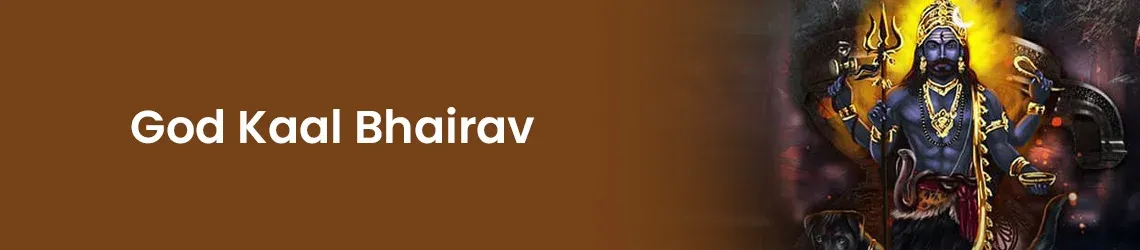
Every image of Kaal Bhairav is designed to inspire both fear and respect. Here's what you're looking at:
- Dark or Black Complexion: His skin is shown as deep black or dark blue, representing the void, the unknown, and the destructive aspect of time that consumes everything.
- Fierce, Angry Expression: Unlike the peaceful Shiva, Kaal Bhairav's face shows rage, with brows pulled tight, wide eyes, and bared teeth.
- Garland of Skulls: He wears a mala (garland) made of human skulls around his neck. This represents the cycle of time destroying all living beings and the ego death required for spiritual growth.
- Three Eyes: Like Shiva, he has a third eye in the middle of his forehead. This eye sees truth, burns away illusion, and represents wisdom beyond normal perception.
- Four Arms: Usually shown with four arms, each holding significant items that represent different powers.
- Weapons in His Hands: He carries a trident (trishul), drum (damaru), sword, or axe. These are tools for the destruction of evil and ignorance.
- Skull Cup (Kapala): Often holds a skull cup filled with blood, representing the severing of attachments and the destruction of ego.
- Snake Around His Neck: Like Shiva, he wears serpents as ornaments, showing his mastery over fear and death.
- Dog as His Vehicle (Vahan): Kaal Bhairav vahan is a dog. In Hindu tradition, where most gods ride majestic animals like elephants or peacocks, Bhairav chose the dog. This shows his connection to the outcasts, his role as protector of the downtrodden, and loyalty (dogs being symbols of faithfulness). The dog also represents Dharma (righteousness).
- Ornaments Made of Bones: He wears jewelry made from bones, constantly reminding everyone that the body is temporary and death is inevitable.
The Kaal Bhairav Story
The legends surrounding Kaal Bhairav reveal his fierce nature and divine purpose. Read on.
The Birth of Bhairav: Brahma's Fifth Head
The most famous Kaal Bhairav story involves a dispute that got out of hand. Once, Lord Brahma (the creator) and Lord Vishnu (the preserver) got into an argument about who was superior.
Brahma grew five heads to prove his greatness. With these five heads, he started becoming arrogant, even disrespecting Shiva. One of Brahma's heads began speaking rudely about Shiva, questioning his supremacy and showing extreme pride.
This disrespect couldn't stand. From Shiva's anger emerged Kaal Bhairav, a fierce, terrifying form. In one swift move, Bhairav cut off Brahma's fifth head with his fingernail (some versions say with a sword). The head stuck to Bhairav's hand as punishment for killing a Brahmin
To atone for this sin, Kaal Bhairav had to wander the universe as a beggar, using the skull as his begging bowl. This wandering continued until he reached Kashi, where the skull finally fell from his hand, liberating him from the sin. This is why Kashi is so sacred to Bhairav; it's where he found freedom.
The deeper meaning? This story represents the destruction of the ego (Brahma's fifth head symbolizing excessive pride).
It shows that no matter how powerful you are, your ego will be destroyed. It also teaches that even in carrying out divine justice, there are cosmic laws everyone must follow.
Bhairav as Kashi's Kotwal
After being freed from his sin in Kashi, Shiva appointed Kaal Bhairav as the eternal guardian and "Kotwal" (police chief) of the city. His job is to maintain order, protect pilgrims, and make sure the sacred space remains pure.
Legend says that before dying in Kashi, souls must face Kaal Bhairav. He examines their life, their deeds, and determines their fate. Those who've lived righteously pass through easily; those who haven't faced his judgment. He's like the final checkpoint before liberation.
The Eight Bhairavas
According to tantric traditions, there are eight main forms of Bhairav (Ashta Bhairav), each protecting a different direction and having specific powers:
- Asitanga Bhairav (East)
- Ruru Bhairav (Southeast)
- Chanda Bhairav (South)
- Krodha Bhairav (Southwest)
- Unmatta Bhairav (West)
- Kapali Bhairav (Northwest)
- Bhishana Bhairav (North)
- Samhara Bhairav (Northeast)
Each form has unique characteristics and is worshiped for specific purposes. Together, they create a protective energy field.
How to Worship Kaal Bhairav?
Worshiping Kaal Bhairav requires courage, sincerity, and understanding that you're dealing with intense energy. This isn't casual devotion; it demands utter respect.
Important Guidelines Before Starting
- Kaal Bhairav worship should be done with pure intentions
- Never approach him with ego or arrogance
- He responds to sincere devotees, especially those facing difficulties
- Women can worship Bhairav; the old restrictions don't apply in Kali Yuga (current age)
- Sunday and Tuesday are his main days
- Night worship (especially midnight) is considered most powerful
Daily Home Worship of Kaal Bhairav
If you want to honor Kaal Bhairav baba at home:
- Set up his picture or small idol in the north or northeast corner
- Keep the area clean and free from clutter
- Light a mustard oil lamp (this is his preference)
- Offer black sesame seeds, coconut, liquor (in a separate container, not directly), or milk
- Some devotees offer meat or alcohol at temples, though home worship usually sticks to vegetarian offerings
- Feed dogs regularly; this is considered direct service to his vehicle and brings his blessings
- Chant his mantras, especially before leaving home for protection
- Wear black or dark blue on his worship days
Kaal Bhairav Mantras:
"Om Hreem Batukaya Apadudharanaya Kuru Kuru Batukaya Hreem Om" (For removing obstacles and distress)
"Jai Kaal Bhairav" (Simple but powerful salutation) "Om Kaal Bhairavaya Namaha" (Basic prayer acknowledging him)
Kaal Bhairav Ashtakam (Eight-verse prayer - very powerful when recited regularly)
Feeding Dogs - Direct Bhairav Seva
Since the dog is Kaal Bhairav vahan, feeding dogs is considered direct worship:
- Feed stray dogs, especially black ones
- Offer rotis with ghee, milk, or meat
- Do this regularly, especially on Tuesdays and Sundays
- Never harm or disrespect dogs
Formal Puja of Bhairav Baba
- Clean worship space thoroughly
- Lay black cloth and place the idol/yantra
- Light the mustard oil lamp and incense
- Invoke Lord Ganesha first (always start with him)
- Then invoke Shri Kaal Bhairav with mantras
- Offer flowers, black sesame, coconut
- Pour milk over the idol (abhishekam)
- Apply sandalwood paste and kumkum
- Offer prasad (usually consists of traditional sweets)
- Chant the Kaal Bhairav Ashtakam or his 108 names
- Perform aarti with camphor
- Sit in meditation, asking for protection and guidance
- Distribute prasad and feed the dogs afterward
Warning: Tantric Bhairav worship involving alcohol and non-vegetarian offerings should only be done under a guru's guidance. Don't attempt advanced tantric practices without proper knowledge.
When to Worship Kaal Bhairav
- Tuesdays and Sundays: His main worship days
- Midnight: Most powerful time for his mantras
- Bhairav Ashtami: Eighth day after the full moon (especially in the month of Margashirsha
- Kaal Bhairav Jayanti: His birthday, celebrated in November/December
- Before important events: Court cases, exams, difficult tasks
- When feeling threatened: He's the go-to deity for protection
Festivals Related to Kaal Bhairav
Several festivals specifically honor Kaal Bhairav throughout the year.
- Kaal Bhairav Jayanti: His main festival, celebrated in November-December on the eighth day after the full moon. Devotees fast and chant mantras all day and night.
- Bhairav Ashtami: Celebrated monthly on every eighth day after the full moon. Devotees fast, perform pujas, and feed dogs.
- Shivaratri: Important since Kaal Bhairav is Shiva's fierce form. Devotees stay awake all night chanting and performing rituals.
Sacred Temples Dedicated to Kaal Bhairav
Kaal Bhairav has dedicated temples across India, with Varanasi being the most important.
- Kaal Bhairav Temple, Varanasi, Uttar Pradesh: The main temple where he guards the holy city. Famous for its unique tradition where devotees offer liquor to the deity. Every Varanasi visitor is expected to come here.
- Kal Bhairav Temple, Ujjain, Madhya Pradesh: One of the most important temples after Varanasi. This ancient temple also receives liquor offerings.
- Batuk Bhairav Temple, Haridwar, Uttarakhand: Located on a hilltop requiring a trek. People worship the child form of Kaal Bhairav here for protection.
Why Kaal Bhairav Matters Today
In modern times filled with stress, competition, and constant threats (both physical and psychological), Kaal Bhairav's fierce protective energy feels more relevant than ever. He's not about gentle encouragement but about destroying what's holding you back and clearing the path forward.
His worship teaches us to face our fears. When you've meditated on time's inevitable march, suddenly that job interview or difficult conversation doesn't seem so intimidating.
The practice of feeding dogs as Bhairav worship has created a beautiful side effect, more people caring for strays. Devotees across India feed street dogs daily, seeing them as extensions of the divine. That's compassion coming from an unlikely source, the fiercest deity.
Jai Kaal Bhairav
Hindu Gods
- God Kartikeya
- God Annamalaiyar
- God Murugan
- God Dattatreya
- God Vishnu
- God Krishna
- God Jagannath
- God Hanuman
- God Ganesha
- God Surya
- Goddess Lakshmi
- God Shiva
- Goddess Tulsi
- Goddess Shakambhari
- Goddess Saraswati
- God Agni
- God Indra
- God Nandi
- God Ayyappa
- Goddess Durga
- God Kaal Bhairav
- Goddess Annapurna
- Maa Shailputri
- Maa Brahmacharini
- Maa Chandraghanta
- Maa Kushmanda
- Maa Skandamata
- Maa Katyayani
- Maa Kalaratri
- Maa Mahagauri
- Maa Siddhidatri