
Devi Shakambhari
Devi Shakambhari is a powerful form of Goddess Durga, worshiped as the goddess of vegetation, greenery, and the earth's natural abundance.
The name "Shakambhari" comes from two Sanskrit words, "Shaka," meaning vegetables or leafy greens, and "Ambhari," meaning one who wears or bears.
Put it together, and you get "she who bears vegetables and greens" or "the one adorned with vegetation."
Shakambhari Devi is known to be a savior during times of drought and extreme scarcity of food. She is also believed to have appeared during a hundred-year drought, bringing life back to the barren land through her powers.
This is only the beginning. Let’s explore what Shakambhari Mata looks like, what she represents, and the deeper stories she’s known for.
Shakambhari Mata: What She Looks Like and What It Means
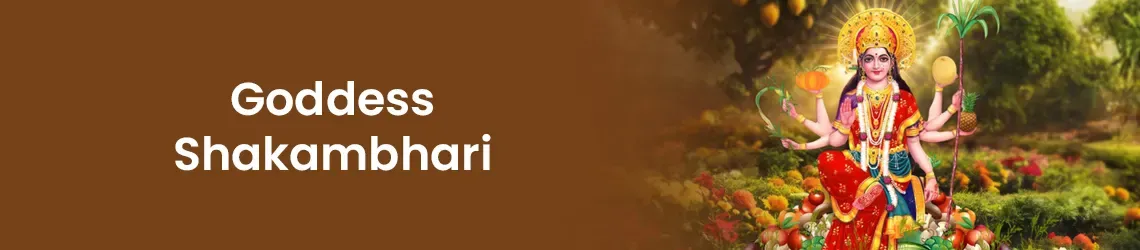
Every image or statue of Devi Shakambhari is filled with nature's symbolism. Here's what each element represents:
- Covered Head-to-Toe in Greens: She's often seen adorned with fresh green leaves, vegetables, fruits, and herbs. This shows her direct connection to vegetation.
- Multiple Arms (Usually Eight or Ten): Like other forms of Durga, she has multiple arms holding different items. Each arm represents her ability to protect and nurture in many ways at once.
- Bow and Arrow: She often carries a bow and arrow, showing her warrior aspect and her readiness to fight against forces that harm nature and life.
- Lotus Flower: A symbol of purity, beauty, and spiritual growth that rises from muddy waters.
- Vegetables and Fruits in Her Hands: She holds various vegetables, fruits, and leafy greens, directly showing her role as the provider of Earth's produce.
- Green or Dark Complexion: Her skin is usually shown in shades of green or dark, earthy tones, connecting her to the fertile soil and lush vegetation.
- Seated on a Lotus or Lion: Sometimes she sits on a blooming lotus (representing creation from water and earth), other times on a lion (showing her fierce protective power).
- Calm and Compassionate Expression: Despite being a warrior goddess, her face shows motherly love and care, especially toward those suffering from hunger and scarcity.
The Stories About Shakambhari Mata
Shakambhari Devi is powerful and teaches important lessons about nature, devotion, and divine intervention.
The Hundred-Year Drought
The most famous story comes from the Devi Bhagavata Purana and the Devi Mahatmya. According to this legend, there was once a terrible demon named Durgamasura who caused chaos in the world. Through his evil powers, he stopped all rainfall on Earth for a hundred years.
No rain for an entire century. Rivers dried up, fields turned to dust, trees died, and nothing grew. Animals and humans started dying of hunger and thirst. The earth became a barren wasteland. People cried out in desperation, not knowing how to survive.
The gods themselves couldn't solve this crisis, so they prayed to the Divine Mother for help. Moved by the suffering of all living beings, Goddess Parvati appeared in the form of Shakambhari Devi.
The moment she manifested, something miraculous happened. Her eyes filled with tears of compassion for the suffering world, and these tears transformed into streams of water. From her body, which was adorned with hundreds of vegetables, fruits, and herbs, food began to sprout and flow to the starving people and animals.
She fed the entire world with vegetables, fruits, leafy greens, and herbs that grew from her own divine form.
For nine days, she sustained all life with the food that came from her body. The earth turned green again, rivers began to flow, and life was restored.
But that wasn't the end. Durgamasura, the demon responsible for the drought, heard about this powerful goddess and came to fight her. After all, he couldn't let someone undo his destruction. A fierce battle followed, and on the tenth day, Shakambhari Devi defeated and killed Durgamasura.
With the demon gone and nature restored, rain returned to the earth. The land became fertile again, and crops grew.
This is why Shakambhari Devi is celebrated as the savior of the world during its darkest time.
The Festival of Shakambhari Jayanti
This victory is celebrated every year during Shakambhari Jayanti, which falls in the month of Pausha (December-January), typically on the full moon day. During this festival, devotees thank the goddess for her protection of nature and pray for blessings of good harvests and rainfall.
The lesson here is simple. When we destroy nature or when natural balance is disturbed, life itself is threatened. Only by restoring and respecting nature can we survive.
How to Worship Devi Shakambhari?
Worshiping Shakambhari Mata means respecting nature and being thankful for what the earth provides us. You can either worship her daily or during special times like harvests and droughts.
Devi Shakambhari: Everyday Worship at Home
You can honor Shakambhari Devi every day in the following simple ways:
- Keep some plants alive at home.
- Say thanks before cutting up those vegetables before cooking.
- Stop throwing away food, especially greens and grains.
- Compost your scraps instead of trashing them
- Buy from local farmers when you can
- Grow something, anything, even if it's just basil on your window.
Simple Shakambhari Mantras
"Om Shakambharyai Namaha" (I bow to Shakambhari)
"Om Hreem Shreem Shakambhari Devyai Namaha"
Special Puja Rituals
For a dedicated Shakambhari Puja, especially during her festival or when seeking blessings for crops and rainfall.
What to Do:
- Clean your space, lay out a green cloth
- Place a picture/statue of Skakanbhari devi in front and center.
- Surround it with fresh vegetables and greens.
- Set up the water pot with leaves
- Light up the lamp and incense
- Start with Ganesha (It’s a tradition, as he is known to clear obstacles)
- Mark Devi’s forehead with kumkum and turmeric
- Main offering time: those fresh green leaves and veggies you brought
- Add flowers, fruits, and grains around.
- Chant her mantras or read from holy texts.
- Wave the lamp while reciting mantras (that's aarti)
- Share the blessed food with everyone
- You can also donate food or plant a tree afterward.
Best Days to Worship Shakanbhari Devi
Whether it’s about Shakanbhari Devi or her forms, you can worship her based on the following auspicious days and events.
- Shakambhari Jayanti: The main festival, celebrated on Pausha Purnima (full moon in December-January)
- Navratri: All nine days, but especially the eighth day (Ashtami)
- Fridays: Considered auspicious for worshiping forms of Goddess Durga
- During Drought or Before Monsoon: Special prayers for rainfall
- Harvest Time: To thank her for the successful crops
- Before Planting Season: To seek blessings for a good yield
Sacred Temples Dedicated to Devi Shakambhari
Several ancient temples across India are dedicated to Shakambhari Mata, where devotees seek her blessings for nature's abundance and protection.
- Shakambhari Devi Temple in Saharanpur, Uttar Pradesh: The temple in the Shivalik Hills where she supposedly first appeared. They throw a massive fair during Devi’s birthday celebration.
- Shakumbhari Devi Temple in Rajasthan: Near Udaipur, this one's huge for farming communities praying for monsoon rains.
- Shakambhari Temple in Himachal Pradesh: Mountain temple surrounded by forests, buzzing during harvest festivals.
Why Devi Shakambhari Matters Today?
In today's world, facing climate change, deforestation, and food security issues, Shakambhari Devi's message has never been more relevant.
She reminds us that our survival is completely tied to nature's well-being. When we harm the environment, we harm ourselves.
What's powerful about Shakambhari worship is its direct connection to environmental action. Worshiping her means taking care of the earth, respecting farmers who grow our food, and understanding that every vegetable on your plate is a sacred gift from nature.
Jai Mata Shakambhari!
Hindu Gods
- God Kartikeya
- God Annamalaiyar
- God Murugan
- God Dattatreya
- God Vishnu
- God Krishna
- God Jagannath
- God Hanuman
- God Ganesha
- God Surya
- Goddess Lakshmi
- God Shiva
- Goddess Tulsi
- Goddess Shakambhari
- Goddess Saraswati
- God Agni
- God Indra
- God Nandi
- God Ayyappa
- Goddess Durga
- God Kaal Bhairav
- Goddess Annapurna
- Maa Shailputri
- Maa Brahmacharini
- Maa Chandraghanta
- Maa Kushmanda
- Maa Skandamata
- Maa Katyayani
- Maa Kalaratri
- Maa Mahagauri
- Maa Siddhidatri