

First Lunar Eclipse of 2026 : Date, Time, Sutak Kaal, Remedies & Complete Details
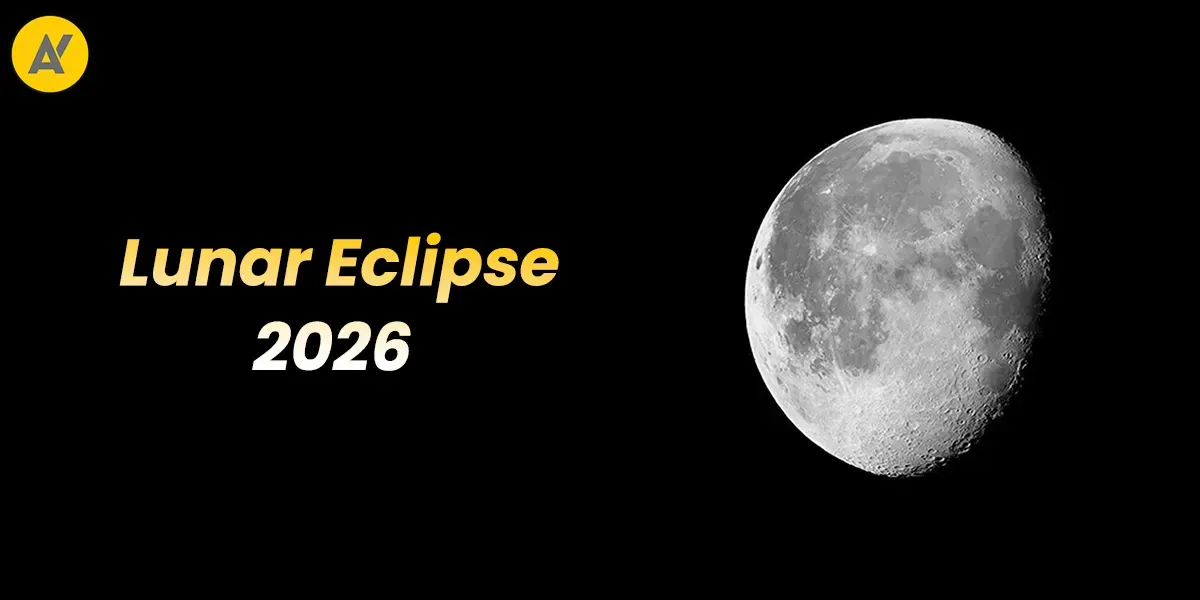
Mark your calendar – the sky has plans for you! The 03 March 2026 Lunar Eclipse is set to be one of the most talked-about celestial events of the year. With people searching for the exact Lunar Eclipse 2026 date and time, curiosity is rising across the country.
Many are also eager to know about the Lunar Eclipse 2026 in India, especially the Lunar Eclipse visibility in India, and whether it will be fully or partially seen. Adding to the excitement is the rare overlap of Holi 2026 and a lunar eclipse on the same day. Naturally, questions around Sutak Kaal during the eclipse, rituals, and precautions are gaining attention.
In this detailed guide, you will find accurate timings, visibility details, religious significance, do’s and don’ts, effective remedies, and the scientific reason behind the eclipse. Whether you view it through faith, astrology, or science, this event deserves your attention.
03 March 2026 Lunar Eclipse – Date & Time
The following is the complete schedule for the first lunar eclipse's phases in 2026:
When is the Lunar Eclipse 2026?
| Detail | Information |
|---|---|
| Date | 03 March 2026 |
| Day | Tuesday |
| Type of Eclipse | Total Lunar Eclipse |
Lunar Eclipse 2026 Timings (IST)
Refer to the table below for key details:
| Eclipse Phase | Time (IST) |
|---|---|
| Eclipse Start Time (With Moonrise) | 06:35 PM |
| Eclipse End Time | 06:46 PM |
| Local Eclipse Duration | 11 Mins 41 Secs |
Complete Eclipse 2026 Timeline: Penumbral, Partial & Total Phases
| Eclipse Event | Time (IST) |
|---|---|
| First Contact with the Penumbra (Partial Shadow) | 02:16 PM |
| First Contact with the Umbra (Total Shadow) | 03:21 PM |
| Total Phase Starts | 04:35 PM |
| Maximum of Lunar Eclipse | 05:04 PM |
| Total Phase Ends | 05:33 PM |
| Last Contact with the Umbra | 06:46 PM |
| Last Contact with the Penumbra | 07:52 PM |
Eclipse Duration Breakdown
| Phase | Duration |
|---|---|
| Duration of Total Eclipse Phase | 57 Mins 27 Secs |
| Duration of Partial Eclipse Phase | 03 Hours 25 Mins 17 Secs |
| Duration of Penumbral Eclipse Phase | 05 Hours 35 Mins 45 Secs |
*Note – (Timings may vary slightly by location.)
Will the Lunar Eclipse 2026 Be Visible in India?
Which Indian cities will witness the eclipse?
Cities like New Delhi, Mumbai, Kolkata, Chennai, Bengaluru, Hyderabad, Ahmedabad, Patna, Guwahati, Imphal, Shillong, Kohima, and Itanagar are likely to observe different stages of this celestial event.
Will it be fully visible or partially visible?
In India, a Total Lunar Eclipse, also called the Blood Moon, is expected to be visible in parts of eastern and north-eastern India.
Most regions across the country may witness the Partial phase, while western India could see only the Penumbral phase, as the Moon will rise after the total phase ends.
If not visible in India, will Sutak Kaal be valid?
If the eclipse is visible in your region, Sutak Kaal during the Lunar Eclipse 2026 will be considered valid. But, if it’s not visible in a region (e.g., due to clouds or other natural reasons), Sutak may not be applicable; however, precautions may still apply.
*Note – Sutak is a spiritually inauspicious, "contaminated" period observed in Hindu tradition before and during solar (12 hours prior) and lunar (9 hours prior) eclipses.
How to Watch the Lunar Eclipse
Can it be seen with the naked eye? Yes. A lunar eclipse is completely safe to watch with the naked eye. No special glasses are needed, unlike solar eclipses.
Viewing through a telescope: Using binoculars or a telescope enhances the details of the lunar eclipse and will give you a clearer view of the red tint during totality.
Online live streaming options: If the weather blocks your view, space agencies and observatories often stream the eclipse online for real-time feeds.
Lunar Eclipse & Holi 2026 – A Rare Coincidence
In 2026, the sky and tradition align in a way that doesn’t happen often. Holi 2026 and the Lunar Eclipse fall on the same date, that is 03 March 2026. When a major festival of joy meets a powerful celestial event, curiosity rises. Is it a sign? A warning? Or simply cosmic timing? Let’s understand what this rare overlap truly means.
Religious Significance of Holi and Eclipse Together
Holi marks the victory of devotion over ego. It celebrates the triumph of Prahlad’s faith and the burning away of negativity through Holika Dahan. Fire symbolizes purification.
A lunar eclipse, on the other hand, is linked with heightened spiritual energy. In astrology, it is seen as a sensitive phase when the Moon, the ruler of emotions and the mind, becomes temporarily weak. People are advised to stay mindful, avoid new beginnings, and focus on prayer.
When these two events occur together, it creates a powerful symbolic contrast:
Holi represents celebration, color, and social joy.
The lunar eclipse represents introspection, restraint, and spiritual caution.
It’s like the universe asking you to celebrate, but with awareness.
Why is this Lunar Eclipse & Holi combination rare?
Holi always falls on Phalguna Purnima, the full moon of the Hindu month of Phalguna. Lunar eclipses also occur only on a full moon. However, not every full moon becomes an eclipse. In 2026, Holika Dahan on 3 March happens during the eclipse window. This alignment doesn’t occur frequently, making it astrologically and spiritually noteworthy.
Spiritual and traditional importance
Traditionally, eclipses are viewed as periods when cosmic energies are unstable. Rituals are paused during Sutak Kaal, and people avoid auspicious beginnings.
Holi, however, is a festival of renewal and happiness. The bonfire of Holika Dahan burns negativity and prepares you for a fresh start.
When both occur together, many see a deeper meaning:
- Burn inner negativity during Holika Dahan.
- Use the eclipse hours for mantra chanting and meditation.
- Treat the day as both a celebration and a purification.
- Instead of seeing it as a clash, you can view it as a double layer of cleansing.
Will Holi celebration rules change due to the eclipse?
Yes, timing matters. If the eclipse timing overlaps with Holika Dahan or Rangwali (color) Holi, rituals may be adjusted based on the muhurat before Sutak begins. Since Sutak is considered spiritually sensitive, important rituals are ideally completed outside that window.
Impact on Holika Dahan
Timing of Holika Dahan in 2026:
- Holika Dahan Date – 03 March 2026 (Tuesday)
- Time – 06:31 PM to 08:58 PM (IST)
- Duration – 02 Hours 27 Mins
If eclipse timing overlaps with Holika Dahan, priests and Vedic astrologers may recommend completing rituals before Sutak begins. Dahan rituals must be wrapped before Sutak to avoid inauspiciousness; delay bonfires if needed.
There should be proper coordination between the festival and the eclipse. Perform Dahan early, chant mantras during the lunar eclipse, then celebrate Holi on 04 March post-Sutak.
Sutak Kaal 2026
For a lunar eclipse, Sutak begins nine hours before the eclipse starts.
When Will Sutak Kaal Begin?
Below are the key timings for the Sutak Kaal during the Lunar Eclipse in 2026:
Sutak Kaal Start Time – 09:43 AM (IST)
Sutak Kaal End Time – 06:46 PM (IST)
*Note - (Exact timing depends on your location.)
What Not to Do During Sutak Kaal
Here’s what you should avoid during a Sutak period:
- Avoid temple visits or touching the deities.
- Avoid cooking food during this period; pre-prep meals if you can.
- Avoid starting auspicious ceremonies or activities like weddings, new ventures, or purchases.
Who is Exempted from Sutak?
The following people are not subject to the Sutak period:
- Young Children
- Elderly people
- Sick Individuals
- In regions where the eclipse is not visible, some traditions waive strict rules, but caution prevails.
Do’s & Don’ts During Lunar Eclipse
Here are some of the most important things to remember throughout the eclipse period:
Do’s:
- Chant mantras like the Mahamrityunjaya Mantra or Hanuman Chalisa for protection
- Do meditation and prayers to harness positive energies
- Engage in Charity and donation, especially food or clothes.
- Take a bath after the eclipse ends to cleanse your aura
- Clean your house and altar
Don’ts:
- Avoid rating during the eclipse
- Avoid sleeping; instead, stay awake for spiritual vigilance
- Avoid engaging in arguments; maintain peace and harmony
- Precautions for pregnant women: Avoid viewing the eclipse directly; rest in a calm room, chant mantras or remedies. Also, avoid stepping outside unnecessarily.
Remedies to Reduce Negative Effects
These Lunar Eclipse 2026 remedies can help reduce stress and negative energy. They can balance lunar energy and help you move through the eclipse period smoothly.
Effective Remedies During Lunar Eclipse
- Chant “Om Namah Shivaya” 108 times
- Donate white items like rice or milk to the needy
- Feed the stray animals
- Take a bath with rock salt after the eclipse
- Light a diya (lamp) with sesame oil during the eclipse hours
- Meditate under guidance
Astrological Products That Can Lower the Impact of a Lunar Eclipse
Associated with the Moon, Wearing a Moonstone bracelet or pendant it is believed to reduce the impact of the unstable energy associated with the Moon during a lunar eclipse. It can help calm your mind and stay emotionally balanced.
Considered a protective bead 5 Mukhi Rudrakshacan reduce the impact of negative waves generated during a lunar eclipse. It is believed to help strengthen mental stability and spiritual power.
Using Karungali bead Mala while chanting mantras during a lunar eclipse is believed to reduce the impact of negative energy and improve concentration in meditation.
Scientific Reason – Why Does a Lunar Eclipse Occur?
A lunar eclipse is a beautiful example of cosmic alignment. It happens when the Earth moves directly between the Sun and the Moon, forming a straight line in space. As a result, Earth blocks the sunlight that normally reflects off the Moon. Instead of shining brightly, the Moon passes through Earth’s shadow.
There are two main parts of Earth’s shadow:
- Umbra – The dark, central shadow where sunlight is completely blocked
- Penumbra – The lighter outer shadow where sunlight is only partially blocked
Three parts of the lunar eclipse phase:
- A Total Lunar Eclipse occurs when the entire Moon moves into the umbra.
- A Partial Lunar Eclipse happens when only a portion of the Moon enters this dark shadow.
- A Penumbral Eclipse is more subtle and may look like a slight dimming.
Lunar eclipses can only occur on a Full Moon day because that’s when the Sun, Earth, and Moon are positioned opposite each other. However, not every full moon brings an eclipse. The Moon’s orbit is slightly tilted, so this perfect alignment happens only a few times each year.
What causes the “Blood Moon” effect?
During a total lunar eclipse, the Moon often turns reddish. This is popularly called the Blood Moon.
The red color appears due to a process called Rayleigh scattering. When sunlight passes through Earth’s atmosphere, shorter blue wavelengths scatter in different directions.
The longer red and orange wavelengths bend around Earth and reach the Moon. That filtered red light reflects off the Moon’s surface, giving it a glowing reddish tint.
In simple words, you are seeing all the sunrises and sunsets of Earth projected onto the Moon at once. Pretty amazing, right?
Is a lunar eclipse really inauspicious?
Scientifically, no. It is a natural astronomical event. Spiritually, many cultures consider them sensitive windows for reflection, prayer, and inner cleansing. Instead of fear, the eclipse can be viewed as a pause; a moment to reset emotions and thoughts.
In astrology, the Moon represents the mind, emotions, stability, and maternal energy. During a lunar eclipse, the Moon is believed to become temporarily weak because it is overshadowed by Earth’s shadow.
This symbolic “weakening” of the Moon may increase emotional sensitivity, confusion, mood swings, or restlessness, especially for those strongly influenced by the Moon in their birth chart. That is why astrology recommends certain remedies during this phase.
To Sum it Up
The 3 March 2026 Lunar Eclipse is a powerful blend of science, tradition, and faith. With key details on the Lunar Eclipse 2026 date and time, Lunar Eclipse 2026 visibility in India, and Sutak Kaal during this eclipse, you can plan mindfully.
Moreover, the rare overlap of Holi 2026 and the Lunar Eclipse makes it even more special. Follow the right do’s, don’ts, and remedies to stay balanced and spiritually aligned during this cosmic shift.
FAQs
Will the 3 March 2026 Lunar Eclipse be visible in India?
Yes, the Total Lunar Eclipse on this day will be visible in India, but visibility may vary by region. Eastern and north-eastern parts may witness the total phase, while most regions will see the partial phase. Western India is likely to observe only the penumbral stage.
Is Sutak Kaal valid in India?
Sutak Kaal will be valid in regions where the lunar eclipse is visible. For this eclipse, Sutak Kaal will apply per IST (Indian Standard Time). If the eclipse is not visible in a particular area, some traditions may relax Sutak rules.
Can pregnant women watch the lunar eclipse?
Traditionally, pregnant women are advised to avoid direct viewing of the lunar eclipse and remain indoors in a calm environment. They are encouraged to chant mantras and rest peacefully. Scientifically, however, a lunar eclipse is safe and does not emit harmful radiation.
- What should be done if Holi and a lunar eclipse fall on the same day?
If Holika Dahan overlaps with the eclipse, rituals should ideally be completed before Sutak begins. Devotees can perform Dahan early, chant mantras during the eclipse, and celebrate Rangwali Holi the next day after Sutak ends for proper spiritual alignment.
How long will the Lunar Eclipse 2026 last?
The total lunar eclipse phase will last about 57 minutes and 27 seconds as per the Indian Standard Time, depending on the locality. The partial phase will continue for approximately 3 hours and 25 minutes, while the entire penumbral phase will span nearly 5 hours and 35 minutes.
Team Astroyogi is an experienced in-house editorial team of passionate writers, researchers, and astrology enthusiasts dedicated to making ancient divination sciences more accessible and meaningful in everyday life. With years of collective experience in creating insightful astrology and spirituality content, the team specializes in simplifying complex spiritual concepts into practical guidance for readers seeking clarity, balance, and personal growth. The Astroyogi editorial team possesses expertise across a wide range of subjects, including Indian Astrology, Vedic Astrology, Planetary Transits, Horoscope Analysis, Vastu Shastra, Numerology, Tarot, Spiritual Wellness, and Ritual Practices. Every piece of content is carefully researched, fact-checked, and crafted with the intention of offering reliable, insightful, and easy-to-understand guidance rooted in traditional wisdom. Driven by a commitment to authenticity and reader trust, Team Astroyogi strives to create content that empowers individuals to navigate life’s opportunities and challenges with confidence, positivity, and inner peace. Their mission is to bridge ancient astrological knowledge with modern-day relevance, helping readers make informed decisions and lead more harmonious lives.