


Tuesday, September 22, 2026 Paksha:Shukla Tithi:Ekadashi

Wednesday, September 23, 2026 Paksha:Shukla Tithi:Dvadashi
Wednesday, September 23, 2026 Paksha:Shukla Tithi:Dvadashi

Friday, September 25, 2026 Paksha:Shukla Tithi:Chaturdashi
Friday, September 25, 2026 Paksha:Shukla Tithi:Chaturdashi
Saturday, September 26, 2026 Paksha:Shukla Tithi:Purnima
Sunday, September 27, 2026 Paksha:Krishna Tithi:Prathama

Monday, September 28, 2026 Paksha:Krishna Tithi:Dvitiiya
The 9th day of Navratri marks the grand culmination of the sacred nine-day festival dedicated to Goddess Durga and her nine divine forms. This day is devoted to Maa Siddhidatri, the ninth and final manifestation among the Navadurga, who is revered as the bestower of siddhis (divine powers), wisdom, and spiritual fulfillment.
The ninth day of Navratri, also known as Maha Navami, represents completion, divine perfection, and spiritual awakening. It is the day when devotees conclude their Navratri sadhana and prepare for Vijayadashami.
Let’s learn everything about Navaratri day 9, including its significance, rituals, mantra, vrat rules, and the important Kalash Visarjan ritual.
Navratri Day 9 Overview
Rituals on Navratri day 9 focus on Maa Siddhidatri's blessings for siddhis and enlightenment, marking the festival's victorious close.
| Aspect | Details |
|---|---|
| Chaitra Navratri 9th Day 2026 Date | 27th March 2026 (Friday) |
| Tithi | Navami (ninth lunar day as per Hindu Panchang) |
| Navratri Day | Navratri Day 9 |
| Goddess Worshipped | Maa Siddhidatri |
| Navratri Ninth Day Color | Purple |
| Key Ritual | Worship of Maa Siddhidatri with Kanya Pujan and Kalash Visarjan |
| Planet Associated | Ketu |
What’s the Significance of Navratri Day 9?
The ninth day of Navratri celebrates Maa Siddhidatri as the granter of all accomplishments, dissolving obstacles and karmic bonds for worldly success and moksha. This day also signifies the completion of the spiritual journey that begins on the first day of Navratri. It represents enlightenment, fulfillment, and the union of the devotee with divine energy.
Spiritually, the 9th day of Navratri represents:
Attainment of spiritual knowledge and wisdom
Attainment of siddhis like spiritual knowledge, wisdom, and inner strength
Fulfillment of desires and wishes
Completion of sadhana (spiritual practice)
Awakening of divine consciousness
Liberation from worldly attachments
Goddess of the 9th Day: Maa Siddhidatri
The day 9 Navratri goddess, Maa Siddhidatri, revered as the 9th devi of Navratri, represents the ultimate culmination of the Navadurga forms and embodies divine perfection and spiritual fulfillment. She is worshipped by gods, sages, and devotees alike as the bestower of siddhis (supernatural powers), wisdom, and inner transformation.
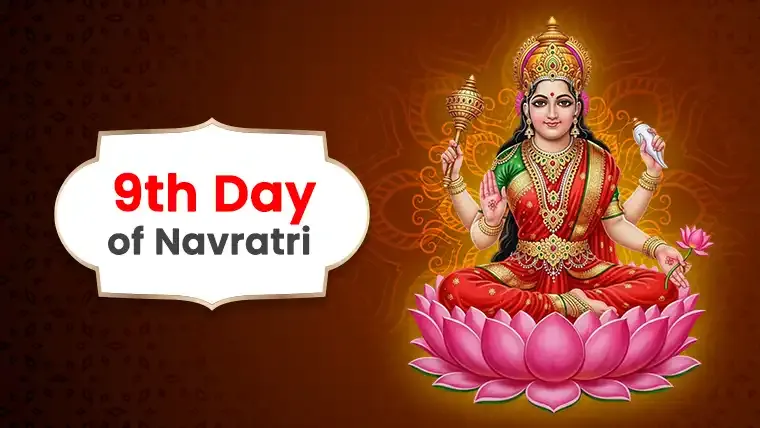
Goddess Siddhidatri is typically depicted seated gracefully on a lotus or sometimes riding a lion, symbolizing purity, power, and fearlessness. She has four arms, holding a chakra (discus), gada (mace), shankh (conch), and lotus, each representing cosmic balance and divine authority. Her serene expression radiates calmness, compassion, and transcendental energy, guiding devotees toward enlightenment on the 9th day of Navratri.
Vedic texts describe her as Adi Shakti manifesting Shiva's left half in Ardhanarishvara, balancing cosmic masculine-feminine forces.
Puja Essentials (Samagri) for Navratri Day 9
The puja for the 9th day of Navratri continues with the Kalash established on day 1 while honoring Maa Siddhidatri. Here’s a list of essential puja items:
Idol or image of Maa Siddhidatri.
Purple cloth or chunari aligning with the day's color.
Puja thali (tray) with roli (sacred bright-red powder), kumkum (sacred vermillion powder), chandan (sandalwood), haldi (turmeric), akshat (rice).
Lotus flowers, garlands, ghee diya, dhoop (incense), camphor.
Prasad, including fruits, sweets, panchamrit, and Kanya Pujan foods.
Shankh (conch shell), ghanti (bell), sphatik or rudraksha mala.
Durva grass, coconuts for offerings
Puja Rituals for Day 9 of Navratri
The Navratri day 9 rituals are performed with deep devotion and are considered highly auspicious.
Morning Rituals:
Wake up early, bathe ritually, and wear purple garments
Purify the altar, sprinkle Gangajal, and adorn it with purple drapes and flowers
Set up the Maa Siddhidatri idol beside the Kalash; offer sankalp for Navami
Light the diya/incense, offer akshat and fruits
Worship of Maa Siddhidatri:
Place the idol/image of Maa Siddhidatri
Offer flowers, kumkum, and akshat
Offer fruits, sweets, and coconut as bhog
Chant the Navratri Day 9 mantra
Perform aarti and sing devotional songs praising the goddess
Maha Aarti, family katha of Siddhidatri, and extended prasad distribution from Kalash amplify communal joy. Kalash remains undisturbed until Visarjan the next day on Dashami Tithi or at a Shubh Muhurat as per the Hindu Panchang.
*Note: One of the most important rituals of Navratri is the Kalash Visarjan, which marks the formal conclusion of Navratri Puja. The Kalash, established on the first day of Navratri, and known as Ghatasthapana, symbolizes the presence of Goddess Durga throughout the nine days. After the Navratri worship concludes, this sacred setup is respectfully concluded.
Kanya Pujan:
Many devotees perform Kanya Pujan on the ninth day of Navratri (if not done on Ashtami, the eighth day of Navratri).
On this day, nine young girls (representing the nine manifestations of Goddess Durga) are worshipped, given food and gifts, and then asked for their blessings. Read more about the Kanya Pujan rituals here.
Navratri Day 9 Mantra
Chanting mantras is essential on the 9th day of Navratri.
Main Mantra:
॥ Om Devi Siddhidatryai Namah ॥
9th Day of Navratri Color: Purple
Purple defines day 9 of Navratri, symbolizing royalty, spirituality, intuition, and cosmic mystery; it is ideal for invoking higher realms and Ketu's mystical energy. Wearing purple clothing and using purple flowers or cloths on the altar encourages deep insights and inner transformation.
Auspicious Offerings, Flowers, and Bhog on Day 9 of Navratri
Offerings on the ninth day of Navratri are made with devotion and gratitude.
Flowers: Red lotus, hibiscus, and fragrant flowers like champa are considered auspicious for enlightenment.
Bhog: Til (sesame seed-based preparation) ladoo, kheer, halwa, coconut barfi, fruits (bananas, pomegranates), and mishri for sweetness.
Special Offering: Sesame seeds are considered auspicious for Maa Siddhidatri and are believed to remove negativity and bring prosperity.
Fasting (Vrat) Rules for the 9th Day of Navratri
Fasting on the ninth day of Navratri is often the final vrat of the festival and marks the completion of fasting for many devotees. On this day, only sattvik, pure vegetarian, and fast-friendly food is consumed, and the fast is broken after Kanya Pujan. Know more about the fasting rules for Navratri in this guide.
Do’s and Don’ts for Day 9 of Navratri
On this day, some important things to remember are as follows:
Do’s:
Cultivate gratitude and surrender.
Honor Kanya Pujan wholeheartedly.
Chant mantras with focus; meditate on siddhis.
Perform selfless dana; visit Siddhidatri temples.
Embrace detachment amid festivities.
Don’ts:
Avoid tamasic foods, intoxicants, and ego.
Avoid haste in rituals.
Refrain from negativity, lies, and arguments.
Limit worldly distractions; prioritize devotion.
Do not overlook Kanya (young girls') blessings in Pujan.
The 9th day of Navratri is dedicated to Maa Siddhidatri, the goddess of wisdom, fulfillment, and divine powers. It marks the completion of the sacred Navratri journey and symbolizes spiritual awakening and enlightenment.
By understanding the rituals, significance, and practices of the Navratri day 9 goddess, devotees can celebrate this auspicious day with deeper devotion and awareness.
May Maa Siddhidatri bless you with success, wisdom, and spiritual enlightenment on this sacred ninth day of Navratri!
Festival List
- Nag Panchami
- Raksha Bandhan
- Janmashtami
- Ganesh Chaturthi
- Onam
- Pitru Paksha
- Shardiya Navratri
- Durga Puja
- Dussehra
- Karwa Chauth
- Dhanteras
- Diwali
- Govardhan Puja
- Bhai Dooj
- Chhath Puja
- Tulsi Vivah
- Guru Nanak Jayanti
- Christmas
- New year
- Lohri
- Pongal
- Makar Sankranti
- Vasant Panchami
- Shivratri
- Ramadan
- Holi
- Good Friday
- Navratri
- Gudi Padwa
- Ugadi
- Vaisakhi
- Ram Navami
- Mahavir Jayanti
- Hanuman Jayanati
- Buddha Purnima
- Akshay Tritiya
- Shani Jayanti
- Guru Purnima
- Hariyali Teej