

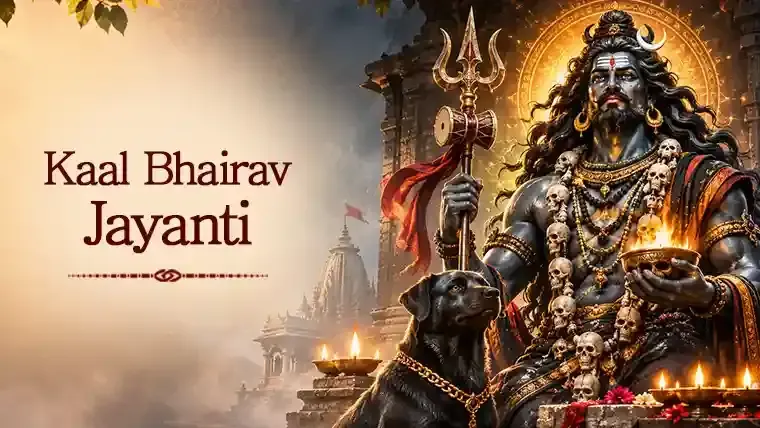
Kaal Bhairav Jayanti (also known as Kaal Bhairav Ashtami, Bhairava Ashtami, or Bhairavashtami) is the annual festival that celebrates the manifestation of Lord Kaal Bhairav. He is the fierce form of Lord Shiva and the cosmic guardian of time and death.
The name carries a deep meaning. Kaal stands for time, death, and destiny, while Bhairav means the fearsome one. Together, the name describes the Lord who governs time and stands beyond it.
Every month, the Krishna Paksha Ashtami is observed as Masik Kalashtami. The Margashirsha Krishna Ashtami is different because it is regarded as the appearance anniversary of Lord Kaal Bhairav, which is why it is celebrated as Jayanti.
The festival holds a central place in Shaivite and Tantric traditions. In Varanasi, Lord Kaal Bhairav is worshipped as the Kotwal, the divine guardian of the city.
In 2026, Kaal Bhairav Jayanti falls on Tuesday, December 1, during the Krishna Paksha Ashtami of the Margashirsha month (Kartika in the Amanta calendar). The Ashtami tithi runs from 12:11 AM to 11:13 PM, and the main prayers take place during Pradosh Kaal (dusk) and Nishita Kaal (midnight).
Panchang and Muhurat for Kaal Bhairav Jayanti 2026
The table below lists the main Panchang details for the day. All timings are based on New Delhi and may differ slightly in other cities.
| Panchang Element | Details for 2026 |
|---|---|
| Day and Date | Tuesday, December 1, 2026 |
| Ashtami Tithi | 12:11 AM to 11:13 PM on December 1 |
| Sunrise | 6:56 AM |
| Sunset | 5:23 PM |
| Abhijit Muhurat | 11:48 AM to 12:30 PM |
| Nishita Kaal (Night Puja) | 11:42 PM to 12:36 AM (December 2) |
| Rahu Kaal (to avoid) | 2:46 PM to 4:04 PM |
Purnimanta and Amanta Calendars
North Indian calendars follow the Purnimanta system and place this festival in Margashirsha. South and West Indian calendars follow the Amanta system and place it in Kartika.
Both systems observe Kaal Bhairav Jayanti on the same day. Only the name of the month changes.
Legend of Lord Kaal Bhairav
The story of Lord Kaal Bhairav is told in the Shiva Purana and other Shaivite texts. It begins with a debate between Lord Brahma and Lord Vishnu on Mount Sumeru about who holds the highest authority over creation.
Lord Brahma claimed absolute supremacy and spoke with pride, showing disrespect toward Lord Shiva. His fifth head voiced this arrogance.
Lord Shiva then manifested Lord Kaal Bhairav from His wrath. He commanded Him to humble Lord Brahma and uphold cosmic order. Lord Kaal Bhairav severed the arrogant fifth head.
The severed skull remained attached to His hand. He wandered until He reached Kashi, where He was freed from this burden. Lord Shiva then appointed Him the eternal guardian, or Kotwal, of Kashi.
Meaning of the Story
The legend is not only about an act of anger. It symbolizes the removal of ego, false pride, and the illusion of being supreme.
Lord Kaal Bhairav represents the divine power that restores humility and protects the righteous.
Significance of Kaal Bhairav Jayanti
Kaal Bhairav Jayanti honors Lord Kaal Bhairav as the protector of time and the remover of fear. The day carries a reminder that time is powerful and impermanent and that ego and attachment lead to suffering.
Devotees worship Lord Kaal Bhairav for the following:
Protection from fear, anxiety, and negative influences
Courage, confidence, and emotional strength
Relief from delays, obstacles, and repeated difficulties
Discipline, honesty, and right action
Safety during travel and new beginnings
Progress on the spiritual path and a deeper bond with Lord Shiva
Astrological Importance
In popular Hindu astrology, Lord Kaal Bhairav is linked with calming the harsh effects of Shani (Saturn) and Rahu-Ketu. Disciplined devotion, charity, and service to others are considered helpful during such phases.
The day is best seen as one of prayer, self-discipline, and reflection. For personal chart-based guidance, a qualified astrologer can offer suitable direction.
Kaal Bhairav Jayanti Puja Vidhi and Vrat Rules
Worship is mainly done at night. Lord Kaal Bhairav is said to have appeared at midday, but the observance follows Ratri Vyapini Ashtami, the Ashtami present during the night. This makes Pradosh Kaal (dusk) and Nishita Kaal (midnight) the main puja windows.
Puja Samagri
Idol or image of Lord Kaal Bhairav or Lord Shiva
Mustard-oil lamp
Black sesame seeds and black urad dal
Fresh red flowers and bilva leaves
Incense, sandal paste, and vermilion
Fruits, sweets, or prasad
Rudraksha mala for chanting
Food for dogs, such as roti or milk
Step-by-Step Puja Vidhi
Bathe early in the morning, wear clean clothes, and clean the puja area.
Take a sankalpa (vow) to observe the day-long vrat.
Place the idol or image of Lord Kaal Bhairav or Lord Shiva on a clean altar. Invoke Lord Ganesha first.
In the evening, light a mustard-oil lamp.
Offer water, flowers, incense, black sesame seeds, and black urad dal.
Chant "Om Kalabhairavaya Namah" 108 times with a rudraksha mala.
Recite the Kalabhairava Ashtakam, then perform the aarti.
Keep a night vigil (Jagarana) with bhajans, scripture reading, or silent prayer.
Strict observers may worship in each Prahara of the night and offer three Arghyas, which are water and flower offerings, with the traditional Arghya mantras.
Fasting Rules
Fasting on this day is a personal choice and not a compulsion. Some observe a full fast, while others take one sattvic meal or fruits and milk.
Elderly people, pregnant women, and those with medical conditions such as diabetes should avoid a strict fast unless a doctor advises otherwise. The essence of the vrat is devotion and self-restraint, not hardship.
Kaal Bhairav Mantras and Stotras
Chanting is a core part of the night worship. The mantras below are commonly recited, usually 108 times with a rudraksha mala.
Kaal Bhairav Moola Mantra
This is the simplest mantra and is suitable for beginners.
ॐ कालभैरवाय नमः॥
Om Kalabhairavaya Namah
Meaning: Salutations to Lord Kaal Bhairav.
Kaal Bhairav Beej Mantra
This mantra uses seed sounds for deeper focus and protection.
ॐ ह्रां ह्रीं ह्रौं काल भैरवाय नमः॥
Om Hraam Hreem Hraum Kala Bhairavaya Namah
Meaning: Salutations to Lord Kaal Bhairav, invoked through the sacred seed sounds Hraam, Hreem, and Hraum.
To understand how chanting Kaal Bhairav mantras can help overcome obstacles in your life, consult verified astrologers on Astroyogi.
Kaal Bhairav Jayanti: Remedies, Do's and Don'ts
Simple acts of devotion and kindness are the heart of the day. These remedies are offered as spiritual practices and not as guaranteed outcomes.
Auspicious Remedies
Feed dogs: Plain roti, biscuits, or milk offered to stray dogs is considered the most direct way to please Lord Kaal Bhairav, as the dog is His vahana.
Donate for winter: Blankets, warm clothes, black sesame seeds, or food given to those in need suit the start of winter in Margashirsha.
Visit a temple: Light a mustard-oil lamp at a Kaal Bhairav or Lord Shiva temple in the evening.
Do's
Keep the body and mind clean and calm during worship.
Chant mantras and recite the Ashtakam with devotion.
Practice honesty and self-discipline throughout the day.
Offer food to dogs kindly and safely.
Don'ts
Avoid anger, harsh speech, and arguments.
Avoid alcohol and other intoxicants.
Avoid harming or mistreating animals.
Avoid strict fasting if health does not permit it.
Avoid treating the festival as a source of fear or superstition.
Famous Kaal Bhairav Temples in India
Kaal Bhairav Temple, Varanasi
This temple in the ancient lanes of Kashi is the most celebrated shrine of Lord Kaal Bhairav. He is worshipped here as the Kotwal of Kashi.
According to tradition, a pilgrimage to Varanasi is incomplete without His darshan. Many pilgrims visit after worshipping at the Kashi Vishwanath Temple.
A protective thread called the Bhairav Raksha Sutra is tied around the wrist here. Offerings usually include mustard oil, black sesame seeds, and flowers. The temple generally stays open from about 5:00 AM to 9:00 or 10:00 PM, though timings may vary.
Kal Bhairav Temple, Ujjain
This ancient shrine stands on the banks of the Shipra River in Madhya Pradesh. It is traditionally believed to have been built by King Bhadrasen and is mentioned in the Avanti Khanda of the Skanda Purana.
The temple is known for the unique ritual of offering liquor to the deity. This practice belongs to the temple's own tradition and is not part of Bhairav worship everywhere.
The nearest airport is Devi Ahilyabai Holkar Airport in Indore, about 53 km away.
Ashta Bhairav Shrines
Shaivite tradition recognizes eight forms of Lord Bhairav, known as the Ashta Bhairavas, with Lord Kaal Bhairav regarded as the chief. Shrines dedicated to these forms are found across India.
Festival List
- Nag Panchami
- Raksha Bandhan
- Janmashtami
- Ganesh Chaturthi
- Onam
- Pitru Paksha
- Shardiya Navratri
- Durga Puja
- Dussehra
- Karwa Chauth
- Dhanteras
- Diwali
- Govardhan Puja
- Bhai Dooj
- Chhath Puja
- Tulsi Vivah
- Guru Nanak Jayanti
- Christmas
- New year
- Lohri
- Pongal
- Makar Sankranti
- Vasant Panchami
- Shivratri
- Ramadan
- Holi
- Good Friday
- Navratri
- Gudi Padwa
- Ugadi
- Vaisakhi
- Ram Navami
- Mahavir Jayanti
- Hanuman Jayanati
- Buddha Purnima
- Akshay Tritiya
- Shani Jayanti
- Guru Purnima
- Hariyali Teej
Panchang, Rituals & Auspicious Timings






Frequently Asked Questions
Masik Kalashtami is the monthly observance on every Krishna Paksha Ashtami. Kaal Bhairav Jayanti is the yearly anniversary of the manifestation of Lord Kaal Bhairav, observed on the Margashirsha Krishna Ashtami.
Night is preferred. Following the Ratri Vyapini Ashtami rule, the main puja is performed during Pradosh Kaal at dusk and Nishita Kaal at midnight.
The dog is the sacred vahana of Lord Kaal Bhairav. Feeding dogs is seen as an act of devotion and compassion.
The most common mantra is "Om Kalabhairavaya Namah," chanted 108 times with a rudraksha mala.
No. Fasting is optional and can be adjusted to health and family tradition. Prayer and charity are equally valued.
After severing Lord Brahma's fifth head, Lord Kaal Bhairav reached Kashi and was freed from the burden of the skull. Lord Shiva then appointed Him the guardian of the city.


