


Tuesday, September 22, 2026 Paksha:Shukla Tithi:Ekadashi

Wednesday, September 23, 2026 Paksha:Shukla Tithi:Dvadashi
Wednesday, September 23, 2026 Paksha:Shukla Tithi:Dvadashi

Friday, September 25, 2026 Paksha:Shukla Tithi:Chaturdashi
Friday, September 25, 2026 Paksha:Shukla Tithi:Chaturdashi
Saturday, September 26, 2026 Paksha:Shukla Tithi:Purnima
Sunday, September 27, 2026 Paksha:Krishna Tithi:Prathama

Monday, September 28, 2026 Paksha:Krishna Tithi:Dvitiiya
The 8th day of Navratri is one of the most spiritually powerful days in the nine-day festival dedicated to Goddess Durga. On this sacred day, devotees worship Maa Mahagauri, the eighth form of Durga, who represents purity, peace, and inner transformation.
The eighth day of Navratri is deeply associated with cleansing of past karmas and attaining serenity. Let’s dive in to learn everything you need to know about the Navratri day 8, including its significance, rituals, mantra, vrat rules, and spiritual meaning.
Navratri Day 8 Overview
The eighth day of Navratri focuses on Maa Mahagauri's worship, often called Maha Ashtami or Durga Ashtami.
| Aspect | Details |
|---|---|
| Chaitra Navratri 8th Day 2026 Date | 26th March 2026 (Thursday) |
| Tithi | Ashtami (eighth lunar day as per Hindu Panchang) |
| Navratri Day | Navratri Day 8 |
| Goddess Worshipped | Maa Mahagauri |
| Navratri Eighth Day Color | Peacock green or Pink |
| Key Ritual | Worship of Maa Mahagauri with Kanya Pujan |
| Planet Associated | Rahu |
What’s the Significance of Navratri Day 8?
Day 8 Navratri honors Maa Mahagauri, whose name means "extremely fair and radiant," symbolizing the washing away of sins and karmic impurities. Worshipping the Navratri day 8 goddess purifies the soul, removes obstacles, and invites prosperity and harmony.
Spiritually, Navratri day 8 of Navratri is about:
Purifying mind, body, and soul
Letting go of past karmic burdens
Attaining peace, calmness, and stability
Strengthening faith and devotion
Receiving divine grace and blessings
Goddess of the 8th Day: Maa Mahagauri
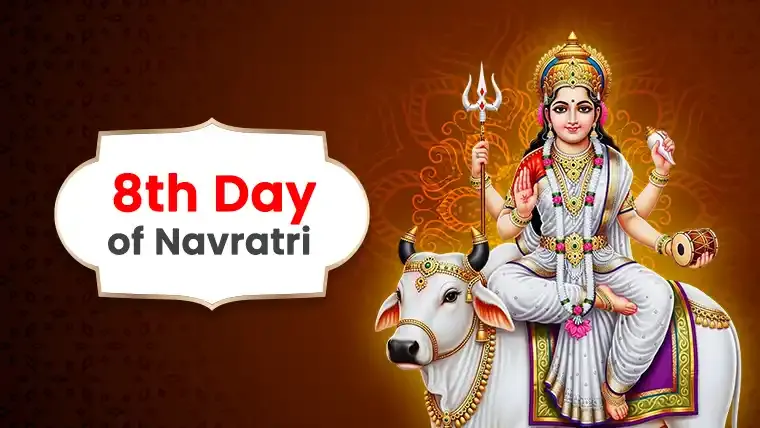
Maa Mahagauri, the Navarathri day 8 deity, shines with snow-white brilliance, her name translating to "extremely fair" or "radiant one," akin to a full moon or fresh jasmine. Seated on a white bull with four arms, holding a trident, damaru (a small two-headed drum), and offering blessings, she exudes compassion and strength, her calm and serene expression symbolizing forgiveness over vengeance.
Legend says her body turned radiant white through intense penance to win Lord Shiva. Worshipping the day 8 Navratri goddess cleanses deep-seated impurities, aligns the Sahasrara (crown) chakra for enlightenment, and grants unwavering tranquility amid life's storms.
Puja Essentials for Navratri Day 8
The existing Kalash from Ghatasthapana continues as the focal point, adorned for Mahagauri Mata. Essential puja samagri includes:
Idol or image of Maa Mahagauri.
Peacock green or pink cloth/chunari matching the Navratri day 8 color theme.
Puja thali with roli (sacred bright red powder), kumkum (sacred vermilion powder), haldi (turmeric), chandan (sandalwood), akshat (rice).
White flowers, garlands, ghee diya, dhoop, agarbatti (incense), camphor.
Sattvik prasad like coconut sweets, fruits, kheer.
Bell, shankh (conch shell), rudraksha mala for chanting.
Kanya Pujan items: nine young girls' seats, their favorite foods.
*Note: Kanya Pujan (Kanjak Puja) is one of the most important rituals of the eighth day of Navratri. It is traditionally performed on the eighth day of Navratri (Ashtami) or the ninth day of Navratri (Navami). On this day, nine little, young girls (symbolizing Navdurga) are welcomed home and honored with food (typically consisting of halwa, chana, and poori), clothes, and respect by feeding them modestly and seeking their blessings. Read more about the Kanya Pujan here.
Puja Rituals for Day 8 of Navratri
The eighth day of Navratri rituals is highly sacred and performed with devotion and discipline.
Morning Rituals:
Wake up early and take a bath
Wear peacock green or pink clothes, the color of the day
Clean the puja space thoroughly
Light a ghee diya and incense sticks
Offer water to the Kalash
Worship of Maa Mahagauri:
Place the idol/image of Maa Mahagauri at the worship space
Offer flowers, kumkum, and akshat
Offer coconut, fruits, and sweets (like halwa) as bhog
Chant the Navratri Day 8 mantra
Perform Maa Mahagauri aarti with devotion
In the evening, perform group bhajans, katha recitation of Mahagauri’s legend, and extended aarti.
Kanya Pujan:
After worshipping the goddess, perform Kanya Pujan. Distribute prasad among family and friends post-Kanya Pujan for blessings.
Also Read: Maa Mahagauri Aarti Lyrics: “Jai Mahagauri Jagat Ki Maya”
Navratri Day 8 Mantra
Mantra japa amplifies Maa Mahagauri's purifying vibrations on this auspicious day.
Main Mantra:
॥ Om Devi Mahagaurayai Namah ॥
8th Day of Navratri Color: Peacock Green/Pink
Peacock green (or pink as an alternate) dominates Navratri day 8, symbolizing renewal, vitality, healing, and prosperity, mirroring nature's lush rebirth. Devotees wear it, use it on altars, and incorporate it into decorations. These colors add softness, evoke compassion, and invite freshness and positive energy.
Auspicious Offerings, Flowers, and Bhog on Day 8 of Navratri
Offerings honor Mahagauri's pristine essence.
Flowers: White lotus, jasmine, champa; pure and fragrant for spiritual elevation.
Bhog: Coconut, kheer (sweet milk-based pudding, peda, halwa (pudding-like confection), fruits like bananas; avoid tamasik foods.
Special Offering: Coconut is considered highly sacred and is believed to fulfill wishes when offered on Navratri day 8.
Fasting (Vrat) Rules for the 8th Day of Navratri
Vrat on the eighth day of Navratri upholds sattva, focusing on light, pure sustenance amid Ashtami fervor. Opt for fruits, milk, nuts, vrat thali (sabudana khichdi, singhara atta items). Many observe strict nirjala upvas (fast) till evening aarti. Hydrate mindfully; break fast with sattvik bhog post-puja. To know more about the Navaratri fasting rules, read this guide.
Why Durga Ashtami is So Important
The eighth day of Navratri is often considered the most powerful among all nine days.
It marks the peak of divine energy
It is ideal for performing major rituals
Wishes made on this day are believed to be fulfilled quickly
It is a day of gratitude and devotion
Many devotees also perform Havan (sacred fire ritual) on this day to purify their surroundings and attract positive energy.
Do’s and Don’ts for Day 8 of Navratri
Do’s:
Maintain purity in thoughts and actions
Perform Kanya Pujan with utmost respect
Chant mantras devotedly; meditate on forgiveness
Share prasad generously; engage in selfless service
Focus on positive speech
Don’ts:
Avoid tamasik foods, alcohol, garlic, onion
Refrain from arguments, lies, or harming others
Avoid anger, negativity, and arguments
Steer clear of ego; practice humility
Limit distractions like excessive media
Avoid distractions and gossip
The 8th day of Navratri is dedicated to Maa Mahagauri, the goddess of purity, peace, and transformation. Through devotion, fasting, and rituals, devotees seek her blessings to cleanse their lives of negativity and move towards spiritual growth.
Understanding the significance of Navratri day 8, its rituals, mantra, and vrat rules helps deepen your connection with the divine. As you celebrate this sacred day, focus on inner purity, compassion, and faith.
May Maa Mahagauri bless you with peace, prosperity, and a pure heart on this auspicious day of Ashtami.
Festival List
- Nag Panchami
- Raksha Bandhan
- Janmashtami
- Ganesh Chaturthi
- Onam
- Pitru Paksha
- Shardiya Navratri
- Durga Puja
- Dussehra
- Karwa Chauth
- Dhanteras
- Diwali
- Govardhan Puja
- Bhai Dooj
- Chhath Puja
- Tulsi Vivah
- Guru Nanak Jayanti
- Christmas
- New year
- Lohri
- Pongal
- Makar Sankranti
- Vasant Panchami
- Shivratri
- Ramadan
- Holi
- Good Friday
- Navratri
- Gudi Padwa
- Ugadi
- Vaisakhi
- Ram Navami
- Mahavir Jayanti
- Hanuman Jayanati
- Buddha Purnima
- Akshay Tritiya
- Shani Jayanti
- Guru Purnima
- Hariyali Teej