


Sunday, October 25, 2026 Paksha:Shukla Tithi:Purnima
Sunday, October 25, 2026 Paksha:Shukla Tithi:Purnima
Monday, October 26, 2026 Paksha:Krishna Tithi:Prathama
Monday, October 26, 2026 Paksha:Krishna Tithi:Prathama
Monday, October 26, 2026 Paksha:Krishna Tithi:Prathama
Wednesday, October 28, 2026 Paksha:Krishna Tithi:Tritiiya
Thursday, October 29, 2026 Paksha:Krishna Tithi:Chaturthi
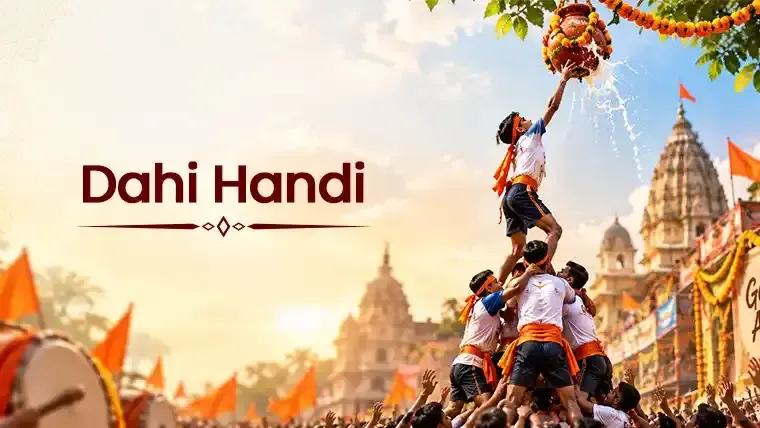
Dahi Handi is a lively Hindu festival that is celebrated the day after Krishna Janmashtami. The festival brings people together to act out a sweet story from Lord Krishna's childhood.
When Is Dahi Handi?
Many people ask, when is Dahi Handi celebrated each year? Dahi Handi is primarily a regional celebration associated with the day after Krishna Janmashtami, particularly in Maharashtra and Goa. While it commonly falls on the day called Krishna Navami—the ninth day of the dark half of the Hindu month of Bhadrapada—the exact tithi can vary depending on the local Panchang.
Dahi Handi comes right after Krishna Janmashtami, which is the day Lord Krishna was born.
Dahi Handi Date in 2026
This year, the Dahi Handi date is Saturday, 5 September. Janmashtami falls one day before, on Friday, 4 September.
Here is a simple table with all the timing details.
| Event | 2026 Date | Day Name | Time Window Begins | Time Window Ends | Best Time to Celebrate |
|---|---|---|---|---|---|
| Krishna Janmashtami | Friday, 4 September 2026 | Ashtami | 2:25 AM on 4 Sept | 12:13 AM on 5 Sept | Late night, around 12:00 AM |
| Dahi Handi | Saturday, 5 September 2026 | Navami | 12:13 AM on 5 Sept | 9:53 PM on 5 Sept | Daytime, 10:00 AM to 5:00 PM |
Janmashtami has one fixed and special time. This is the midnight hour, since that is when Lord Krishna was born. People wake up late at night to do puja and celebrate his birth.
Note: Dahi Handi is different. There is no single fixed time for breaking the pot. Since the whole day of 5 September falls on Navami, people can celebrate any time during the day. Most events happen in the afternoon, often between 2:00 PM and 4:00 PM, since this works best for big crowds.
The Story Behind Dahi Handi
Every festival has a story, and Dahi Handi has a very sweet one.
Lord Krishna spent his childhood in the Vraja region, with his early years split between the villages of Gokul and Vrindavan. Even as a small child during his cowherd days, he loved eating butter and curd. He loved it so much that people called him "Makhan Chor," which means "butter thief."
The mothers in the village tried to stop him. They hung pots of curd, milk, and butter high up near the ceiling. They thought this would keep the food safe from little Krishna.
But Krishna was clever. He would climb onto the shoulders of his friends to reach the pots anyway. Together, the group of children would break the pots and enjoy the treats inside.
This is exactly what people act out today. The pot hung high in the air is the handi. The human pyramid built to reach it copies what young Krishna and his friends used to do.
People do not see this as simple naughty behavior. They see it as a form of love and joy. It is called "lila," which means "playful divine action." It helps people feel closer to Lord Krishna in a fun and joyful way.
How the Dahi Handi Celebration is Organized
The Dahi Handi celebration follows a few simple steps almost everywhere it is held.
Setting Up the Pot
First, a pot is filled with curd, butter, milk, honey, and sometimes fruits or coins.
This pot is then hung very high in the air. It can be anywhere from 20 to 40 feet off the ground.
The pot is decorated with flowers and bright cloth. This makes it stand out and become the center of attention.
Forming the Human Pyramid
Teams of young men and boys take part in this event. The participants are commonly known as Govindas, while their teams may be called Govinda Pathaks or mandals, particularly in Maharashtra.
The team builds a pyramid using their bodies. The strongest members stand at the bottom. Other members climb on top of them, layer by layer. The lightest person, often a young boy, climbs all the way to the top to break the pot.
The Fun and Noise
While the pyramid is being built, the crowd cheers loudly. People shout "Govinda! Govinda!" again and again.
Water, colors, and flower petals are often thrown at the climbers. Music and dancing add even more energy to the event. Crowds cheer the teams with music, drums, slogans, and dancing, while some celebrations also include water or flower petals.
Sharing the Food
Once the pot breaks, the food inside falls. Everyone shares this food, which is called prasad. It is a way of spreading joy and blessings among everyone present.
Staying Safe
Because the pyramids can be very tall, safety has become important. Many cities now use helmets, mats, and set height limits. Teams also practice for weeks before the big day to stay safe and strong.
Dahi Handi in Different Parts of India
Dahi Handi is not celebrated the same way everywhere. Each region adds its own touch.
Maharashtra and Goa
This is where Dahi Handi is the biggest and most exciting. Big teams compete against each other. Large crowds gather to watch. In these areas, it is also called Gopalkala.
North India
In North India, Janmashtami gets more attention than Dahi Handi. People focus more on fasting, singing, and temple visits. Some places still hold small Dahi Handi events, but they are not as big as in Maharashtra.
South India
In South India, people focus on temple worship and home prayers during this festival. Some areas also build human pyramids, but it is not the main focus.
Around the World
Indian communities living outside India also celebrate Dahi Handi. This includes places like the United States, the United Kingdom, and the United Arab Emirates. They hold events in temples or community halls, following local safety rules.
The Importance of Dahi Handi
Dahi Handi isn't just a fun activity; it is an important tradition with lots of meanings for many people.
Worship with Joy
It helps us worship Lord Krishna in His playful childhood. We see that devotion need not be solemn and subdued. There are some occasions when devotion is joyful and full of laughter too.
Importance of Cooperation and Trust
Making a human pyramid requires cooperation and coordination of all individuals. Every single individual is important—whether they are at the bottom of the pyramid or on the very top. Without cooperation, the pyramid will fall apart.
A Symbol of Culture
In places like Maharashtra, Dahi Handi has grown into a huge cultural event. It brings together neighbors, local teams, and sponsors every single year.
What Happens Over the Two Days
Here is a simple look at how the full celebration unfolds, from Janmashtami night to Dahi Handi day.
Janmashtami Night
Many people fast on this day. Temples and homes are decorated with flowers and lights. A small cradle is often prepared for baby Krishna.
As midnight approaches, people gather for prayers. This is called Nishita Puja. They dress a small idol of baby Krishna and sing devotional songs. This marks the exact moment Lord Krishna was born.
Dahi Handi Day
The next day is full of energy and celebration. Streets are decorated with hanging pots. Teams gather to build their pyramids and try to break the handi.
Music plays, colors fly through the air, and people dance together. Once the pots break, everyone shares the food inside. This marks the joyful end of the Dahi Handi celebration.
Festival List
- Nag Panchami
- Raksha Bandhan
- Janmashtami
- Ganesh Chaturthi
- Onam
- Pitru Paksha
- Shardiya Navratri
- Durga Puja
- Dussehra
- Karwa Chauth
- Dhanteras
- Diwali
- Govardhan Puja
- Bhai Dooj
- Chhath Puja
- Tulsi Vivah
- Guru Nanak Jayanti
- Christmas
- New year
- Lohri
- Pongal
- Makar Sankranti
- Vasant Panchami
- Shivratri
- Ramadan
- Holi
- Good Friday
- Navratri
- Gudi Padwa
- Ugadi
- Vaisakhi
- Ram Navami
- Mahavir Jayanti
- Hanuman Jayanati
- Buddha Purnima
- Akshay Tritiya
- Shani Jayanti
- Guru Purnima
- Hariyali Teej