



Wednesday, October 14, 2026 Paksha:Shukla Tithi:Chaturthi

Thursday, October 15, 2026 Paksha:Shukla Tithi:Panchami

Friday, October 16, 2026 Paksha:Shukla Tithi:Shashthi

Friday, October 16, 2026 Paksha:Shukla Tithi:Shashthi

Friday, October 16, 2026 Paksha:Shukla Tithi:Shashthi

Friday, October 16, 2026 Paksha:Shukla Tithi:Shashthi

Friday, October 16, 2026 Paksha:Shukla Tithi:Shashthi

Saturday, October 17, 2026 Paksha:Shukla Tithi:Saptami

Saturday, October 17, 2026 Paksha:Shukla Tithi:Saptami

Saturday, October 17, 2026 Paksha:Shukla Tithi:Saptami
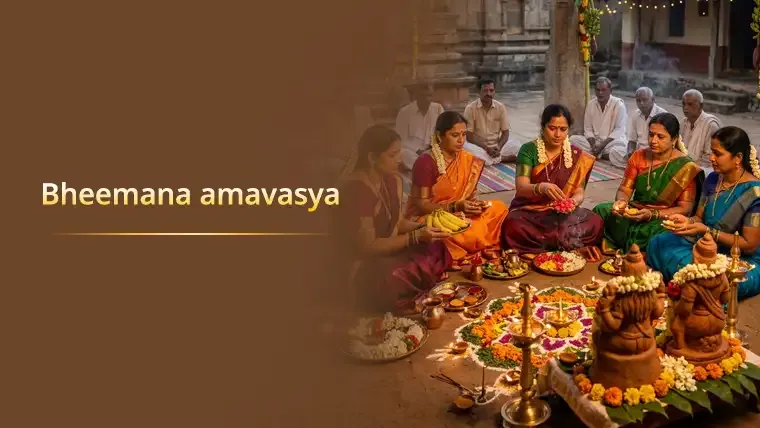
Bheemana Amavasya is a sacred Hindu vrat observed mainly in South India, dedicated to Lord Shiva and Goddess Parvati. It is primarily observed by married women for the well-being, longevity, and prosperity of their husbands and family members.
This Amavasya is considered spiritually powerful because it focuses on marital harmony, household protection, and family prosperity, unlike general Amavasya observances that are often dedicated to ancestral rituals.
Bheemana Amavasya 2026 Date
Bheemana Amavasya 2026 will be observed on Wednesday, 12 August 2026. The date is determined according to the Hindu lunar calendar and falls on the Amavasya Tithi (New Moon Day).
Bheemana Amavasya 2026 Date and Time
| Details | Information |
|---|---|
| 📅 Date | Wednesday, 12 August 2026 |
| 🌑 Tithi | Amavasya (New Moon Day) |
| ⏰ Amavasya Begins | 01:52 AM on 12 August 2026 |
| ⏰ Amavasya Ends | 11:06 PM on 12 August 2026 |
| 🌓 Paksha | Krishna Paksha |
| 🗓️ Hindu Month | Ashadha / Shravana Amavasya (Region-Based Variation) |
Note: Timings may vary slightly based on the regional Panchang followed in Karnataka, Andhra Pradesh, and Telangana.
Also Check: Check all Amavasya dates in 2026 with exact timings and tithi details.
Mythological Story Behind Bheemana Amavasya
This amavasya is connected to the devotion of Draupadi toward her husband and her penance for their well-being.
According to popular tradition:
In the Mahabharata, Draupadi is considered the ideal devoted wife.
She is believed to have performed intense prayers and fasting on an Amavasya (new moon day) to protect the Pandavas from dangers and ensure their long life.
Among the Pandavas, Bhima (also called Bheema) is especially associated with the strength and protection of the family.
Over time, this day became associated with Bhima and Draupadi’s devotion and family protection rituals.
Where Bheemana Amavasya is Celebrated
Bheemana Amavasya is primarily celebrated in:
Karnataka as Bheemana Amavasya
Andhra Pradesh as Chukkala Amavasya
Telangana as Jyotirbheemeshwara Vratam or Bheema Amavasya
Parts of Tamil Nadu as Adi Amavasya
Border regions of Maharashtra as Gatari Amavasya
The festival is especially prominent among Hindu families in South India, where traditional vrats and Shiva worship are widely followed.
In many regions, women gather in temples or perform rituals at home with observance of fasting and prayer.
Significance of Bheemana Amavasya
The significance of Bheemana Amavasya goes beyond ritual worship and is deeply connected with emotional, spiritual, and cultural values observed in South Indian households.
This vrat is considered important because it reflects the traditional belief that devotion, discipline, and prayer can strengthen family stability and remove obstacles from married life.
In many regions, this day is also seen as a form of Shakti-centered household worship, where women express gratitude for their family’s well-being through fasting and Shiva-Parvati devotion.
Unlike general Amavasya observances that focus on ancestral offerings, Bheemana Amavasya emphasizes:
Strengthening the emotional bond in marriage
Cultivating patience, discipline, and devotion
Preserving cultural traditions of family worship
Encouraging spiritual mindfulness within household life
This makes the vrat not just a ritual, but a meaningful cultural practice that reinforces faith and family unity.
Fasting Rules and Puja Vidhi
In our tradition, every sacred day is celebrated by observing either fasting, worshipping gods and goddesses, or sometimes both. Here is a simple guide to the fasting rules and puja vidhi for Bheemana Amavasya.
Fasting Rules
Devotees observing Bheemana Amavasya fasting may follow:
Complete fasting (nirjala vrat) or partial fasting
Consumption of fruits and sattvic food only
Avoidance of onion, garlic, and non-vegetarian food
Maintaining purity in thoughts and actions throughout the day
Puja Vidhi (Step-by-Step)
Wake up early and take a ritual bath
Clean and decorate the puja space
Place a Shiva Lingam or an idol or image of Lord Shiva and Goddess Parvati
Light diyas and incense sticks
Offer flowers, fruits, milk, and bilva leaves
Chant “Om Namah Shivaya”
Read or listen to Bheemana Amavasya vrat katha
Pray for family well-being and marital harmony
Break the fast after evening puja (based on tradition)
Final Thoughts
Bheemana Amavasya is a spiritually powerful vrat that reflects devotion, discipline, and family values. Through fasting, Shiva-Parvati worship, and prayer, devotees seek protection, prosperity, and happiness for their families.
The observance continues to hold strong cultural importance, especially among married women in South India, preserving a tradition of faith and spiritual connection across generations.
Festival List
- Nag Panchami
- Raksha Bandhan
- Janmashtami
- Ganesh Chaturthi
- Onam
- Pitru Paksha
- Shardiya Navratri
- Durga Puja
- Dussehra
- Karwa Chauth
- Dhanteras
- Diwali
- Govardhan Puja
- Bhai Dooj
- Chhath Puja
- Tulsi Vivah
- Guru Nanak Jayanti
- Christmas
- New year
- Lohri
- Pongal
- Makar Sankranti
- Vasant Panchami
- Shivratri
- Ramadan
- Holi
- Good Friday
- Navratri
- Gudi Padwa
- Ugadi
- Vaisakhi
- Ram Navami
- Mahavir Jayanti
- Hanuman Jayanati
- Buddha Purnima
- Akshay Tritiya
- Shani Jayanti
- Guru Purnima
- Hariyali Teej