


Thursday, October 15, 2026 Paksha:Shukla Tithi:Panchami

Friday, October 16, 2026 Paksha:Shukla Tithi:Shashthi
Friday, October 16, 2026 Paksha:Shukla Tithi:Shashthi
Friday, October 16, 2026 Paksha:Shukla Tithi:Shashthi
Friday, October 16, 2026 Paksha:Shukla Tithi:Shashthi
Friday, October 16, 2026 Paksha:Shukla Tithi:Shashthi
Saturday, October 17, 2026 Paksha:Shukla Tithi:Saptami
Saturday, October 17, 2026 Paksha:Shukla Tithi:Saptami
Saturday, October 17, 2026 Paksha:Shukla Tithi:Saptami
Sunday, October 18, 2026 Paksha:Shukla Tithi:Ashtami
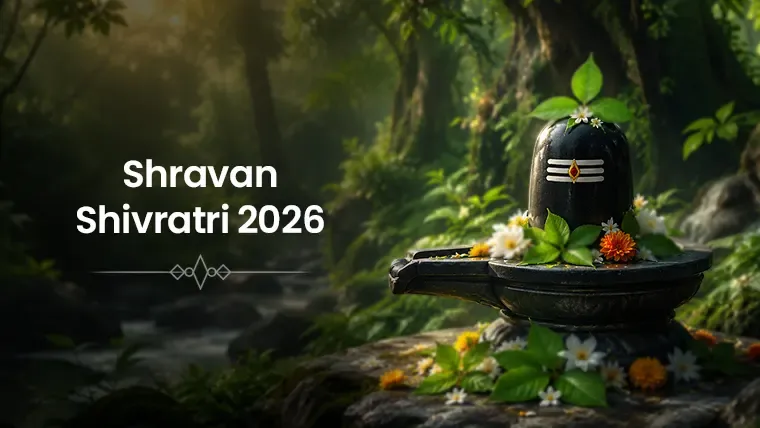
There are a total of twelve Shivratris observed throughout the year, but the one that comes in the month of Sawan is more important than the others. Shravan Shivratri is very significant from the point of view of spirituality, as it occurs in the most sacred month of Lord Shiva. There is variation in festival dates across regions, as each region uses its own lunar calendar.
The lunar calendar followed in North India is the Purnimanta calendar, in which the month ends with the full moon; therefore, the month of Sawan begins around 15 days earlier in the North compared to the western and southern parts of India.
Shravan Shivratri 2026: Date, Time and Nishita Kaal Puja Muhurat
Sawan Shivratri 2026 falls on Tuesday, 11th August. For more details, such as muhurat timings and dates that follow the Purnimanta calendar, go through the following:
| Detail | Date and Time |
|---|---|
| 📅 Festival Date | 11 August 2026 (Tuesday) |
| 🌙 Chaturdashi Tithi Begins | 04:54 AM on 11 August 2026 |
| 🌙 Chaturdashi Tithi Ends | 01:52 AM on 12 August 2026 |
| 🔱 Nishita Kaal Puja Muhurat | 12:05 AM – 12:48 AM on 12 August 2026 |
| 🍃 Parana Time | After 05:48 AM on 12 August 2026 |
Shravan Shivratri 2026: Four Prahar Timings
| Prahar | Date & Time |
|---|---|
| 🌆 First Prahar | 11 August 2026: 07:04 PM – 09:45 PM |
| 🌃 Second Prahar | 11 August 2026: 09:45 PM – 12 August 2026: 12:26 AM |
| 🌌 Third Prahar | 12 August 2026: 12:26 AM – 03:07 AM |
| 🌅 Fourth Prahar | 12 August 2026: 03:07 AM – 05:48 AM |
Note: The timings for Shravan Shivratri may vary slightly across different Panchangs and regional traditions. Devotees are advised to follow the timings provided by their local temple or trusted Panchang for accurate fasting and puja observance.
Why The Night of Shravan Shivratri Matters
This isn't just a day set aside for worship. It's believed to be the night the divine energies of Lord Shiva and Goddess Parvati come together—power meeting consciousness, in the way devotees understand it. The night is also tied to the Samudra Manthan, when Lord Shiva swallowed the Halahala poison to save the universe and earned the name Neelkanth for it, his throat turning blue in the process. Devotees offer Gangajal to Lord Shiva that night, as if to cool something that was set on fire for everyone else's sake.
Fasting on this day and offering Gangajal is believed to get a suitable life partner for single women. Married women keep the vrat for the long life of their husbands and peace in their families. It is the same night with different meanings for almost everybody celebrating it.
The Kanvariyas play a major role on Shravan Shivratri—these are the devotees who undertake a journey by foot to rivers such as the Ganga, take holy water in their Kaavads, and come back to pour that water on the Shivlinga.
How the Fast is Kept on Shravan Shivratri
Devotees wake early, take a proper bath, and wear something clean. Some visit a temple; others set up an altar at home. Bel patra, milk, honey, and Gangajal are offered to the Shivlinga, with devotees chanting "Om Namah Shivaya" throughout.
Most keep either a Nirjala Vrat (without water) or a Phalahar Vrat (only fruits), breaking it only after the Nishita Kaal Puja, usually after midnight—the hour Lord Shiva is believed to be closest to his devotees.
Shravan Shivratri Puja Rituals
Wake before sunrise and take a ritual bath
Offer Gangajal, milk, and Bel patra to the Shivlinga
Chant mantras or recite the Shiv Chalisa
Light a diya and stay awake through the night (Jagran)
Break the fast only after Nishita Kaal puja concludes
Keep thoughts clean and maintain a state of purity through the day
Precautions to Take during Shravan Shivratri
Don’t use tulsi leaves for the puja.
Eat sattvic food and fast: no grains, salt, non-veg, onion, garlic, brinjal, or alcohol.
Do not sleep during the daytime; stay awake for prayers and mantras.
Avoid haircuts, shaving, and nail-cutting during Shravan, especially now.
Don’t express anger and jealousy; keep your mind relaxed and devoted.
Wear white or brightly colored clothes; don’t wear black.
Do not harm snakes or any living creature.
Astrological Relevance Of Shravan Shivratri
According to Vedic astrology, Shravan Shivratri is considered especially powerful for reducing the negative effects of certain planetary influences. Different zodiac signs may experience the spiritual energy of this day in unique ways.
Aries & Scorpio: For Aries and Scorpio natives who are influenced by Mars, the energy of the day increases, and they are advised to focus it through devotion rather than impulsive actions
Taurus: Taurus natives, whose sign is closely tied to material comforts, benefit from practicing restraint through fasting
Dosha-Afflicted Natives: Those going through a Shani Dosha, Sade Sati, or Mangal Dosha are often advised to worship Lord Shiva specifically on this night for relief
Rahu-Ketu Affected Natives: The people who face problems due to Rahu-Ketu can benefit from this puja by getting rid of their obstacles
All Zodiac Signs: Due to being the ultimate destroyer of negativity, this night becomes very auspicious for those who wish to cleanse their planetary influences irrespective of their star signs
Sawan Shivratri is more than a religious festival—it is an opportunity for self-reflection, devotion, and spiritual renewal. Through fasting, prayer, and meditation, devotees seek Lord Shiva's blessings for peace, prosperity, and inner transformation. Whether celebrated at a temple or at home, the essence of this sacred night lies in strengthening one's faith and reconnecting with the divine.
Festival List
- Nag Panchami
- Raksha Bandhan
- Janmashtami
- Ganesh Chaturthi
- Onam
- Pitru Paksha
- Shardiya Navratri
- Durga Puja
- Dussehra
- Karwa Chauth
- Dhanteras
- Diwali
- Govardhan Puja
- Bhai Dooj
- Chhath Puja
- Tulsi Vivah
- Guru Nanak Jayanti
- Christmas
- New year
- Lohri
- Pongal
- Makar Sankranti
- Vasant Panchami
- Shivratri
- Ramadan
- Holi
- Good Friday
- Navratri
- Gudi Padwa
- Ugadi
- Vaisakhi
- Ram Navami
- Mahavir Jayanti
- Hanuman Jayanati
- Buddha Purnima
- Akshay Tritiya
- Shani Jayanti
- Guru Purnima
- Hariyali Teej