



Monday, October 26, 2026 Paksha:Krishna Tithi:Prathama
Monday, October 26, 2026 Paksha:Krishna Tithi:Prathama

Monday, October 26, 2026 Paksha:Krishna Tithi:Prathama
Wednesday, October 28, 2026 Paksha:Krishna Tithi:Tritiiya


Thursday, October 29, 2026 Paksha:Krishna Tithi:Chaturthi
Thursday, October 29, 2026 Paksha:Krishna Tithi:Chaturthi
Thursday, October 1, 2026 Paksha:Krishna Tithi:Panchami
Thursday, October 1, 2026 Paksha:Krishna Tithi:Panchami

Friday, October 2, 2026 Paksha:Krishna Tithi:Saptami
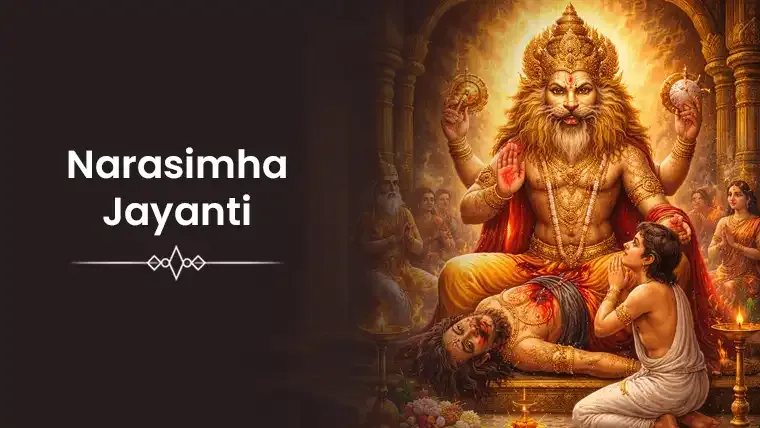
Narasimha Jayanti stands out as one of the most powerful and spiritually significant Hindu festivals dedicated to Lord Narasimha, the fierce and protective Avatar (incarnation) of Lord Vishnu. This sacred day marks the appearance of Lord Narasimha in his half-man, half-lion form, symbolizing the ultimate victory of good over evil and divine protection for true devotees.
Celebrated with deep devotion across India, Narasimha Jayanti is a time for prayer, fasting, and seeking strength and protection from life’s challenges. This comprehensive guide covers the Narasimha Jayanti 2026 date, significance, puja rituals, fasting rules, and mantras, offering a clear understanding of how the festival is traditionally observed with devotion.
Narasimha Jayanti 2026: Date and Muhurat (Timing)
As per the Hindu calendar, Narasimha Jayanti is observed on the Chaturdashi (14th day) of the Shukla Paksha (waxing phase of the moon) in the month of Vaishakha (April-May). In 2026, Narasimha Jayanti will be observed on:
Date – 30th April, 2026 (Thursday)
Evening Puja Time – 04:27 PM to 07:00 PM
Duration – 2 hours 34 minutes
Midday Sankalp Time – 11:19 AM to 01:53 PM
Chaturdashi Tithi Timing:
Chaturdashi Starts: 29th April 2026 at 07:51 PM
Chaturdashi Ends: 30th April 2026 at 09:12 PM
Parana Time (Time for Breaking the Fast):
- 1st May 2026 after 05:41 AM
*Note: The above timings are calculated based on the Indian Standard Time (IST). Therefore, sunrise and sunset timings may vary depending on your location. It is advisable to consult a local Panchang for precise timings.
What is Narasimha Jayanti?
Narasimha Jayanti celebrates the divine 4th incarnation of Lord Vishnu as Narasimha, who appeared to protect his devotee Prahlada and destroy the demon king Hiranyakashipu.
The word “Narasimha” is derived from two Sanskrit words:
- Nara – Human
- Simha – Lion
This unique form represents a powerful combination of human intelligence and lion-like strength. Lord Narasimha Jayanti reminds us that divine protection always comes when faith is unwavering, no matter how difficult the situation may be.
The Divine Legend of Lord Narasimha’s Appearance
The story behind Narasimha Swamy Jayanti is one of the most powerful in Hindu mythology.
Hiranyakashipu, a demon king, performed intense penance and received a boon that made him nearly invincible; he could not be killed by man or animal, inside or outside, day or night, or by any weapon.
However, his son Prahlada remained an ardent devotee of Lord Vishnu. Enraged by this, Hiranyakashipu tried several times to kill him but failed.
One day, he challenged Prahlada, asking if Vishnu was present everywhere, even in a pillar. When Prahlada said yes, the king struck the pillar.
At that moment, Lord Vishnu appeared as Narasimha (half-man, half-lion) and killed Hiranyakashipu at twilight, on a threshold, using his claws, thus bypassing every condition of the boon.
This story symbolizes that truth and devotion always triumph over arrogance and evil.
How is Narasimha Jayanti Celebrated?
Narasimha Jayanti is observed with devotion, discipline, and spiritual focus. Devotees begin the day with purification rituals and dedicate time to prayer, fasting, and chanting.
Temples conduct special rituals that include:
Abhishek (a sacred ritualistic bath for deities)
Aarti (a ritualistic prayer where a diya or lamp is offered to the gods)
Devotional singing
While at home, devotees engage in meditation, scripture reading, and mantra chanting. Evening prayers hold special importance as they mark the time of Lord Narasimha’s appearance.
Moreover, the day is ultimately about strengthening faith, seeking protection, and aligning oneself with divine energy.
Narasimha Jayanti Puja Samagri
To perform Narasimha Jayanti puja, it is important to prepare the required items in advance:
Idol or image of Lord Narasimha
Gangajal (holy water)
Panchamrit (milk, curd, ghee, honey, sugar)
Clean clothes (yellow or white preferred)
Sandalwood paste or roli (sacred vermillion powder) for tilak
Fresh flowers (especially yellow or lotus)
Tulsi (holy basil) leaves
Incense sticks and diya (lamp)
Fruits and sweets for prasad
Aasan (clean cloth or mat)
These items help create a pure and sacred environment for worship.
Narasimha Jayanti Puja Vidhi (Step-by-Step)
Performing Narasimha Jayanti puja with devotion brings divine blessings and protection.
Simple Puja Method:
Start early: Wake up, take a bath, and wear clean clothes.
Take Sankalp: Resolve to observe the puja or fast with devotion.
Set up altar: Place Lord Narasimha’s idol on a clean cloth.
Offer Panchamrit bath: Do the Abhishekam of the idol and purify it.
Apply tilak & decorate: Offer flowers and sandalwood paste.
Light a diya & incense: Create a spiritual atmosphere.
Offer prasad: Fruits and sweets with devotion.
Chant mantras: Recite Narasimha mantras or Vishnu Sahasranama.
Conclude the puja with Aarti and distribute prasad among family members.
Devotees also visit temples, perform bhajans, and read sacred texts on this day, which are believed to:
Remove fear, negativity, and obstacles
Protect from enemies and harmful influences
Bring courage, confidence, and mental strength
Promote spiritual growth and inner peace
Strengthen faith in divine protection
Narasimha Jayanti Mantra
Regular recitation of the Narashimha mantra is said to shield devotees from negative influences and instill courage and confidence. Chanting the following mantra is believed to remove fear and bring strength, protection, and positivity into one’s life:
||Ugram Veeram Mahavishnum
Jvalantam Sarvato Mukham
Nrisimham Bhishanam Bhadram
Mrityur Mrityum Namamyaham||
Narasimha Jayanti Fasting (Vrat Rules)
Narasimha Jayanti fasting is considered highly powerful and spiritually rewarding.
Fasting rules include:
Observe a nirjala fast (without water) or a phalahar fast (fruits and milk).
Maintain purity in thoughts, speech, and actions.
Avoid tamasic foods like onion, garlic, and non-vegetarian food.
Spend time in prayer, meditation, and chanting.
Break the fast (Parana) the next day at the prescribed time.
Fasting on this day is believed to bring protection, peace, and spiritual growth.
Feeling stuck or confused about important life decisions? Let Astroyogi’s experienced astrologers guide you with accurate, personalized advice. Discover what your kundli reveals and take control of your future with clarity and confidence.
Festival List
- Nag Panchami
- Raksha Bandhan
- Janmashtami
- Ganesh Chaturthi
- Onam
- Pitru Paksha
- Shardiya Navratri
- Durga Puja
- Dussehra
- Karwa Chauth
- Dhanteras
- Diwali
- Govardhan Puja
- Bhai Dooj
- Chhath Puja
- Tulsi Vivah
- Guru Nanak Jayanti
- Christmas
- New year
- Lohri
- Pongal
- Makar Sankranti
- Vasant Panchami
- Shivratri
- Ramadan
- Holi
- Good Friday
- Navratri
- Gudi Padwa
- Ugadi
- Vaisakhi
- Ram Navami
- Mahavir Jayanti
- Hanuman Jayanati
- Buddha Purnima
- Akshay Tritiya
- Shani Jayanti
- Guru Purnima
- Hariyali Teej