



Thursday, October 22, 2026 Paksha:Shukla Tithi:Ekadashi

Sunday, October 25, 2026 Paksha:Shukla Tithi:Purnima

Sunday, October 25, 2026 Paksha:Shukla Tithi:Purnima

Monday, October 26, 2026 Paksha:Krishna Tithi:Prathama
Monday, October 26, 2026 Paksha:Krishna Tithi:Prathama

Monday, October 26, 2026 Paksha:Krishna Tithi:Prathama
Wednesday, October 28, 2026 Paksha:Krishna Tithi:Tritiiya
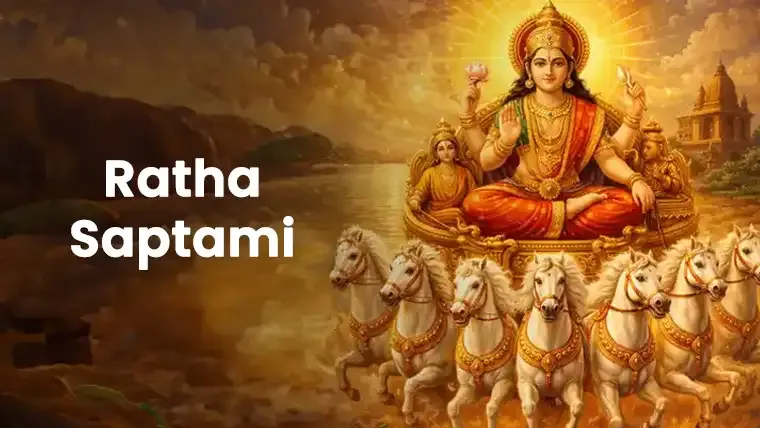
Ratha Saptami is an ancient Hindu festival celebrated in honor of the Sun God, also called Lord Surya. The word "Ratha" means chariot, and "Saptami" means the seventh day, symbolizing the divine journey of the Sun in his celestial chariot drawn by seven horses. This auspicious festival celebrates the birth of Lord Surya and marks the commencement of his northward journey, known as Uttarayan
Date & Time

Ratha Saptami 2026 Date and Time
Ratha Saptami in 2026 falls on Sunday, January 25, 2026. The Saptami Tithi begins at 12:39 AM and ends at 11:10 PM on January 25, 2026.
The Snan (Holy Bath) Muhurat is from 05:26 AM to 07:13 AM, with a duration of 1 hour 47 minutes. The sunrise (Arghyadan Time) is approximately at 07:13 AM on January 25, 2026.
This date is particularly auspicious as it falls on a Sunday, the day dedicated to Lord Surya himself, multiplying the spiritual significance and blessings of the celebration.
Significance of Ratha Saptami
Ratha Saptami holds deep spiritual, cultural, and health-related significance across Hindu traditions.
Let's examine the primary reasons why this festival holds significance for people.
1. Birthday of Lord Surya
Ratha Saptami is celebrated as the divine birthday of Lord Surya, honoring his cosmic power and presence in our lives. Just like we celebrate human birthdays, Ratha Saptami celebrates the divine birth and power of Lord Surya. It's a day dedicated entirely to honoring the Sun's role in our lives.
2. A Fresh Start for Farmers and Everyone Else
This festival marks a significant seasonal transition that brings hope and renewal to communities across India. Ratha Saptami marks the beginning of spring and the start of the harvest season in India.
For farmers, it means a time of new crops and prosperity. For the rest of us, it represents renewal, new beginnings, and fresh energy in life.
3. The Health Day
There's a reason Ratha Saptami is also called "Arogya Saptami" (the health day). People believe that bathing during this festival, especially at dawn, cleanses the body and mind, removes illnesses, and boosts their overall health and immunity.
4. A Day for Gratitude and Positivity
In our modern lives, we're always rushing. Ratha Saptami is a moment to pause and express gratitude to the Sun for everything it provides: light, warmth, energy, and life itself.
Ratha Saptami Puja Vidhanam: Step-by-Step Rituals
If you're planning to celebrate Ratha Saptami, here are simple steps to performing the puja and rituals traditionally.
1. Early Morning Meditation
Wake up before sunrise and prepare yourself mentally and physically for the rituals. Take a few minutes to meditate or pray.
2. Ritual Bath (Snan) with Arka Leaves
Take a holy bath at dawn. If possible, use Arka (milkweed) leaves, place one on your head, two on your shoulders, two on your knees, and two on your feet while bathing. Bathing in a river or canal is preferred, but a home bath works too.
3. Arghyadan (Water Offering)
Face the rising sun and slowly offer water from a small vessel (preferably copper) with folded hands. Chant "Om Suryaye Namaha" or Surya Mantras while doing this.
4. Lighting the Ghee Lamp
Light an earthen lamp filled with ghee and place it near your prayer area. Offer incense, camphor, and red flowers to the Sun God.
5. Worshiping with Sacred Offerings
Offer these items to Lord Surya: red flowers, vermillion (kumkum), turmeric, jaggery, sesame seeds, fruits, coconut, and incense.
6. Chanting Sacred Mantras
Recite the Gayatri Mantra or chant "Om Suryaye Namaha" repeatedly. Even 5-10 minutes of chanting is beneficial.
7. Preparation of Sacred Food (Bhog)
Boil milk in an earthen pot facing the Sun, then prepare sweet rice (kheer) from it. Offer this to the deity before consuming.
8. Women's Rituals
Draw images of the chariot and Lord Surya, or create colorful rangolis at your home entrance as a sign of welcome and prosperity.
Ratha Saptami Fasting (Vrat) Rules
Fasting on Ratha Saptami is an important aspect of the celebration. Here are the key guidelines:
Complete Fast: Many devotees observe a complete fast without food or water throughout the day
Partial Fast: Some follow a partial fast, consuming only fruits, milk, or light meals
No Sleep: Devotees are advised to remain awake through the night preceding Ratha Saptami
Purity and Discipline: Maintain purity of thoughts, speech, and actions throughout the day
Breakfast: The fast is traditionally broken after performing all rituals and consuming Prasad (blessed food)
Fasting on Ratha Saptami is believed to promote detoxification and spiritual purity and attract blessings for health and prosperity.
Unlock the full power of the Sun in your birth chart this Ratha Saptami. For personalized guidance, talk to an astrologer on Astroyogi today.
Conclusion
Ratha Saptami is a cosmic celebration of life's eternal rhythm and the balance that sustains the universe. Lord Surya, in his chariot form, represents multiple aspects of cosmic energy: the seven colors of the rainbow, the seven days of the week, the seven energy centers (chakras) in our bodies, the seven rays of solar energy, and the seven celestial planets that influence our lives.
Each horse carries deep spiritual significance, reminding us that the Sun's power extends far beyond just providing light and heat. By celebrating Ratha Saptami, we align ourselves with the cosmic energy of the Sun, seek its blessings for health and prosperity, and express gratitude to the divine power that sustains all life on Earth.
Festival List
- Nag Panchami
- Raksha Bandhan
- Janmashtami
- Ganesh Chaturthi
- Onam
- Pitru Paksha
- Shardiya Navratri
- Durga Puja
- Dussehra
- Karwa Chauth
- Dhanteras
- Diwali
- Govardhan Puja
- Bhai Dooj
- Chhath Puja
- Tulsi Vivah
- Guru Nanak Jayanti
- Christmas
- New year
- Lohri
- Pongal
- Makar Sankranti
- Vasant Panchami
- Shivratri
- Ramadan
- Holi
- Good Friday
- Navratri
- Gudi Padwa
- Ugadi
- Vaisakhi
- Ram Navami
- Mahavir Jayanti
- Hanuman Jayanati
- Buddha Purnima
- Akshay Tritiya
- Shani Jayanti
- Guru Purnima
- Hariyali Teej