
Diwali Puja Vidhi 2026: Step-by-Step Guide with Mantras
Diwali Laxmi Puja at home is performed on the evening of Kartik Amavasya. It begins with purification and sankalp, moves through the worship of Lord Ganesha and Goddess Lakshmi, and ends with aarti, prasad, the lighting of diyas, and visarjan.
Read ahead to learn how to perform a traditional Diwali pooja at home in simple, clear steps.
Preparation Before the Puja
Good preparation makes the puja smooth and peaceful.
The house is cleaned, especially the entrance, kitchen, puja area, and the place where money is kept.
Broken items, stale flowers, and clutter are removed.
A bath is taken, and clean clothes are worn. Red, yellow, or white are popular choices.
Rangoli is drawn at the entrance, and a toran of mango or marigold leaves is hung on the door.
The chowki is placed facing east or north-east, covered with a clean cloth.
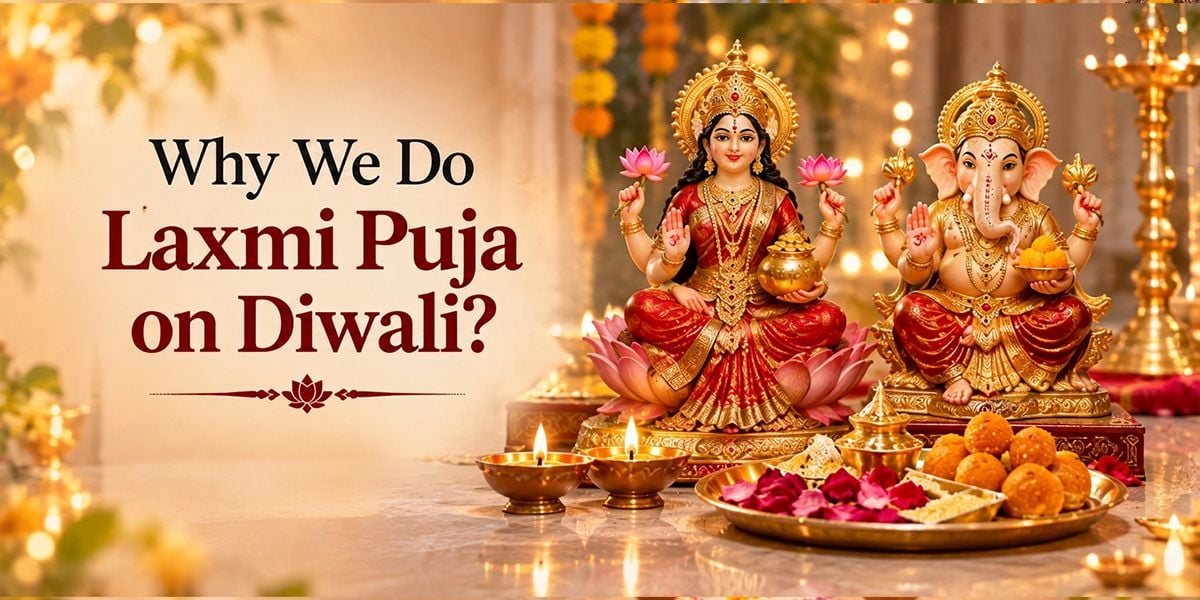
Goddess Lakshmi and Lord Ganesha are placed on the chowki, with the kalash kept to one side.
Diwali Puja Vidhi: Step by Step
Step 1: Light the Diya and Purify Yourself (Atma Shodhan)
A ghee diya and incense are lit before the altar. Sitting facing east or northeast, the worshipper purifies themselves with these mantras.
Atma Shodhan Mantra
ॐ अपवित्रः पवित्रो वा सर्वावस्थां गतोऽपि वा।
यः स्मरेत् पुण्डरीकाक्षं स बाह्याभ्यन्तरः शुचिः॥
Meaning: Whether a person is pure or impure, or in any state of being, remembering the Supreme Lord purifies them both externally (body) and internally (mind).
Atma Shodhan Achaman Mantra (water is sipped from the palm after each line)
ॐ आत्मतत्त्वं शोधयामि स्वाहा।
ॐ विद्यातत्त्वं शोधयामि स्वाहा।
ॐ शिवतत्त्वं शोधयामि स्वाहा॥
Meaning:
Om Atmatattvam Shodhayami Swaha: I purify the essence of my soul.
Om Vidyatattvam Shodhayami Swaha: I purify the essence of my knowledge and wisdom.
Om Shivattattvam Shodhayami Swaha: I purify the essence of Shiva, representing auspiciousness and divine consciousness.
Step 2: Take Sankalp
With folded hands, a sankalp is taken. It is a simple pledge to perform the puja for the health, peace, and prosperity of the family. Those who know the traditional Sanskrit sankalp can recite it. Words such as amuka are replaced with the actual place, year, day, gotra, and name.
Sankalpa Mantra
ॐ तत्सत् अद्यैतस्य ब्रह्मणोऽह्नि द्वितीय-प्रहरार्द्धे श्वेत-वराह-कल्पे
जम्बू-द्वीपे भरत-खण्डे अमुक-प्रदेशे अमुक-पुण्य-क्षेत्रे कलियुगे
कलि-प्रथम-चरणे अमुक-संवत्सरे कार्तिक-मासे कृष्ण-पक्षे
अमावस्या-तिथौ अमुक-वासरे अमुक-गोत्रोत्पन्नो अमुक-नाम-अहं
सपत्नीकस्य सुपुत्रस्य सबान्धवस्य सर्वत्र यशो-विजयादि-लाभार्थं
सर्वारिष्ट-निवृत्ति-पूर्वक-सकल-मनोकामना-सिद्ध्यर्थं
अप्राप्त-लक्ष्मी-प्राप्त्यर्थं प्राप्त-लक्ष्मीं चिर-काल-संरक्षणार्थं
प्रचलित-व्यापार-प्रतिष्ठाने बहु-धन-लाभार्थं श्रीमहा-लक्ष्मी-प्रसन्नार्थं।
Additional Sankalpa for Diwali Puja
स्वस्ति-वाचन-कलश-स्थापन-पूर्वकं यथा-सम्पादित-सामग्र्या
गणपति-सूर्यादि-नवग्रह-षोडश-मातृकादि-पूजन-सहितं दीपावल्यां
श्रीगणेश-लक्ष्मी-प्रतिमा-पूजनम् करिष्ये।
For New Account Book Worship (Additional Mantra)
अमुक-नामकस्य मम व्यापार-प्रतिष्ठानस्य
नूतन-वासना-पूजन-कर्मणः साङ्गता-सिद्ध्यर्थं।
Meaning: I solemnly resolve to perform the Diwali worship of Lord Ganesha and Goddess Lakshmi with devotion. I seek their blessings for prosperity, wealth, success, good fortune, and the fulfillment of my wishes. I pray for the removal of obstacles and misfortunes, the protection of existing wealth, and the growth of my business and family well-being. For new account book worship, the additional declaration expresses the intention to perform the ceremonial worship of the new business account books and seek blessings for the successful completion of the ritual.
Step 3: Shanti Path (Invocation of Peace)
These eleven mantras invoke peace and the protection of the divine forces. They can be recited in full or in part if time is short.
1. ॐ आ नो भद्राः क्रतवो यन्तु विश्वतोऽदब्धासो अपरीतास उद्भिदः।
देवा नो यथा सदमिद्वृधे असन्नप्रायुवो रक्षितारो दिवे-दिवे॥
Meaning: May noble and positive thoughts come to us from all directions, thoughts that are free from limitations and cannot be hindered. May the divine forces always protect us and support our growth and progress.
2. ॐ देवानां भद्रा सुमतिर्ऋजूयतां देवानां रातिरभि नो निवर्तताम्।
देवानां सख्यमुपसेदिमा वयं देवा न आयुः प्रतिरन्तु जीवसे॥
Meaning: May the benevolent wisdom of the divine guide us. May we receive divine blessings and generosity, enjoy the friendship of the gods, and be blessed with a long and fulfilling life.
3. ॐ तान् पूर्वया निविदा हूमहे वयं भगं मित्रमदितिं दक्षमस्रिधम्।
अर्यमणं वरुणं सोममश्विना सरस्वती नः सुभगा मयस्करत्॥
Meaning: We invoke the divine powers of Bhaga, Mitra, Aditi, Daksha, Aryaman, Varuna, Soma, and the Ashwini Kumaras. May Goddess Saraswati bless us with prosperity, happiness, and well-being.
4. ॐ तन्नो वातो मयो भुवातु भेषजं तन्माता पृथिवी तत्पिता द्यौः।
तद् ग्रावाणः सोमसुतो मयोभुवस्तदश्विना शृणुतं धिष्ण्या युवम्॥
Meaning: May the wind bring us healing and happiness. May Mother Earth and Father Heaven bless us with well-being and healing. May the divine forces associated with Soma bring us peace, and may the Ashwini Kumaras listen to our prayers and bless us.
5. ॐ तमीशानं जगतस्तस्थुषस्पतिं धियञ्जिन्वमवसे हूमहे वयम्।
पूषा नो यथा वेदसामसद् वृधे रक्षिता पायुरदब्धः स्वस्तये॥
Meaning: We invoke Lord Rudra, the supreme protector and ruler of all living and non-living beings, for guidance and protection. May the divine powers safeguard our knowledge, wealth, and family, and bless us with growth, prosperity, and well-being.
6. ॐ स्वस्ति न इन्द्रो वृद्धश्रवाः स्वस्ति नः पूषा विश्ववेदाः।
स्वस्ति नस्तार्क्ष्यो अरिष्टनेमिः स्वस्ति नो बृहस्पतिर्दधातु॥
Meaning: May Lord Indra bless us with prosperity and well-being. May Lord Surya nourish and protect all living beings. May Garuda protect us from harm, and may Lord Brihaspati bless us with wisdom, knowledge, and good fortune.
7. ॐ पृषदश्वा मरुतः पृश्निमातरः शुभं यावानो विदथेषु जग्मयः।
अग्निजिह्वा मनवः सूरचक्षसो विश्वे नो देवा अवसा गमन्निह॥
Meaning: May the Maruts and all divine forces, who bring auspiciousness and protection, bless us with their presence. May these divine beings accept our offerings and shower their blessings upon us.
8. ॐ भद्रं कर्णेभिः शृणुयाम देवाः भद्रं पश्येमाक्षभिर्यजत्राः।
स्थिरैरङ्गैस्तुष्टुवागं सस्तनूभिर्व्यशेम देवहितं यदायुः॥
Meaning: O divine beings, may we always hear auspicious words and see positive things. May we be blessed with strong and healthy bodies, and may we spend our entire lives in devotion, gratitude, and the service of the divine.
9. ॐ शतमिन्नु शरदो अन्ति देवा यत्रा नश्चक्राजरसं तनूनां।
पुत्रासो यत्र पितरो भवन्ति मानो मध्यारीरिषतायुर्गन्तोः॥
Meaning: O divine beings, bless us with a long and healthy life of a hundred years. May we live to see our children grow into parents themselves. May our lives reach their natural completion without being cut short.
10. ॐ अदितिर्द्यौरदितिरन्तरिक्षमदितिर्माता स पिता स पुत्रः।
विश्वेदेवा अदितिः पञ्च जना अदितिर्जातमदितिर्जनित्वम्॥
Meaning: The divine Mother Aditi represents the heavens, the atmosphere, and the entire universe. She is the mother, father, and child. All divine beings and all forms of life are manifestations of the same divine power. Everything that exists, and everything yet to be born, is part of this universal divine energy.
11. पृथिवी शान्तिरन्तरिक्षगं शान्तिर्द्यौश्शान्तिर्दिशः शान्तिरवान्तरदिशाश्शान्तिरग्निश्शान्तिर्वायुः
शान्तिरादित्यश्शान्तिश्चन्द्रमाश्शान्तिर्नक्षत्राणि शान्तिरापश्शान्तिरोषधयश्शान्तिर्वनस्पतयश्शान्तिर्गौः
शान्तिरजा शान्तिरश्वश्शान्तिः पुरुषश्शान्तिर्ब्रह्म शान्तिर्ब्राह्मणश्शान्तिः शान्तिरेव शान्तिश्शान्तिर्मे अस्तु शान्तिः।
Meaning: May peace prevail on Earth, in the atmosphere, and in the heavens. May all directions, fire, wind, the Sun, the Moon, and the stars bring peace. May water, medicinal herbs, plants, animals, and all living beings exist in harmony. May the Supreme Divine bless us with peace. May the entire universe be filled with peace and harmony, and may this peace remain within us and continue to grow.
Step 4: Mangal Path (Auspicious Verses)
These verses invite auspiciousness before the main worship begins.
1. सुमुखश्चैकदन्तश्च कपिलो गजकर्णकः।
लम्बोदरश्च विकटो विघ्ननाशो विनायकः॥
Meaning: Lord Ganesha is known by many auspicious names, including Sumukha (the one with a beautiful face), Ekadanta (the one with a single tusk), Kapila, Gajakarnaka, Lambodara, and Vinayaka. He is the remover of obstacles and the giver of auspicious beginnings.
2. धूम्रकेतुर्गणाध्यक्षो भालचन्द्रो गजाननः।
द्वादशैतानि नामानि यः पठेच्छृणुयादपि॥
Meaning: Lord Ganesha is also known as Dhumraketu, Ganadhyaksha, Bhalachandra, and Gajanana. Whoever recites or listens to these twelve sacred names of Lord Ganesha receives his divine blessings.
3. विद्यारम्भे विवाहे च विदेशगमने तथा।
संग्रामे सङ्कटे चैव विघ्नस्तस्य न जायते॥
Meaning: Those who remember Lord Ganesha during the beginning of education, marriage, foreign travel, battles, or difficult situations remain protected from obstacles and challenges.
4. शुक्लाम्बरधरं देवं शशिवर्णं चतुर्भुजम्।
प्रसन्नवदनं ध्यायेत् सर्वविघ्नोपशान्तये॥
Meaning: I meditate upon the divine Lord, dressed in white garments, radiant like the Moon, with four arms and a pleasant face. May his blessings remove all obstacles and bring peace.
5. सर्वमङ्गलमाङ्गल्ये शिवे सर्वार्थसाधिके!
शरण्ये त्र्यम्बके गौरि नारायणि! नमोऽस्तु ते॥
Meaning: O Goddess Narayani, Gauri, and the three-eyed divine Mother, you are the source of all auspiciousness and the fulfiller of all wishes. I bow to you and seek your protection and blessings.
6. सर्वदा सर्वकार्येषु नास्ति तेषाममङ्गलम्।
येषां हृदिस्थो भगवान् मङ्गलायतनो हरिः॥
Meaning: Those who have Lord Hari, the source of all auspiciousness, residing in their hearts experience good fortune in all their actions. His divine presence protects them from inauspiciousness.
7. तदेव लग्नं सुदिनं तदेव ताराबलं चन्द्रबलं तदेव।
विद्याबलं दैवबलं तदेव लक्ष्मीपतेरंघ्रियुगं स्मरामि॥
Meaning: That moment becomes auspicious, that day becomes favorable, and the strength of the stars, Moon, knowledge, and destiny becomes favorable when I remember the divine feet of Lord Vishnu, the consort of Goddess Lakshmi.
8. लाभस्तेषां जयस्तेषां कुतस्तेषां पराजयः।
येषामिन्दीवरश्यामो हृदयस्थो जनार्दनः॥
Meaning: Those who have Lord Janardana, whose complexion resembles a blue lotus, residing in their hearts are blessed with success and prosperity. Victory belongs to them, and defeat has no place in their lives.
9. विनायकं गुरुं भानुं ब्रह्मा-विष्णु-महेश्वरान्।
सरस्वतीं प्रणम्यादौ सर्व-कार्यार्थ-सिद्धये॥
Meaning: Before beginning any task, I bow to Lord Vinayaka, Guru, Lord Surya, Brahma, Vishnu, Maheshwara, and Goddess Saraswati. May their blessings bring success and fulfillment to all my endeavors.
10. अभीप्सितार्थ-सिद्ध्यर्थं पूजितो यः सुरासुरैः।
सर्व-विघ्नच्छिदे तस्मै गणाधिपतये नमः॥
Meaning: I bow to Lord Ganesha, the leader of the Ganas, who is worshipped by both gods and demons for the fulfillment of their wishes. May he remove all obstacles and help accomplish our goals.
11. सर्वेष्वारब्ध-कार्येषु त्रयस्त्रि-भुवनेश्वराः।
देवाः दिशन्तु नः सिद्धिं ब्रह्मेशान-जनार्दनाः॥
Meaning: May the divine rulers of the three worlds, Lord Brahma, Lord Shiva, and Lord Janardana (Vishnu), bless us with success and fulfillment in all the tasks we undertake.
Step 5: Worship Lord Ganesha First
Lord Ganesha is worshipped first to remove all obstacles from the ritual. Durva grass, red flowers, roli, akshat, chandan, incense, and a sweet are offered to seek his divine blessings. To chant along with their full spiritual context, explore our guide on Ganesh Puja Mantras and their meanings in English.
The simple mantra chanted is:
Om Gan Ganapataye Namah
For the fuller Ganpati Sankshipt Puja, the following mantras are added in order.
1. Shri Ganpati Avirbhava Mantra (Invocation)
ॐ गणानां त्वा गणपतिगं हवामहे कविं कवीनामुपमश्रवस्तमम्।
ज्येष्ठराजं ब्रह्मणां ब्रह्मणस्पत आ नः शृण्वन्नूतिभिः सीद सादनम्॥
Meaning: We invoke Lord Ganesha, the leader of all divine beings, the wisest among the wise, and the most revered. O Lord of wisdom and sacred knowledge, please hear our prayers, bless us with your presence, and accept our worship.
2. Shri Ganpati Avahan Mantra (Inviting)
ॐ भूर्भुवः स्वः श्रीगणपते!
इहागच्छ, इह तिष्ठ, मम पूजां गृहाण।
Meaning: O Lord Ganesha, I invite you to come and reside here. Please accept my worship and bless this ceremony with your divine presence.
3. Shri Ganpati Prana Pratishtha Mantra (Establishing the Presence)
ॐ मनो जूतिर्जुषतामाज्यस्व बृहस्पतिर्यज्ञमिमं तनो त्वरिष्टं यज्ञ समिमं दधातु।
विश्वे-देवा स इह मादयन्ताम् ॐ प्रतिष्ठ।
Meaning: May this sacred ritual be accepted by the divine. May Lord Brihaspati bless and protect the ceremony, ensuring its successful completion. May all the gods be pleased and establish their divine presence here.
4. Shri Ganpati Dashopachara Pujan Mantra (Ten Offerings)
ॐ गणपतये नमः पादयोः पाद्यं समर्पयामि।
ॐ गणपतये नमः शिरसि अर्घ्यं समर्पयामि।
ॐ गणपतये नमः गन्धाक्षतं समर्पयामि।
ॐ गणपतये नमः पुष्पं समर्पयामि।
ॐ गणपतये नमः धूपं घ्रापयामि।
ॐ गणपतये नमः दीपं दर्शयामि।
ॐ गणपतये नमः नैवेद्यं समर्पयामि।
ॐ गणपतये नमः आचमनीयं समर्पयामि।
ॐ गणपतये नमः ताम्बूलं समर्पयामि।
ॐ गणपतये नमः दक्षिणां समर्पयामि।
Meaning: These are the ten traditional offerings to Lord Ganesha:
Sacred water for washing his feet
Arghya, a respectful water offering
Sandalwood paste and sacred rice grains
Flowers
Incense
Lit lamp
Food offerings (naivedya)
Water for purification
Betel leaves and nuts
Monetary offering (dakshina)
May Lord Ganesha accept these offerings and bless us with wisdom, prosperity, and the removal of obstacles.
5. Shri Ganpati Prarthana Mantra (Closing Prayer)
अनेन पूजनेन श्रीगणपतिः प्रीयताम्।
Meaning: May Lord Ganesha be pleased with this worship and bless us with his divine grace.
Step 6: Kalash Sthapna (Set Up the Kalash)
The kalash is filled with clean water, a coin, akshat, roli, and a few drops of Ganga jal. Mango leaves are placed around the rim, and a coconut wrapped in red cloth is set on top. Because the kalash symbolizes divine presence and abundance, you can follow our Kalash Sthapana mantras: a step-by-step guide to conduct the ritual invocation seamlessly.
Step 7: Navagraha Puja
Following the kalash setup, invoke the nine planetary deities (Navagraha) as outlined in your sankalp to bring harmony and balance in the year ahead. To chant each deity's specific invocation accurately, refer to our complete breakdown of Navagraha Puja mantras: Sanskrit, English Translation, and Meaning.
Step 8: Worship the Sixteen Matrikas (Shodasha Matrika Puja)
The sixteen Mother Goddesses are invoked and worshipped alongside Ganesha and the kalash.
1. Shodasha Matrika Avahan Mantra (Invocation)
ॐ गौरी-पद्मा-शची-मेधा-सावित्री-विजया-जया-देवसेना-स्वधा-स्वाहा-माता
लोक-माता-हृष्टि-पुष्टि-तुष्टि-कुल-देवता-षोडश-मातृकाभ्यो नमः।
ॐ षोडश-मातृकाः! इहागच्छत, इह तिष्ठत, मम पूजां गृह्णीत।
Meaning: I bow to the sixteen divine Mother Goddesses: Gauri, Padma, Shachi, Medha, Savitri, Vijaya, Jaya, Devasena, Swadha, Swaha, Mata, Lokamata, Hrishti, Pushti, Tushti, and Kuladevata. I invite all sixteen Mother Goddesses to come, reside here, and accept my worship. May their divine presence bless us with protection, prosperity, wisdom, and well-being.
2. Shodasha Matrika Dashopachara Pujan Mantra (Ten Offerings)
ॐ गौर्यादि-षोडश-मातृकाभ्यो नमः पादयोः पाद्यं समर्पयामि।
ॐ गौर्यादि-षोडश-मातृकाभ्यो नमः शिरसि अर्घ्यं समर्पयामि।
ॐ गौर्यादि-षोडश-मातृकाभ्यो नमः गन्धाक्षतान् समर्पयामि।
ॐ गौर्यादि-षोडश-मातृकाभ्यो नमः पुष्पं समर्पयामि।
ॐ गौर्यादि-षोडश-मातृकाभ्यो नमः धूपम् आघ्रापयामि।
ॐ गौर्यादि-षोडश-मातृकाभ्यो नमः दीपं दर्शयामि।
ॐ गौर्यादि-षोडश-मातृकाभ्यो नमः नैवेद्यं निवेदयामि।
ॐ गौर्यादि-षोडश-मातृकाभ्यो नमः आचमनीयं समर्पयामि।
ॐ गौर्यादि-षोडश-मातृकाभ्यो नमः ताम्बूलं समर्पयामि।
ॐ गौर्यादि-षोडश-मातृकाभ्यो नमः दक्षिणां समर्पयामि।
Meaning: The same ten offerings as above (water for the feet, arghya, sandalwood and rice, flowers, incense, lamp, naivedya, water for purification, betel leaves and nuts, and dakshina) are made to the sixteen Mother Goddesses. May they accept these offerings and bless us with protection, happiness, abundance, and family well-being.
3. Shodasha Matrika Prarthana Mantra (Prayer)
ते सम्मता जनपदेषु धनानि तेषां तेषां यशांसि न च सीदति धर्मवर्गः।
धन्यास्त एव निभृतात्मज-भृत्य-दारा येषां सदाऽभ्युदयदा भवती प्रसन्ना॥
Meaning: Those who receive the grace of the divine Mother Goddess are respected in their communities and blessed with wealth, fame, and righteousness. Fortunate are those whose families, children, and loved ones flourish under her blessings. May the Goddess always remain pleased with us and bless us with continuous growth and prosperity.
Step 9: Invoke Goddess Lakshmi
The idol, photo, or silver coin of Goddess Lakshmi is placed on the chowki. A garland, flowers, chandan, kumkum, and akshat are offered. With folded hands, Goddess Lakshmi is welcomed into the home. Access the Complete Step-by-Step Shree Laxmi Puja Vidhi Guide
On Diwali night, Maa Kali is also worshipped in many parts of eastern India, especially Bengal, Odisha, and Assam. Those who follow this tradition can follow the detailed Kali Puja Vidhi ritual instructions.
Many families also worship Goddess Saraswati alongside Lakshmi and Ganesha for knowledge and wisdom. You can explore Saraswati Puja mantras with English meanings to include them in your prayers.
Step 10: Offer Panchamrit or Water
Panchamrit, or clean water, is offered gently as abhishek. The idol or photo is then wiped with a clean cloth. A tilak of chandan and kumkum is applied.
Step 11: Offer Shringar
A fresh garland, flowers, and a clean red or yellow cloth are offered to Goddess Lakshmi. Jewelry or a new coin can also be placed before her.
Step 12: Offer Naivedya
Kheer, peda, fruits, makhana, puffed rice, batasha, and dry fruits are offered. The food is kept fresh, clean, and neatly arranged.
Step 13: Offer Coins and Wealth Items
A coin, currency notes, gold or silver items, a wallet, a cash box, or account books are placed before Goddess Lakshmi. Prayers are made for honest earnings, financial stability, and freedom from debt.
Step 14: Worship Lord Kubera
Where a Lord Kubera idol or yantra is placed, offer flowers, akshat, incense, and a diya. To invite financial stability and complete this sacred ritual, recite the full verses detailed in Shri Kuber puja mantras and their meanings in English.
The Kubera mantra chanted is:
Om Yakshaya Kuberaya Vaishravanaya Dhanadhanyadhipataye Dhanadhanyasamriddhim Me Dehi Dapaya Swaha
Step 15: Chant Lakshmi Mantras
The Lakshmi beej mantra is chanted 11, 21, 51, or 108 times, based on convenience:
Om Shreem Mahalakshmiye Namah
The Lakshmi Gayatri mantra may also be recited:
Om Mahalakshmyai Cha Vidmahe, Vishnu Patnyai Cha Dhimahi, Tanno Lakshmi Prachodayat
Step 16: Perform Aarti
Camphor or a ghee lamp is lit, and aarti is performed before Lord Ganesha and Goddess Lakshmi. The flame is moved clockwise while a bell is rung gently. Families may sing their own traditional aarti.
Flowers are offered afterward, and a small tilak is applied to each family member.
Step 17: Deepmalika Puja and Lighting Diyas Around the Home
Diyas are lit at the main entrance, windows, balcony, tulsi plant, kitchen, and puja area. One diya is kept burning safely through the night wherever possible. While lighting the lamps, the following mantras are recited.
1. Deepmalika Dhyan Mantra
भो दीप! ब्रह्मरूपस्त्वं ह्यन्धकार-विनाशकः।
गृहाण मया कृतां पूजाम् ओजस्तेजः प्रवर्धय॥
Meaning: O sacred lamp, you represent the divine form of Brahman and dispel darkness. Please accept my worship and bless me with greater strength, vitality, and radiance.
2. Deepmalika Pushpanjali Mantra
ॐ दीप-वृक्षाय नमः।
Meaning: Salutations to the sacred arrangement of lamps.
3. Deepmalika Prarthana Mantra
शुभं करोतु कल्याणमारोग्यं सुख-सम्पदम्।
मम बुद्धि-प्रकाशं च दीप-ज्योतिर्नमोऽस्तु ते॥
शुभं भवतु कल्याणमारोग्यं पुष्टि-वर्धनम्।
आत्म-तत्त्व-प्रबोधाय दीप-ज्योतिर्नमोऽस्तु ते॥
दीपावलिर्मया दत्ता गृहाण त्वं सुरेश्वरि!
अनेन दीप-दानेन ज्ञान-दृष्टि-प्रदा भव॥
Meaning: May the divine light of the lamp bring auspiciousness, well-being, good health, happiness, and prosperity. May it illuminate my intellect. Salutations to the sacred flame that brings goodness and helps us understand the true nature of the self. O Divine Goddess, please accept the row of lamps I have offered. Through this offering of light, bless me with the vision of knowledge and wisdom.
Step 18: Distribute Prasad
Prasad is shared with family members and everyone present. Some can be kept aside for neighbors and guests.
Step 19: Visarjan (Concluding the Puja)
The puja is closed with the Diwali Visarjan Mantra. The deities are thanked and bid farewell with a request to return.
यान्तु देवगणाः सर्वे पूजामादाय मामकीम्।
इष्ट-काम-समृद्घ्यर्थं पुनरागमनाय च॥
Meaning: May all the divine beings accept the worship offered by me and graciously depart, with the promise of returning to bless me with the fulfillment of my wishes and aspirations.
Simple Diwali Puja at Home
A shorter method also works well for those with limited time.
Clean the puja corner and take a bath.
Place photos of Goddess Lakshmi and Lord Ganesha on a clean cloth with flowers, sweets, and a coin.
Light a ghee diya and incense.
Recite the Atma Shodhan mantra for purification.
Offer roli, akshat, chandan, flowers, and naivedya.
Chant "Om Gan Ganapataye Namah" and then "Om Shreem Mahalakshmiye Namah" 21 times.
Perform a short aarti and distribute prasad.
Light diyas around the house, reciting the Deepmalika Prarthana mantra.
Sincere devotion matters more than elaborate arrangements.
Diwali Puja for Business or Shop
For shops and offices, the same vidhi is followed at the cash counter or office altar. Images of Goddess Lakshmi, Lord Ganesha, and Lord Kubera are placed together.
Account books, a new diary, or a billing device are worshipped, and the additional account book sankalp from Step 2 is included. Prasad is then shared with staff and family. This practice is closely linked to Chopda Pujan, observed in many business communities.
Important Notes
Rituals vary by family, region, and tradition. The family custom should be followed where it differs.
A photo of Goddess Lakshmi is enough. An idol is not required.
If the main muhurat is missed, the puja can be done during Pradosh Kaal.
Diyas should be kept away from curtains and decorations, especially in homes with children or pets.
The long Sanskrit mantras (Shanti Path, Mangal Path, Sankalp) are optional for a home puja. Reciting a few, or following a priest, is also acceptable.
Mantra List
- Kamala Mata Mantra
- Kaali Mantra
- Kuber Mantra
- Shri Ganesh Mantra
- Gayatri Mantra
- Diwali Pooja Mantra
- Lakshmi Mantra
- Shanti Paath Mantra
- Durga Mantra
- Saraswati Mantra
- Shani Mantra
- Hanuman Mantra
- Surya Mantra
- Krishna Mantra
- Mahamrityunjaya Mantra
- Om Mantra
- Lakshmi-Ganesh Mantra
- Shiva Mantra
- Murugan Mantra
- Shiv Namaskar Mantra
- Shiv Mrityunjay Mantra