


Tuesday, October 20, 2026 Paksha:Shukla Tithi:Navami
Tuesday, October 20, 2026 Paksha:Shukla Tithi:Navami
Tuesday, October 20, 2026 Paksha:Shukla Tithi:Navami
Tuesday, October 20, 2026 Paksha:Shukla Tithi:Navami
Tuesday, October 20, 2026 Paksha:Shukla Tithi:Navami
Tuesday, October 20, 2026 Paksha:Shukla Tithi:Navami
Wednesday, October 21, 2026 Paksha:Shukla Tithi:Dashami
Wednesday, October 21, 2026 Paksha:Shukla Tithi:Dashami
Wednesday, October 21, 2026 Paksha:Shukla Tithi:Dashami
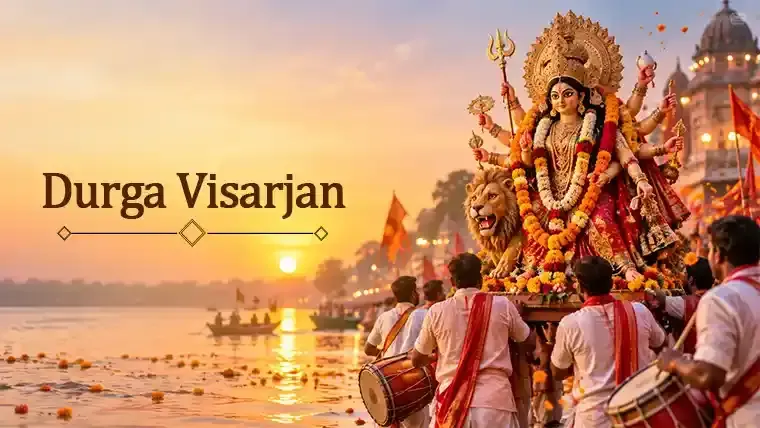
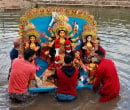
Durga Visarjan is the final ritual of Durga Puja, known as Vijayadashami. It is also called Durga Puja Visarjan or Durga Mata Visarjan. On this day, the clay statue of Goddess Durga is taken out in a big procession and placed into a river, lake, or sea.
This act stands for Goddess Durga going back to her home in the mountains with Lord Shiva after spending a few days with her devotees on earth.
Bengal Durga Visarjan 2026: Vijaya Dashami Puja Schedule
The Bengali Panjika follows regional calendar traditions to determine the dates of Durga Puja in West Bengal. Below is the schedule for Vijaya Dashami 2026, including key rituals and Durga Visarjan timings.
| Puja Day | Date (2026) | Ritual and Calendar Event |
|---|---|---|
| Durga Visarjan (Vijaya Dashami) | 21 October (Wednesday) | Puja begins at 6:30 AM, Darpan Visarjan at 8:30 AM, Sindoor Khela, and Durga Visarjan after the evening Arati |
Important Durga Visarjan Timings for October 21, 2026
| Time | Ritual or Event |
|---|---|
| 6:30 AM | Dashami Puja Begins |
| 8:30 AM | Darpan Visarjan (Symbolic Mirror Immersion) |
| 2:11 PM | Dashami Tithi Ends |
| 6:30 PM | Evening Aarti Concludes; Public Immersion Processions Begin |
North India Durga Visarjan 2026: Dates and Puja Timings
North India follows Navratri rather than the five-day Durga Puja structure used in Bengal, and its dates come from the general Hindu lunisolar calendar instead of the Bengal panchang. Because of this, some dates fall a day earlier than the Bengal schedule above.
| Date (2026) | Main Festival | Auspicious Timings & Rituals |
|---|---|---|
| 19 October (Monday) | Durga Ashtami | Navami Tithi begins at 10:51 AM |
| 20 October (Tuesday) | Maha Navami | Navami Tithi ends at 12:50 PM |
| 20 October (Tuesday) | Dussehra (Vijayadashami) | Aparahna Puja: 01:14 PM – 03:30 PM Vijay Muhurat: 01:59 PM – 02:45 PM Ravan Dahan: After sunset (approximately 05:47 PM) Note: Dashami Tithi ends on 21 October at 02:11 PM. |
In North India, Vijayadashami and Durga Visarjan both fall on 20 October, a day before the Bengal date of 21 October. This is covered in more detail below.
A note on timings: the Vijay Muhurat and Aparahna Puja times above are for New Delhi. These can shift a little for other cities, and the exact Ravan Dahan start time depends on the local panchang and city, so it helps to check local event timings.
How Durga Visarjan is Performed: Step by Step Guide
The visarjan ceremony follows a ritualistic order, generally performed at the pandal before the procession begins.
Step 1: Final Puja and Aarti. The devotees perform the last aarti for the Goddess and offer flowers, incense, and lamps. The priest recites mantras to seek Goddess Durga's blessings for the coming year.
Step 2: Pushpanjali (Flower Offering). Devotees hold flowers and bilva leaves in their hands, chant pushpanjali mantras, and offer them to Goddess Durga in three rounds with mantras like the Navarna Mantra.
Step 3: Visarjan Mantra. The person who does the puja has rice and flowers in his right hand while he seeks the forgiveness of Goddess Durga for any inadvertent wrongdoing during the puja and takes leave of the goddess. In this step, the priest recites the mantras seeking permission from the deities to take away the idol.
Step 4: Bowing and Dakshina. Involves bowing to the deities and the priest, followed by giving and taking of dakshina (donation).
Step 5: The Procession (Bhasan). A very lively function with dhak (drums), music, and dance (dhunuchi), with people enjoying beating the dhak and dancing with the dhunuchis (incense burners) while the crowds chant "Bolo Durga Mai-ki Jai" and similar slogans.
Step 6: Immersion. The idol is immersed in the water body while chants are chanted. This function is known as Bhasan in Kolkata.
Step 7: Return and Closure. This marks the end of Durga Puja. Sweets are distributed, and people greet each other on Vijayadashami, which is considered a day of new beginnings.
To make sure your festival rituals align perfectly with auspicious timings, you can consult with verified astrologers from Astroyogi for personalized guidance.
Durga Visarjan Mantras
A few mantras are commonly said during the Durga Visarjan ceremony.
Navarna Mantra: Om Aim Hreem Kleem Chamundayai Vicche
Visarjan Mantra: Om Samudra vasane devi, parvata stana mandale, Vishnu patni namastubhyam, pad sparsham kshamasva me
Durga Beej Mantra: Om Dum Durgayei Namaha
Why Does Durga Visarjan Fall on Different Dates in Bengal and North India?
Bengal's festival calendar and the wider North Indian calendar can land on different days. This happens because they use different rules to match a lunar day, called a tithi, with a specific sunrise.
The tithi split. In 2026, the Dashami tithi begins in the afternoon of 20 October and runs into the afternoon of 21 October.
How most of North India counts it. Most North Indian calendars pick the festival date using the tithi that is active at sunrise. Since Dashami is active for most of 20 October, these calendars mark Dussehra on Tuesday, 20 October.
How Bengal counts it. Bengal's panchang follows older calculation methods, such as the Bisuddhasiddhanta. These methods look at which day holds more of the tithi during the main daytime hours. Since Dashami tithi runs well into the daytime on 21 October, the Bengal panchang places Bijoya Dashami, Sindoor Khela, and Durga Visarjan on Wednesday, 21 October.
Most families do Sindoor Khela after the morning temple rituals are done on Vijaya Dashami. The procession and the actual immersion of the idol happen later, often well into the evening.
Significance of Durga Visarjan
Durga Visarjan is not just about putting the statue in water. It carries a few meanings that make the day special.
Goddess Durga returns home. The immersion shows Goddess Durga going back to her husband, Lord Shiva, in his home in the Himalayas after her yearly visit to Earth.
Nothing physical lasts forever. Just like the clay statue slowly breaks down in water, this ritual reminds people that all physical things change and fade, while the divine stays the same.
Good wins over evil. Vijayadashami marks the day Goddess Durga defeated the demon Mahishasura. Durga Visarjan closes out this celebration of good winning over evil.
A tearful goodbye. In Bengal and other parts of eastern India, this day feels like sending off a daughter to her husband's home. People cry, sing, and play drums as they say goodbye.
Rituals Associated with Durga Visarjan
Durga Visarjan is not just the immersion of the idol. It is a series of farewell rituals that show devotion, thanks, and a heartfelt send-off for Goddess Durga. The most popular ritual is Sindoor Khela, followed by the procession and immersion.
Devi Baran. Married women perform a farewell aarti for Goddess Durga. They offer sweets, betel leaves, and prayers before she departs.
Sindoor Khela. Women, often dressed in white sarees with red borders, apply vermilion to the forehead and feet of Goddess Durga. They then apply sindoor to one another as a blessing for a happy marriage, success, and good health.
Offering sweets and prayers. Devotees offer mishti, or sweets, and seek the blessings of Goddess Durga before saying goodbye.
Ghat Visarjan. In some traditions, devotees perform a symbolic immersion of the sacred pot, called the ghat, at the pandal before the main idol procession.
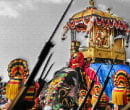
Bhasan procession. The idol is carried to a river, pond, or other immersion site. The procession is filled with dhak drums, conch-shell sounds, joyful cries, dancing, and chants such as "Durga Ma Ki Jai."
Immersion and Bijoya greetings. After the immersion, families and communities exchange Bijoya Dashami greetings, share sweets, and take blessings from elders. This marks the end of the festival and a fresh start.
These customs can differ by region, family tradition, and local pandal. Together, they turn visarjan into both a sacred farewell and a joyful community celebration.
Regional Ways of Celebrating Durga Visarjan
Bengal (Kolkata): Married women take part in Sindoor Khela, where they put sindoor on each other and on the statue before visarjan. Kolkata is known for having some of the biggest visarjan processions, with huge crowds joining in.
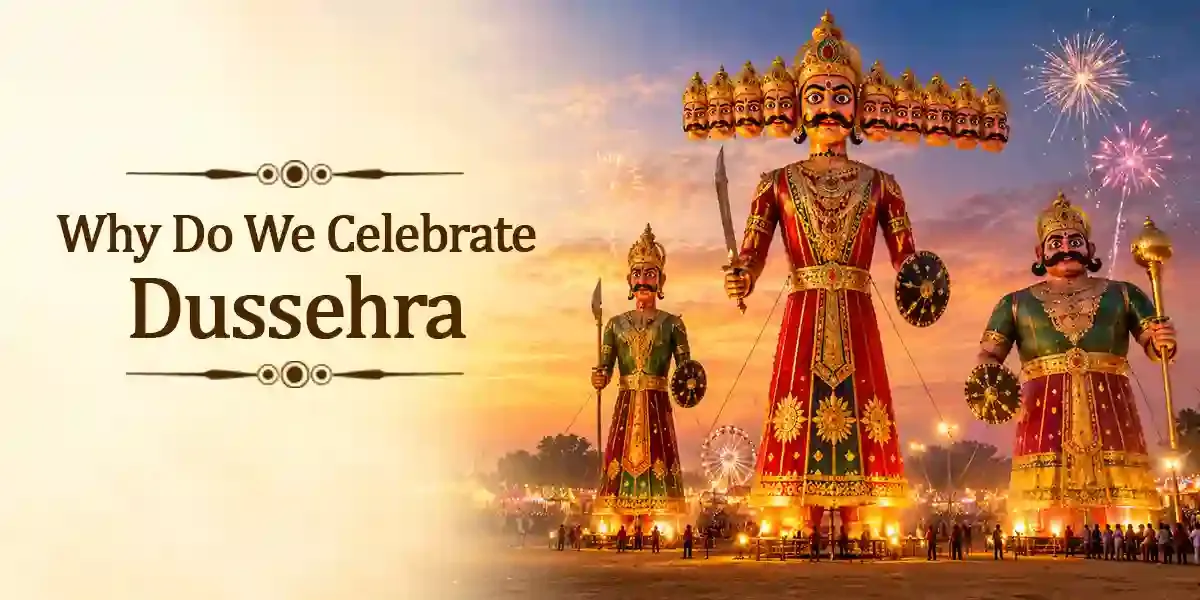
North India: Vijayadashami is celebrated as Dussehra here, with the burning of Ravana effigies. Durga Visarjan still takes place to close out the Navratri puja.
South India: This day also marks the end of Saraswati Puja, sometimes called Ayudha Puja. Tools and vehicles are worshipped before the visarjan happens.
Eco-Friendly Durga Visarjan
More people are now choosing eco-friendly ways to do Durga Visarjan to protect rivers and lakes.
Some common eco-friendly steps include:
Statues made from clay and natural colors instead of harmful materials
Man-made immersion tanks so rivers do not get polluted
Small symbolic immersions at home using a tiny clay idol or a coconut in a bucket
Many cities now have rules that require these eco-friendly steps and set fixed spots for immersion to protect local water bodies.
Frequently Asked Questions
What is the difference between Durga Visarjan and Ganesh Visarjan?
Both involve putting a statue into water, but they happen on different days. Durga Visarjan takes place on Vijayadashami, at the end of Durga Puja. Ganesh Visarjan happens on Anant Chaturdashi, at the end of Ganesh Chaturthi.
Can Durga Visarjan be done at home?
Yes. For a home puja, a small clay idol or a symbolic item like a coconut or kalasha can be placed in a bucket of water. That water can then be poured onto plants or into a nearby water body.
What should be worn for Durga Visarjan?
Traditional clothes are common. Women often wear sarees, with red and white sarees with red borders being popular in Bengal. Men usually wear dhoti-kurta or other formal ethnic outfits.
Is there a fixed direction for the visarjan procession?
The procession usually heads toward the closest approved water body. It follows routes set by the local police for safety.