
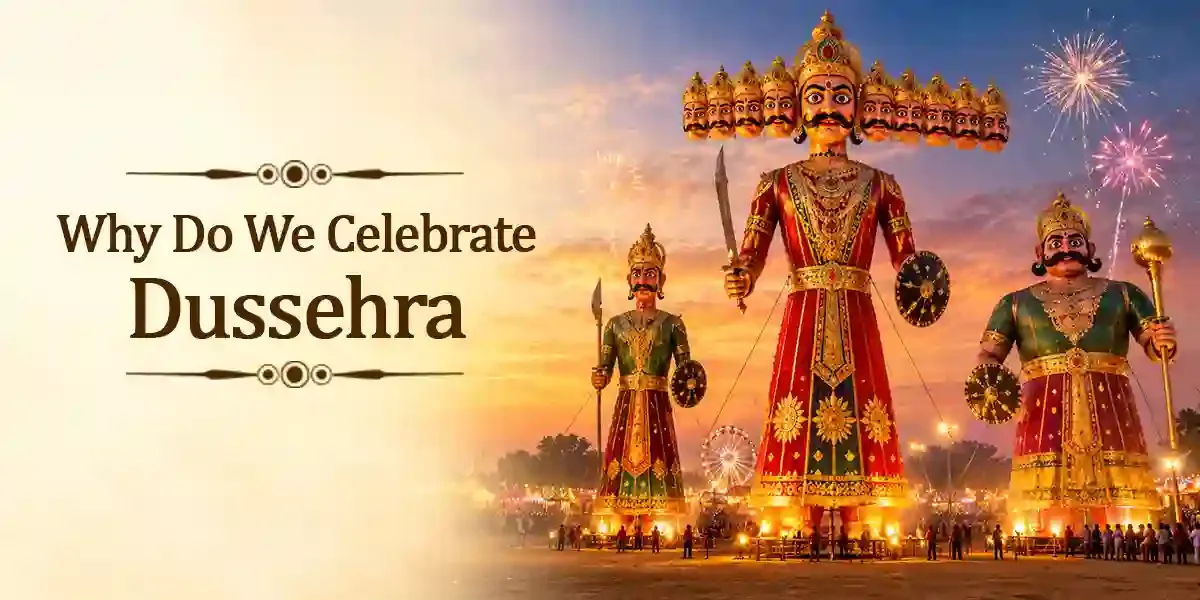

Dussehra Story : Why do we celebrate dussehra?
Dussehra, also known as Vijayadashami or Dasara, celebrates the victory of good over evil. Two major traditions of courage, devotion, and righteousness lie behind this festival. One tells of Lord Rama defeating the mighty Ravana. The other tells of Goddess Durga destroying the demon Mahishasura.
Many devotees look up the Dussehra story each year, wondering why Dussehra is celebrated and what Vijayadashami is. Both tales answer this in their own way.
Dussehra Meaning
The word "Dussehra" is commonly understood as "the removal of ten," referring to the ten heads of Ravana. Vijayadashami means victory on the tenth day. Together, these names capture the heart of the festival: the tenth day on which truth won over wrong.
The Story Behind Dussehra: Lord Rama and Ravana
Long ago, Lord Rama, the prince of Ayodhya, was set to be crowned king. But a palace plot led by his stepmother, Queen Kaikeyi, sent him into the forest for fourteen years. Goddess Sita, his wife and an incarnation of Goddess Lakshmi, and Lord Lakshmana, his devoted brother, chose to go with him.
During their time in the forest, Ravana, the king of Lanka, set his sights on Goddess Sita. He sent the demon Maricha, who took the form of a magical golden deer, to lure Lord Rama away. Goddess Sita wished to have the deer, and Lord Rama went after it.
When the deer cried out in Lord Rama's voice, Goddess Sita insisted that Lord Lakshmana go to help. Before leaving, he drew a protective line around the hut and asked her not to cross it.
Ravana then came to the hut disguised as a holy man. He tricked Goddess Sita into stepping across the line and carried her away to Lanka. The brave vulture Jatayu tried to stop him but was wounded. Before breathing his last, Jatayu told Lord Rama what had happened.
Lord Rama and Lord Lakshmana began their search and soon befriended Sugriva, the Vanara king. The Vanara army, along with Lord Hanuman, the ultimate devotee of Lord Rama, joined the search.
Lord Hanuman crossed the sea to Lanka and found Goddess Sita in a garden of Ashoka trees. He conveyed Lord Rama's message, handed her Lord Rama's ring, and returned with the news of her safety.
Lord Rama and the Vanara army then built a bridge across the ocean to Lanka. A great war followed, in which Lord Rama's forces defeated Ravana's commanders and allies one after another, including his mighty brother Kumbhakarna and his son Meghnad.
Finally, Lord Rama faced Ravana himself. Ravana was a learned and powerful king, but pride and desire had blinded him. Lord Rama killed the king of Lanka and rescued Goddess Sita.
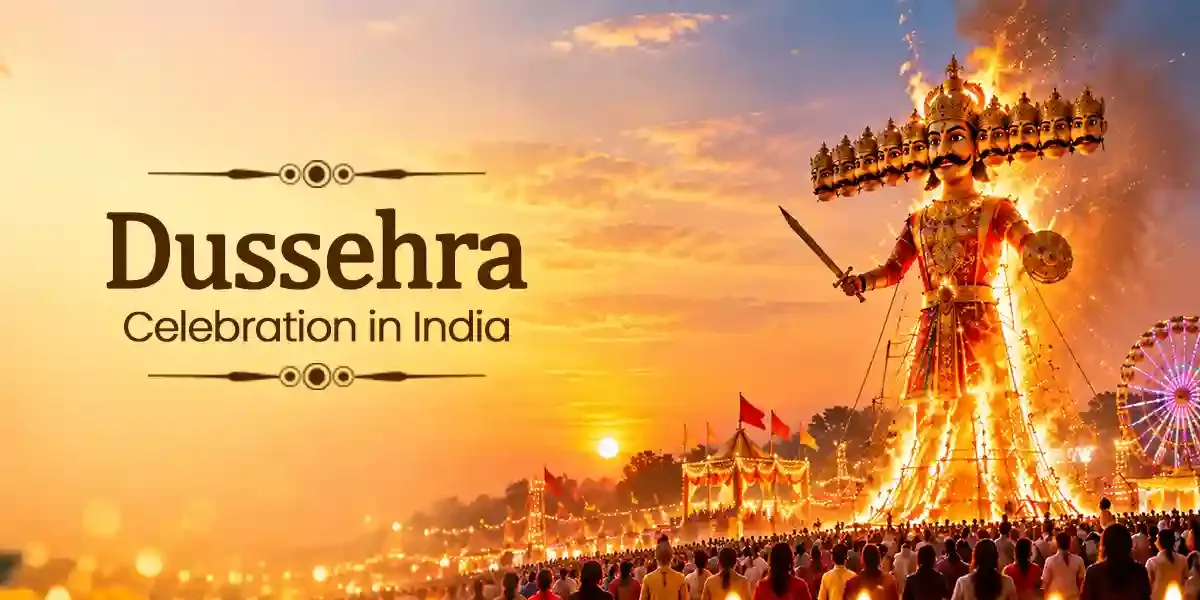
The day of Ravana's defeat is celebrated as Dussehra. Lord Rama, Goddess Sita, and Lord Lakshmana then returned to Ayodhya. Their homecoming and the lighting of lamps to welcome them are commemorated as Diwali.
The Meaning Behind Ravana's Ten Heads
Ravana's ten heads are traditionally seen as ten inner flaws: lust, anger, greed, attachment, pride, jealousy, selfishness, injustice, cruelty, and ego. His fall shows that even the mightiest can be undone by these weaknesses.
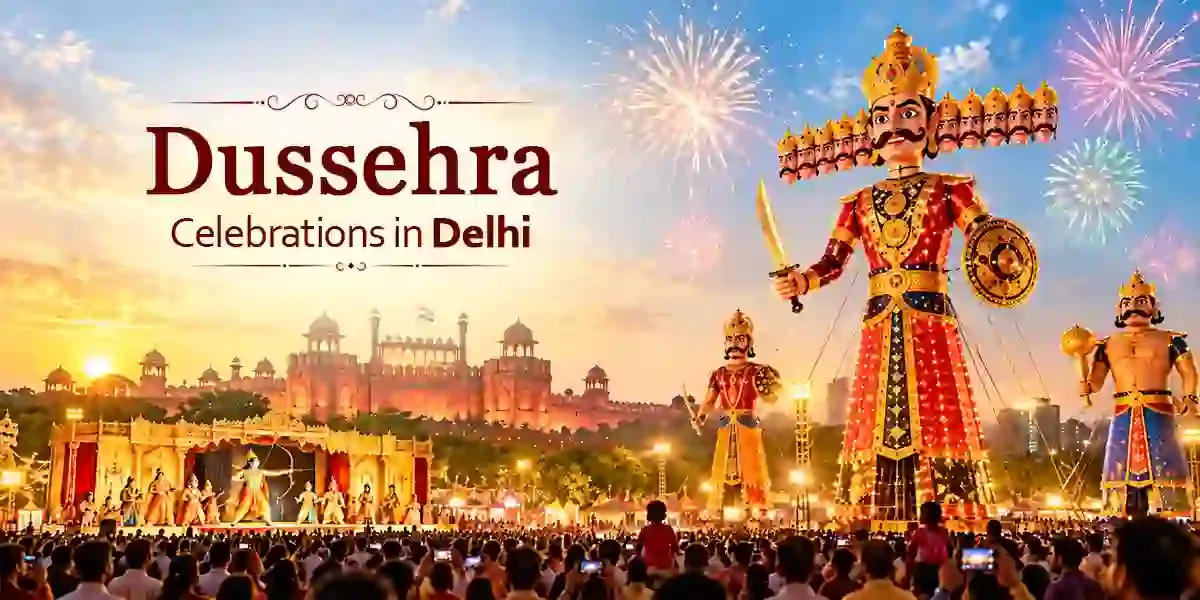
Also read: Dussehra Celebrations in Delhi 2026: Date, Muhurat and Best Places
The Dasara Story: Goddess Durga and Mahishasura
Another well-known Dasara story comes from eastern and southern India. It tells of Mahishasura, a demon who could take the form of a buffalo. Through severe penance, he received a boon from Lord Brahma that no man or god could kill him.
Confident that this made him invincible, Mahishasura did not guard against a female warrior. He attacked the heavens and drove the gods out of their homes.
The troubled gods approached Lord Brahma, Lord Vishnu, and Lord Shiva. Their combined energy took the form of a radiant warrior, Goddess Durga.
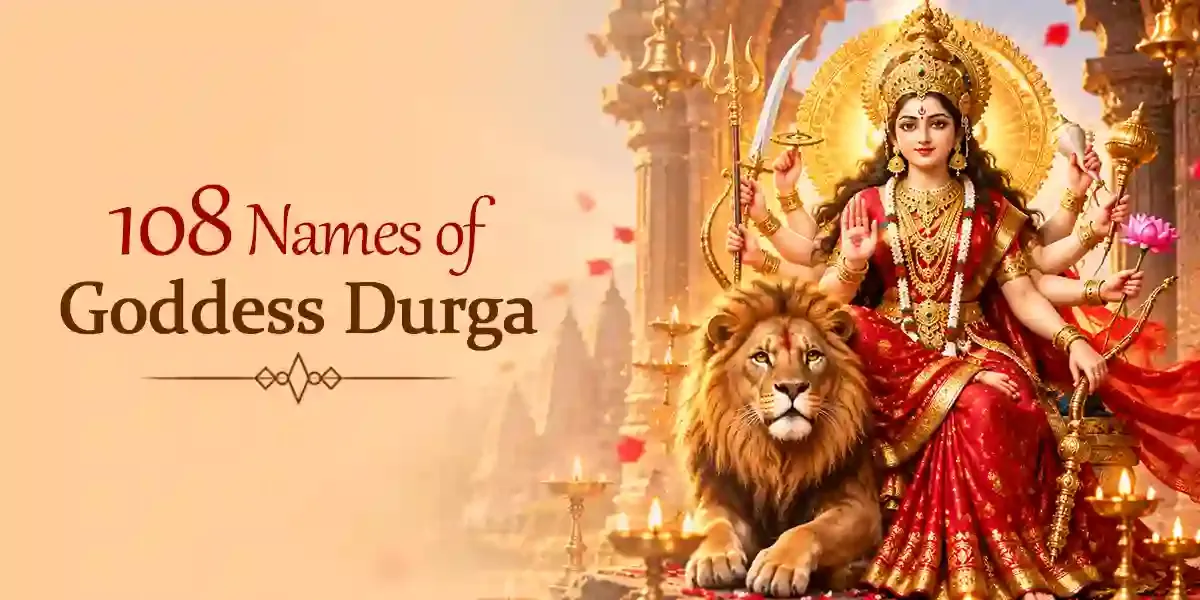
Each god gifted the Goddess a weapon. Lord Shiva gave her a trident, Lord Vishnu gave a discus, and the others offered their own divine arms. Mounted on a lion, Goddess Durga rode out to face Mahishasura.
The battle lasted nine days and nine nights. Mahishasura kept changing his form to escape the Goddess, appearing as a buffalo, a lion, an elephant, and a warrior.
On the tenth day, Goddess Durga overpowered him in his buffalo form and killed him. Peace returned to the heavens. This tenth-day victory is commemorated as Vijayadashami, and the nine nights of battle are remembered as Navratri.
Note: Dasara is told in different ways across India. In Karnataka, the festival is linked to Goddess Chamundeshwari, a form of Goddess Durga associated with slaying the demons Chanda and Munda. In eastern India, the day is called Bijoya Dashami. These are seen as different expressions of the same truth.
Also read: Dussehra Celebrations in India: Traditions Across Different Regions
Why Is Dussehra Celebrated?
Dussehra is celebrated because both stories end the same way. Lord Rama defeated Ravana, and Goddess Durga defeated Mahishasura. Together, they show that no matter how powerful evil seems, it cannot last forever.
The significance of Dussehra lies in this message. Lord Rama's story stands for duty, humility, and standing by dharma at all costs. Goddess Durga's story stands for fighting evil with courage and fearlessness.
Dussehra: A Story of Courage, Devotion, and Victory
At its heart, the Dussehra story is about the triumph of good over evil. It tells of a prince who stood by dharma through great hardship and a goddess who rose to help the gods when a demon drove them out of heaven. It also tells of two proud rulers who fell because of their arrogance.
Dussehra marks an auspicious time for new beginnings and casting away negative energies. Celebrate this season of victory by consulting with verified astrologers on Astroyogi to welcome positivity into your life.
Talk to Astrologers
View All



Team Astroyogi is an experienced in-house editorial team of passionate writers, researchers, and astrology enthusiasts dedicated to making ancient divination sciences more accessible and meaningful in everyday life. With years of collective experience in creating insightful astrology and spirituality content, the team specializes in simplifying complex spiritual concepts into practical guidance for readers seeking clarity, balance, and personal growth. The Astroyogi editorial team possesses expertise across a wide range of subjects, including Indian Astrology, Vedic Astrology, Planetary Transits, Horoscope Analysis, Vastu Shastra, Numerology, Tarot, Spiritual Wellness, and Ritual Practices. Every piece of content is carefully researched, fact-checked, and crafted with the intention of offering reliable, insightful, and easy-to-understand guidance rooted in traditional wisdom. Driven by a commitment to authenticity and reader trust, Team Astroyogi strives to create content that empowers individuals to navigate life’s opportunities and challenges with confidence, positivity, and inner peace. Their mission is to bridge ancient astrological knowledge with modern-day relevance, helping readers make informed decisions and lead more harmonious lives.