
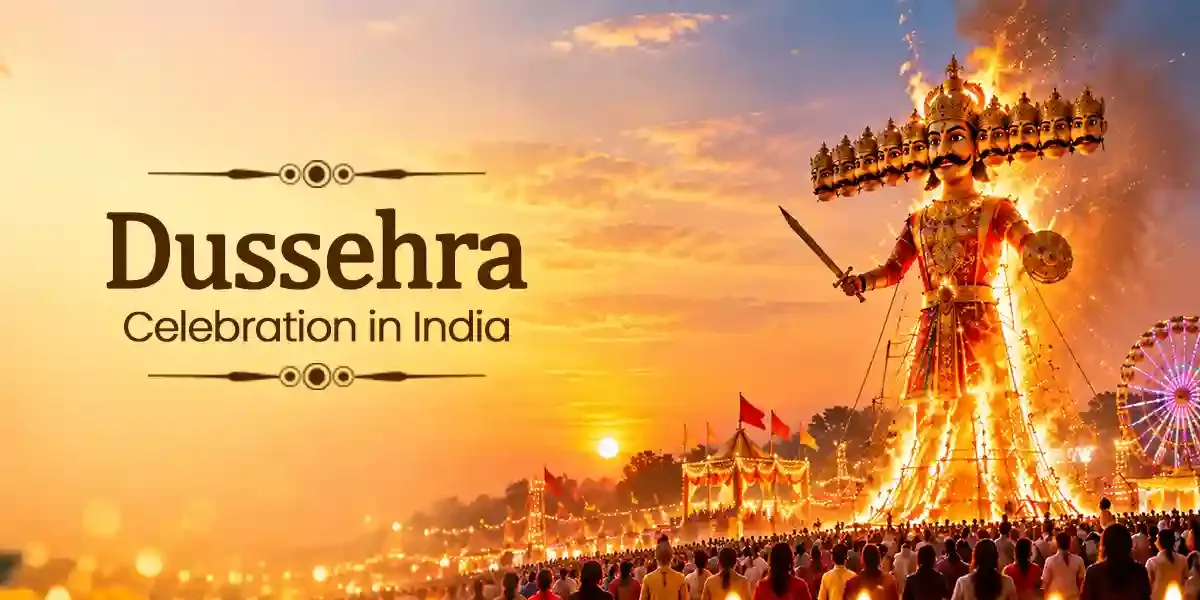

Dussehra Celebrations in India: Traditions Across Different Regions
Dussehra celebrations in India take many forms, shaped by region, legend, and local faith. It falls on Tuesday, October 20, in most of India, while West Bengal observes Vijayadashami on October 21.
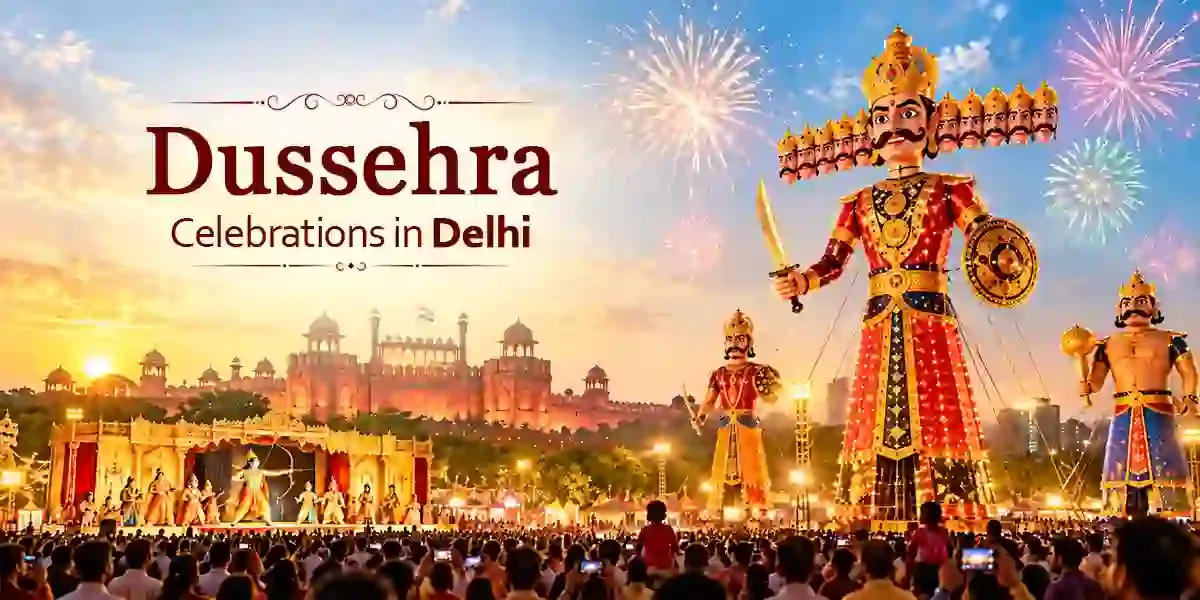
In North India, the day honors Lord Rama's defeat of Ravana, the ten-headed king of Lanka. Ramlila plays retell the Ramayana, and models of Ravana, Kumbhakarna, and Meghnath are burned to symbolize the end of ego and evil.
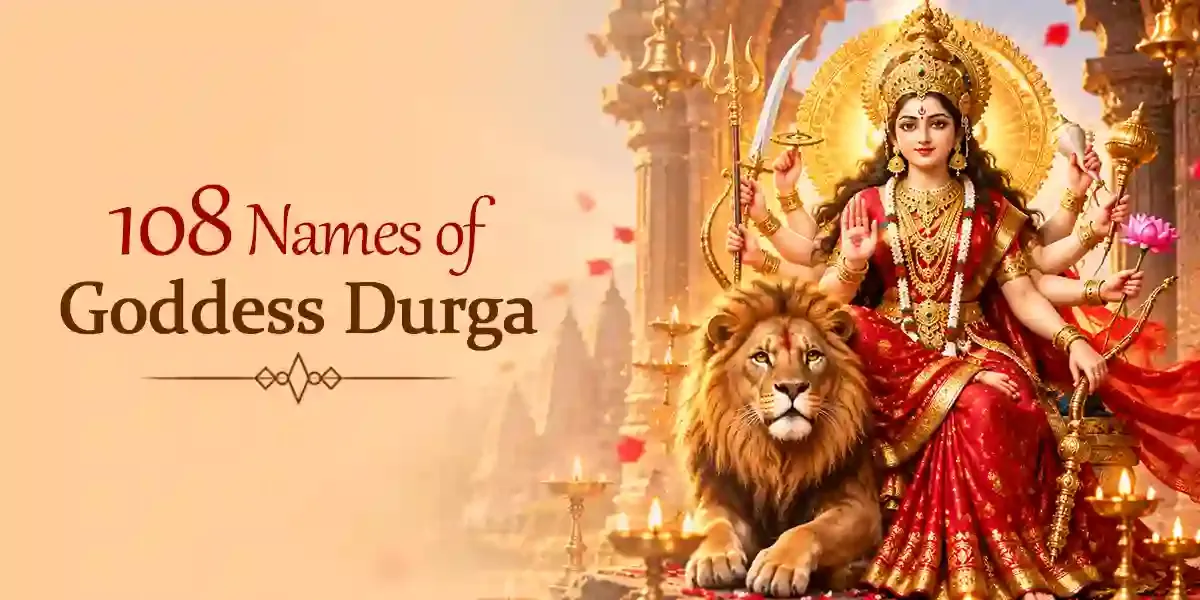
In Bengal and eastern India, the focus is on Goddess Durga's triumph over the buffalo demon Mahishasura. Durga Puja ends with Bijoya Dashami, a day of victory and an emotional farewell to the Goddess. Both traditions share one idea: evil may be powerful, but it is never final.
Types of Dussehra Celebrations in Different Regions of India
Explore how Dussehra is celebrated across various parts of India, highlighting the unique traditions, major rituals, and key attractions that make each regional festivity worth experiencing.
| State / Region | Traditions & Rituals | Why Attend |
|---|---|---|
| Delhi | Theme: Lord Rama's triumph over Ravana Rituals: Ramlila acts and Ravan Dahan |
Tallest Ravan model in India (221 ft.) |
| West Bengal (Kolkata) | Theme: Goddess Durga's victory over Mahishasura Rituals: Idol immersion and Sindoor Khela |
Artistic, emotional, community-driven Durga Puja |
| Himachal Pradesh (Kullu) | Theme: Gathering of valley deities Rituals: Deity processions to Dhalpur Maidan |
Week-long Himalayan festival after Vijayadashami |
| Gujarat (Ahmedabad, Vadodara) | Theme: Devotion, dance, and Lord Rama's victory Rituals: Garba, Dandiya Raas, and Ravan Dahan |
Nine nights of folk dance |
| Tamil Nadu (Chennai, Kanyakumari) | Theme: Learning, craft, and divine power Rituals: Golu displays, Ayudha Puja, Vidyarambham |
Home- and temple-centered cultural displays |
| Punjab (Amritsar, Ludhiana) | Theme: Ramlila and community festivity Rituals: Ramlila and Ravan Dahan |
Theater, fairs, food, and fireworks |
| Uttar Pradesh (Varanasi) | Theme: The Ramayana in its sacred homeland Rituals: Ramlila along the Ganges, Ravan Dahan |
Riverfront devotion and traditional performance |
| Chhattisgarh (Bastar) | Theme: Tribal deities and local tradition Rituals: Goddess Danteshwari Devi procession |
One of India's longest Dussehra festivals |
| Karnataka (Mysuru) | Theme: Royal heritage and Goddess Chamundeshwari's victory Rituals: Jamboo Savari elephant procession |
Palace-led Dasara with lit monuments |
| Rajasthan (Kota) | Theme: Ramlila, trade, and folk culture Rituals: Ravan Dahan and a long fair |
Extended melas of devotion and shopping |
| Ayodhya (Uttar Pradesh) | Theme: Lord Rama's birthplace Rituals: Ramlila, Ravan Dahan, illuminations |
Most symbolic setting for Lord Rama's story |
West Bengal (Kolkata): Durga Puja and Bijoya Dashami
Kolkata turns Dussehra into the finale of Durga Puja. Themed pandals, dhak drums, and food stalls fill neighborhoods. On Bijoya Dashami, married women play Sindoor Khela, applying vermilion to the Goddess and each other, before idols are immersed in the Hooghly River.
Highlight: Sindoor Khela and the emotional Durga Visarjan processions.
When it will take place: Durga Puja runs from around October 16 to 21, 2026, with immersion on October 21.
What makes it unique: Kolkata treats Durga Puja as worship and public art together. Pandals can resemble temples, villages, or imaginary worlds, all built through community effort.
Himachal Pradesh (Kullu): Kullu Dussehra
Kullu Dussehra begins on Vijayadashami and lasts about a week. Hundreds of village deities are carried in palanquins to Dhalpur Maidan, where they gather around Lord Raghunath. The festival ends with the burning of a pile of dry grass representing Lanka.
Highlight: Local gods arriving in decorated palanquins.
When it will take place: October 21 to 27, 2026.
What makes it unique: The valley's devta tradition treats local deities as living members of the community. Snowy ridges and open-air rituals add to the atmosphere.
Gujarat (Ahmedabad and Vadodara): Navratri, Garba, and Dussehra
Dussehra in Gujarat follows nine nights of Navratri, filled with garba and dandiya raas in colorful dresses. The dances honor the Goddess and build toward Vijayadashami, when Ramlila and Ravan Dahan events take place in many areas.
Highlight: Thousands dancing through the night.
When it will take place: Navratri begins October 11, 2026, and Dussehra falls on October 20.
What makes it unique: Garba is participatory rather than a spectator event, and anyone can join the circle. Ahmedabad and Vadodara host the largest organized venues.
Tamil Nadu (Chennai and Kanyakumari): Navaratri Golu and Ayutha Puja
Tamil Nadu celebrates Navaratri with golu, stepped displays of dolls depicting gods, mythological scenes, and village life. Families invite guests, exchange gifts, and serve sundal. Ayutha Puja honors tools, books, and vehicles, while Vidyarambham marks new beginnings in learning.
Highlight: Golu displays in homes and temples.
When it will take place: Navratri begins October 11, 2026. Ayutha Puja falls around October 19, and Vijayadashami around October 20 to 21.
What makes it unique: The focus is knowledge, craft, and gratitude for livelihood rather than giant models. The mood is intimate and family-centered.
Delhi: Ramlila and Ravan Dahan
Delhi builds its Dussehra around Ramlila, open-air dramas of the Ramayana staged over several nights. On Vijayadashami, towering statues of Ravana, Kumbhakarna, and Meghnath are set alight before cheering crowds at major grounds.
Highlight: A giant Ravana model burning at a Ramlila ground.
When it will take place: Ramlila begins on October 11, 2026, and Ravan Dahan is on October 20.
What makes it unique: Multiple large events happen across the city on the same evening. Delhi suits first-time visitors seeking the classic North Indian experience.
Punjab (Amritsar and Ludhiana): Ramlila and Festival Fairs
Punjab marks Dussehra with Ramlila theater, model burning, and community gatherings. Amritsar and Ludhiana stage performances of Lord Rama's exile, Sita's abduction, and the final battle. Local melas add food stalls, rides, handicrafts, and fireworks.
Highlight: Ravan Dahan followed by a lively fair.
When it will take place: Ramlila begins October 11, 2026, and the main observance is October 20.
What makes it unique: Festive fair culture gives Dussehra a warm, neighborhood feel. Amritsar pairs well with a visit to the Golden Temple.
Uttar Pradesh (Varanasi): Ramlila and Ravan Dahan
Varanasi brings Dussehra to one of Hinduism's oldest cities. The UNESCO-inscribed Ramnagar Ramlila is a moving play staged over 31 days. Neighborhood Ramlilas begin with Navratri, and models are burned on Vijayadashami.
Highlight: The Ramnagar Ramlila and Ravan Dahan beside the Ganges.
When it will take place: Ramnagar Ramlila runs from September 25 to October 25, 2026. Neighborhood Ramlilas begin October 11, and Dussehra is on October 20.
What makes it unique: The Rama and Ravana story gains depth from sacred geography and centuries of cultural memory. The festival feels spiritual rather than purely spectacular.
Chhattisgarh (Bastar): Bastar Dussehra
Bastar Dussehra centers on Goddess Danteshwari Devi and the region's tribal deities, not on Lord Rama and Ravana. Rituals include the Goddess's journey from Dantewada to Jagdalpur and processions with wooden chariots.
Highlight: The procession of Goddess Danteshwari Devi.
When it will take place: The festival began with Pat Jatra on August 12, 2026. The main phase runs from October 18 to 22, with October 20 as the principal date.
What makes it unique: The festival preserves an ancient devotional tradition at a remarkable scale, far from the Ramlila model.
Karnataka (Mysuru): Mysuru Dasara
Mysuru Dasara honors Goddess Chamundeshwari's victory over Mahishasura across ten days of music, dance, exhibitions, and ceremonies. The finale is Jamboo Savari, in which the Goddess's idol rides a golden howdah atop a decorated elephant.
Highlight: The Jamboo Savari procession.
When it will take place: October 11 to 21, 2026, with Jamboo Savari on October 21.
What makes it unique: The Wodeyar royal heritage gives Dasara Palace city grandeur. Amba Vilas Palace is illuminated nightly.
Rajasthan (Kota): Kota Dussehra Mela
Kota pairs Ravan Dahan with one of Rajasthan's major fairs. Ramlila traditions, folk performances, rides, stalls, and traders create a long festival that continues well after Dussehra night.
Highlight: Ravan Dahan followed by weeks of fair activity.
When it will take place: October 20 to November 6, 2026.
What makes it unique: The fair stretches Dussehra far beyond a single evening, blending ritual, commerce, and entertainment in true mela style.
Ayodhya (Uttar Pradesh): Deepotsav and Ramlila
Ayodhya, known as Lord Rama's birthplace, gives Dussehra exceptional religious weight. Ramlila, temple rituals, processions, and Ravan Dahan unfold against the backdrop of the city's deep Ramayana heritage.
Highlight: Celebrating Lord Rama's victory in his traditional birthplace.
When it will take place: Ramlila begins on October 11, 2026, and Ravan Dahan is on October 20.
What makes it unique: The city offers a pilgrimage into the setting of the Ramayana itself. Very heavy crowds are expected on the main day. The famed Deepotsav lamp lighting is a separate Diwali event, held November 6 to 8, 2026.
Final Thoughts
West Bengal offers Goddess Durga's farewell, Kullu gathers its gods, Gujarat dances through Navratri, and Tamil Nadu honors learning and craft. Delhi and Punjab stage classic Ravan Dahan spectacles, Varanasi and Ayodhya root the Ramayana in sacred ground, Bastar celebrates tribal deities, Mysuru brings royal pageantry, and Kota extends the festival into a long mela.
Across every variation, the heart of Dussehra is the same. Goodness, courage, and devotion prevail over arrogance and harm, whether the victory belongs to Lord Rama, Goddess Durga, Goddess Chamundeshwari, or a local guardian deity.
Travel plans can follow personal style. Kolkata suits art and emotion, Mysuru royal grandeur, Kullu Himalayan ritual, and Bastar indigenous tradition. Delhi, Varanasi, and Ayodhya deliver the great Ramlila experience. Most destinations peak on October 20, Bengal and Mysuru on October 21, and Kullu and Kota stretch into early November.
Talk to Astrologers
View All




Team Astroyogi is an experienced in-house editorial team of passionate writers, researchers, and astrology enthusiasts dedicated to making ancient divination sciences more accessible and meaningful in everyday life. With years of collective experience in creating insightful astrology and spirituality content, the team specializes in simplifying complex spiritual concepts into practical guidance for readers seeking clarity, balance, and personal growth. The Astroyogi editorial team possesses expertise across a wide range of subjects, including Indian Astrology, Vedic Astrology, Planetary Transits, Horoscope Analysis, Vastu Shastra, Numerology, Tarot, Spiritual Wellness, and Ritual Practices. Every piece of content is carefully researched, fact-checked, and crafted with the intention of offering reliable, insightful, and easy-to-understand guidance rooted in traditional wisdom. Driven by a commitment to authenticity and reader trust, Team Astroyogi strives to create content that empowers individuals to navigate life’s opportunities and challenges with confidence, positivity, and inner peace. Their mission is to bridge ancient astrological knowledge with modern-day relevance, helping readers make informed decisions and lead more harmonious lives.