




Friday, October 9, 2026 Paksha:Krishna Tithi:Chaturdashi

Saturday, October 10, 2026 Paksha:Krishna Tithi:Amavasya


Sunday, October 11, 2026 Paksha:Shukla Tithi:Prathama


Monday, October 12, 2026 Paksha:Shukla Tithi:Dvitiiya

Wednesday, October 14, 2026 Paksha:Shukla Tithi:Chaturthi
Thursday, October 15, 2026 Paksha:Shukla Tithi:Panchami

Friday, October 16, 2026 Paksha:Shukla Tithi:Shashthi

Friday, October 16, 2026 Paksha:Shukla Tithi:Shashthi
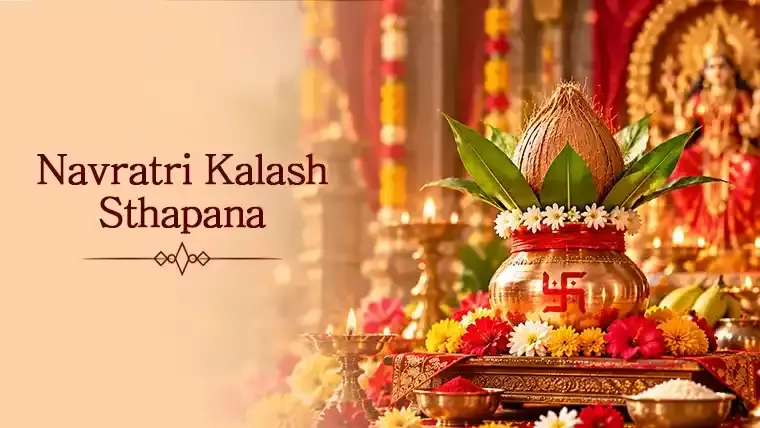
Navratri Kalash Sthapana is the first and most important step of the nine-day festival. In different regions, this ritual is also called Navratri sthapana, Navratri sthapna, or Navratri Ghatasthapana. It marks the moment Goddess Durga is invited into the home.
Shardiya Navratri Ghatasthapana (Kalash Sthapana) 2026: Date And Muhurat
| Festival | Ghatasthapana Date | Main Muhurat | Alternate Abhijit Muhurat |
|---|---|---|---|
| Shardiya Navratri 2026 | Sunday, October 11 | About 6:19 AM to 10:12 AM | About 11:45 AM to 12:30 PM |
Note: The timings above are based on New Delhi. The Navratri kalash sthapana muhurat can shift by an hour or more in other cities, since it depends on local sunrise. For example, Cuttack shows a Shardiya muhurat of about 5:40 AM to 9:35 AM on the same day. Checking a local Panchang before the ritual is recommended.
As a general rule, the ritual works best in the first part of the morning, before midday, while the tithi called Pratipada is active. If the main window is missed, the Abhijit muhurat is used instead.
Significance and Meaning of Kalash Sthapana
The word "kalash" means a sacred pot. The word "sthapana" means "to set up" or "install." So Navratri kalash sthapana simply means placing a holy pot at the start of Navratri. The pot is filled with water and stands for the presence of Goddess Durga in the home for the next nine days.
Navratri begins with this ritual because the whole festival is built around prayer to Goddess Durga and her nine forms, known as Navadurga. Before nine days of fasting and worship can begin, a fixed spot is needed to call the goddess into the home. The kalash becomes that fixed spot.
A Navratri kalash is not treated like an ordinary pot. It is seen as a sacred object holding divine energy, often called Shakti. Once it is set up, the pot is kept clean and respected, and it is not moved or touched carelessly during the festival.
Symbolism of the Kalash
Every item placed in and around the kalash carries its own meaning:
Water stands for life and purity.
Mango leaves stand for fresh energy and new beginnings.
A whole coconut stands for completeness and is treated as another form of the goddess.
Barley seeds, called jau, stand for growth and food.
Clean soil stands for the earth itself, the base of all life.
Together, these items show growth, protection, and abundance. That is why the setup is done slowly and with care, not rushed.
Materials Needed for Kalash Sthapana Navratri
A basic setup for Kalash Sthapana Navratri includes:
A copper, brass, silver, or clay pot for the kalash.
Clean water, mixed with a little Ganga water if available.
Five or seven mango leaves.
One whole coconut with its husk and tuft intact.
Red, yellow, or white cloth.
Red sacred thread, known as kalava or moli.
Roli or kumkum, turmeric, and sandalwood paste.
Akshata, which is plain or turmeric-colored uncooked rice.
Barley seeds, called jau, and clean soil.
A wooden platform or chowki with a clean cloth.
Flowers, a garland, and durva grass.
A coin, betel nut, cloves, and cardamom.
Incense, a lamp, cotton wicks, and ghee or oil.
Fruits, sweets, and a picture or murti of Goddess Durga.
Not every family uses every item on this list. A clean, simple setup done with devotion is enough.
How to Do Kalash Sthapana in Navratri
Anyone learning how to do kalash sthapana in Navratri can follow these steps in order.
Step 1: Clean the space before keeping your puja supplies. It is better to choose a puja corner that is quiet and stable in the house or apartment. There should be a good amount of light and air. It is better to face northeast or east while performing the puja.
Step 2: Arrange the chowki. A wooden plate is kept on a clean cloth, and a picture or murti of Goddess Durga is fixed behind the place where the kalash will be fixed.
Step 3: Sow the barley. For this, we take a clean tray and fill it with clean soil. Now, we have to sow some barley seeds in it and cover them with a tiny layer of clean soil. A little sprinkle of water is done on the first day, and the same can be done every day of the festival. It is better to avoid excess watering, which leads to rotting of seeds, and less watering leads to no growth of seeds. We need to take care that the sprouts get proper airflow and sunlight.
Step 4: Prepare the kalash or pot. We need to tie a string of kalava on the neck of the kalash. On it, we can draw a swastika or Om by using kumkum or turmeric.
Step 5: Fill the kalash. It is time to fill the pot with water. We can also add a coin, a betel nut, a few grains of rice, cloves, and some Ganga jal. It is better to make sure that the water in the pot is clean.
Step 6: Add the mango leaves. Now, we have to arrange the mango leaves around the mouth of the pot. The stems of the leaves have to be kept in water, and the leafy part has to be spread outwards.
Step 7: Place the coconut (nariyal).
Select a whole coconut with the husk and tuft intact.
Wash and dry the coconut thoroughly.
Wrap it in a clean red, yellow, or orange cloth and tie it with kalava.
Position it on the mango leaves so that the tufted end faces upwards.
Balance it properly, ensuring it does not touch the water directly.
Step 8: Fix the kalash on the chowki. It has to be kept on the soil or on a small plate above the soil tray.
Step 9: Invoke the deities. We have to start the prayers by inviting Lord Ganesha, the family deity, and Goddess Durga with Navadurga.
Step 10: Offer puja. Kumkum, flowers, incense, an ornamented lighted lamp, fruits, and sweets are offered to Lord Ganesha, the family deity, and Goddess Durga with Navadurga. Aarti is performed after the offering of these items.
Pro Tips for Daily Care
Keep the kalash and barley tray in the same clean, undisturbed spot for all nine days.
Offer fresh flowers and a short prayer each day rather than skipping days.
Never use the kalash water for regular household tasks.
Let the coconut stay untouched and uncut until the festival ends.
What to Avoid
Setting up the kalash at night instead of during the day.
Using a pot that is cracked, dirty, or unstable.
Copying another city's muhurat instead of checking a local Panchang.
Placing the lamp near curtains, paper, or anything flammable.
What to Do After Navratri Ends
Once Navratri finishes, a short closing ritual is done. A final aarti is performed, and thanks are offered to Goddess Durga. The coconut and cloth are removed with care, and if the coconut is in good condition, it may be used as prasad.
The grown barley shoots are placed in a clean natural spot, such as under a tree or in a garden. The kalash water is poured onto plants or soil rather than a drain, and the pot itself is cleaned and stored for future use.
Navratri Kalash Sthapana sets the tone for the entire festival. A clean setup, the right muhurat, and steady daily care matter far more than having every single item on the list. Following the basic steps with attention is enough to mark the start of nine days of worship to Goddess Durga in the proper way.
Durga Visarjan & Kalash Removal Muhurat
For New Delhi, the auspicious window for Durga Visarjan and Kalash removal on October 20, 2026 is approximately 1:14 PM to 3:30 PM, with a total duration of 2 hours 16 minutes.
Note: The exact timing may vary depending on your city and local Panchang. Check the local Panchang before performing the final ritual.