


Saturday, November 7, 2026 Paksha:Krishna Tithi:Chaturdashi
Saturday, November 7, 2026 Paksha:Krishna Tithi:Chaturdashi

Saturday, November 7, 2026 Paksha:Krishna Tithi:Chaturdashi
Sunday, November 8, 2026 Paksha:Krishna Tithi:Amavasya

Sunday, November 8, 2026 Paksha:Krishna Tithi:Amavasya
Sunday, November 8, 2026 Paksha:Krishna Tithi:Amavasya
Sunday, November 8, 2026 Paksha:Krishna Tithi:Amavasya
Sunday, November 8, 2026 Paksha:Krishna Tithi:Amavasya
Sunday, November 8, 2026 Paksha:Krishna Tithi:Amavasya
The 6th day of Navratri marks a powerful phase in the nine-day festival dedicated to Goddess Durga and her nine divine forms, known as Navadurga. On this Navratri day 6, devotees worship Maa Katyayani, the sixth manifestation of Durga, who symbolizes courage, divine strength, and righteous anger against evil.
This day is associated with transformation, determination, and inner awakening. Let’s learn everything you need to know about Navratri or Navratra 6th day, including its significance, rituals, mantra, vrat (fast) rules, tips, and spiritual meaning.
Navratri Day 6 Overview
The sixth day of Navratri revolves around devoted worship of Maa Katyayani, continuing the progressive journey through Durga's forms.
| Aspect | Details |
|---|---|
| Sharad Navratri 6th Day 2026 Date | 16 October 2026 (Friday) |
| Tithi | Shashthi (sixth lunar day as per Hindu Panchang) |
| Navratri Day | Navratri Day 6 |
| Goddess Worshipped | Maa Katyayani |
| Navratri Sixth Day Color | Green |
| Key Ritual | Worship of Maa Katyayani |
| Planet Associated | Venus (Shukra) |
What’s the Significance of Navratri Day 6?
The goddess of the sixth day of Navratri, that is, Goddess Maa Katyayani, represents the fierce and warrior form of Goddess Durga. She was born to the sage Katyayana to destroy the demon Mahishasura, symbolizing the victory of good over evil.
Worshipping the Navratri Day 6 goddess is believed to remove negativity, grant courage, and strengthen determination. This day is especially important for those seeking justice, clarity, and strength to overcome obstacles.
Spiritually, Navratri's sixth day focuses on:
Building courage and inner strength
Overcoming fear and obstacles
Removing fear and negativity
Gaining wisdom and spiritual knowledge
Strengthening decision-making ability and clarity
Goddess of the 6th Day: Maa Katyayani
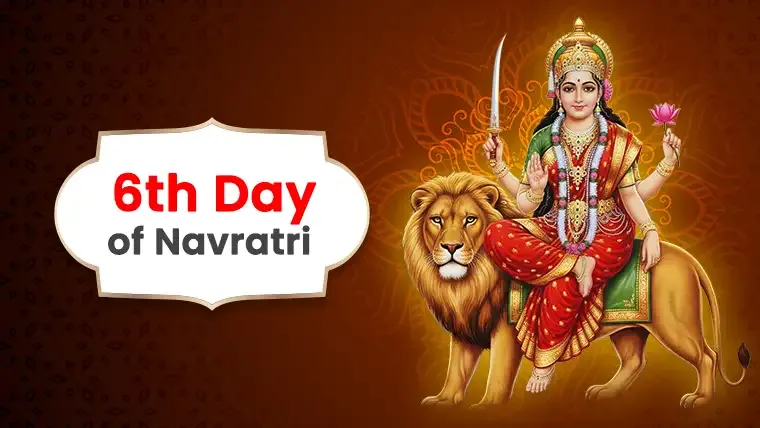
Maa Katyayani is traditionally depicted as a fierce warrior goddess riding a lion, with four arms holding a sword and lotus while her other hands are shown in protective and boon-giving gestures.
The name “Katyayani” is associated with Sage Katyayana, in whose family tradition the goddess is said to have been born. As the warrior form of Goddess Durga and the destroyer of Mahishasura, she represents courage, strength, and determination.
Maa Katyayani also holds special significance for devotees seeking blessings for marriage. In the Bhagavata Purana, the gopis of Vrindavan worshipped Katyayani with the desire to have Lord Krishna as their husband.
Puja Essentials (Samagri) for Navratri Day 6
While Ghatasthapana is performed on the first day, devotees continue worshipping the Kalash and Akhand Jyoti during the following days of Navratri along with the form of Goddess Durga worshipped that day.
Idol or picture of Maa Katyayani
Kalash and other regular Navratri puja items used during the nine days
Pooja thali with roli, kumkum, haldi, chandan, and akshat for tilak.
Fresh flowers and garlands
Ghee diya, dhoop, agarbatti (incense), and camphor for aarti.
For prasad, sweets (ladoo, malpua), fruits (coconut, pomegranate), and panchamrit.
Bell, shankh, rudraksha/tulsi mala for japa; shringar items like vermilion.
Puja Rituals for Day 6 of Navratri
The Navaratri day 6 rituals follow a structured and disciplined process similar to earlier days, with a focus on Maa Katyayani.
Morning Rituals:
Wake up early, bathe, and wear green clothes, the Navratri Day 6 color for 2026.
Clean the puja space and decorate it with flowers
Place Maa Katyayani idol or image near the Kalash
Light a ghee diya and incense, offer akshat, flowers,
Take a sankalp (resolution) to perform the 6th day of Navratri puja
Worship of Maa Katyayani:
Adorn the idol with a chunari, shringar, and vermilion.
Offer flowers, fruits, honey, and sattvik sweets as bhog according to family and regional traditions.
Chant dedicated mantras and read Katyayani Katha.
Perform aarti with bhajans praising her as Mahishasura Mardini.
Aarti, Bhajans, and Katha:
Devotees may recite Durga Aarti and sing aarti dedicated to Maa Katyayani. Reading or listening to her katha, including the story of her battle with Mahishasura, helps devotees understand the significance of the sixth day.
Families often gather for evening aarti, strengthening devotion and unity.
Navratri Day 6 Mantra
Mantra chanting is a key part of the Navratri day 6 rituals, helping devotees connect with the divine energy of Maa Katyayani.
Main Mantra:
**॥ Om Devi Katyayinyai Namah ॥ **
Color of the 6th Day of Navratri: Green
The Navratri Day 6 color is green, which represents growth, renewal, harmony, and balance.
On the 6th day of Navratri, devotees may wear green clothes, decorate the altar with green flowers, and offer green-colored sweets or fruits to Maa Katyayani. The color adds a fresh and devotional touch to Navratri worship.
Auspicious Offerings, Flowers, and Bhog on Day 6 of Navratri
Offerings on the 6th day of Navratri are made to Maa Katyayani as part of the devotional worship.
Flowers: Green leaves along with fresh flowers such as marigolds, lotus, or other flowers may be offered according to local and family traditions.
Bhog: Honey is traditionally associated with Maa Katyayani. Devotees may also offer fruits and simple sattvik sweets according to family and regional traditions.
Fasting (Vrat) Rules for the 6th Day of Navratri
The sixth day of Navratri fasting follows the same sattvik principles observed during Navratri. Depending on personal health, tradition, and family practice, devotees may consume fruits, milk, nuts, vrat-friendly grains, and other permitted foods while avoiding non-sattvik foods.
Devotees may observe a full or partial fast according to their family tradition and personal health. Those observing a vrat can stay hydrated with water, milk, or permitted beverages and follow the fasting rules they normally observe during Navratri.
Do’s and Don’ts for Navratri Day 6
Some of the key things to keep in mind.
Do’s:
Maintain a calm mindset
Chant the Navratri Day 6 mantra sincerely
Pray to Maa Katyayani with devotion and concentration
Offer honey and sattvik food
Participate in aarti and prayers
Don’ts:
Avoid anger and negative thinking
Follow your chosen vrat rules consistently.
Avoid non-vegetarian food and alcohol
Do not disturb the Kalash
Stay away from arguments and distractions
The 6th day of Navratri is dedicated to Maa Katyayani, the warrior form of Goddess Durga associated with courage, strength, and protection. Through prayer, fasting, and mantra chanting, devotees seek her blessings to overcome obstacles and strengthen their determination.
From the green color of the day to Maa Katyayani's worship, mantra, offerings, and vrat traditions, each aspect of Navratri Day 6 reflects devotion, courage, and spiritual discipline.