
Janmashtami Puja Samagri & Vidhi: How to Perform Puja at Home
Krishna Janmashtami celebrates the divine appearance of Lord Krishna. It is observed on Krishna Paksha Ashtami in the month of Bhadrapada (Bhadon), with Nishita Kaal (the midnight window) forming the core worship period.
The exact Janmashtami date and puja timings vary by location according to the local Panchang; while Rohini Nakshatra is traditionally associated with Lord Krishna’s birth, the festival is primarily based on Ashtami tithi and Nishita Kaal, with Rohini being an additional consideration in some traditions.
Moreover, having the Janmashtami puja samagri list ready beforehand ensures the ritual runs smoothly and uninterrupted.
Janmashtami Puja Samagri List
The Janmashtami puja samagri list can be as simple or elaborate as a household prefers. A basic setup of an idol or picture, water, flowers, tulsi leaves, a lamp, and bhog is enough for a meaningful puja.
Essential Items by Category
| Puja Category | Janmashtami Puja Samagri |
|---|---|
| 🛕 Deity | Bal Gopal, Laddu Gopal, or a picture of Lord Krishna |
| 🪔 Altar Setup | Chowki, clean cloth, and puja thali |
| 🥛 Abhishek | Milk, curd, ghee, honey, sugar, clean water, and Gangajal |
| 🌸 Worship | Chandan, kumkum, akshat, Tulsi leaves, and fresh flowers |
| 🔥 Lighting | Diya, ghee or oil, cotton wicks, incense sticks, and camphor |
| 🍯 Bhog & Prasad | Makhan-mishri, fruits, milk, sweets, and Panchamrit |
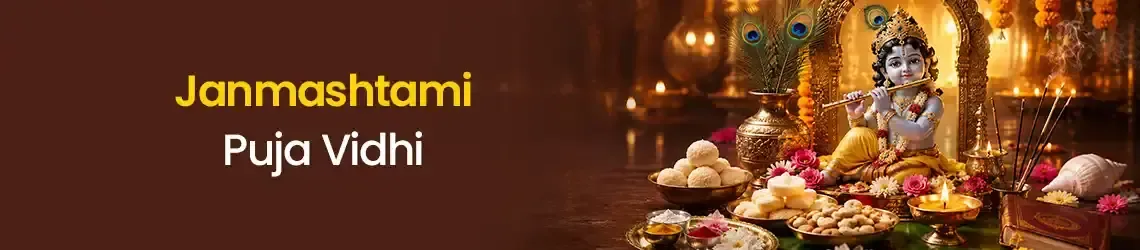
| 👑 Decoration | Cradle (jhula), new clothes, crown, flute, and peacock feather |
Lord Krishna Decoration Items
A new dhoti or outfit, a small crown, a peacock feather, a flute, a garland, a necklace, and other ornaments complete the traditional look of Bal Gopal. Soft bedding for the cradle and decorative flowers add to the arrangement. The crown, flute, peacock feather, and jewelry remain traditional but optional additions.
Panchamrit Ingredients
Panchamrit is prepared from five ingredients: milk, curd, ghee, honey, and sugar or mishri. Gangajal, rose water, and clean water for rinsing can also be kept ready as optional additions, along with small bowls or a plate to collect the abhishek liquid.
Bhog and Prasad Items
Common offerings include makhan-mishri, kheer, panjiri, fruits, dry fruits, milk, and homemade sweets. Many households avoid grains, pulses, onions, and garlic while preparing bhog during the vrat.
Preparing for Janmashtami Puja
Puja Room Cleaning
The room where the puja will occur needs cleaning, as does the idol itself, before the puja. All the things needed for the preparation are stored separately. Fresh clothes and ornaments for the idol are kept aside, and preparations for the decoration and arrangement of the place begin beforehand. The idea is to keep the whole place spotless, right from the altar where the idol rests to the food items being utilized.
Preparation for the Idol
The idol is carefully cleaned, and new dresses are then kept for it. The important thing is that the idol should preferably be placed on a clean chowki, pedestal, or puja plate rather than directly on the floor. Practices vary by household, so use what is customary and clean in your home.
Bhog Preparation
All food preparations, including Makhan-Mishri, fruits, and sweets, are prepared carefully in purified utensils, while fasting food is kept separate. No taste test occurs before offering the offerings to the lord, and everything goes through rigorous purification procedures.
Vidhi for Janmashtami Puja
Step 1: Bathing and Clean Clothes
Puja begins with a bath and the wearing of purified clothes after the heart prepares itself for worship. Thereafter,
Step 2: Lighting the Diya and Incense
The diya and incense are lit, and Gangajal is sprinkled around the puja area for purification.
Step 3: Setting up the Altar
The altar is set up with the idol or photo of Lord Krishna placed on a clean cloth, along with a kalash and the other items needed for the puja, before decoration begins.
Step 4: Taking Sankalpa for Janmashtami vrata and puja
This includes intentions regarding prosperity and happiness, among many other intentions related to peace within families. Usually, it's done by expressing one's intentions for divine grace and harmony.
Step 5: Invoking Lord Krishna
Lord Krishna is invoked into the idol with folded hands and a prayer inviting his divine presence into the puja.
Step 6: Mantra Chanting
The mantra "Om Namo Bhagavate Vasudevaya" is chanted 11, 21, or 108 times, according to preference and available time. Devotees can also recite other Janmashtami mantras as part of their worship.
Step 7: Bal Gopal Abhishek
The Abhishek may be performed with water, milk, curd, ghee, honey, Panchamrit, and clean water, according to the family's tradition.
Step 8: Dressing and Decorating Lord Krishna
Decorate the idol of Lord Krishna with new clothes, Chandan, a crown, and peacock feathers.
Step 9: Setting up Lord Krishna inside the Jhula
After the decoration, the idol is placed inside the beautifully designed jhula.
Step 10: Offering Flowers, Tulsi, and Bhog
Flowers and Tulsi leaves are offered to the deity, along with bhog such as makhan mishri, fruit offerings, milk, kheer, sweets, and panchamrit, all while chanting the name of Lord Krishna.
Step 11: Celebrating the Midnight Birth Ceremony
At Nishitha Kaal, the bell-ringing ceremony takes place, the conch shell is blown, if available, the jhula swings, and the names of Lord Krishna are chanted to mark his divine birth.
Step 12: Performing Aarti
Incense sticks, lights/diyas, and camphor aarti are offered in front of the deity while singing hymns such as Om Jai Jagdish Hare, Aarti Kunj Bihari Ki, Krishna bhajans, and Hare Krishna Mahamantra.
Step 13: Distributing Prasad and Observing Vrat/Parana
Prasad is distributed among family and devotees, and the vrat is broken through parana according to the family's tradition, usually after the midnight puja concludes.
Step 14: After the Midnight Puja
Some families continue their devotion with bhajans and quiet prayer through the night, while others rest and complete any remaining rituals, such as distributing prasad further or offering a final aarti, the following morning.
Rules of Janmashtami Vrat
All forms of fasting depend upon family tradition and sampradaya. Some popular forms are the Nirjala vrat, wherein there is no consumption of any food or drink; Jalahar vrat, wherein water can be consumed but not food items; Phalahar vrat, wherein fruit, milk, and dry fruits are permitted; and Anukalpa, wherein some selective non-cereal foods are allowed.
Commonly prohibited foods include rice, wheat, grains, dal/pulses, legumes, meat, fish, eggs, alcohol, onions, and garlic.
For kids, expectant mothers, elders, and persons with illnesses, a strict vrat may lead to health complications. A fruit, milk, or sattvic diet is advisable and comparatively safer than strict fasting rituals on this auspicious day.
Janmashtami Puja Mantras
Krishna Mantras
Om Namo Bhagavate Vasudevaya
Om Krishnaya Namah
Om Gopalaya Namah
Om Govindaya Namah
Hare Krishna Mahamantra
Krishna Shlokas
Vasudeva-sutam Devam
Patram Pushpam Phalam Toyam
The main mantra, "Om Namo Bhagavate Vasudevaya," is a salutation to Lord Vasudeva, another name for Lord Krishna.
Nishita Kaal Puja Timing
Janmashtami Puja is traditionally performed during Nishita Kaal, the midnight period considered especially significant for Krishna worship. The exact Nishita Kaal and Ashtami Tithi timings vary by location, so devotees should check their local Panchang for the correct puja and fasting timings.
Final Janmashtami Puja Checklist
Krishna idol or picture
Chowki and clean cloth
Panchamrit ingredients
Gangajal
Tulsi and flowers
Diya and incense
New clothes and decorations
Makhan-mishri and fruits
Bhog plate
Bell and camphor
Local puja and parana timing
How To Conduct A Simple Janmashtami Puja At Your Place
If you lack time or resources, the simplified process works quite efficiently for conducting your very own puja within a household setting. An idol/painting/image of Lord Krishna is kept on a chowki while lighting up the diya, followed by offering the holy river's waters, flower petals, Tulsi leaves, and Panchamrit Abhishek.
You adorn the idol after completing the abhishek and proceed ahead by performing makhan mishri offerings as well as the fruit offering ceremony at midnight. If you'd like personalized guidance or have questions about specific muhurat timings for your puja, you can always consult with verified astrologers online on Astroyogi.
A Janmashtami puja does not need to be elaborate to be meaningful. Cleanliness, sincerity, and devotion toward Lord Krishna matter far more than the number of items gathered on the altar.