

Navratri Bhog for Nine Days: Complete Prasad List
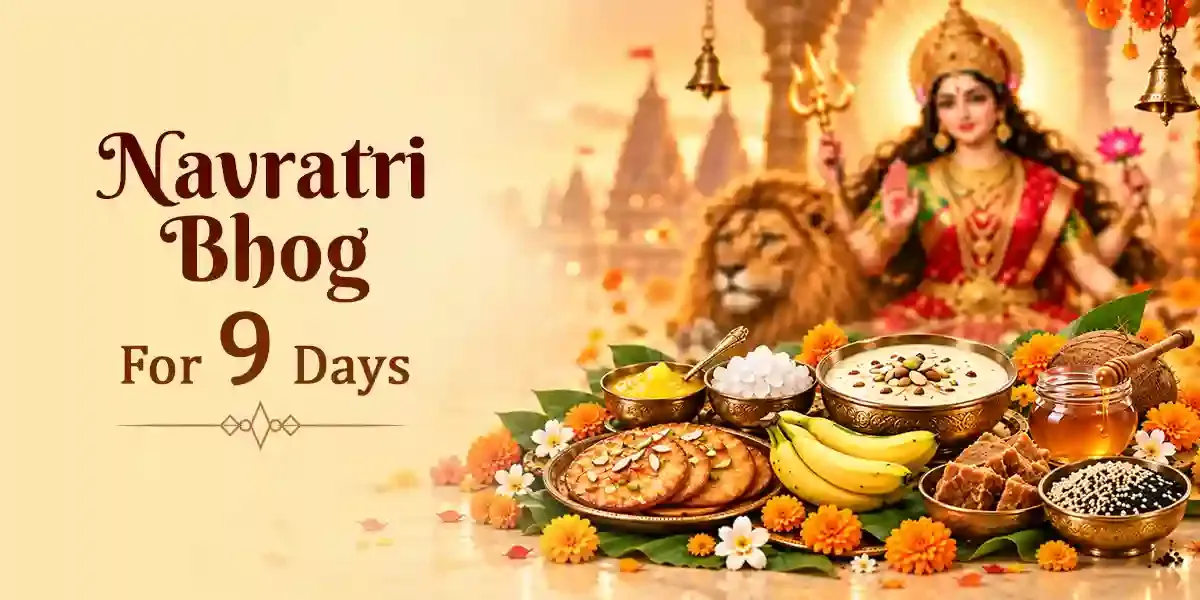
Navratri is celebrated for nine days, and each day is dedicated to a different form of Maa Durga. The bhog offered during these nine days is not the same every day. Traditional offerings include ghee, sugar, milk, jaggery, malpua, honey, banana, and coconut. But which offering is meant for which day and which form of Maa Durga?
The food offerings once offered to Maa Durga, the bhog, are considered prasad and are distributed among family members or devotees. The traditional nine-day Navratri prasad can help devotees plan daily offerings while observing family or regional customs.
Below is the Navratri prasad list for nine days, along with simple bhog, naivedyam, and daily prasadam ideas.
Navratri Bhog for Nine Days List
Day 1: Maa Shailputri- Desi Ghee
The first day of Navratri is dedicated to Maa Shailputri, who represents strength and the divine energy of the Goddess. Desi ghee is traditionally offered as bhog on this day. It can also be used to prepare ghee halwa or ladoos for the prasad.
Day 2 – Maa Brahmacharini: Sugar or Mishri
Maa Brahmacharini is worshipped on the second day and is associated with dedication, determination, and spiritual discipline. Sugar or mishri is offered as bhog, and it can be included in simple sweets or other homemade prasad.
Day 3 – Maa Chandraghanta: Kheer
The third day honours Maa Chandraghanta, a form of Maa Durga associated with courage and protection. Kheer is traditionally offered to her and can be prepared with milk, rice and sugar as a simple homemade bhog.
Day 4 – Maa Kushmanda: Malpua
Maa Kushmanda is worshipped on the fourth day of Navratri and is associated with divine energy and light. Malpua is traditionally prepared as her bhog and can be made using flour, milk and sugar.
Day 5 – Maa Skandamata: Banana
The fifth day is dedicated to Maa Skandamata, the motherly form of Maa Durga. Banana is traditionally offered as bhog and can be served as fresh fruit or incorporated into a simple banana-based sweet.
Day 6 – Maa Katyayani: Honey
Maa Katyayani is worshipped on the sixth day and represents strength and courage. Honey is traditionally offered as bhog and can also be used in simple sweet preparations.
Day 7 – Maa Kalaratri: Jaggery
The seventh day is dedicated to Maa Kalaratri, the fierce form of Maa Durga who represents the power to overcome darkness and negativity. Jaggery is offered as bhog and can be used to prepare gur halwa or til-gur ladoos.
Day 8 – Maa Mahagauri: Coconut
Maa Mahagauri is worshipped on the eighth day and is associated with purity and grace. Coconut is traditionally offered as bhog and can be used to prepare coconut ladoos, barfi or other coconut-based sweets.
Day 9 – Maa Siddhidatri: Sesame Seeds
The final day of Navratri is dedicated to Maa Siddhidatri, who is associated with spiritual attainment and divine blessings. Sesame seeds are traditionally offered as bhog and can be used to prepare til ladoos or other sesame-based prasad.
Navratri bhog and prasad traditions can vary across regions, temples, and families, so devotees should check and follow their family and local traditions.
Navratri Bhog Preparation Tips
Below are the bhog preparation tips that devotees should follow while preparing Navratri bhog:
- Always prepare the bhog using fresh ingredients, without onion and garlic.
- Use food that is specifically for bhog rather than using leftover food items.
- Avoid consuming non-vegetarian food during Navratri as part of the traditional practices followed during the festival.
- Keep the food preparation clean and hygienic.
- If you are making bhog to eat in a vrat, use ingredients that are allowed in Navratri fasting.
- Keep the prepared bhog covered until it is offered.
- Offer the food first to Maa Durga and then distribute it as prasad.
Conclusion
Navratri bhog is connected with traditions followed during the nine days of worship. These food offerings have been part of Navratri traditions for generations and continue in different ways across households. While the traditional practices may vary from one region or family to another, they remain an important part of the festival. Following these traditions allows devotees to bring the cultural and devotional aspects of Navratri into their daily celebrations. The Navratri prasad list can serve as a useful reference while planning the offerings for the festival.
Team Astroyogi is an experienced in-house editorial team of passionate writers, researchers, and astrology enthusiasts dedicated to making ancient divination sciences more accessible and meaningful in everyday life. With years of collective experience in creating insightful astrology and spirituality content, the team specializes in simplifying complex spiritual concepts into practical guidance for readers seeking clarity, balance, and personal growth. The Astroyogi editorial team possesses expertise across a wide range of subjects, including Indian Astrology, Vedic Astrology, Planetary Transits, Horoscope Analysis, Vastu Shastra, Numerology, Tarot, Spiritual Wellness, and Ritual Practices. Every piece of content is carefully researched, fact-checked, and crafted with the intention of offering reliable, insightful, and easy-to-understand guidance rooted in traditional wisdom. Driven by a commitment to authenticity and reader trust, Team Astroyogi strives to create content that empowers individuals to navigate life’s opportunities and challenges with confidence, positivity, and inner peace. Their mission is to bridge ancient astrological knowledge with modern-day relevance, helping readers make informed decisions and lead more harmonious lives.