

Janmashtami Vrat Vidhi: Rules, Foods to Eat And Avoid
Janmashtami is one of the major festivals observed by Hindus, marking the birth anniversary of Lord Krishna, the eighth incarnation of Lord Vishnu. Millions of devotees across India and around the globe fast on this day as a token of their devotion and dedication.
Want to know how to fast properly on Janmashtami? Well, the good thing is that the procedure of doing it, although traditional, is not difficult once you know the basics about it.
Why Do We Observe Fast on Janmashtami?
The reason for observing a fast on Janmashtami is that, according to legend, Lord Krishna was born at midnight on the Ashtami tithi during the Krishna Paksha of the Bhadrapada month. Devotion, discipline, and thankfulness to Lord Krishna are symbolized by fasting on Janmashtami.
No doubt it is an act of abstaining from food; however, the basic principle is to purify one's body and mind so one can spend the day praying and meditating on the teachings of Lord Krishna without being distracted by other mundane matters.
Fasting on this particular day, in the name of devotion, is considered a means of building spirituality within oneself, fulfilling any wish, receiving the blessings of Lord Krishna for guidance, and removing obstacles from one's life path.
Types of Janmashtami Fast
Before getting into how to observe the fast, it helps to know there's more than one way to do it. Which one you choose usually depends on your health, age, and family tradition.
Nirjala Vrat: No food and no water from sunrise until the fast is broken at midnight or the next morning. This is the strictest form and is generally recommended only for those in good health.
Phalahar Vrat: Only fasting-friendly foods are eaten, such as fruits, milk products, sabudana, and samak rice, along with sendha namak instead of regular salt.
Partial or One-Meal Vrat: A single light and sattvic meal is eaten either before sunrise or before noon, followed by fasting until midnight.
Note: Children, elderly individuals, pregnant or nursing women, and people with medical conditions should avoid the strict nirjala method. It's worth checking with a doctor before choosing a fasting style that suits your own health needs.
Rules of Janmashtami Fast
Janmashtami fasting rituals are meant to make sure that there is nothing but the utmost positivity surrounding the birth of our dear lord, which makes the festival 'Sattvic' in every way. Everything around needs to be sattvic, both internally and externally, physically and spiritually.
To-do list:
Fasting starts from sunrise to midnight, depending upon your sankalp (intention).
Bathing and wearing fresh clothing, preferably yellow and white.
Mantra chanting, such as Om Namo Bhagavate Vasudevaya or the Hare Krishna Mahamantra.
Reading Krishna Leelas throughout the day and singing some bhajans.
Offering panchamrit and simple offerings to Lord Krishna at puja ceremonies.
Helpful acts of kindness and donations towards someone needy in any form of food or dress if you can manage it. Not obligatory, but highly recommended.
To avoid:
All kinds of grain cereals, including wheat, rice, corn, oats, and barley.
Pulses and dals, including lentils and beans of all varieties, like masoor, urad, chana, etc.
Non-vegetarian items like meat, onions, garlic, eggs, liquor, drugs, tobacco, etc.
Table salt should be substituted with Sendha namak during Phalahar.
Janmashtami Vrat Vidhi: Step-by-Step Procedure
Fasting correctly during Janmashtami requires an appropriate schedule, from the day before the fast to midnight the very next day.
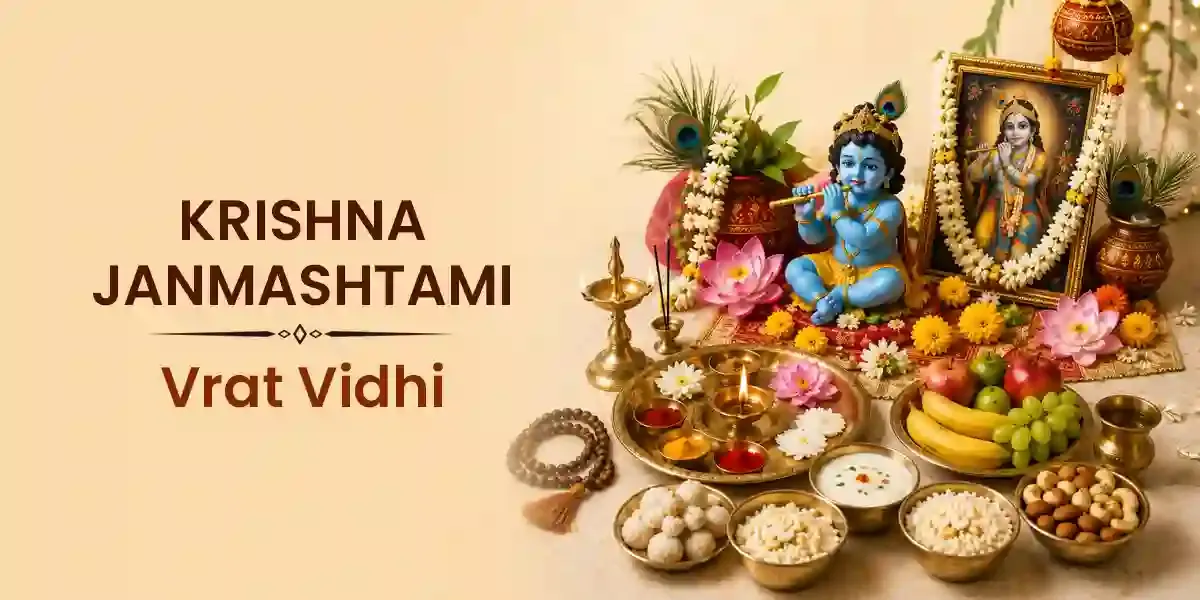
The previous evening: It is necessary to eat earlier that night, with light tamasic food being strictly avoided for the next day. It would be wise to prepare all puja requirements beforehand, such as a picture or idol of Lord Krishna, some swings, flowers, incense, lamps, and all panchamrit preparations.
Janmashtami Morning: Start your day by waking up during Brahma muhurat; bathe in fresh, clean attire; and pledge with sankalp to fast for the day, either ending after midnight or in the morning the next day.
Puja preparations: Cleanliness in the puja area, followed by decorating and even adorning the idol with flowers and burning incense and oil lamps.
Devotion: All day long, devotees sing mantras to Lord Krishna and Lord Vishnu; several devotees even read about the stories of Krishna Leela and perform bhajans.
Nirjala fasting: Those observing Nirjala fast abstain from eating or drinking anything for the entire period, whereas people observing phalahar fasting consume only fruits and milk-based products, such as sabudana.
Nishita Kaal Puja (midnight): The climax of this festival, where the actual hour of birth of Lord Krishna falls. Decorate the idol again with flowers, light incense and lamps, and offer bhog consisting of panchamrit, makhan, fruits, and desserts.
Next morning: Some families, particularly those following Vaishnava tradition, extend the fast and break it only after sunrise the following day.
What to Eat in Janmashtami Fast
A common question is what's actually allowed during a phalahar vrat, as opposed to a nirjala one. Here's what you can eat:
Fruits: All fresh fruits such as banana, apple, papaya, pomegranate, mango, and grapes.
Dairy products: Milk, curd, paneer, fresh cream, butter, ghee, and lassi.
Vrat-friendly starches: Sabudana, samak rice, and, in many traditions, kuttu or rajgira flour.
Vegetables: Potato, sweet potato, raw banana, pumpkin, bottle gourd, cucumber, tomato, and spinach.
Nuts and dry fruits: Almonds, cashews, raisins, dates, and walnuts.
Salt and spices: Sendha namak in moderation, along with black pepper, cumin, coriander powder, and lemon.
Astroyogi Tip: Popular dishes made during the fast include sabudana khichdi, sabudana kheer, samak rice khichdi, kuttu or rajgira paratha with potato stuffing, curd with fruit, and roasted makhana with sendha namak and black pepper.
Breaking Fast During Janmashtami
Learning how to break the Janmashtami fast, which might also be called ending the Janmashtami fast, is equally significant as observing the fast perfectly.
In general, the majority of devotees tend to break the fast immediately after performing aarti at midnight, when Lord Krishna was born. However, some devout followers strictly adhere to Vaishnava traditions and break their fasts after sunrise.
Steps involved in Parana
Prasad, particularly Panchamrit containing milk, curd, honey, ghee, and sugar, along with basic bhog like fruit and makhan, is offered to Lord Krishna.
The first mouthful of the prasad must be consumed post-fast.
This is followed by having anything light and soothing. Milk, lassi, fruits, sabudana kheer, etc., can be chosen as starters.
After waiting for fifteen to thirty minutes, a light, sattvic diet including sabudana khichri or kuttu roti and one vegetable can be eaten.
Note: It should be kept in mind that nothing heavy or deep-fried should be eaten right after fasting is done. It is strongly recommended that one start with water or milk, then have light prasad, and finally have food after a while.
Common Janmashtami Fast FAQs
1. What can be eaten during Janmashtami fast?
During the Janmashtami fast, suitable foods include fresh fruits, dairy (curd, lassi, paneer, milk), sabudana dishes (khichdi, kheer, vada), samak rice, kuttu/rajgira flour, potatoes, roasted makhana, dry fruits, select vegetables, and sendha namak (rock salt). Avoid grains, pulses, onion, garlic, and regular table salt.
2. Can water be consumed during Janmashtami fast?
Water is not permitted during a nirjala vrat, which is a fast observed without any liquids. During a phalahar vrat, water and coconut water are both acceptable and help with hydration throughout the day.
3. Can milk be consumed during Janmashtami fast?
Milk and milk-based items are allowed during phalahar. This includes curd, lassi, and paneer, all of which are commonly used in fasting recipes.
4. Is salt allowed during Janmashtami fast?
Regular table salt is avoided during the fast. Sendha namak, or rock salt, is the accepted substitute and remains the standard choice for seasoning phalahar dishes, though it should still be used in moderation.
5. Can tea or coffee be consumed during Janmashtami fast? Strict fasting tradition generally avoids both tea and coffee. In households where family custom permits it, the drink should be kept simple, made only with milk and a small amount of sugar, without regular salt or other additives.
6. Can you sleep during Janmashtami fast?
Yes, devotees can sleep during the Janmashtami fast, although many choose to stay awake at night for prayers and Krishna Janmashtami celebrations.
7. Can you eat chocolate during Janmashtami fast?
Chocolate is generally avoided during the Janmashtami fast, especially during a strict vrat, as its ingredients may not be considered suitable for fasting.
Final Thoughts
Fasting on Janmashtami is ultimately about devotion, discipline, and celebrating Lord Krishna's birth with a calm, focused mind. Whether the choice is a strict nirjala vrat or a more manageable phalahar vrat, following the rules of the Janmashtami fast with sincerity matters far more than the intensity of the restrictions themselves.
From the morning sankalp to the midnight aarti and the final parana, each step of the Janmashtami vrat vidhi is designed to bring devotees closer to Lord Krishna through prayer, patience, and gratitude.
Team Astroyogi is an experienced in-house editorial team of passionate writers, researchers, and astrology enthusiasts dedicated to making ancient divination sciences more accessible and meaningful in everyday life. With years of collective experience in creating insightful astrology and spirituality content, the team specializes in simplifying complex spiritual concepts into practical guidance for readers seeking clarity, balance, and personal growth. The Astroyogi editorial team possesses expertise across a wide range of subjects, including Indian Astrology, Vedic Astrology, Planetary Transits, Horoscope Analysis, Vastu Shastra, Numerology, Tarot, Spiritual Wellness, and Ritual Practices. Every piece of content is carefully researched, fact-checked, and crafted with the intention of offering reliable, insightful, and easy-to-understand guidance rooted in traditional wisdom. Driven by a commitment to authenticity and reader trust, Team Astroyogi strives to create content that empowers individuals to navigate life’s opportunities and challenges with confidence, positivity, and inner peace. Their mission is to bridge ancient astrological knowledge with modern-day relevance, helping readers make informed decisions and lead more harmonious lives.