

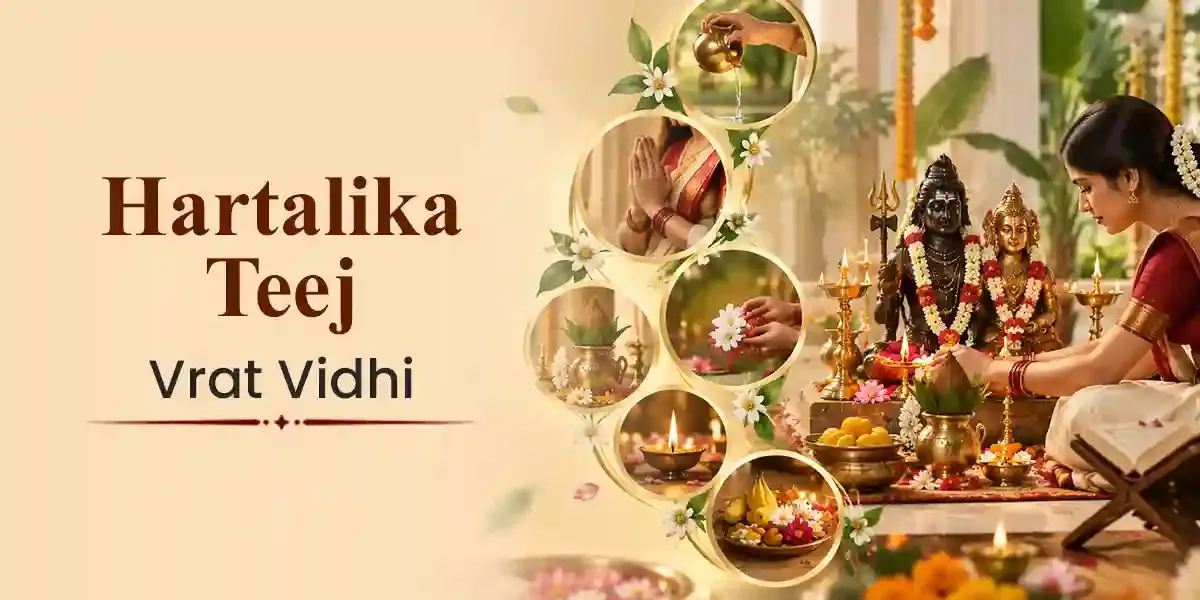

Hartalika Teej Vrat Vidhi: Puja Samagri, Rules & Rituals
Hartalika Teej is a significant Hindu festival that is celebrated with devotion to Lord Shiva and Goddess Parvati as one. It falls on Monday, 14 September, on the Tritiya Tithi of Shukla Paksha in the Bhadrapada month; the celebration is characterized by prayers, fasting, and customs.
Married women follow this fast for the marital happiness and prosperity of their husband, whereas unmarried ones keep it to pray for a good husband.
On this day, devotees fast and listen to Hartalika Teej vrat katha. If you too are going to observe the fast, then here is everything you need to know about the puja rituals, samagri, fasting rules, and significance of Hartalika Teej.
Hartalika Teej Puja Samagri List
It is better to arrange all the required puja items before starting the puja, as it will help in doing rituals peacefully without taking a pause in between. Here is a commonly followed Hartalika Teej puja samagri list:
| Puja Samagri | Used For |
|---|---|
| Idols of Lord Shiva and Goddess Parvati | Main gods worshipped during the puja |
| Clay or sand | Traditionally used to make Shiva-Parvati idols |
| Bel Patra | Offered to Lord Shiva |
| Durva grass | Used as a traditional offering |
| Flowers and Garlands | Used for worship and decoration |
| Fruits and Sweets | Offered as bhog |
| Kumkum, sindoor, turmeric, and akshat | Important traditional offerings |
| Bangles and shringar items | Offered to Goddess Parvati |
| Kalash and coconut | Used for Kalash Sthapana |
| Betel leaves and betel nuts | Traditional puja offerings |
| Diya and incense | Used during worship |
| Panchamrit | Used for traditional abhishekam |
| Red or yellow cloth | For puja space decoration |
These pooja items may differ based on regional traditions and family customs. Follow the practices according to your traditions.
Hartalika Teej Puja Vidhi at Home
If you are also thinking about how to do Hartalika pooja at home, you can follow these simple preparations.
Clean and prepare the Puja area:
Start by cleaning the place where you want to perform the puja, then decorate it with rangoli and place a clean chowki covered with a fresh red or yellow cloth.
Place the idols of Shiva and Parvati:
Using clay or sand, make the idols of Lord Shiva and Goddess Parvati and place them respectfully on the prepared chowki.
Perform Kalash Sthapana:
Prepare a kalash filled with water and place the required leaves and coconut on it according to your family’s customs.
Begin the worship:
Light a diya and incense before beginning the puja, and first worship Lord Ganesha, then offer akshat, kumkum, flowers, and other items of puja. Further, offer Bel Patra and flowers to Lord Shiva, and offer sindoor, bangles, and other shringar items to Goddess Parvati. In the end, offer fruits and sweets as bhog.
Listen to the Vrat Katha:
Reading or listening to the Hartalika Teej Vrat Katha is an important part of the puja. You may also chant Shiva-Parvati mantras or offer prayers during the puja.
After this, you may finish the Hartalika Teej pooja vidhi by performing the Aarti and praying to Lord Shiva and Goddess Parvati for their blessings.
Hartalika Teej Fast Rules
The Hartalika Teej fast rules traditionally involve observing a nirjala vrat, along with worshipping Lord Shiva and Goddess Parvati with devotion. However, the exact fasting practices may vary depending on family traditions and individual circumstances.
Below are some important things that you can keep in mind:
- Traditionally, devotees observe a nirjala fast without drinking water.
- Spend the day in prayer and worship.
- Listen to or recite the Hartalika Teej Vrat Katha.
- Maintain cleanliness and a peaceful mindset throughout the day.
- Follow the puja and fasting traditions and practices in your family.
- Avoid forcing yourself to observe a strict fast if it affects your well-being.
What Can We Eat during the Hartalika Fast?
You're probably wondering what to eat during the Hartalika fast as well. The question has an answer depending on your kind of vrat. In a strict nirjala vrat, no food or water is allowed, but in a modified fast, water and some other food items may be included, such as fruits, milk, or other vrat-friendly foods based on family traditions.
It is best to follow the customs practiced in your family while keeping your individual circumstances in mind.
Conclusion
Hartalika Teej is a grand festival for faith, fasting, worship, and traditional rituals. For devotees, observing the Hartalika Teej vrat vidhi provides them with a meaningful way to worship Lord Shiva and Goddess Parvati.
Though the rites and fasting rituals may vary by region and even more by family, what remains unchanged is the purity of spirit of the festivity, an honest devotion, and faith.
You can either stick to a strict nirjala vrat or slightly modify the fast according to your situation; just remember that sincerely celebrating Hartalika Teej while keeping its traditions in mind will go on to make this auspicious day more memorable and spiritually rewarding.
Talk to Astrologers
View All




Team Astroyogi is an experienced in-house editorial team of passionate writers, researchers, and astrology enthusiasts dedicated to making ancient divination sciences more accessible and meaningful in everyday life. With years of collective experience in creating insightful astrology and spirituality content, the team specializes in simplifying complex spiritual concepts into practical guidance for readers seeking clarity, balance, and personal growth. The Astroyogi editorial team possesses expertise across a wide range of subjects, including Indian Astrology, Vedic Astrology, Planetary Transits, Horoscope Analysis, Vastu Shastra, Numerology, Tarot, Spiritual Wellness, and Ritual Practices. Every piece of content is carefully researched, fact-checked, and crafted with the intention of offering reliable, insightful, and easy-to-understand guidance rooted in traditional wisdom. Driven by a commitment to authenticity and reader trust, Team Astroyogi strives to create content that empowers individuals to navigate life’s opportunities and challenges with confidence, positivity, and inner peace. Their mission is to bridge ancient astrological knowledge with modern-day relevance, helping readers make informed decisions and lead more harmonious lives.