

Bhai Dooj vs Raksha Bandhan: Differences, Rituals And Significance
Raksha Bandhan and Bhai Dooj both celebrate the brother-sister bond, and both are widely observed across Indian households, yet the difference between Bhai Dooj and Raksha Bandhan goes far beyond just the calendar gap between them.
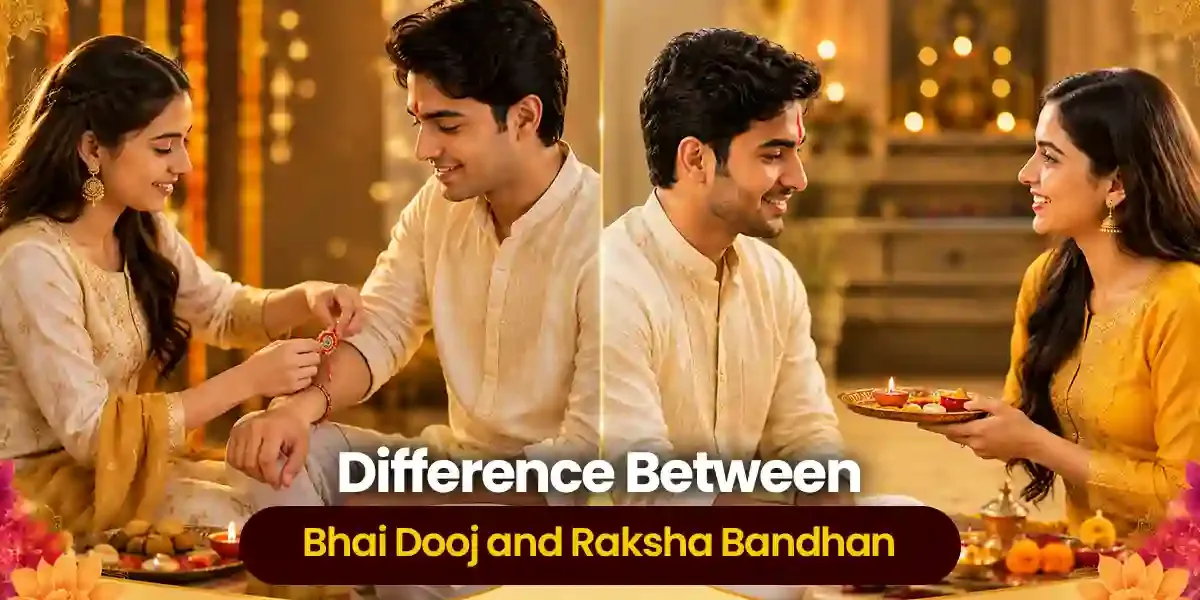
Raksha Bandhan is about a brother's vow of protection, marked by a rakhi tied on the wrist. Bhai Dooj is about a sister's blessing for her brother's long life, marked by a tilak on the forehead.
The two festivals fall in different months, follow different tithis, rest on different mythological stories, and carry different astrological significance, even though the underlying sentiment of sibling love stays the same.
Core Differences between Bhai Dooj and Raksha Bandhan
The difference between Raksha Bandhan and Bhai Dooj is easiest to see through timing, ritual, and symbolism.
| Aspect | Raksha Bandhan | Bhai Dooj |
|---|---|---|
| 📅 Hindu Calendar Date | Shravan Shukla Purnima (Full Moon) | Kartik Shukla Dwitiya (2nd day after Diwali) |
| 🗓️ Gregorian Period | Typically August, monsoon season | October or November |
| 🎀 Central Ritual | Rakhi tied on brother's wrist | Tilak applied on brother's forehead |
| 🛡️ Core Symbolism | Brother's pledge to protect sister | Sister's prayer for brother's long life |
| 🛕 Key Deities in Lore | Lord Krishna, Goddess Draupadi, Goddess Lakshmi, Lord Bali | God Yamraj, Goddess Yamuna, Lord Krishna, Goddess Subhadra |
| 🌸 Other Names | Rakhi, Raksha Bandhan | Bhai Dooj, Bhau Beej, Yama Dwitiya |
Ritual Differences between Raksha Bandhan and Bhai Dooj
On Raksha Bandhan, the sister ties a rakhi on the brother's right wrist, often with a small tilak, an aarti, and sweets fed by hand. The brother gives gifts and promises, in words or in spirit, to protect her through the year. The rakhi acts as a visible symbol of that guardianship, almost like a badge the brother carries with him.
On Bhai Dooj, the sister applies a tilak on the brother's forehead using roli or kumkum and rice, performs an aarti, and offers a special meal prepared just for the occasion. Her prayers focus on his long life and prosperity rather than protection. The brother gives gifts in return, but there is no rakhi involved anywhere in the Bhai Dooj ceremony.
In short: Raksha Bandhan means a wrist thread and a protection vow. Bhai Dooj means a forehead tilak and a longevity blessing.
Want to ensure you perform these sacred rituals at the most auspicious times? Consult verified astrologers on Astroyogi for personalized muhurat timings and ritual guidance for your sibling’s well-being.
Mythological Lore Behind Each Festival
Raksha Bandhan:
When Lord Krishna injured his finger, Goddess Draupadi tore a strip from her saree and tied it around the wound to stop the bleeding. Touched by her care, Lord Krishna vowed to protect her whenever she needed him, a story widely seen as the spiritual origin of the rakhi as a protection thread.
In another tale, Goddess Lakshmi tied a rakhi to King Bali to free Lord Vishnu, who had taken the form of God Vamana, from his service to Bali. Moved by the gesture, Lord Bali honored the bond and granted her wish. Both stories tie the festival firmly to a wrist thread and a spoken promise of protection.
Bhai Dooj:
Goddess Yamuna, sister of Lord Yamraj, longed to see her brother after a long separation, and on Kartik Shukla Dwitiya, Lord Yamraj finally visited her. She welcomed him with a tilak, an aarti, and a warm meal. Pleased by her devotion, Lord Yamraj declared that any brother who receives a tilak from his sister on this day would be blessed with a long life, which is exactly why the festival is also called Yama Dwitiya.
In another story, Lord Krishna visited his sister Goddess Subhadra after defeating the demon Narakasura, and she welcomed him home with sweets and a tilak on his forehead. These stories explain why Bhai Dooj centers on a forehead tilak and a focus on longevity rather than protection.
Astrological Differences between Raksha Bandhan and Bhai Dooj
Raksha Bandhan falls on Shravan Shukla Purnima, the full moon of Shravan. Bhai Dooj falls on Kartik Shukla Dwitiya, the second lunar day of Kartik. These are different tithis in different months, so the two festivals never coincide.
Shravan, a monsoon month, is linked to deities like Lord Shiva and Lord Vishnu, and its full moon suits vows and protective rites, matching the Raksha Bandhan theme. Kartik, arriving after Diwali, is considered highly auspicious for longevity and family blessings, and Dwitiya is tied to God Yama's rites for a long life, matching the Bhai Dooj theme.
Because the tithis and months differ, the muhurat for each festival is calculated separately every year through the panchang, and this astrological separation is part of what keeps their purposes distinct: the full moon of Shravan for a protection vow and Dwitiya of Kartik for a longevity blessing.
Why Two Sibling Festivals Exist
The two festivals cover different sides of the same relationship. Raksha Bandhan, in the monsoon, says "protection." Bhai Dooj, after Diwali, says "long life and prosperity." Different myths and different astrological timings support each one, which is why both are observed rather than combined into a single occasion.
Overall, the difference between Bhai Dooj and Raksha Bandhan comes down to date, ritual, mythology, and astrology, even though both festivals honor the same lasting bond between brothers and sisters.
Team Astroyogi is an experienced in-house editorial team of passionate writers, researchers, and astrology enthusiasts dedicated to making ancient divination sciences more accessible and meaningful in everyday life. With years of collective experience in creating insightful astrology and spirituality content, the team specializes in simplifying complex spiritual concepts into practical guidance for readers seeking clarity, balance, and personal growth. The Astroyogi editorial team possesses expertise across a wide range of subjects, including Indian Astrology, Vedic Astrology, Planetary Transits, Horoscope Analysis, Vastu Shastra, Numerology, Tarot, Spiritual Wellness, and Ritual Practices. Every piece of content is carefully researched, fact-checked, and crafted with the intention of offering reliable, insightful, and easy-to-understand guidance rooted in traditional wisdom. Driven by a commitment to authenticity and reader trust, Team Astroyogi strives to create content that empowers individuals to navigate life’s opportunities and challenges with confidence, positivity, and inner peace. Their mission is to bridge ancient astrological knowledge with modern-day relevance, helping readers make informed decisions and lead more harmonious lives.