
Vaibhav Laxmi Vrat Katha: The Story of Sheela and Goddess Lakshmi
Goddess Lakshmi is worshipped as the Goddess of wealth, prosperity, happiness, and good fortune. Among her different forms, Vaibhav Lakshmi represents abundance, well-being, and prosperity in family life. Devotees observe Vaibhav Lakshmi Vrat, especially on Fridays, to seek the blessings of Maa Lakshmi and invite peace and harmony into their homes.
The Vaibhav Lakshmi Vrat Katha tells the story of a devoted woman named Sheela, whose faith in Goddess Lakshmi helps her overcome difficult circumstances with patience and hope. Reading or listening to this katha is an important part of the Friday vrat.
The Story of Sheela and Goddess Vaibhav Lakshmi
Once upon a time, there lived a woman named Sheela in a town with her husband. Sheela was kind-hearted, religious, and content with what she had. She offered prayers every day and believed in helping those in need. Her husband was also a hardworking and responsible man, and the couple lived a happy life together.
However, things began to change when Sheela's husband fell into bad company. He started spending time with people who encouraged gambling and other harmful habits. Gradually, he lost his earnings, and the family's financial condition began to deteriorate. Their household became filled with worries, and disagreements between the couple became more frequent.
Despite these difficulties, Sheela did not lose hope. She continued praying to God and wished for happiness and peace in her family.
One day, an elderly woman with a peaceful and radiant appearance passed by Sheela's house. Sheela respectfully welcomed her inside and offered her a place to sit. Noticing Sheela's sadness, the elderly woman asked her what was troubling her.
Sheela shared all her problems and explained how her husband's habits had affected their family life. After listening to her patiently, the elderly woman advised her to observe the Vaibhav Lakshmi Vrat dedicated to Goddess Lakshmi.
The elderly woman explained that this vrat is traditionally observed on Fridays. Devotees can take a vow to observe it for 11 or 21 Fridays with faith and devotion. On the day of the vrat, one should wake up early, take a bath, wear clean clothes, and remember Goddess Lakshmi throughout the day.
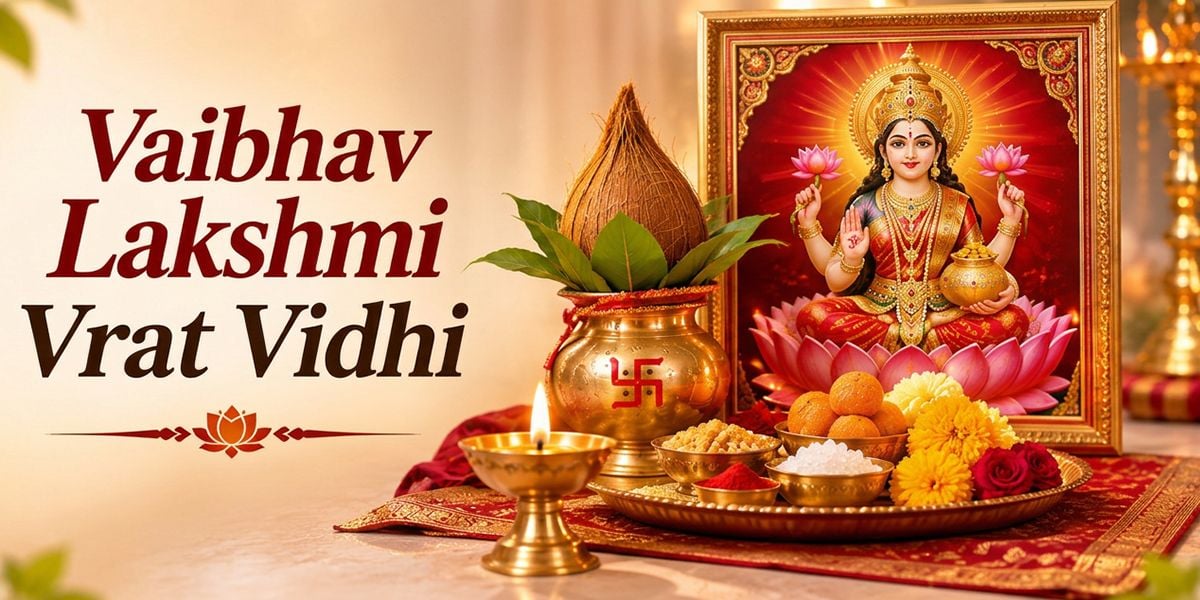
In the evening, devotees should prepare a clean place for worship and spread a red cloth over a wooden platform. An idol or picture of Goddess Lakshmi and a Shri Yantra should be placed on it. A kalash filled with water can be placed over a small mound of rice, with a small bowl containing a gold or silver ornament or coin placed on top.
The elderly woman further explained that devotees should light a diya, offer flowers, kumkum, and sweets to the Goddess, and read the Vaibhav Lakshmi Vrat Katha. The puja should conclude with Lakshmi Aarti and the distribution of prasad.
She also advised Sheela to perform the udyapan after completing the prescribed number of Fridays. As part of the traditional concluding ritual, seven married women should be invited, offered kumkum, and given copies of the Vaibhav Lakshmi Vrat Katha.
After explaining the vrat and its rituals, the elderly woman blessed Sheela and left.
Sheela Observes Vaibhav Lakshmi Vrat
From the following Friday, Sheela began observing the Vaibhav Lakshmi Vrat with complete faith. Her family's financial condition was still difficult, and she no longer had any gold or silver ornaments left. However, she did not let her circumstances weaken her devotion.
She cleaned her nose pin, which was one of her few remaining possessions, and placed it before Goddess Lakshmi during the puja. She followed the instructions given by the elderly woman, recited the Vaibhav Lakshmi Vrat Katha, and offered prasad to her husband after completing the prayers.
According to the traditional story, after accepting the prasad, her husband's behavior gradually began to change. He decided to leave his bad company and return to honest work. With time, his efforts started bringing better results, and the family's financial condition improved.
Peace and happiness gradually returned to their home. Sheela and her husband began living together with love and mutual respect, just as they had before.
Sheela continued to worship Goddess Vaibhav Lakshmi with the same devotion and observed the Friday vrat regularly.
Sheela Performs the Udyapan
After completing 21 Fridays of the vrat, Sheela performed the udyapan on the final Friday with devotion and according to the traditional customs.
She prepared a special offering of kheer and coconut for Goddess Lakshmi and invited seven married women to her home. She welcomed them, applied kumkum to their foreheads, and gifted each woman a copy of the Vaibhav Lakshmi Vrat Katha.
Sheela wanted other women to learn about the vrat and experience the joy of worshipping Goddess Lakshmi.
According to the traditional katha, Sheela's devotion and faith brought happiness and harmony back into her family. The story reminds devotees that Goddess Lakshmi's blessings are sought through sincere prayers, patience, and good deeds.
Significance of Vaibhav Lakshmi Vrat Katha
Vaibhav Lakshmi Vrat holds a special place in Hindu traditions. Devotees primarily observe it on Fridays, which are considered auspicious for worshipping Goddess Lakshmi.
Moreover, Vaibhav Lakshmi Vrat Katha highlights the importance of faith, patience, and devotion during challenging times. Through Sheela's story, devotees are reminded not to lose hope when life becomes difficult and to continue following the path of honesty and good actions.
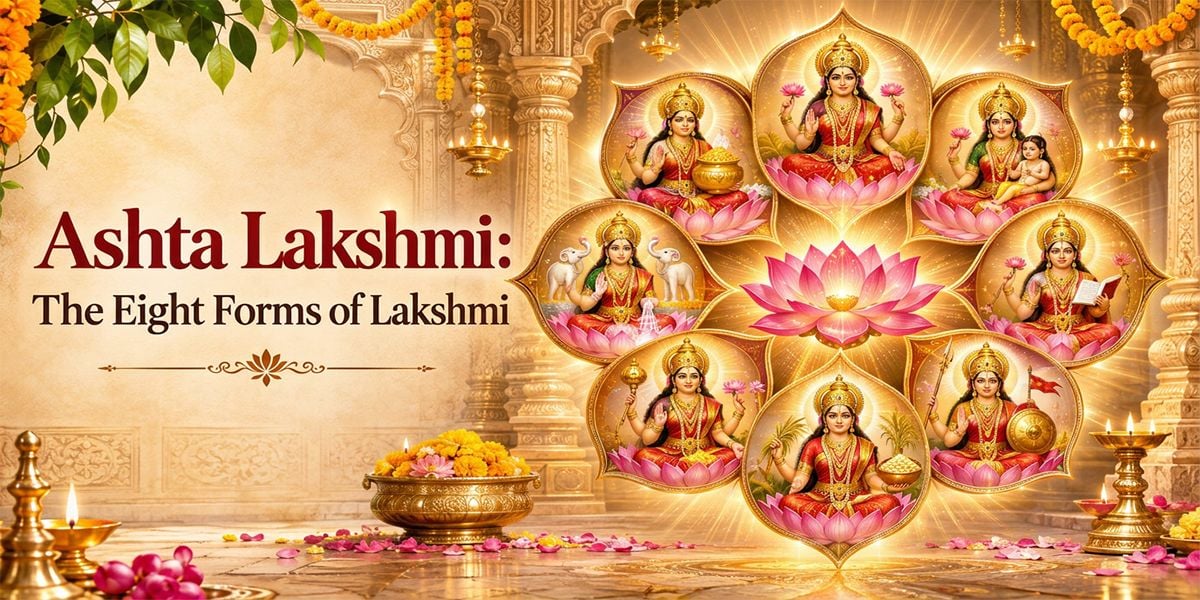
Goddess Vaibhav Lakshmi is also worshipped in her eight forms, each representing a different aspect of prosperity and well-being:
Adi Lakshmi: Represents spiritual wealth, peace, and divine blessings.
Dhana Lakshmi: Symbolizes financial prosperity and material wealth.
Dhanya Lakshmi: Represents food, nourishment, and abundance.
Gaja Lakshmi: Symbolizes royalty, dignity, and prosperity.
Santana Lakshmi: Represents the well-being and happiness of children and family.
Veera Lakshmi: Symbolizes courage, strength, and confidence.
Vijaya Lakshmi: Represents success, achievement, and victory.
Vidya Lakshmi: Symbolizes education, knowledge, and wisdom.
How to Perform Vaibhav Lakshmi Vrat?
Devotees generally follow these traditional steps while observing the Friday vrat:
Wake up early, bathe, and wear clean clothes.
Clean the worship area and place an idol or picture of Goddess Lakshmi on a clean platform.
Keep flowers, kumkum, rice, sweets, incense sticks, a diya, and other required offerings ready.
Observe the Vrat and remember Goddess Lakshmi throughout the day.
Light a diya, offer flowers and sweets, and worship Goddess Lakshmi with devotion.
Recite or listen to the Vaibhav Lakshmi Vrat Katha as part of the puja.
Conclude the worship with Lakshmi Aarti and distribute prasad among family members.
Final Words
The Vaibhav Lakshmi Vrat Katha reminds devotees of the importance of faith, patience, and devotion during challenging times. Sheela's story teaches us to remain hopeful, follow the path of honesty, and keep our faith alive even when circumstances are difficult.
Reading this katha every Friday as part of the vrat is a beautiful way to worship Goddess Lakshmi and seek her blessings. May Maa Vaibhav Lakshmi bless every home with prosperity, happiness, and harmony.