
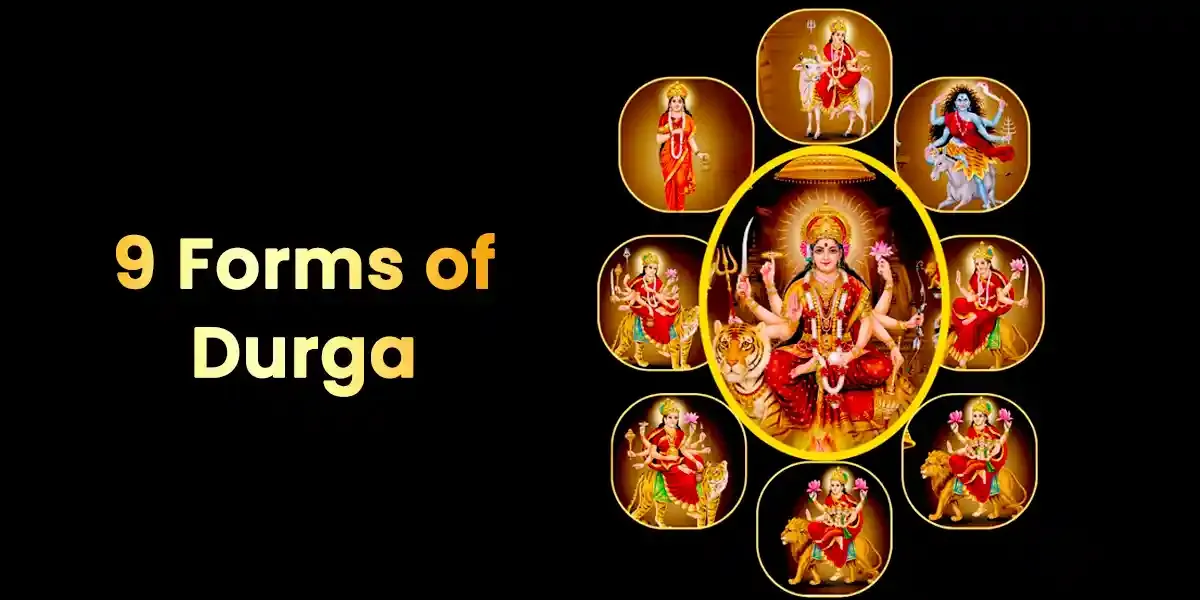

9 Days of Navratri Devi Names: All 9 Forms of Maa Durga
The 9 days of Navratri Devi names start with Maa Shailputri and end with Maa Siddhidatri. These nine forms of Goddess Durga are collectively known as Navadurga. Each form has a different story, appearance, and significance in Hindu mythology. Knowing the names of Navratri Devi in the correct order helps devotees understand which form of Maa Durga is worshipped on each day of the festival.
Nine Forms of Maa Durga: Names and Significance
1. Maa Shailputri – First Day of Navratri
Maa Shailputri is the first of the 9 Devi of Navratri. Her name means "daughter of the mountains," as she is believed to be the daughter of the Himalayas. She is also associated with the rebirth of Goddess Sati as Goddess Parvati.
Maa Shailputri is shown riding a bull named Nandi, with a trident in one hand and a lotus in the other. Her story is associated with strength, purity, and devotion. On the first day of Navratri, devotees begin their prayers by seeking her blessings.
2. Maa Brahmacharini – Second Day of Navratri
Maa Brahmacharini is worshipped on the second day of Navratri. This form of Goddess Parvati represents devotion, discipline, and penance. According to Hindu mythology, she performed intense penance to marry Lord Shiva.
She is usually depicted walking barefoot, holding a jap mala in one hand and a kamandalu in the other. Unlike the warrior forms of Maa Durga, Maa Brahmacharini has a simple appearance that reflects her dedication and self-control. Her story reminds devotees of the importance of patience and determination.
3. Maa Chandraghanta – Third Day of Navratri
Maa Chandraghanta gets her name from the crescent moon shaped like a bell on her forehead. She is worshipped on the third day of Navratri and is known for her warrior form.
She is traditionally depicted riding a tiger or lion, with ten hands carrying different weapons and sacred objects. Her fierce appearance symbolizes courage and readiness to fight evil forces. Maa Chandraghanta is worshipped for protection and the strength to face challenges.
4. Maa Kushmanda – Fourth Day of Navratri
Maa Kushmanda is the fourth Navratri Devi name in the traditional sequence. According to Hindu beliefs, she created the universe with her divine smile, bringing light to a world that was once filled with darkness.
She is often depicted with eight arms and is also known as Ashtabhuja Devi. Her hands hold various objects, including weapons, a rosary, and a pot of nectar. Maa Kushmanda is associated with creation, energy, and vitality. Her worship marks the fourth day of Navratri.
5. Maa Skandamata – Fifth Day of Navratri
Maa Skandamata is the mother of Lord Skanda, also known as Lord Kartikeya. She is worshipped on the fifth day of Navratri and is recognized by the image of her son sitting in her lap.
She is commonly depicted riding a lion and holding a lotus in her hands. The name Skandamata combines Skanda, the name of her son, and Mata, meaning mother. Her form highlights the importance of motherhood, care, and compassion. Devotees seek her blessings for their families and children.
6. Maa Katyayani – Sixth Day of Navratri
Maa Katyayani is known as a powerful warrior form of Goddess Durga. According to Hindu mythology, she appeared to defeat the demon Mahishasura and restore peace. She is named after Sage Katyayana, who is believed to have worshipped the Goddess.
She is usually depicted riding a lion, carrying weapons in her hands. Her story is associated with courage, strength, and the victory of good over evil. She is worshipped on the sixth day of Navratri.
7. Maa Kalaratri – Seventh Day of Navratri
Maa Kalaratri is one of the fiercest forms of Goddess Durga and is worshipped on the seventh day of Navratri. Her appearance may seem fearsome, but she is regarded as a protector who destroys evil forces.
She is traditionally shown with a dark complexion, dishevelled hair, and a fearless expression. She rides a donkey and carries weapons in her hands. Maa Kalaratri symbolizes the destruction of darkness, fear, and negativity. Her worship is an important part of the Navadurga tradition.
8. Maa Mahagauri – Eighth Day of Navratri
Maa Mahagauri is worshipped on the eighth day of Navratri, known as Ashtami in many Hindu traditions. Her name means extremely fair or radiant, and she is associated with purity and serenity.
She is usually depicted wearing white clothes and riding a bull. Her four hands hold a trident and a damaru, while the other two show gestures of blessing and protection. Maa Mahagauri's appearance is often associated with peace, purity, and spiritual growth.
9. Maa Siddhidatri – Ninth Day of Navratri
Maa Siddhidatri is the final of the 9 Devi of Navratri, worshipped on the ninth day, known as Navami. Her name means the giver of siddhis, or spiritual accomplishments. According to Hindu beliefs, she blesses devotees with spiritual knowledge and divine abilities.
She is traditionally depicted seated on a lotus or riding a lion, with four hands holding a lotus, conch, discus, and mace. Maa Siddhidatri completes the sequence of the nine forms of Goddess Durga and is associated with spiritual fulfillment and divine blessings.
To know more about Durga and her lessons, consult a professional astrologer today on Astroyogi.
Conclusion
The Navratri 9-day Devi names follow a traditional sequence, beginning with Maa Shailputri and ending with Maa Siddhidatri. Each of the nine forms has a unique story and significance, from Maa Brahmacharini's devotion to Maa Katyayani's warrior spirit.
Learning the Navratri Mata names and their significance helps devotees understand the traditions followed during the festival. These nine forms of Maa Durga are worshipped throughout Navratri as different expressions of divine feminine power.
Team Astroyogi is an experienced in-house editorial team of passionate writers, researchers, and astrology enthusiasts dedicated to making ancient divination sciences more accessible and meaningful in everyday life. With years of collective experience in creating insightful astrology and spirituality content, the team specializes in simplifying complex spiritual concepts into practical guidance for readers seeking clarity, balance, and personal growth. The Astroyogi editorial team possesses expertise across a wide range of subjects, including Indian Astrology, Vedic Astrology, Planetary Transits, Horoscope Analysis, Vastu Shastra, Numerology, Tarot, Spiritual Wellness, and Ritual Practices. Every piece of content is carefully researched, fact-checked, and crafted with the intention of offering reliable, insightful, and easy-to-understand guidance rooted in traditional wisdom. Driven by a commitment to authenticity and reader trust, Team Astroyogi strives to create content that empowers individuals to navigate life’s opportunities and challenges with confidence, positivity, and inner peace. Their mission is to bridge ancient astrological knowledge with modern-day relevance, helping readers make informed decisions and lead more harmonious lives.