

Which Hand to Tie Rakhi On? Right or Left Wrist Explained
Every Raksha Bandhan, one question comes up again and again: on which hand should the rakhi actually be tied?
The answer is simple, but it carries centuries of ritual logic behind it. Let’s read into exactly which hand to tie rakhi on, why that hand was chosen, and what to do when the rule does not quite fit.
The Short Answer: Right vs. Left Wrist
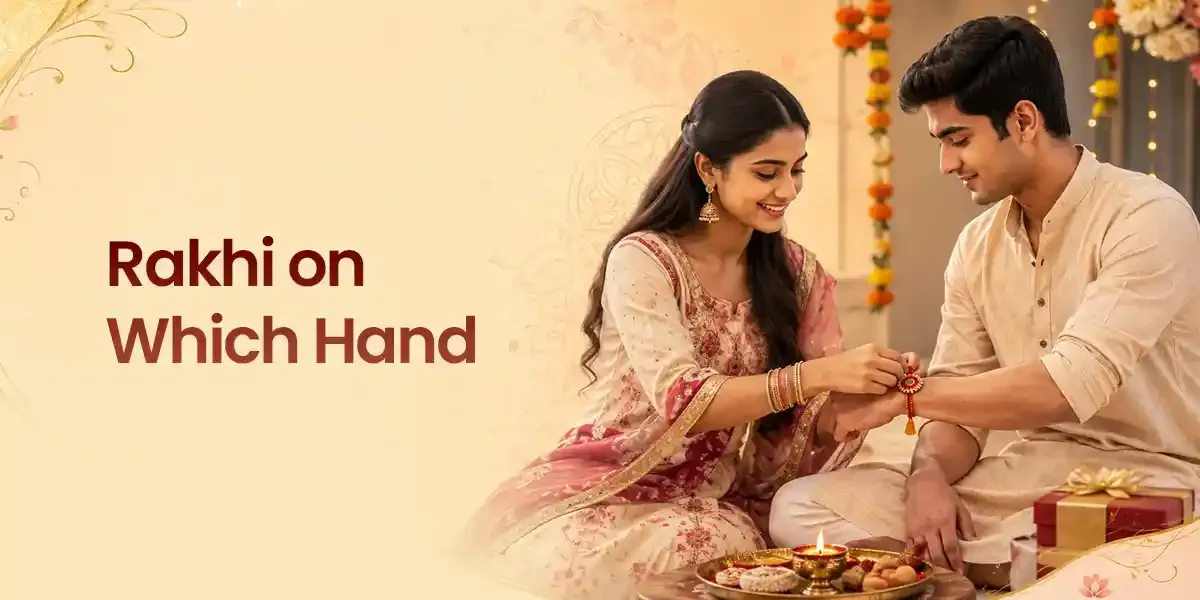
Rakhi is tied on the right wrist of the brother. That is the standard answer to which hand rakhi is tied, followed in most regions and communities in India.
This follows a broader Hindu tradition in which sacred threads and ritual acts use the right side of the body, since the right side is treated as the auspicious, active side.
Who Wears Rakhi on Which Hand?
Brother or male sibling: Right wrist. This is the most searched version of the rakhi hand rule.
Sister, if wearing a sacred thread or kalava: Often the left wrist, especially if married.
Bhabhi, for Lumba Rakhi: Right wrist, commonly, following the same logic used for the brother.
If the right hand is injured or unusable: The left wrist is acceptable. The bond behind Raksha Bandhan matters more than strict form.
Also Read: Want to chant the right mantra while tying Rakhi? Read the Raksha Bandhan Mantra, its meaning and correct pronunciation.
Why the Right Hand?
The Raksha Bandhan hand tradition favors the right side for a few reasons. In Hindu practice, the right side is seen as auspicious and pure, used for giving, offering, and taking vows, and linked with strength and protection, which connects directly to the idea of "raksha," or protection, at the center of the festival.
Rakhi is often called a raksha-sutra, a protective thread. Tying it on the right wrist is meant to symbolically activate the brother's vow to protect his sister, making the hand choice part of the ritual's meaning, not just a physical detail.
Astrological and Traditional Differentiators
In traditional beliefs, men, as well as unmarried females, are said to tie their sacred thread on the right-hand side, while married females tie their threads, like kalava and mauli, on their left hand.
This aligns with the ancient belief that the right hand is active and protective, associated with the role of a brother, while the left hand has feminine and receptive attributes; hence, sometimes the threads of females are worn on this side. This is the reason why rakhi is tied on the right hand of men in most families.
Want to know more about the influence of planet alignment, your kundali, or the timing of your rakhis? Talk to our certified astrologers at Astroyogi.
Ayurvedic and Cultural Logic
Popular explanations also bring in Ayurveda. One common claim is that the right wrist connects to energy channels linked to Vata, Pitta, and Kapha, and tying a thread there supports balance.
There is also a cultural hygiene explanation: the left hand was traditionally used for cleaning tasks, making it seem less suited to sacred acts. As a result, rituals like tilak, prasad, and thread-tying use the right hand and right wrist.
How to Tie Rakhi
The brother sits facing east or north.
The sister does the aarti and/or applies the tilak.
She ties the rakhi on his right wrist with her right hand, usually accompanied by prayers or a mantra.
She gives him a sweet, and in return, he gives her something while renewing his vow of protection.
Two aspects of the hands become important here: the sister ties the rakhi with the right hand, while the rakhi is tied on the right wrist of the brother.
Special Circumstances & Practical Exceptions
Brother is left-handed: Right wrist is preferred, though some people do it as per their dominant hand.
Medical reason or injury: Left wrist is fine. Intention is more important than the process.
Raksha Bandhan through distance: The same rule for the right wrist applies here as well.
Quick Reference Table
| Recipient | Traditional Hand | Why This Hand? |
|---|---|---|
| Brother or male sibling | Right wrist | Auspicious, protective, giving side |
| Sister wearing a thread | Often left wrist | Traditional left-side association for women |
| Bhabhi, Lumba Rakhi | Right wrist, commonly | Same rakhi-on-right logic as brother |
| Right hand unusable | Left wrist allowed | Practicality and bond over strict form |
At the Heart of the Thread
Ultimately, while tradition places the Rakhi on the right wrist to symbolize protection and positive energy, the true essence of Raksha Bandhan goes beyond rules. Whether tied on the right wrist, adapted for practicality, or expressed through a Lumba Rakhi, the thread remains a timeless symbol of devotion, love, and unwavering support between siblings.
Team Astroyogi is an experienced in-house editorial team of passionate writers, researchers, and astrology enthusiasts dedicated to making ancient divination sciences more accessible and meaningful in everyday life. With years of collective experience in creating insightful astrology and spirituality content, the team specializes in simplifying complex spiritual concepts into practical guidance for readers seeking clarity, balance, and personal growth. The Astroyogi editorial team possesses expertise across a wide range of subjects, including Indian Astrology, Vedic Astrology, Planetary Transits, Horoscope Analysis, Vastu Shastra, Numerology, Tarot, Spiritual Wellness, and Ritual Practices. Every piece of content is carefully researched, fact-checked, and crafted with the intention of offering reliable, insightful, and easy-to-understand guidance rooted in traditional wisdom. Driven by a commitment to authenticity and reader trust, Team Astroyogi strives to create content that empowers individuals to navigate life’s opportunities and challenges with confidence, positivity, and inner peace. Their mission is to bridge ancient astrological knowledge with modern-day relevance, helping readers make informed decisions and lead more harmonious lives.