

Onam Flowers: Traditional Flowers Used for Pookalam
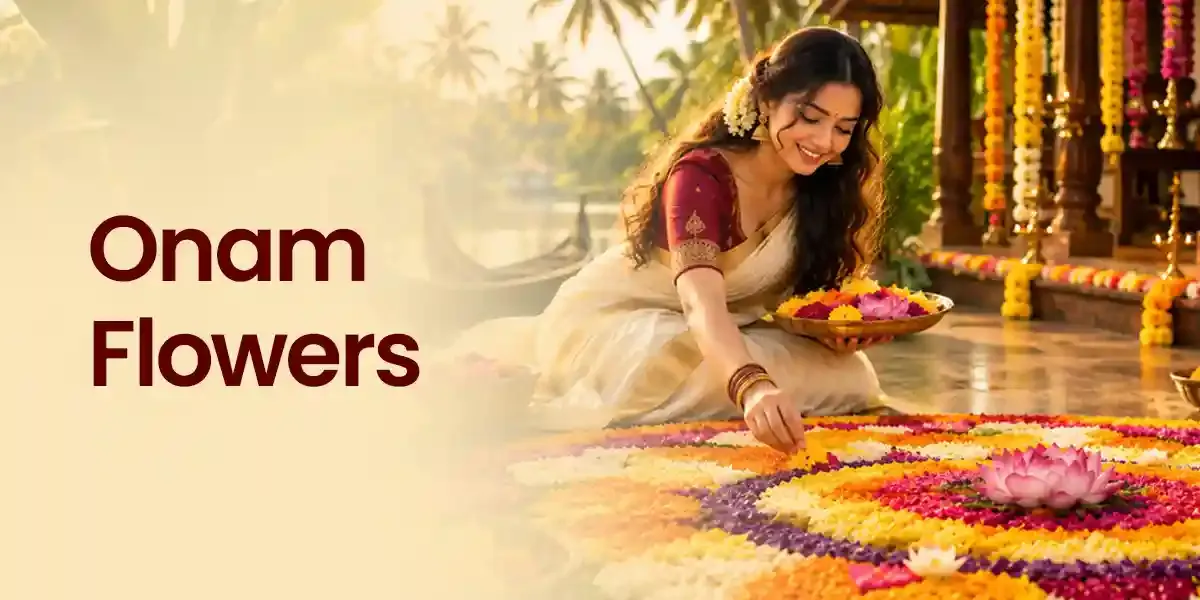
Walk through any Kerala neighborhood in the days leading up to Onam, and you'll notice something magical happening on doorsteps and courtyards. Petals in reds, yellows, whites, and blues are being carefully laid out, one ring at a time, until an entire flower carpet blooms on the ground. This is the beauty of flower Onam traditions – a festival where flowers aren't just decoration; they're the heart of the celebration itself.
If you've ever wondered what goes into these stunning floral designs, or wanted to know the exact Onam flower name list used by Kerala families for generations, this one's for you.
What is an Onam Pookalam?
A Pookalam, also called Athapookalam or Onapookalam, is a decorative floral arrangement created on the floor, usually near the entrance or in the courtyard of a home. The tradition begins on Atham, the first day of the ten-day Onam celebrations, and the design traditionally grows larger and more elaborate as the festival approaches Thiruvonam.
Pookalam making during Onam is much more than a festive ornament. Traditionally, families gathered locally available flowers and worked together to create the design, making Pookalam a beautiful expression of community, creativity, and celebration.
According to Malayali traditional beliefs, it is a symbol of joy and prosperity and is connected with welcoming the legendary King Mahabali. Today, Pookalams range from simple household designs to elaborate creations made for competitions. Yet, at the heart of both is the same idea: bringing people together through flowers.
Which Flowers are Used for Onam Pookalam?
There isn't one fixed list of flowers that every family must use. Traditionally, people worked with flowers that were available locally, and the selection could vary by region and household. However, several flowers have become closely associated with Onam Pookalam traditions.
Here are some of the most commonly mentioned Onam flowers:
Thumba (Ceylon Slitwort)
Thumba is a small, delicate white flower that holds a special place in Onam traditions. The very first Pookalam made on Atham is traditionally a simple arrangement using only Thumba flowers, long before the floral arrangement becomes more elaborate and colorful during the following days.
Tulasi (Holy Basil)
Technically a leaf rather than a flower, Tulasi still earns its place in almost every traditional Pookalam. Its fresh green hue and fragrance bring a calm, sacred touch to the arrangement, and it's considered an essential part of the design.
Chethi (Ixora / Flame of the Woods)
Known for its vivid red and orange shades, Chethi is often considered one of the signature flowers of Onam, lending bold color to the outer rings of the design.
It is frequently listed among the traditional flowers used in Pookalam and is especially useful when you want to create strong contrast between different rings of the design.
Chemparathy (Hibiscus)
This deep red bloom is another familiar choice. Its bold red color immediately catches the eye, making it useful for creating striking sections and accents.
Rather than filling the entire Pookalam with one flower, hibiscus can be used strategically to add depth and definition to the overall pattern.
Sankhupushpam (Butterfly Pea)
A gorgeous blue or blue-purple flower that's a favorite for making certain patterns stand out, since blue tones are relatively rare among Onam flowers.
These pretty flowers can create a wonderful contrast against the yellow, orange, white, and red shades commonly seen in Pookalam designs.
Jamanthi (Marigold/Chrysanthemum)
Jamanthi is commonly associated with chrysanthemum and marigold usage in Onam traditions. Its bright yellow, white, and orange tones are particularly useful for creating large sections of a Pookalam.
These versatile flowers are also practical because their petals can be separated and spread across larger areas, making them useful for both simple household designs and more elaborate arrangements.
Mandaram (often Bauhinia or white fragrant blooms)
Mandaram is another flower associated with Pookalam traditions. Its white petals can introduce a softer element into a design dominated by brighter colors. Large, fragrant, and easy to work with, this flower is a household favorite for filling out bigger sections of the design.
Kongini
Kongini, or lantana, is made up of small flowers and can appear in multiple colors. Its variety makes it particularly useful for detailed patterns and smaller sections of a Pookalam.
Hanuman Kereedam (Red Pagoda Flower)
Named for its resemblance to a pagoda crown, this striking red flower is especially popular in northern Kerala. Its distinctive shape and strong red color make it useful as a decorative accent.
Mukuthi
Mukuthi, commonly known as coatbuttons or tridax daisy, is a small flower that adds delicate yellow and white details to the floral arrangement. Its petite size makes it suitable for creating fine patterns without overpowering the rest of the design.
While the traditional Onam flower name list remains close to many hearts, modern celebrations, especially outside Kerala, often lean on more easily available blooms. Marigolds, chrysanthemums, roses, hibiscus, gerberas, and even jasmine work beautifully. The key is contrast: pair yellows with whites, reds with greens, and purples with oranges to make patterns pop.
How the Pookalam Grows: Day-by-Day Flower Flow
The Pookalam isn’t made once and left; it evolves with the 10-day celebration of the festival. This gradual build-up mirrors the festival’s rhythm: quiet beginnings, swelling energy, and a joyful peak.
Atham: A simple ring of Thumba sets the tone.
Chithira to Chothi: White and light colours expand the design.
Moolam: Some families create a square “Moolakkalam” variation.
Uthradam: The largest, most elaborate Pookalam often appears here.
Thiruvonam: The grand welcome for Mahabali; designs may be refreshed or simplified depending on household custom.
Final Words
Onam flowers are so much more than pretty decor; they're a living, breathing part of a tradition that's been passed down through generations, evolving gently with each passing year while keeping its soul intact. Whether you use the exact traditional Onam flowers or a more accessible modern mix, what matters most is the intention behind it: welcoming prosperity, togetherness, and joy into your home.
Team Astroyogi is an experienced in-house editorial team of passionate writers, researchers, and astrology enthusiasts dedicated to making ancient divination sciences more accessible and meaningful in everyday life. With years of collective experience in creating insightful astrology and spirituality content, the team specializes in simplifying complex spiritual concepts into practical guidance for readers seeking clarity, balance, and personal growth. The Astroyogi editorial team possesses expertise across a wide range of subjects, including Indian Astrology, Vedic Astrology, Planetary Transits, Horoscope Analysis, Vastu Shastra, Numerology, Tarot, Spiritual Wellness, and Ritual Practices. Every piece of content is carefully researched, fact-checked, and crafted with the intention of offering reliable, insightful, and easy-to-understand guidance rooted in traditional wisdom. Driven by a commitment to authenticity and reader trust, Team Astroyogi strives to create content that empowers individuals to navigate life’s opportunities and challenges with confidence, positivity, and inner peace. Their mission is to bridge ancient astrological knowledge with modern-day relevance, helping readers make informed decisions and lead more harmonious lives.